Of course no trip is complete without trying new foods and we ate well in Portugal.
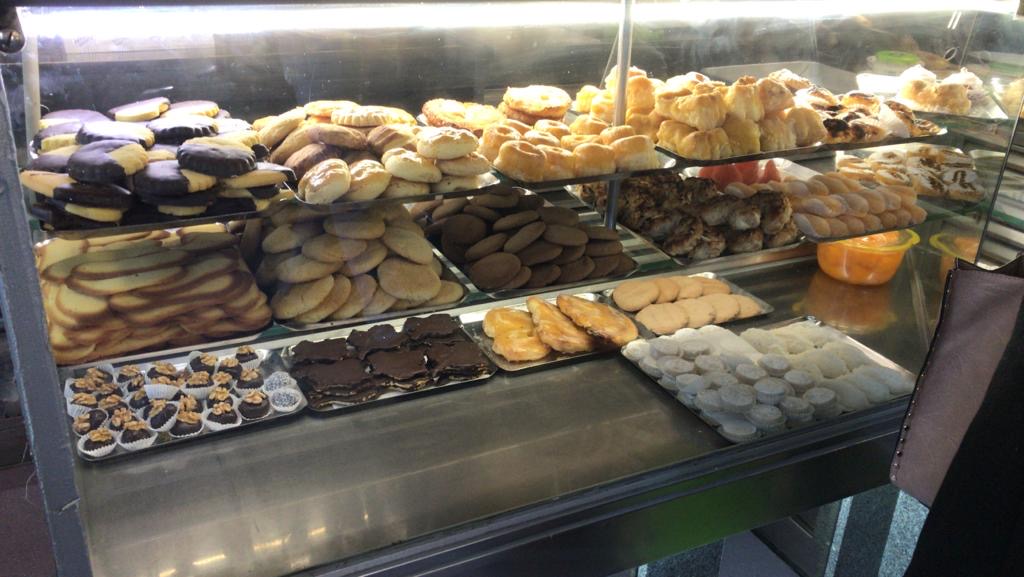
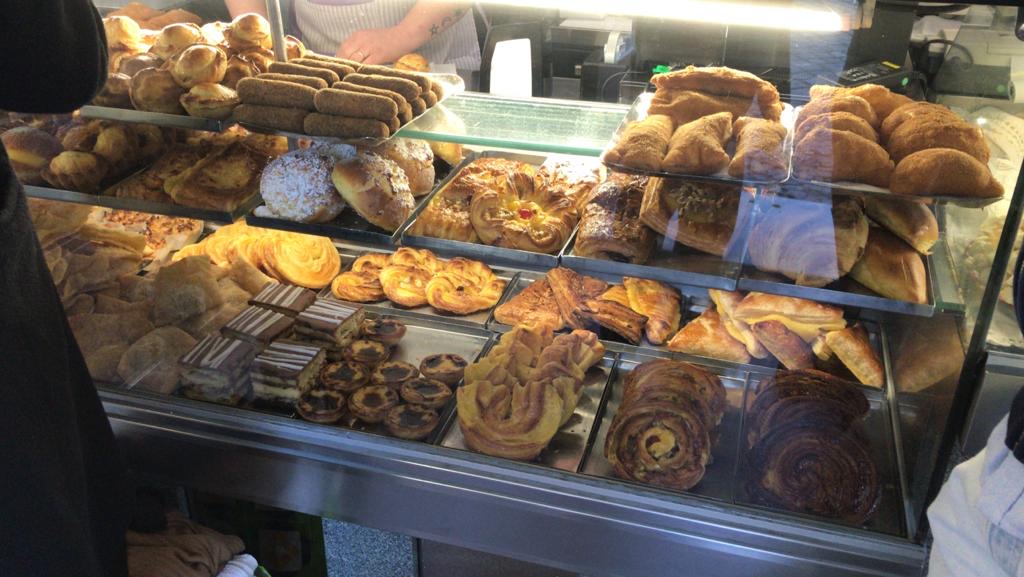
I think the boys’ favorites were the pastries. I’m not really a pastry kind of person but even I liked a couple.
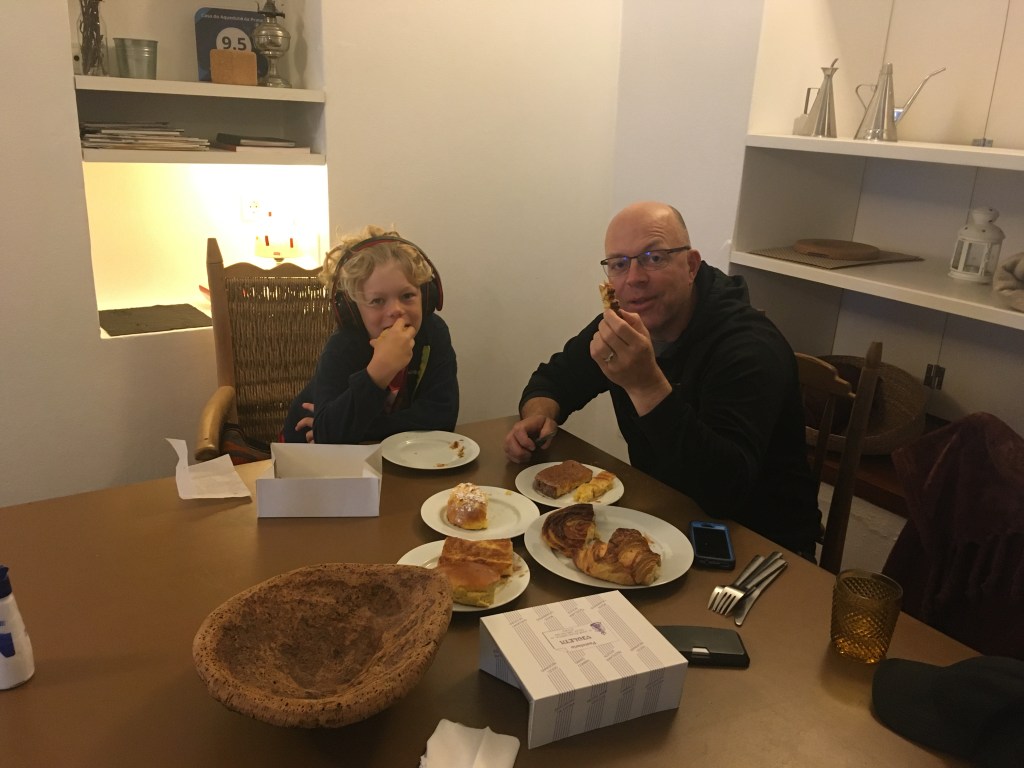
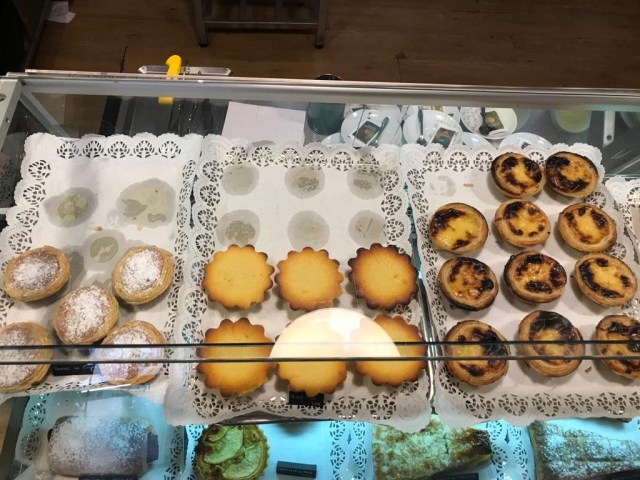
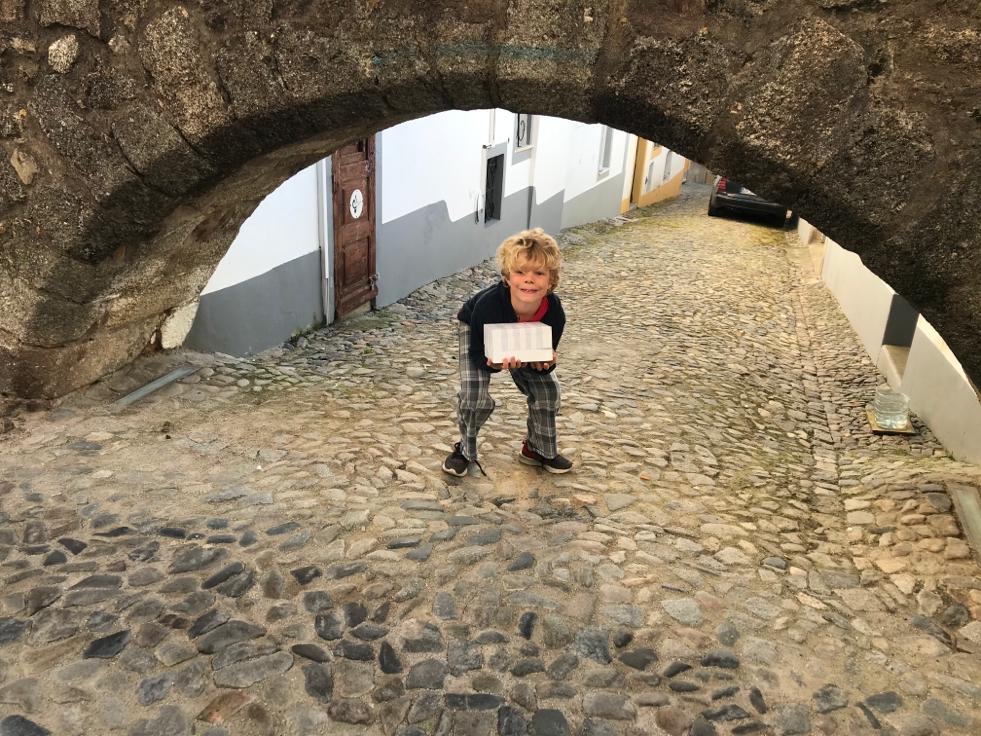
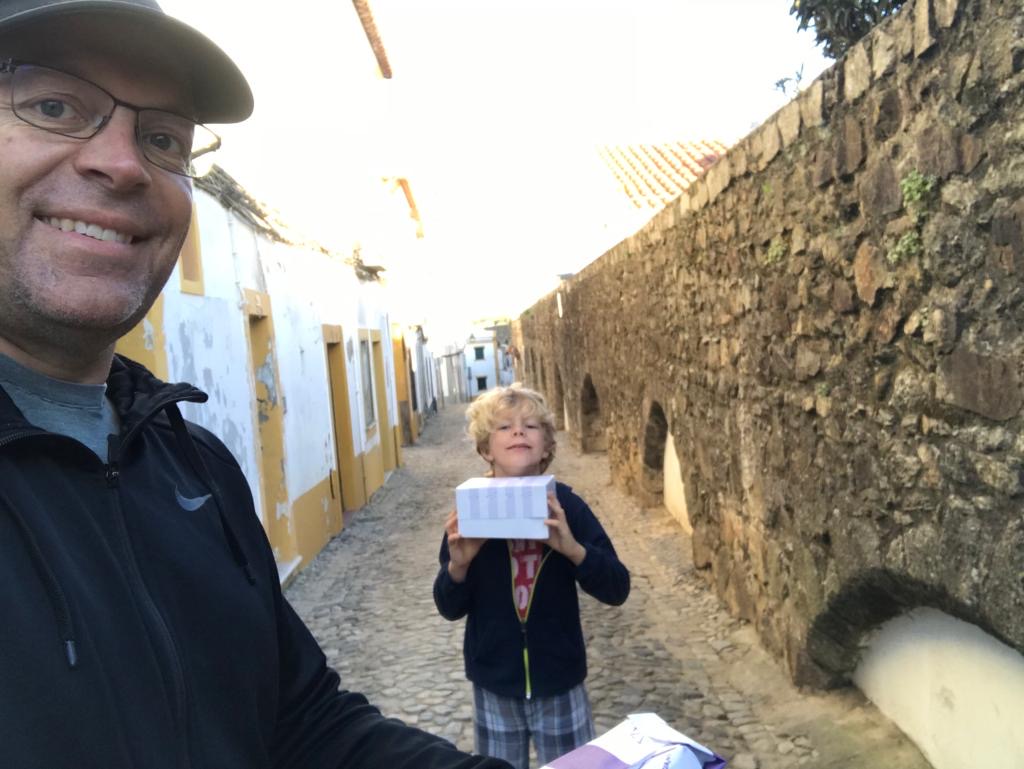
Selection from early morning pastry run in Évora.
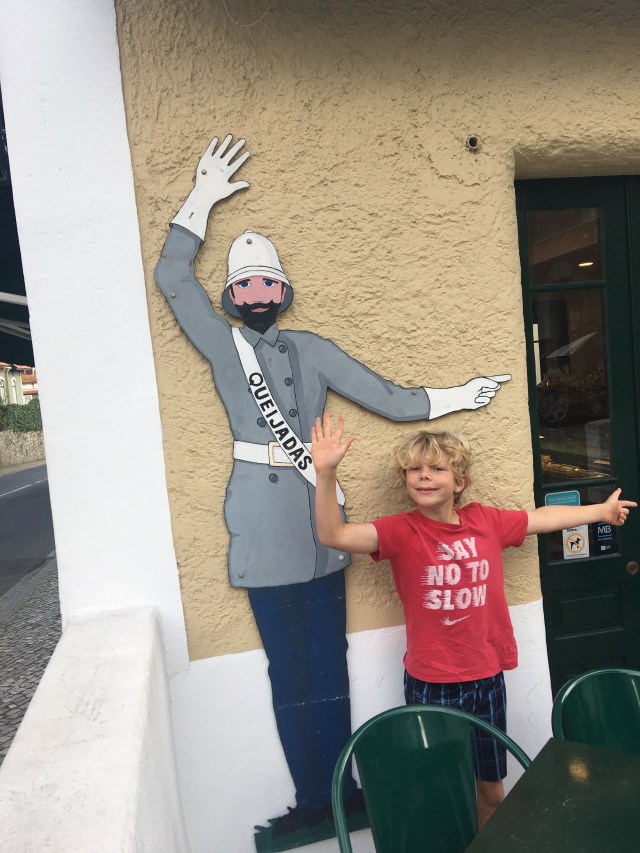
Probably the most typical (and one of our favorites) pastry is the queijada, a little cheesecake made from sheep cheese.
Pastel de feijao (sweet bean tarts), queijadas (cheesecake), pastel de nata (custard tarts)
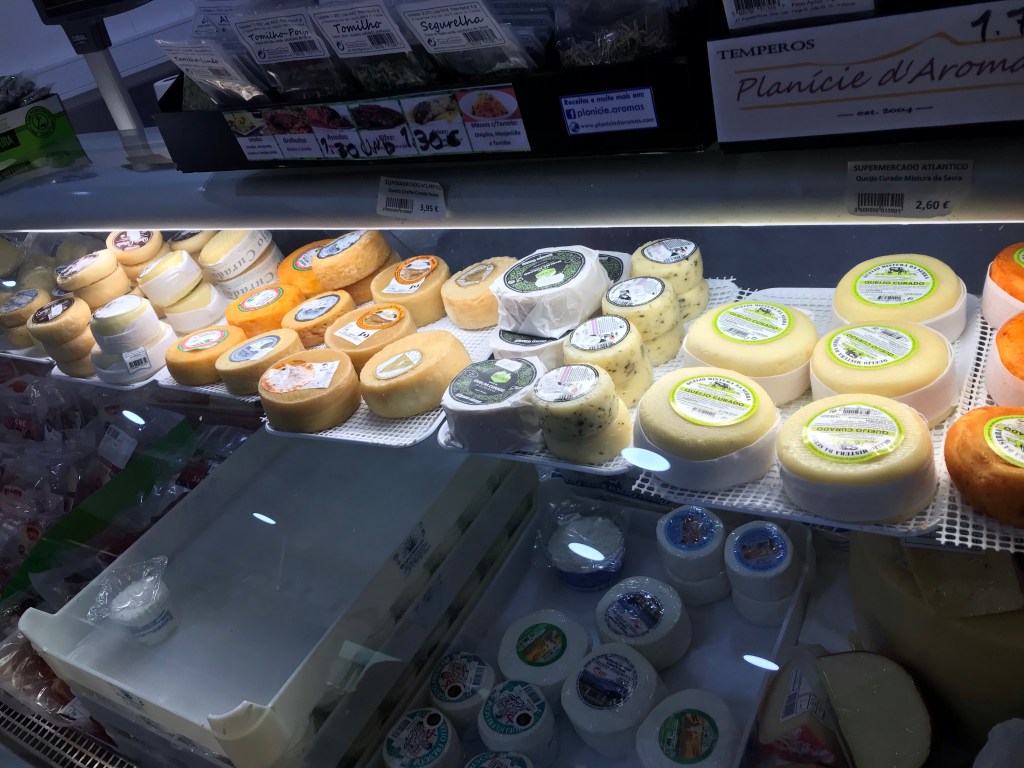
Speaking of cheese, cheese is one of two things that Portugal does a lot better than Spain (*please see foot note at the bottom of this blog about Spanish cheese). Besides the Queijadas, one dish I tried was basically a pot of melted sheep cheese, mmmmmmmm.
The other food the Portugal does better is beef. Leo gave up hamburgers fairly quickly after we arrived in Spain since they were never quite right, and he was very happy to have several in Portugal. We even went to a restaurant that was named Santo Bife, beef in Portuguese (luckily they had a fantastic veggie patty for me). The boys were happy.
There may be a connection between the quality dairy and beef and the fact that we saw grazing goats, sheep and cows all over Portugal, something we don’t see in our part of Spain.
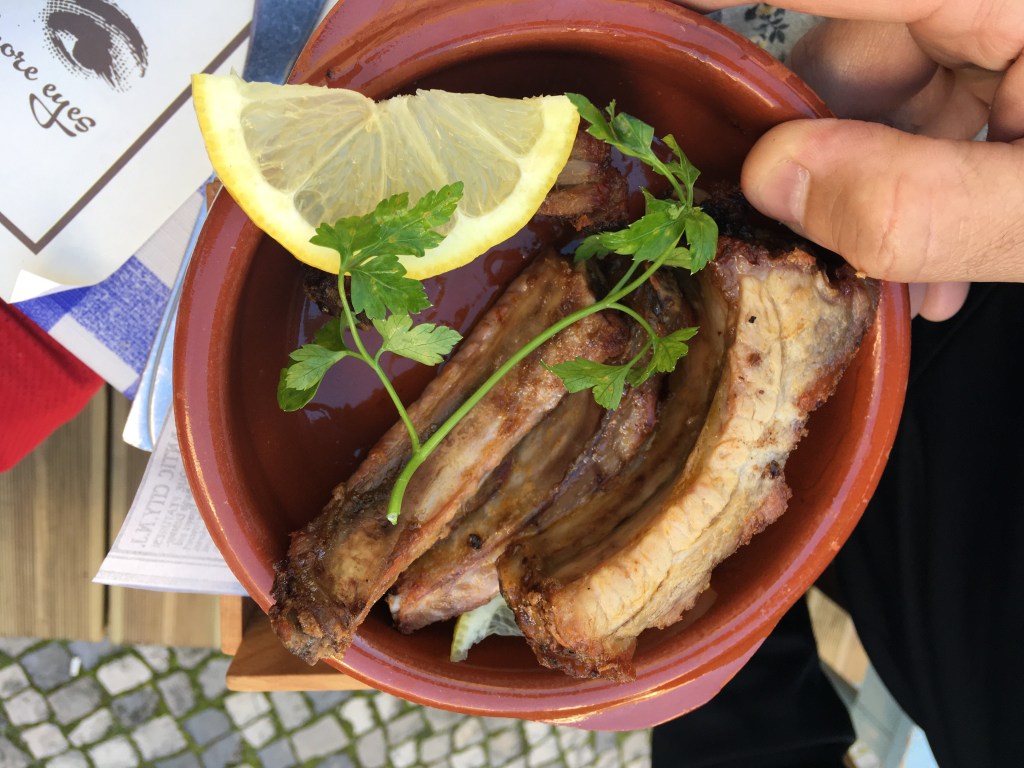
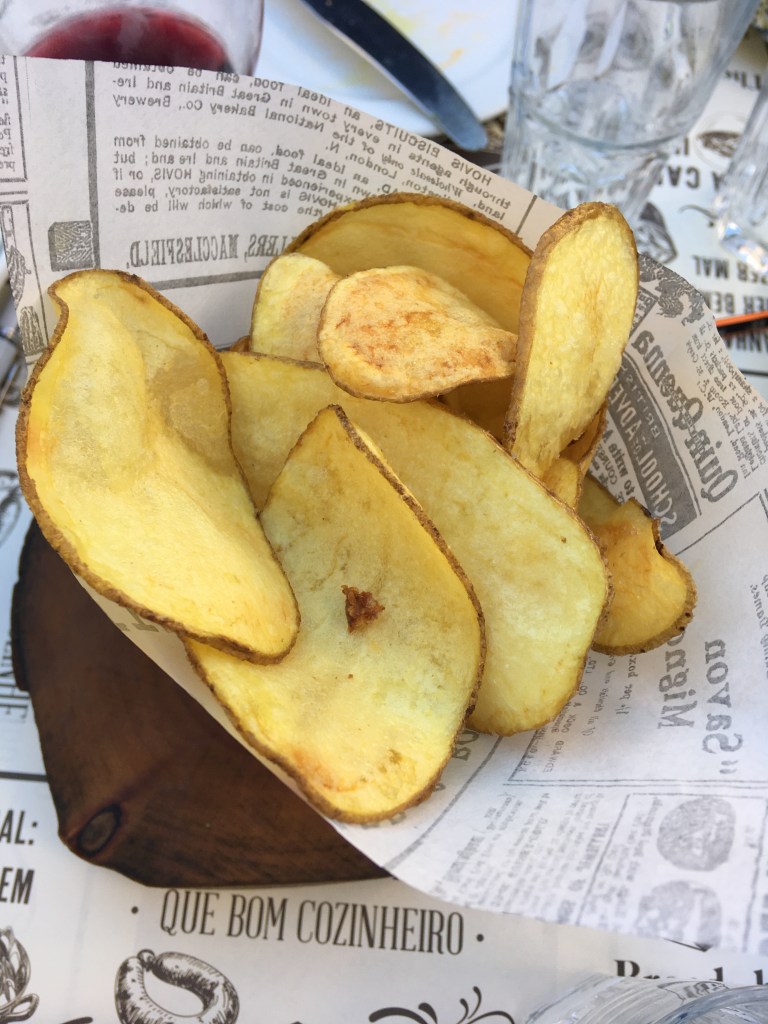
Like Spain, Portugal has tapas, which was a great way to try lots of things.
Ribs
fancy chips
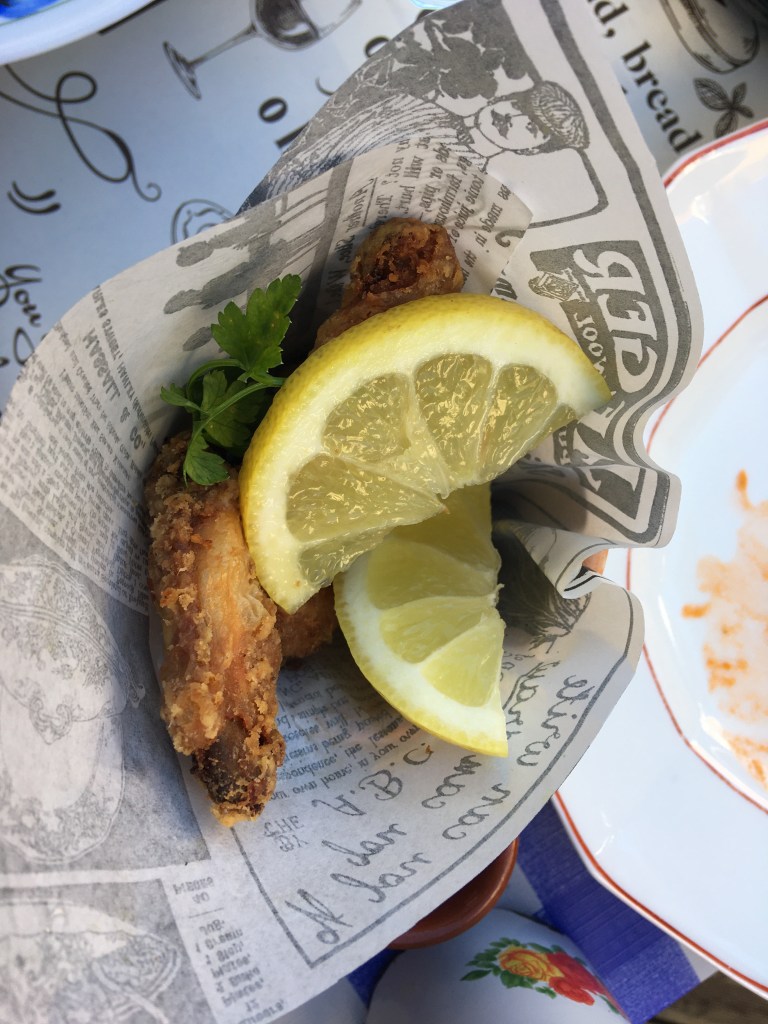
fried fish
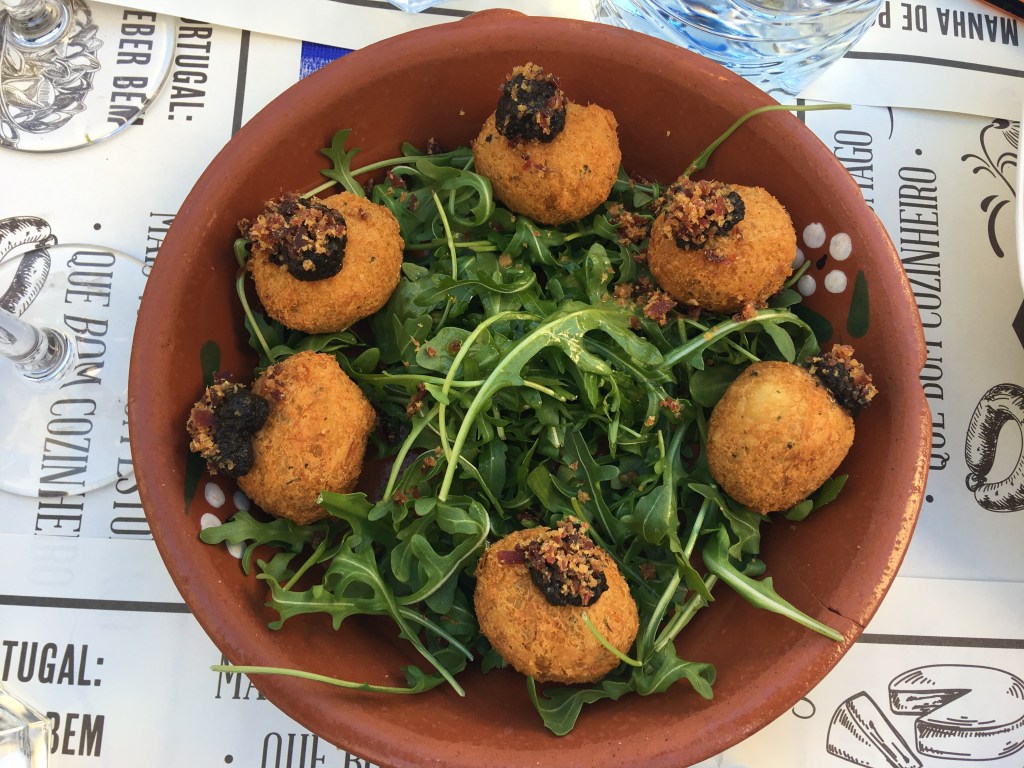
fish croquette (no one’s favorite)
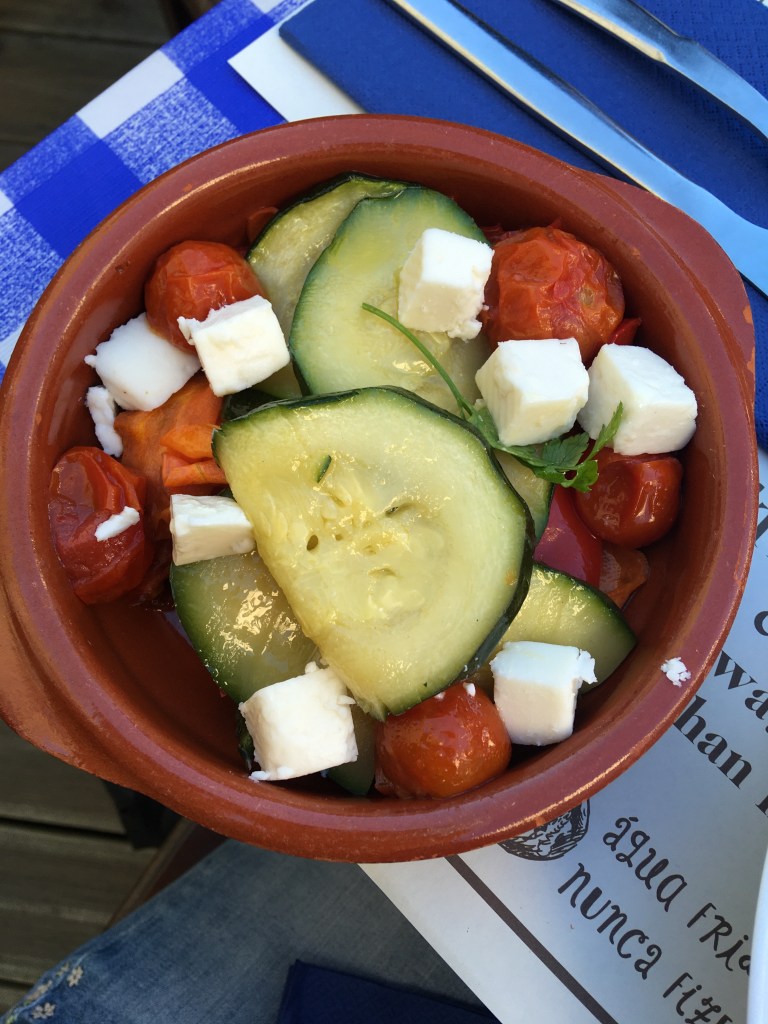
My veggie salad
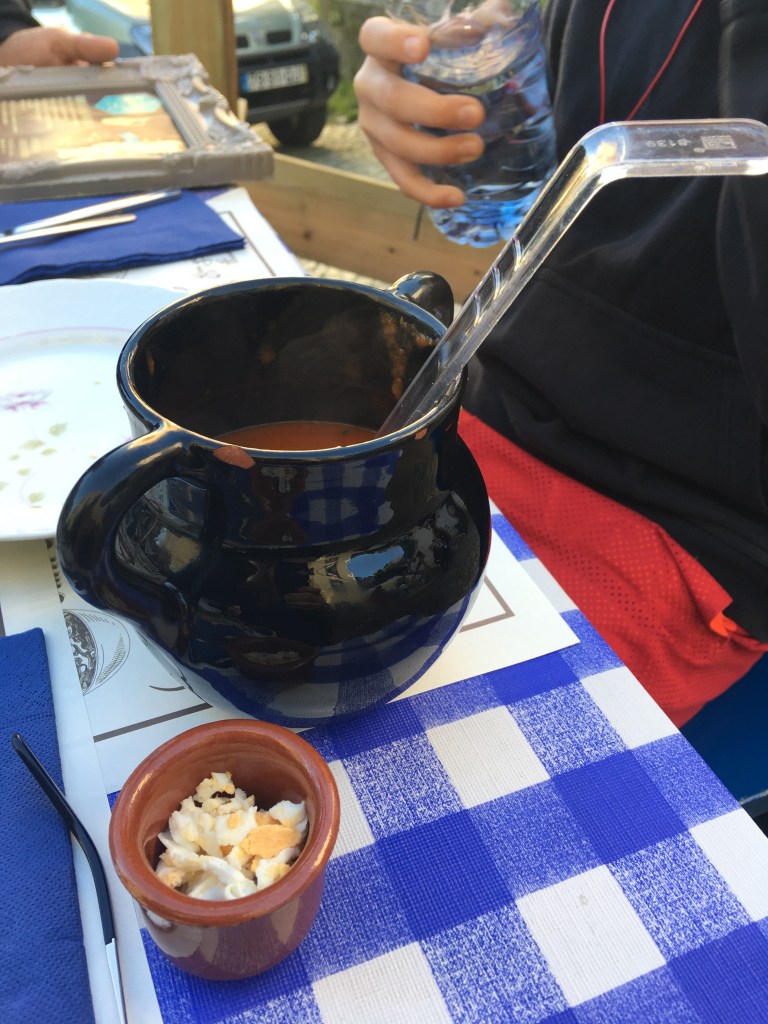
Tomato soup with boiled egg
And then there are the drinks. They have Sangria, similar to Spain’s but with a little more tangy flavor (yum).
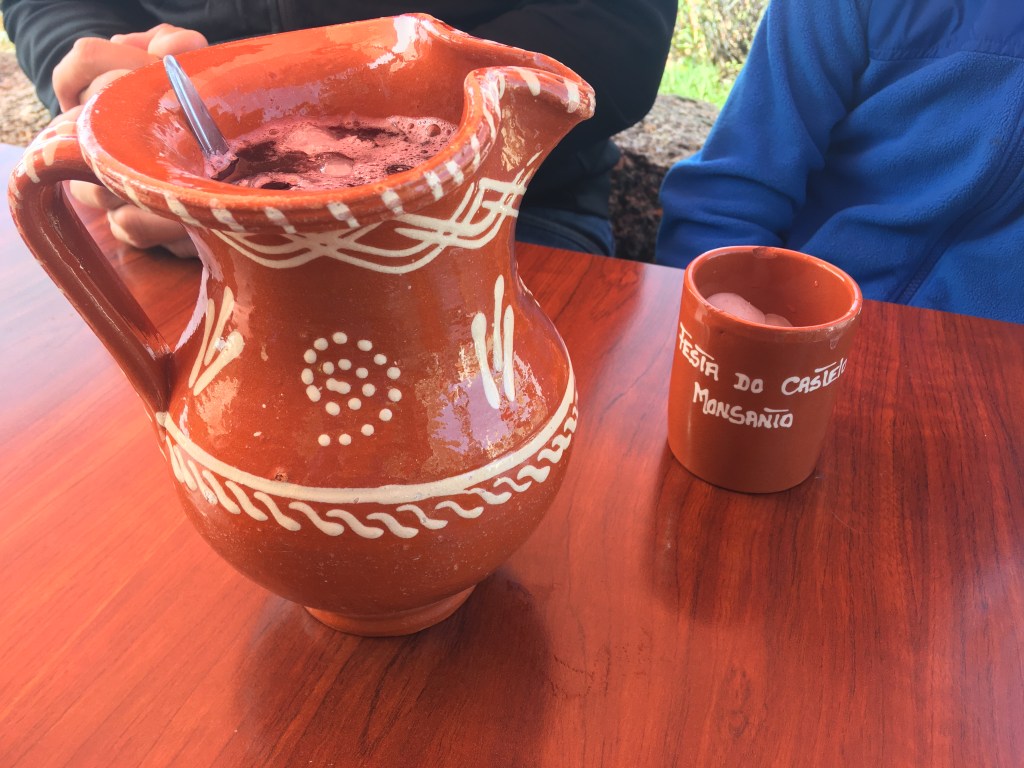
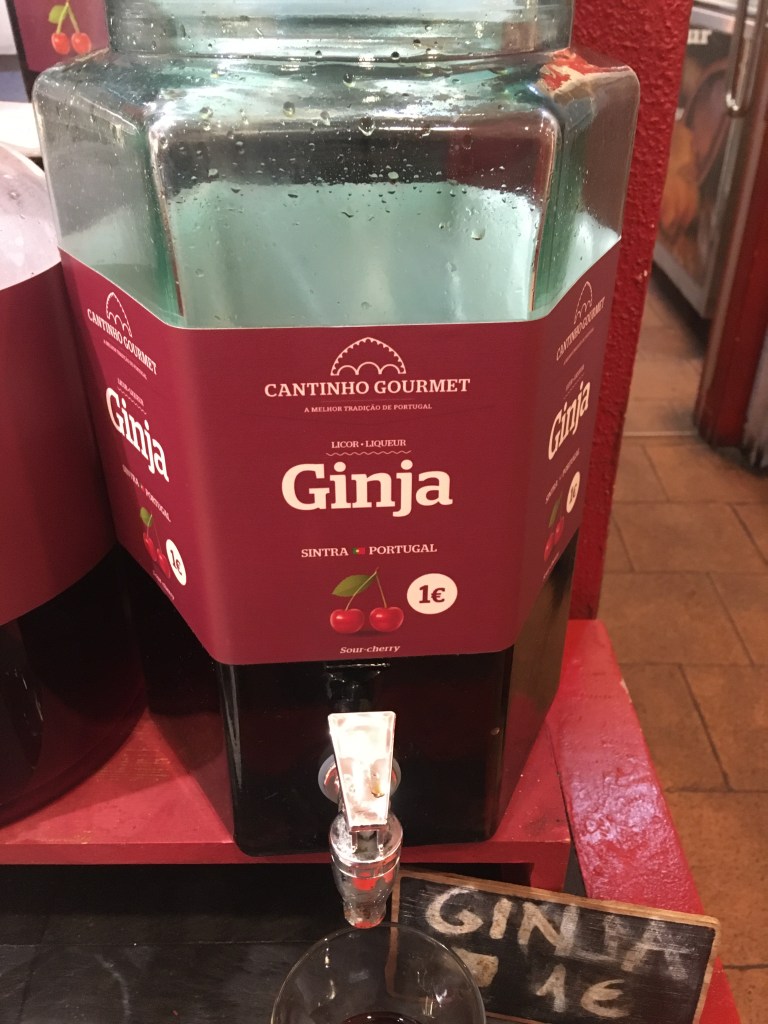
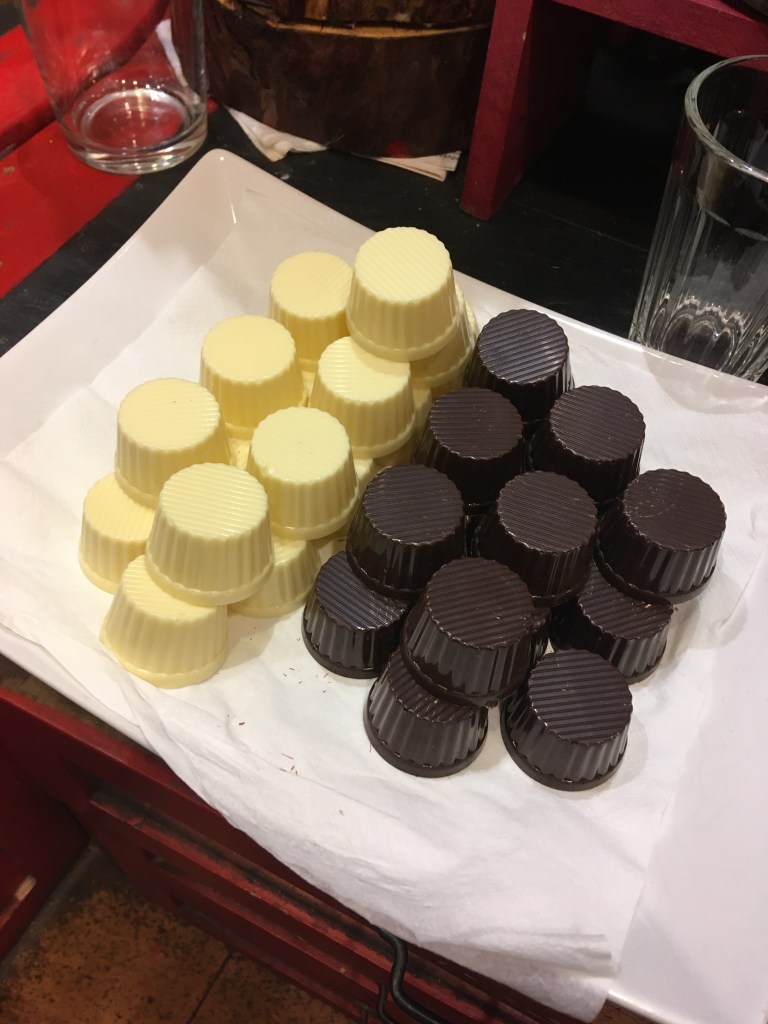
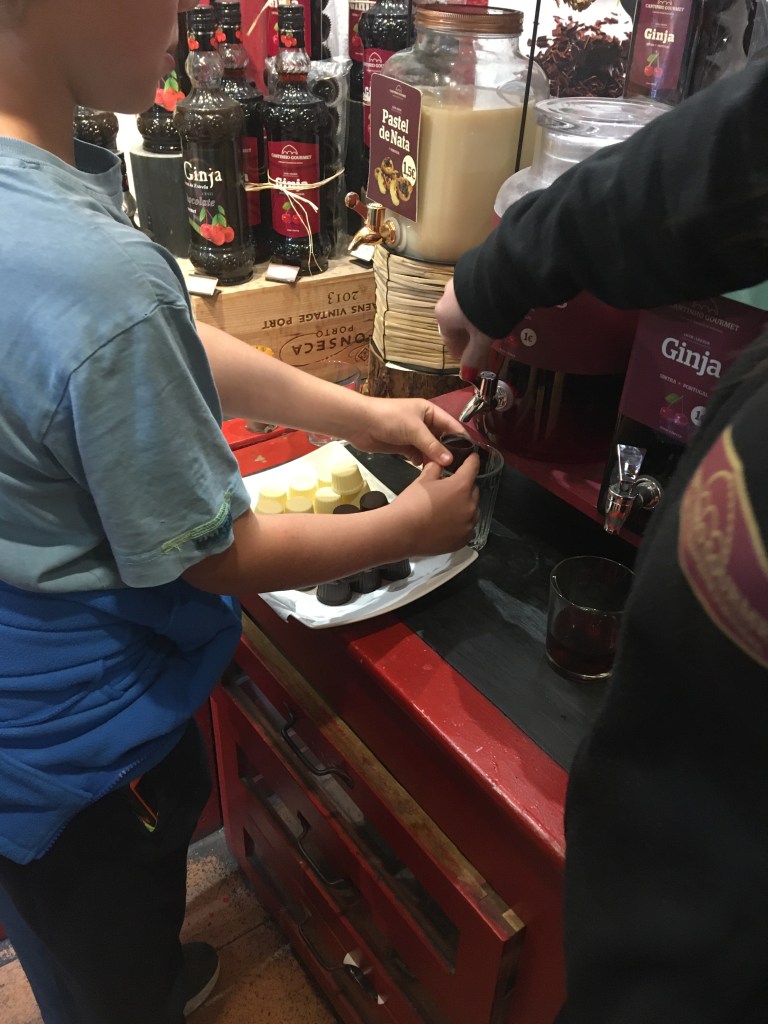
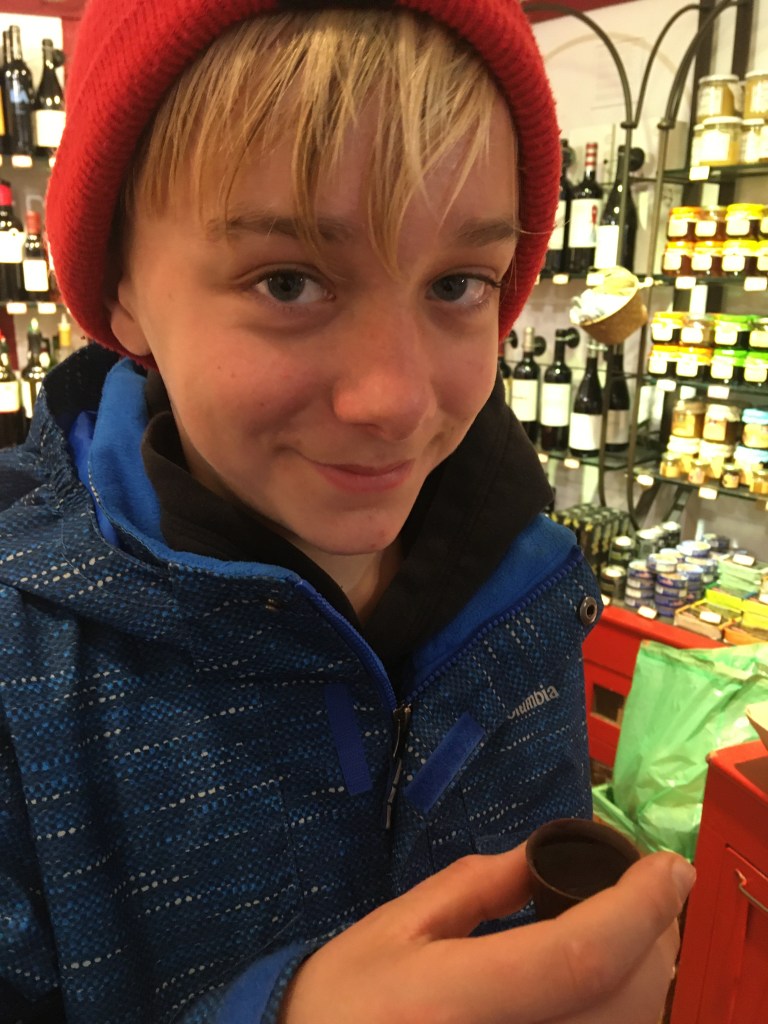
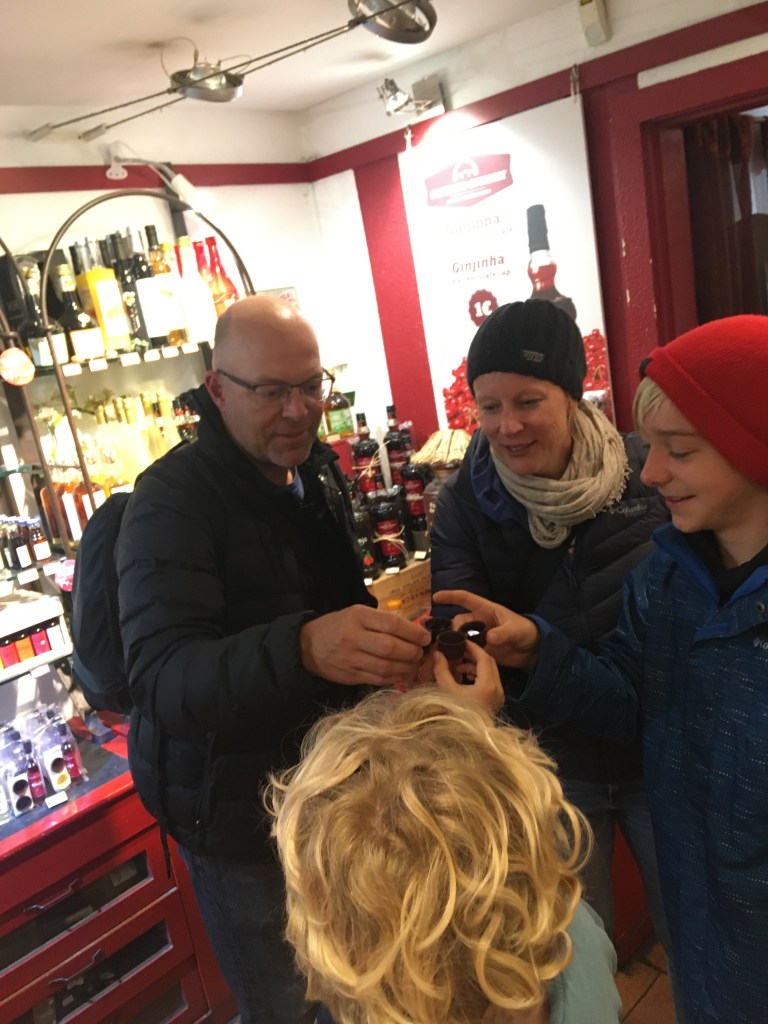
A traditional drink is Ginja, a liqueur made from ginja berries (small sour cherries) that you drink out of a pure chocolate cup.
We found one shop that offered a kids’ non-alcoholic version and the merchant taught us how to properly drink Ginja.
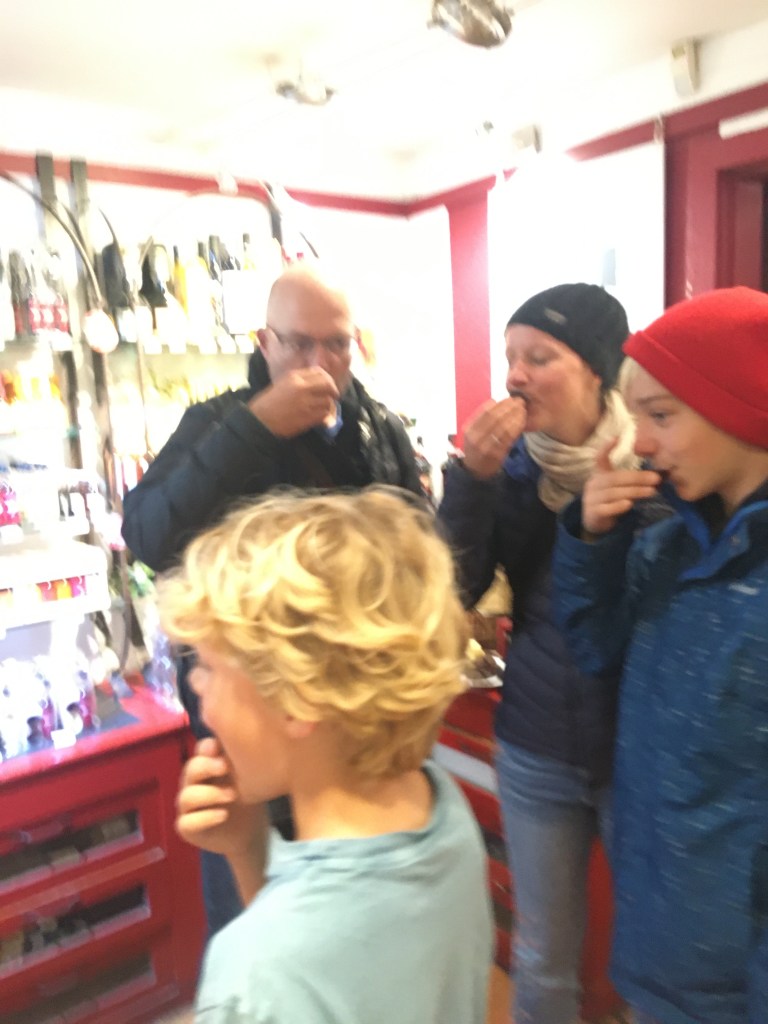
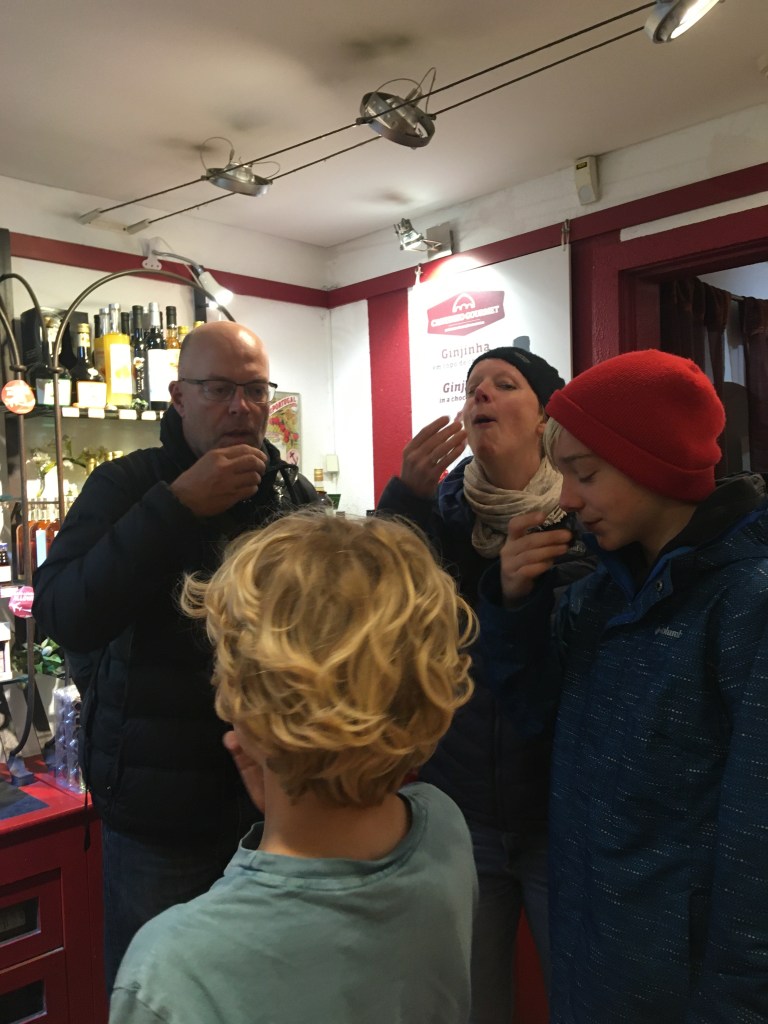
First, you fill the chocolate cup with the liqueur, then you drink about half of it, then you toss the cup with the remaining liqueur into your mounth. Yum!
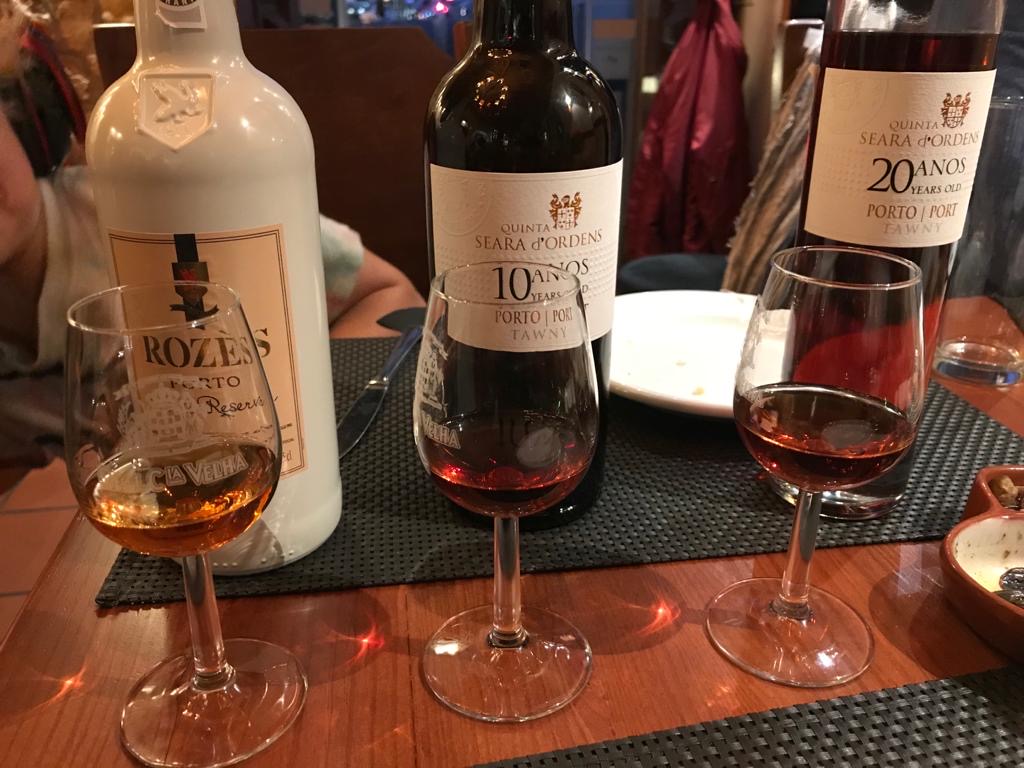
And of course there is port, which our waitress instructed us that to be authentic port it must be produced in Porto.
We sampled from less aged to more aged. I liked the less aged, Todd liked the more aged.
*Spanish Cheese foot note: We have all been very disappointed in the selection of cheese since we arrived in Spain. Mostly there is cow cheese, goat cheese and sheepcheese, or mixtures of those cheeses, either semi-aged or aged, and that is it, that is how they are named. We get a semi-aged cow/sheep mix which is basically Manchego and an imported mild cheddar (which isn’t quite right). We’ve often wondered why there aren’t more choices of cheese, especially with France and Switzerland’s example so close by. Turns out, it is a result of Franco’s leadership, when artisinal cheese was basically outlawed. Additionally, Franco, who was not a wine drinker, greatly limited wine production by destroying vineyards, particularly those producing white wine grapes and pushing for bulk red wine with an emphasis on quantity over quality. This helps explain why we’ve had such a hard time finding wine that is worth drinking.
As we come to the end of our 15 days of lockdown, Spain’s prime minister has called for an additional 15 days of lockdown, extending it until April 11th. With the numbers of new cases still increasing, we understand and have accepted the decision. It is hard, harder knowing that it will last longer and knowing that there really isn’t anywhere we can go to escape this awful situation. We continue to try to make the best of it.
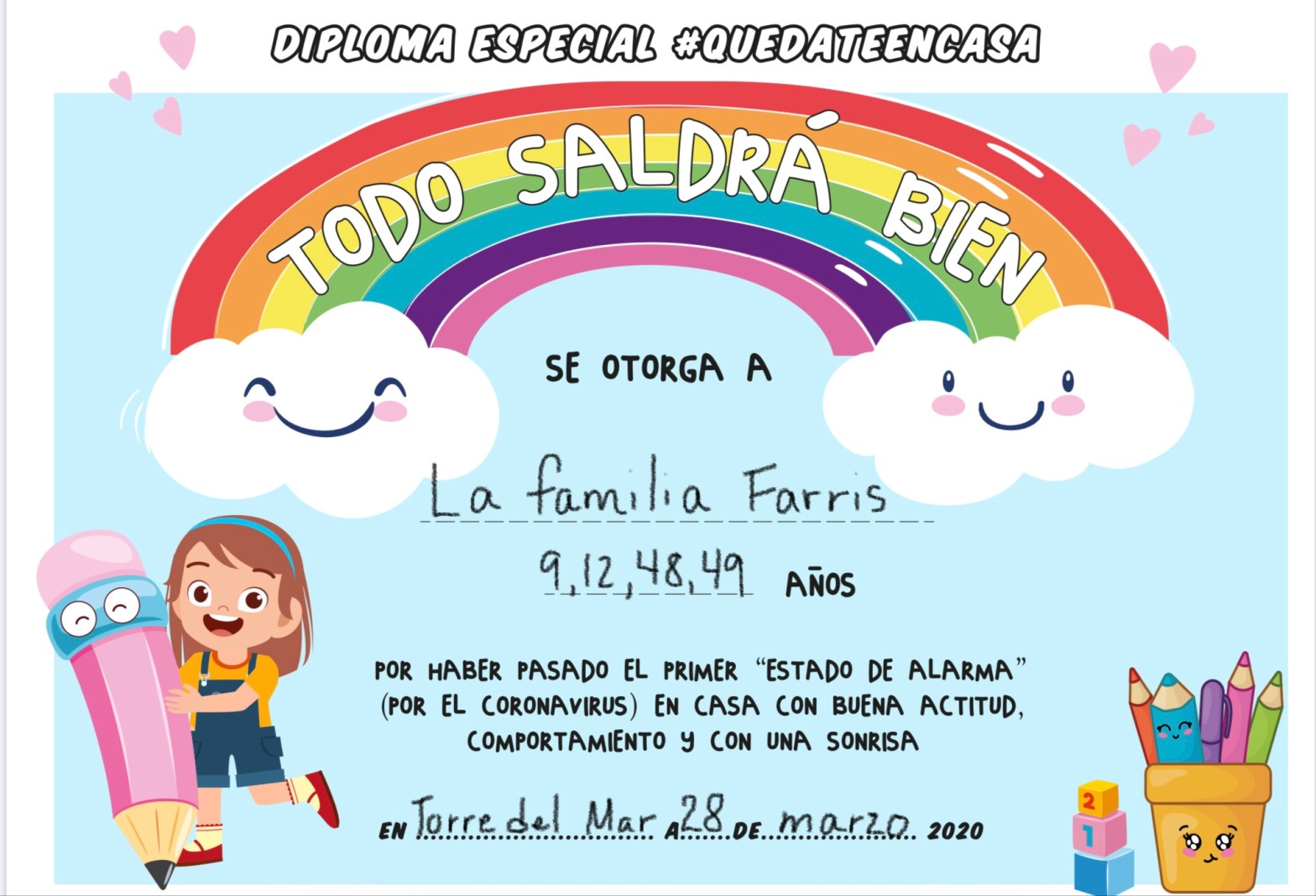
Certificate from Leo’s school congratulating us on making it through the first “state of alarm” at home with a good attitude, good behavior and a smile.
We find new activities to keep the kids entertained.
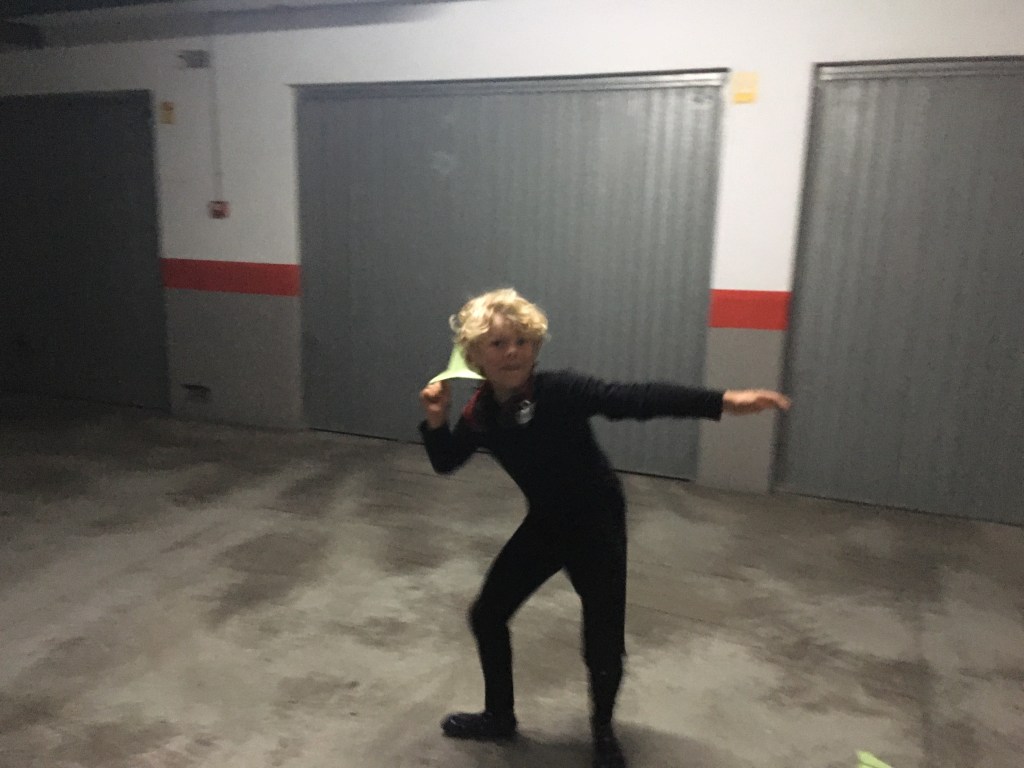
paper airplanes
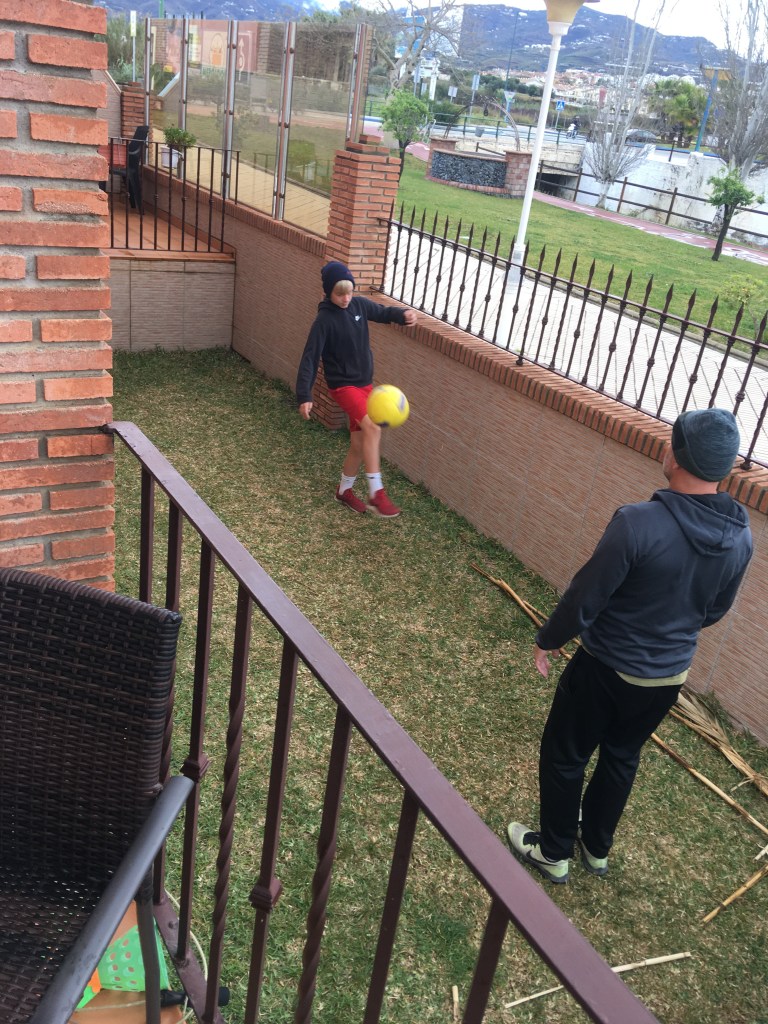
Soccer ball juggling
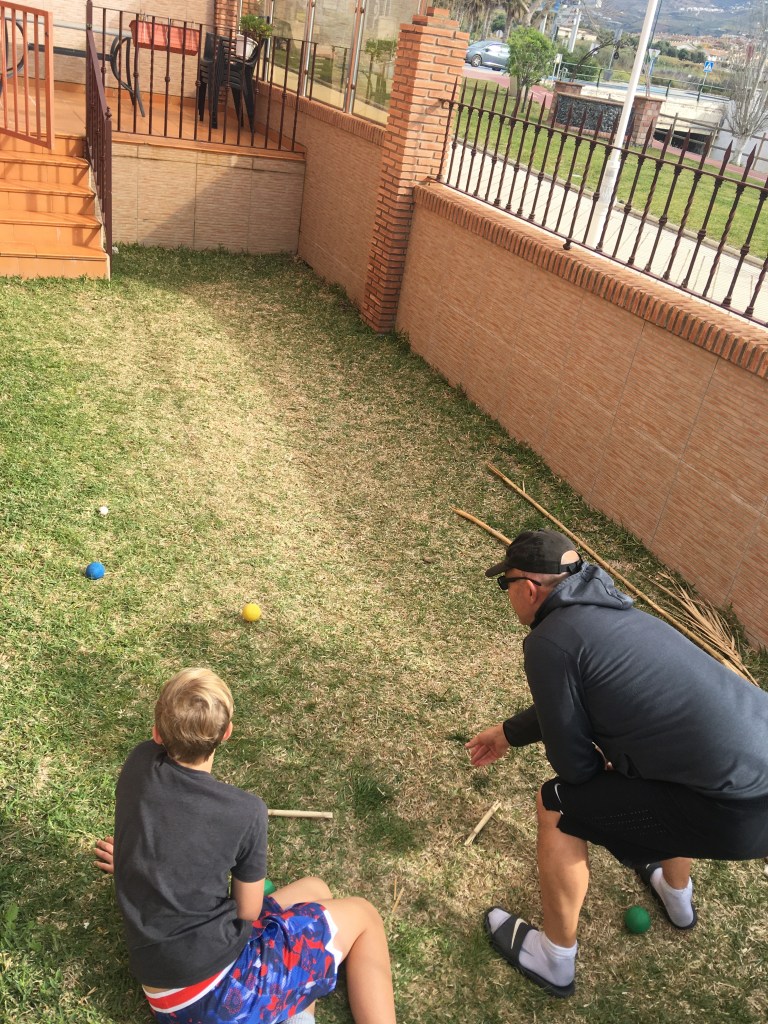
Bocci ball
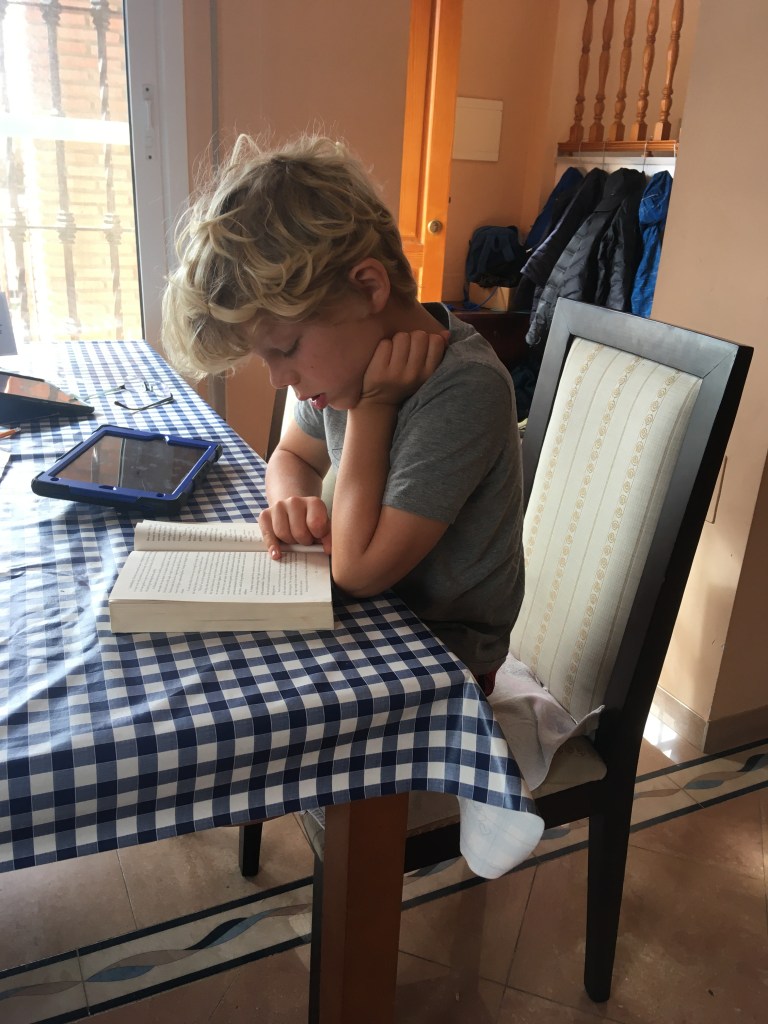
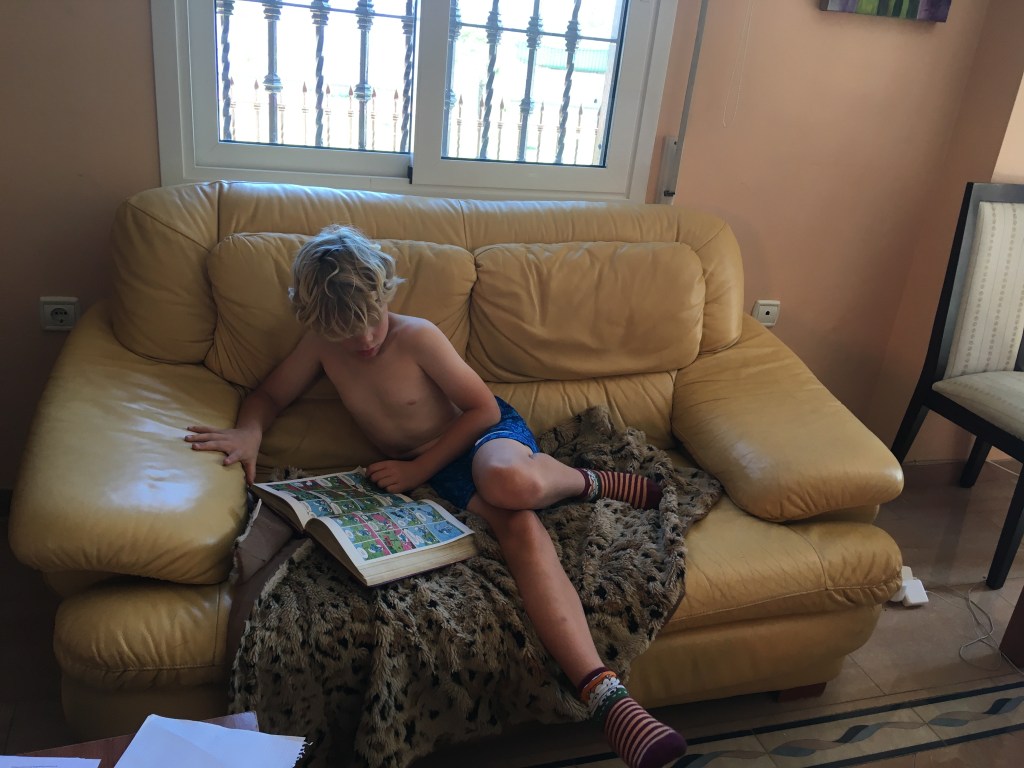
time for a good book
Homemade corn hole
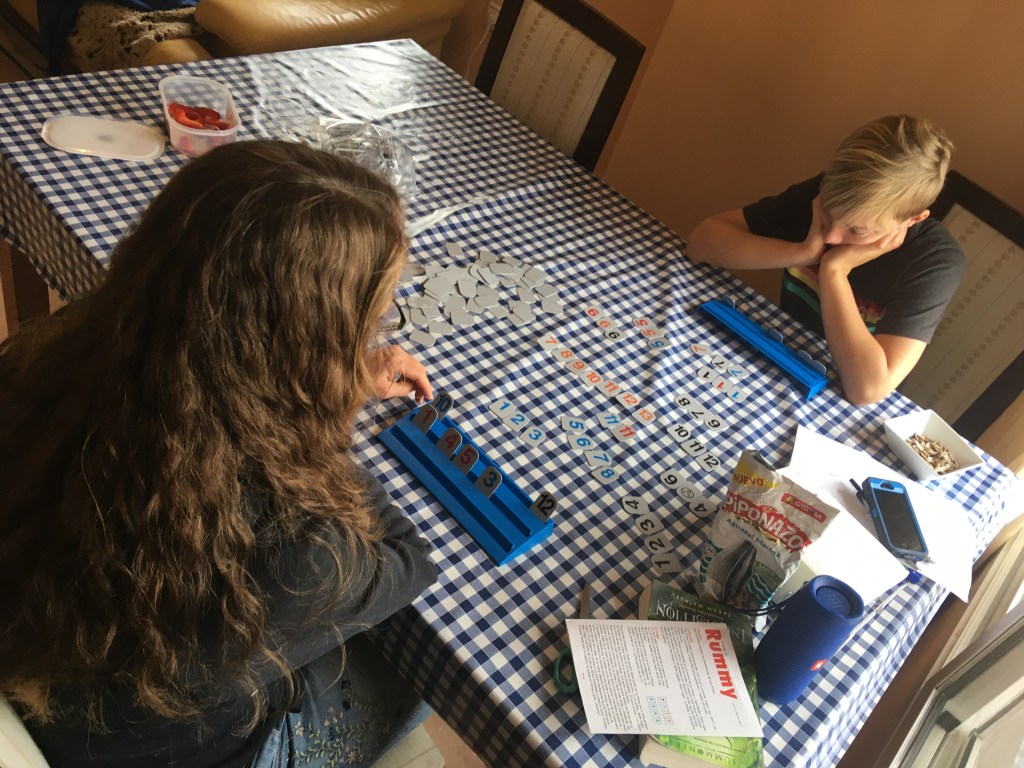
new games
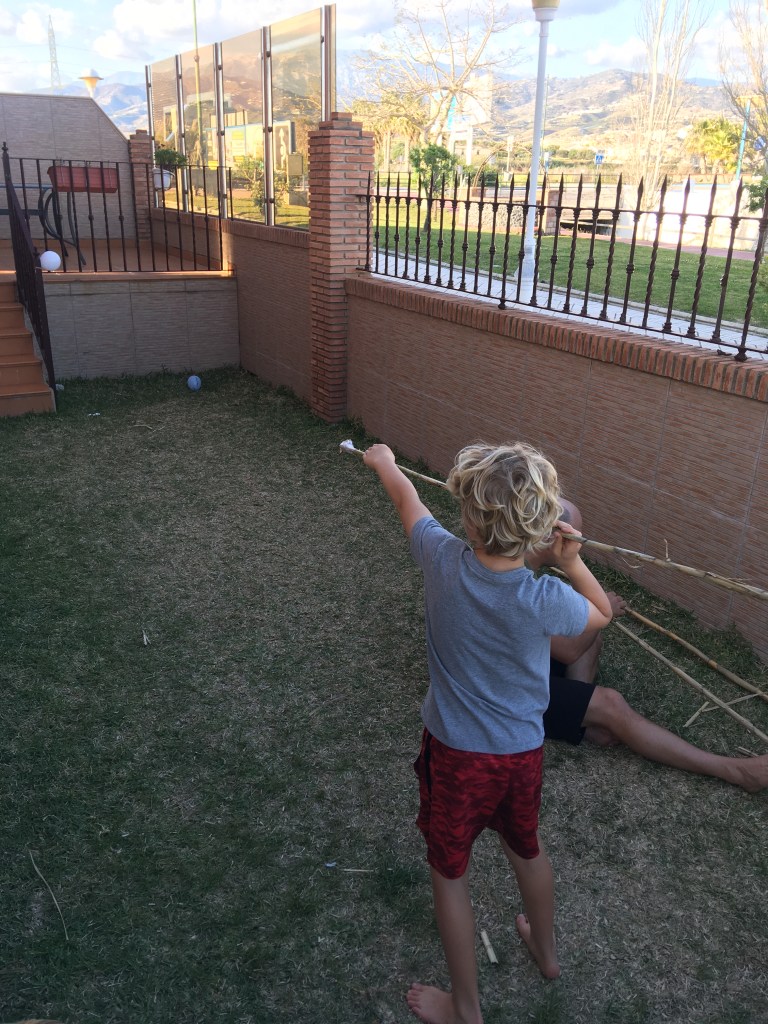
Throwing homemade spears at balloons
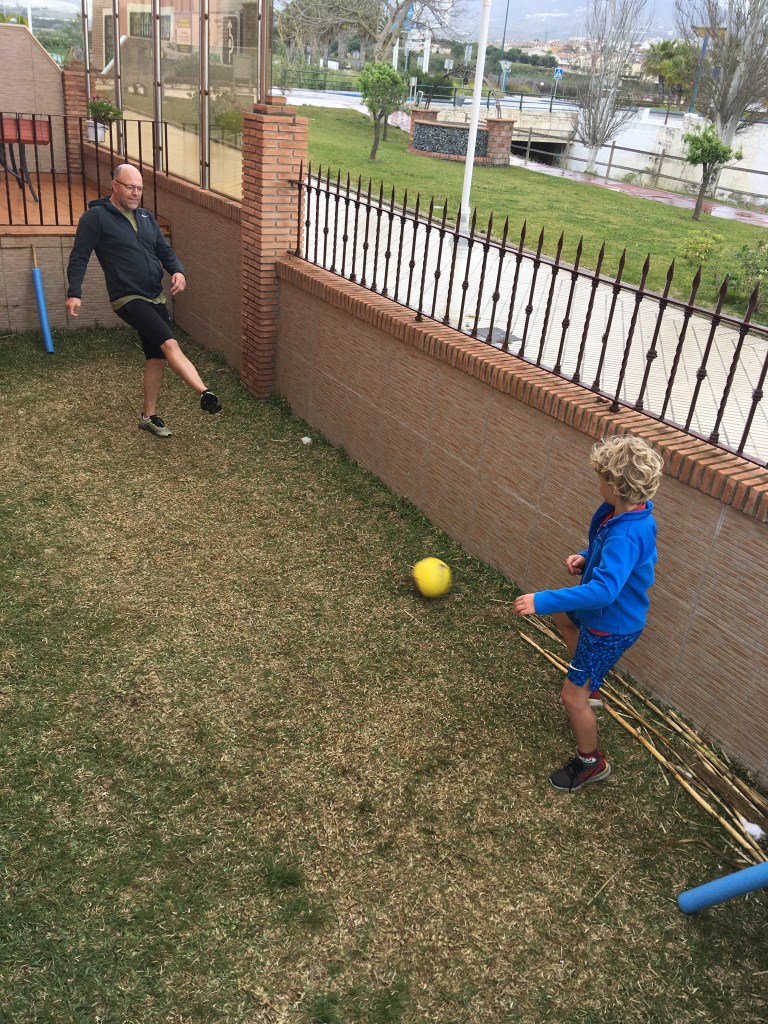
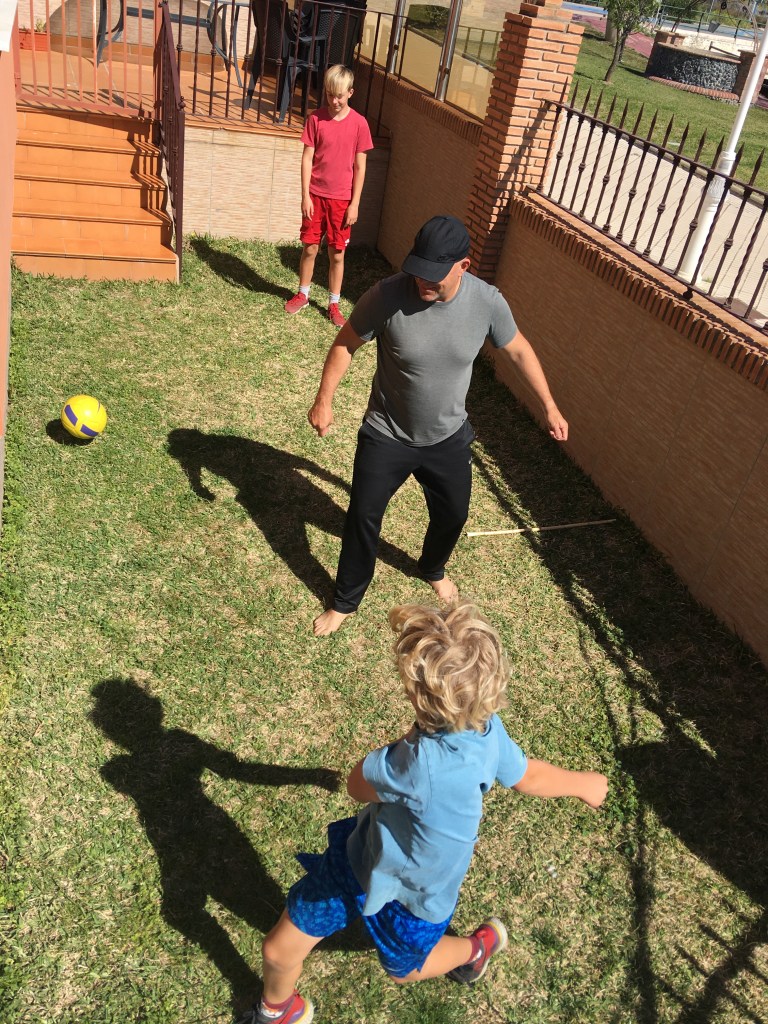
A new soccer game they invented
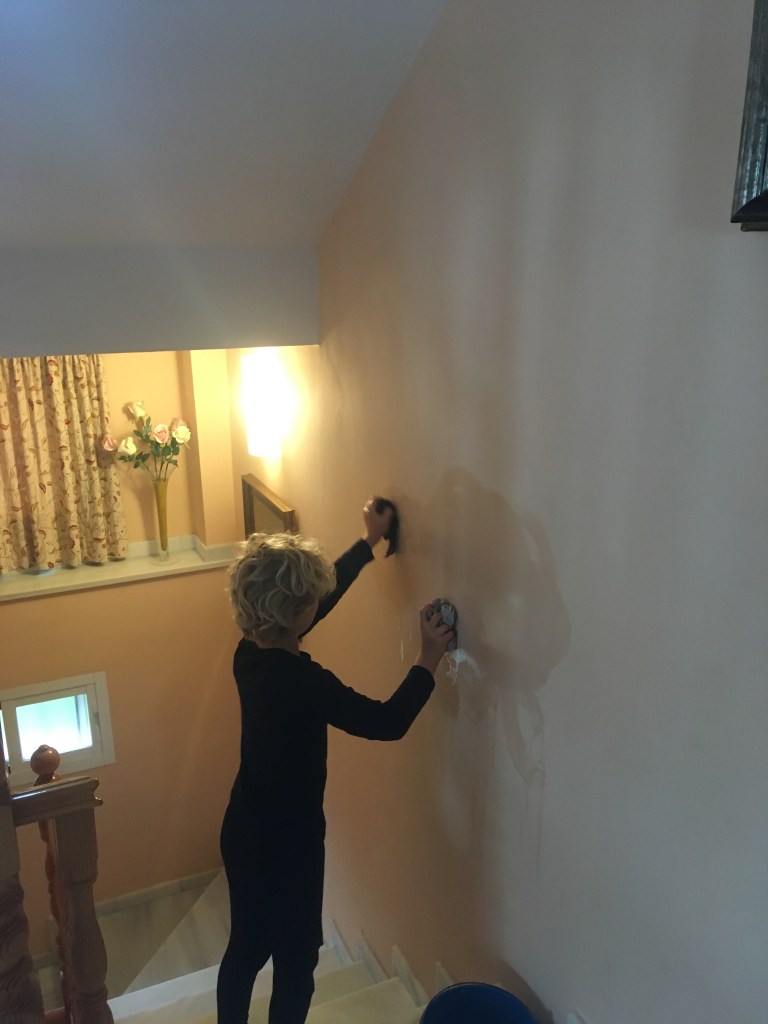
Chores have become a little more creative.
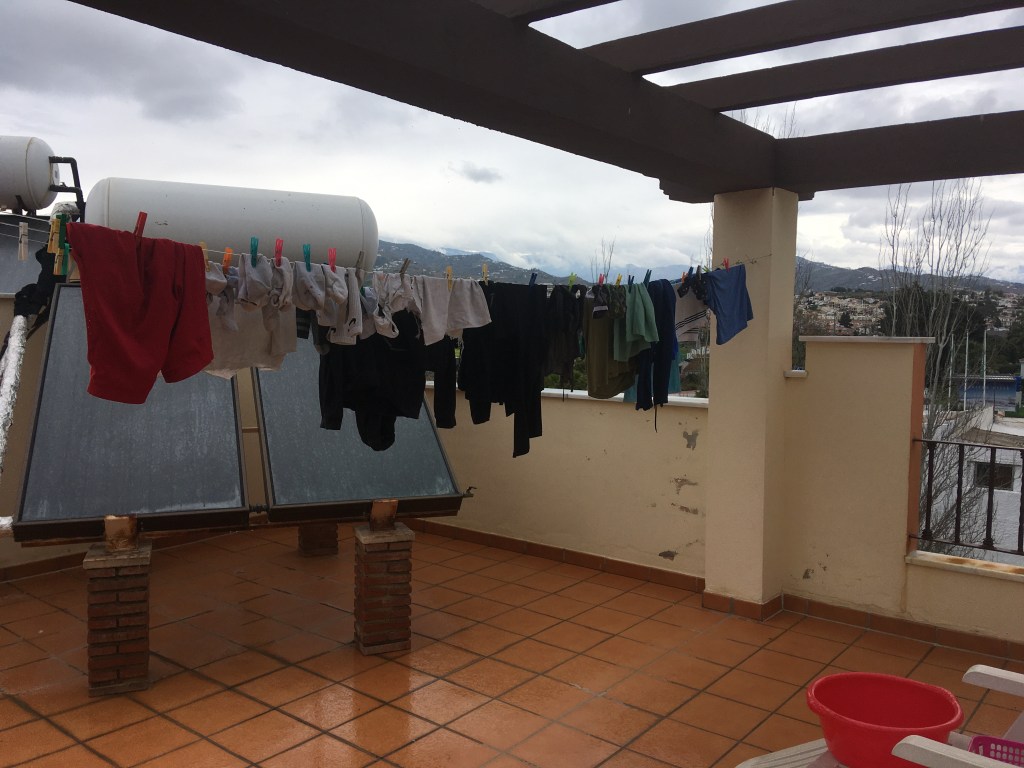
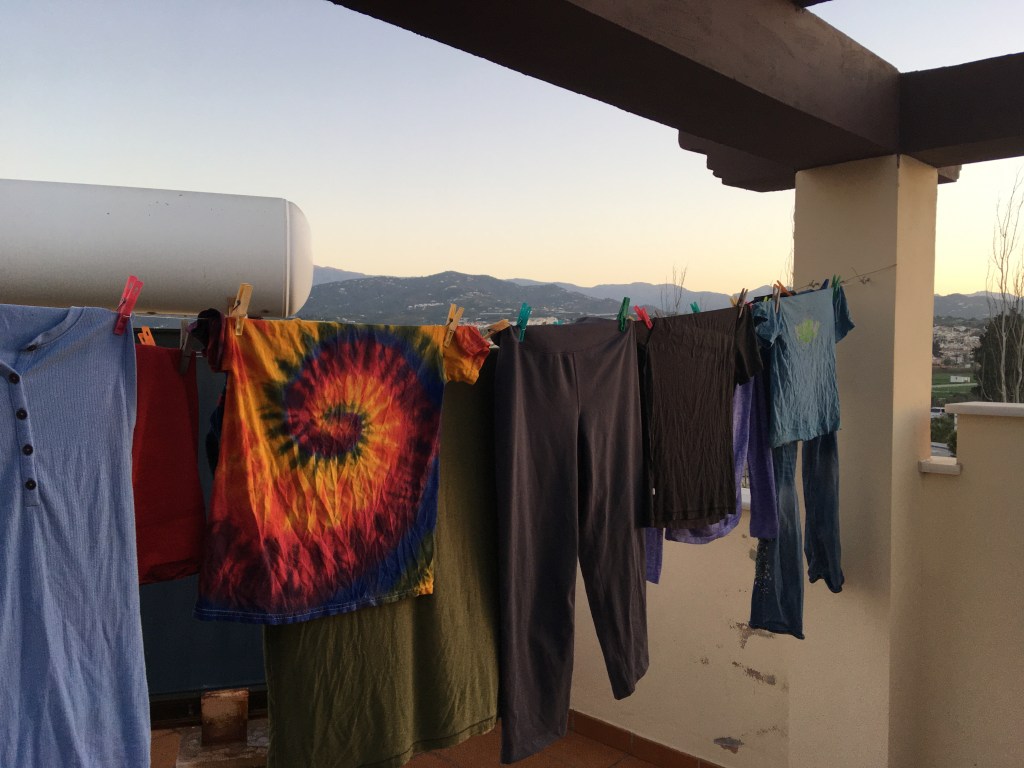
Oliver decided to color code the laundry as it was hung.
Leo was inspired after watching Karate Kid; “wax on, wax off”
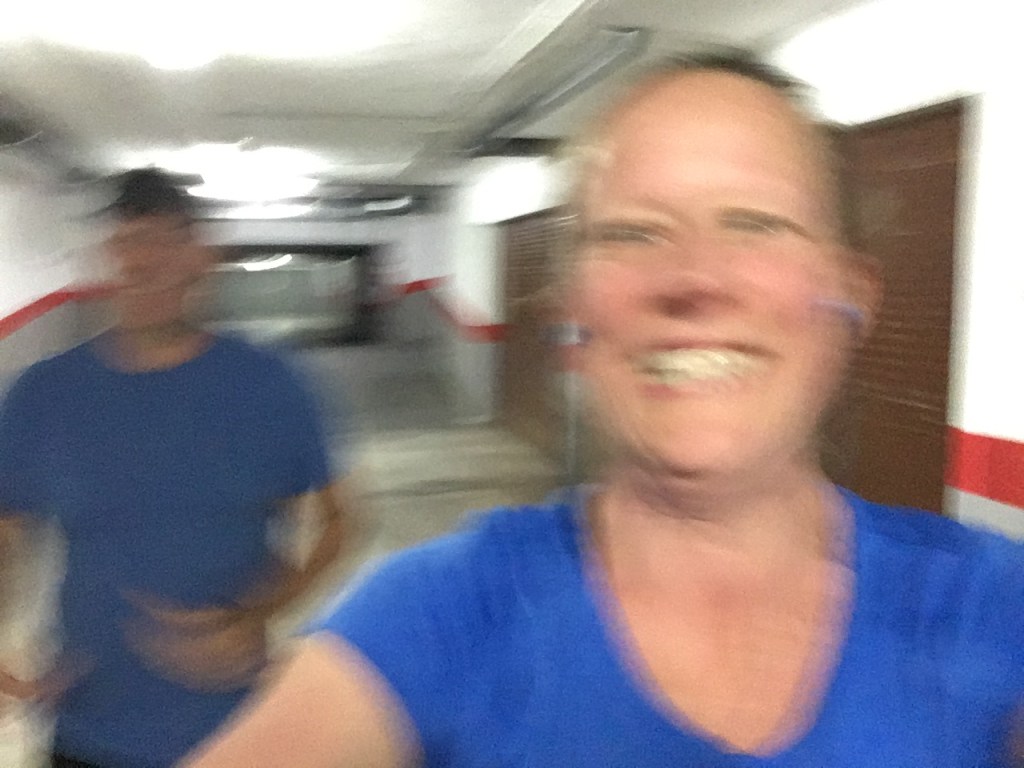
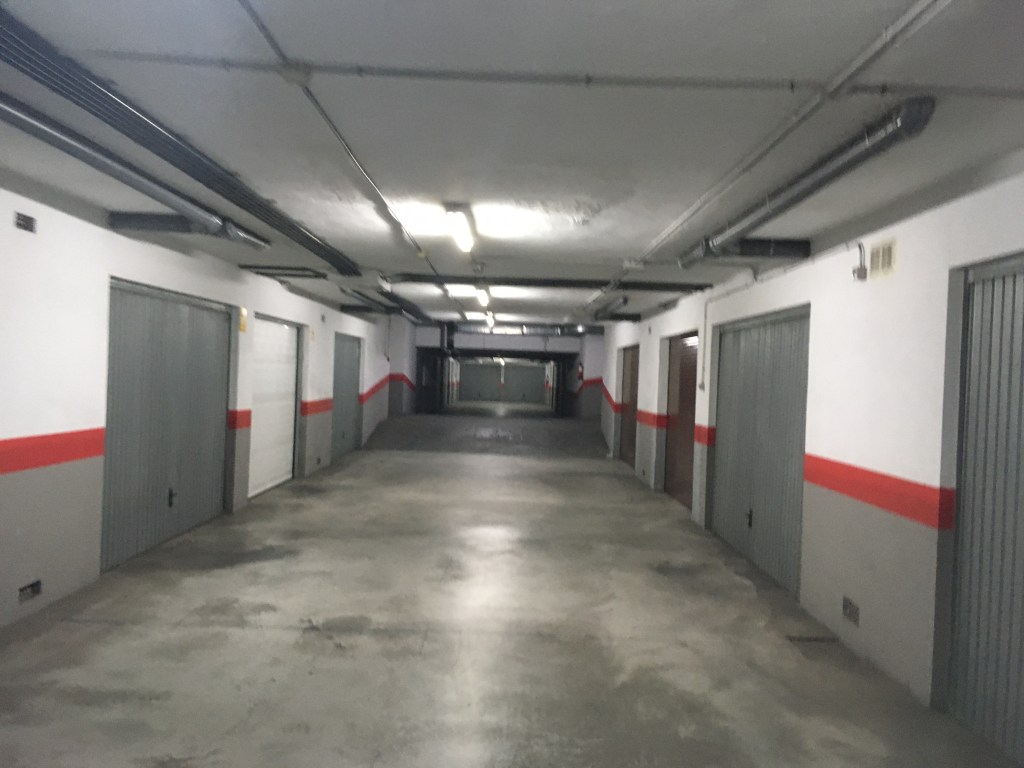
We created a new running route that involves running through the common garage (no one is there) and up our stairs to the upper patio and back down and through the yard.
so fast, we’re just a blur
new running trail
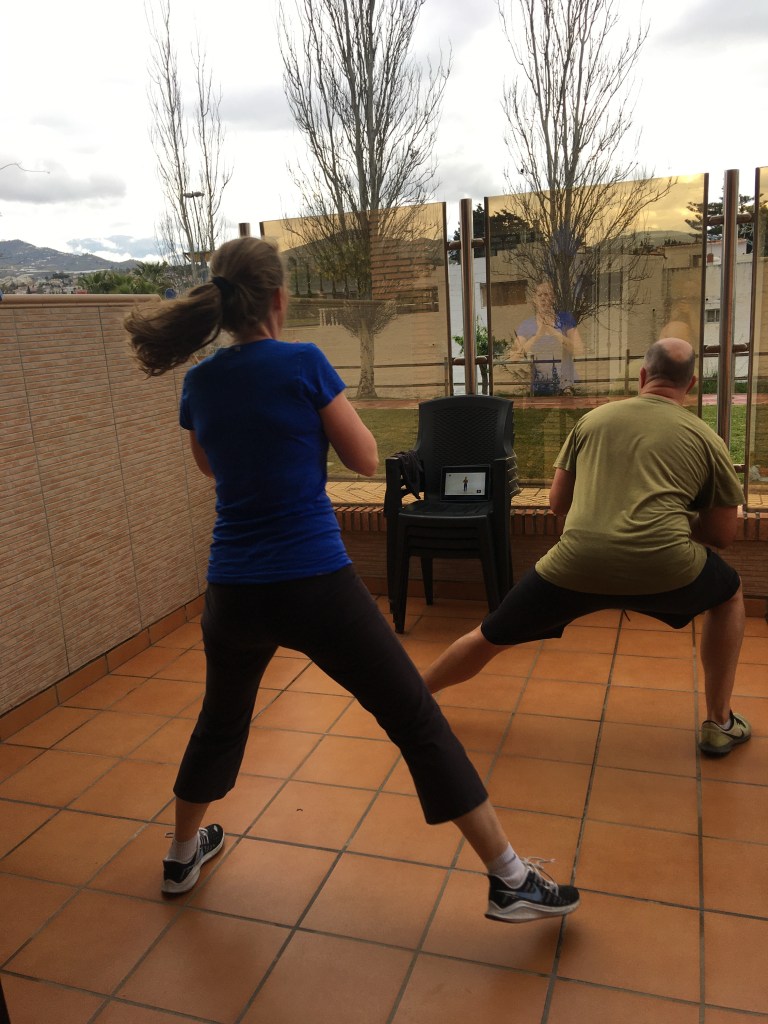
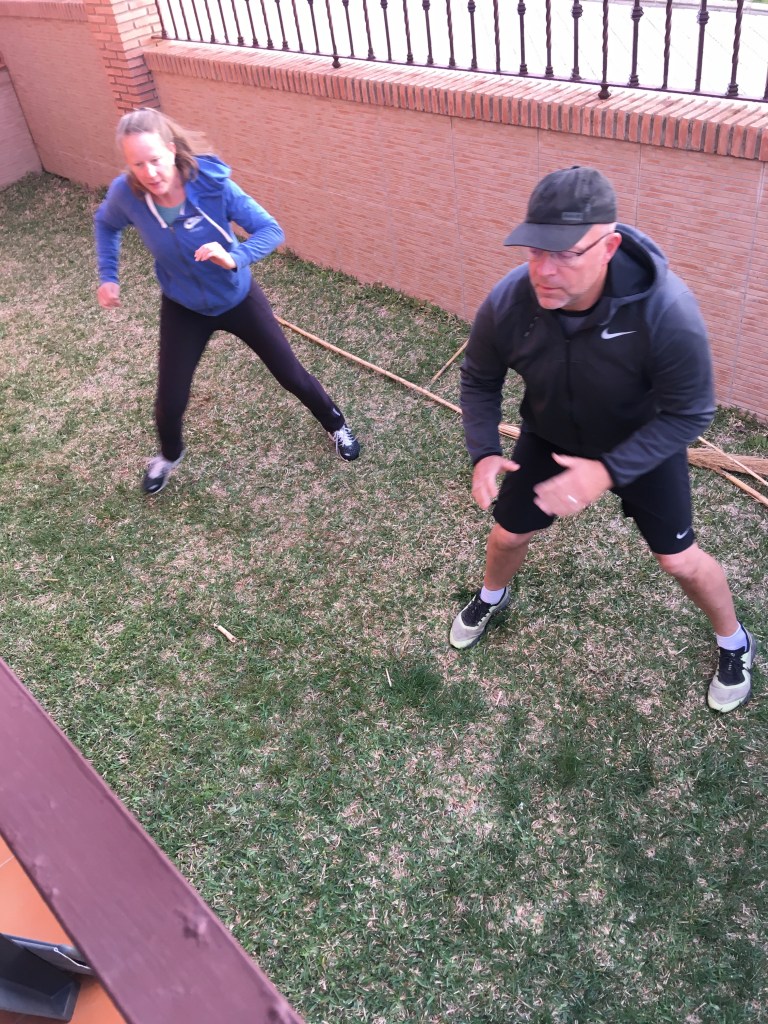
We’ve tried some HIIT workouts online out on one of our patios.
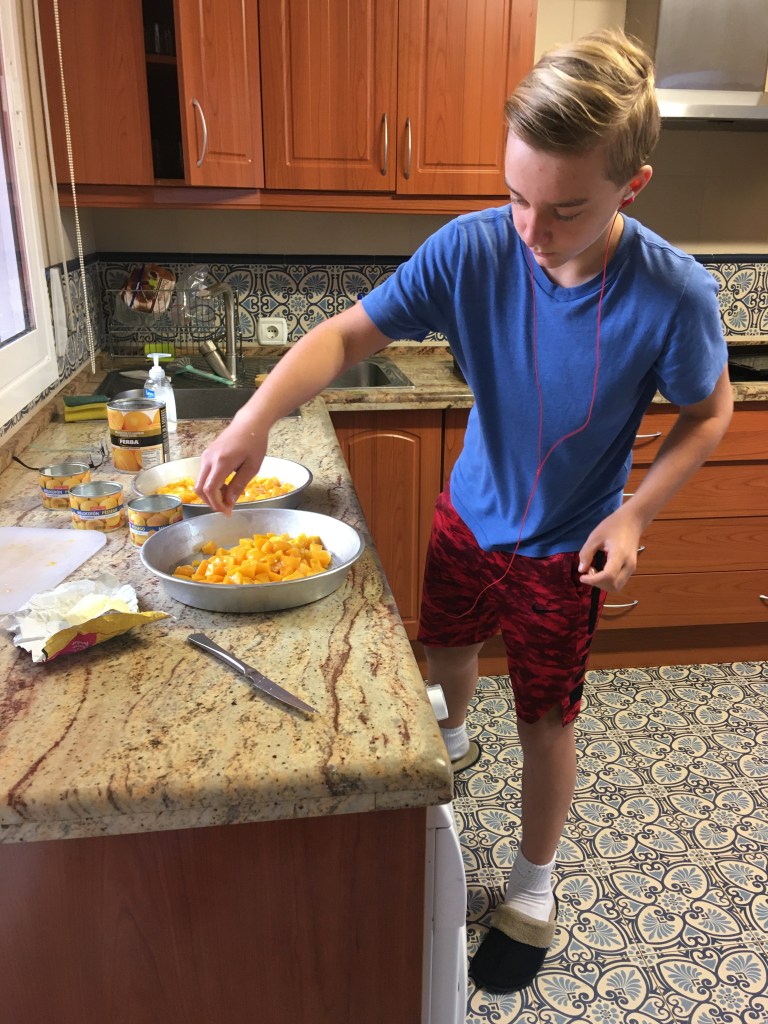
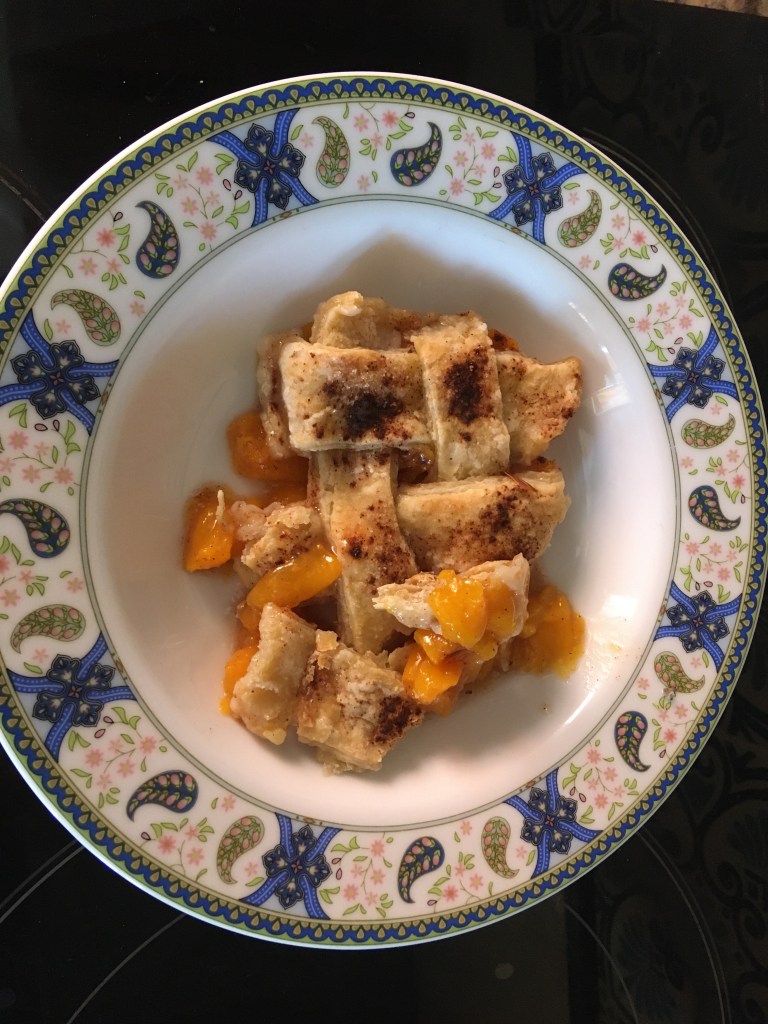
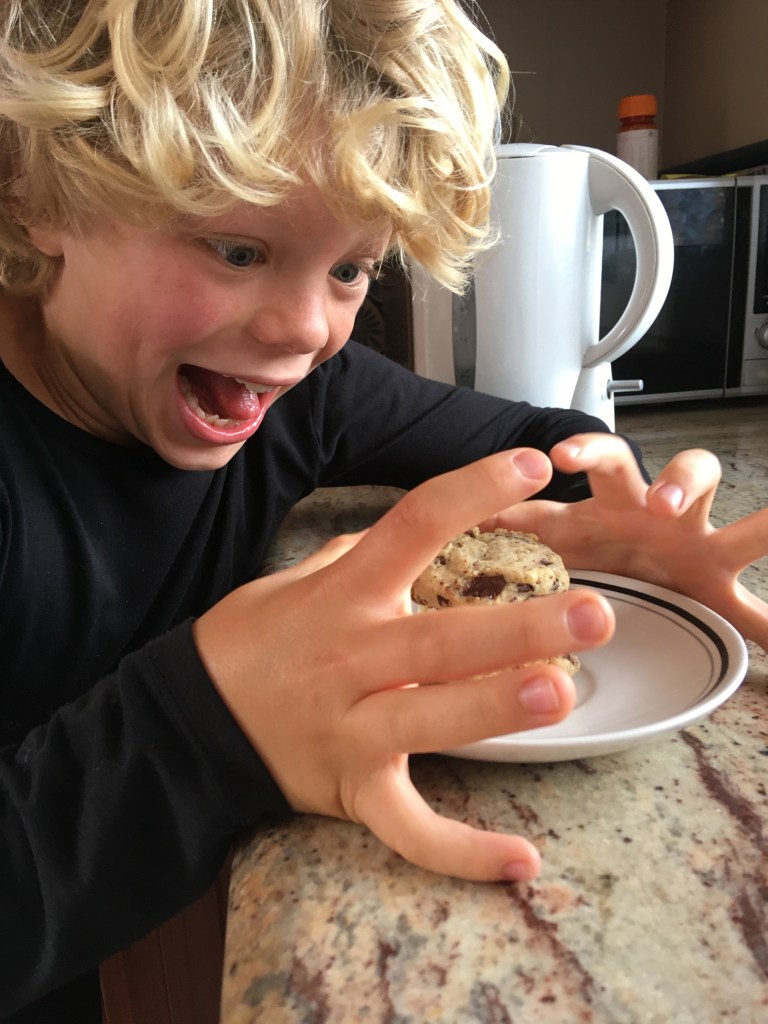
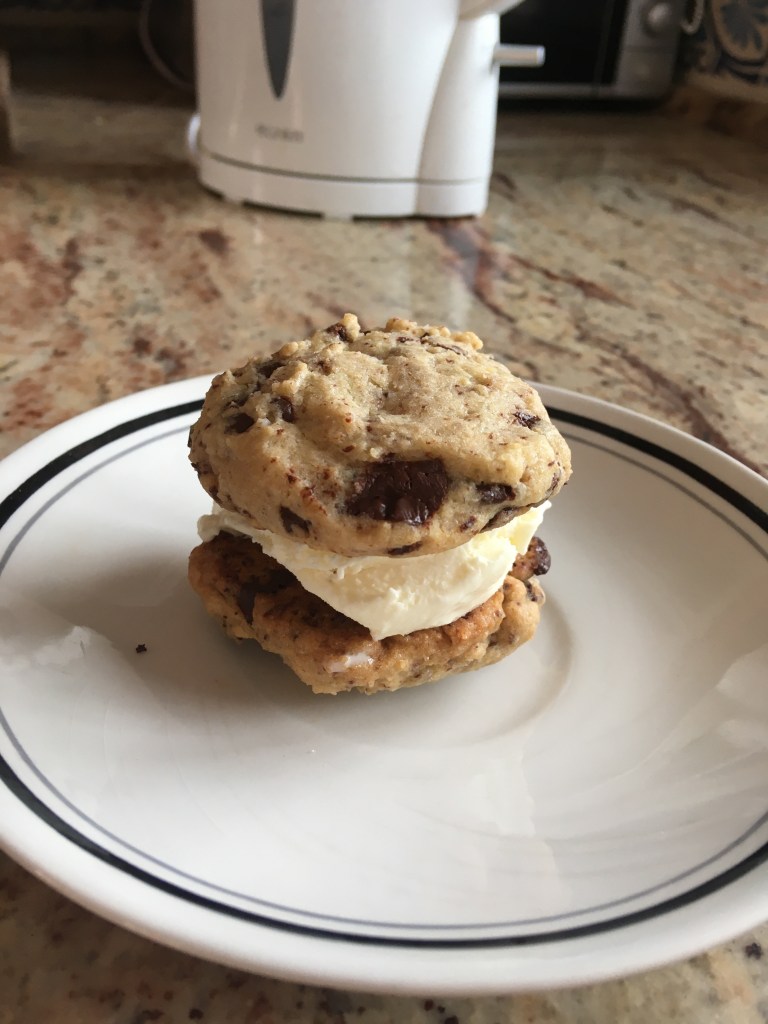
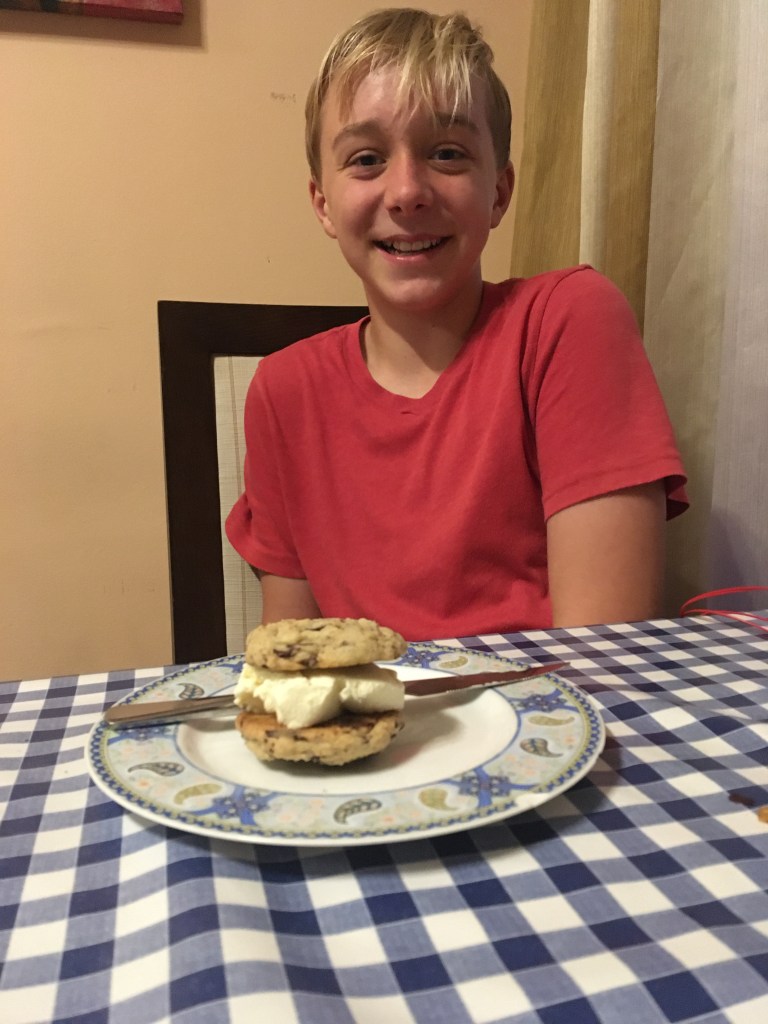
This week’s treats included my mom’s (and grandmother’s) peach cobbler recipe (first time I’ve ever made it, guess it is time for me to learn), and ice cream sandwiches using my sister-in-law Stephanie’s chocolate chip cookie recipe.
Our only outings have been to the grocery store, garbage bins and one trip to the post office.
Todd on the way to get groceries
taking out the garbage
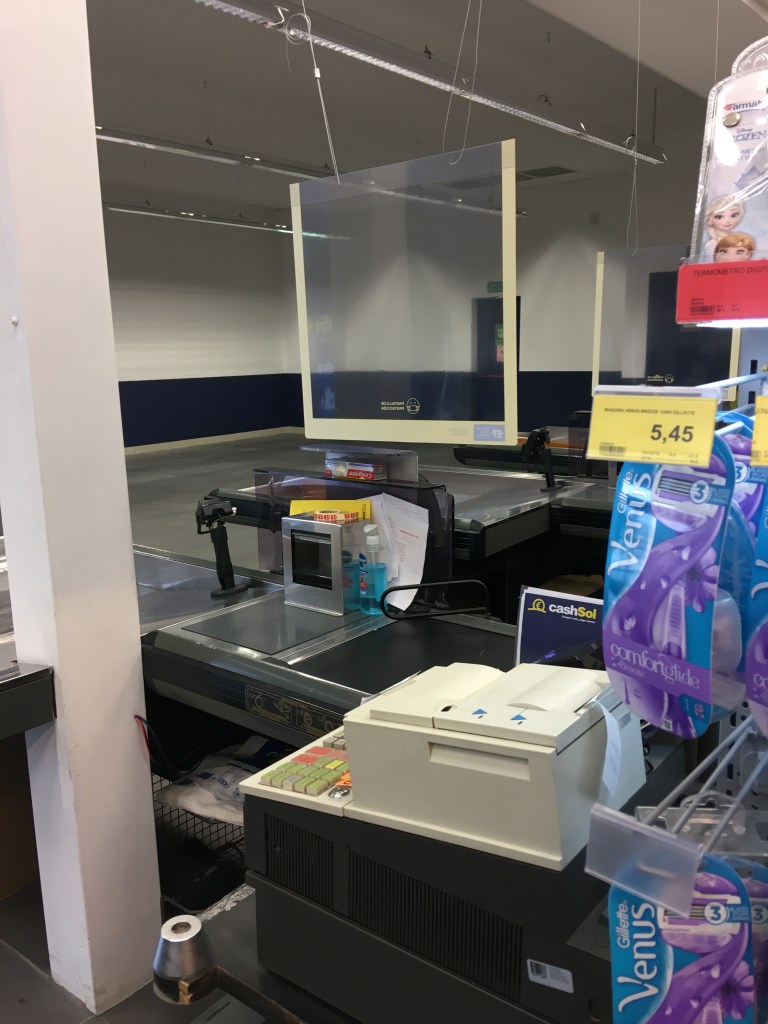
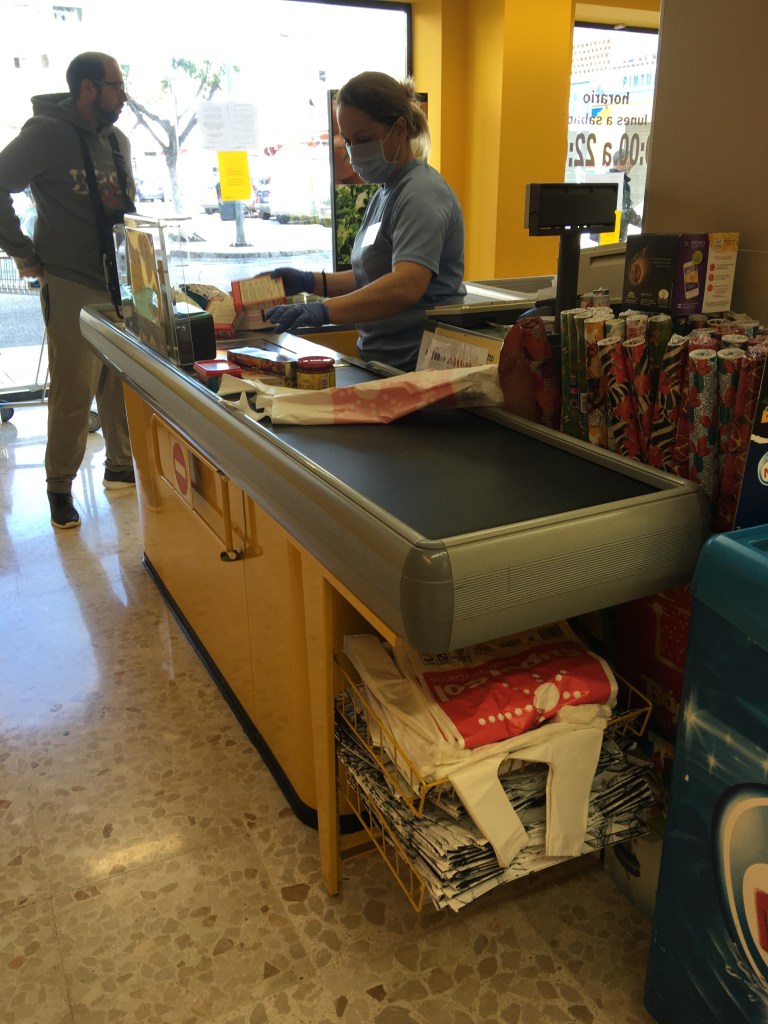
new cough screens for checkers
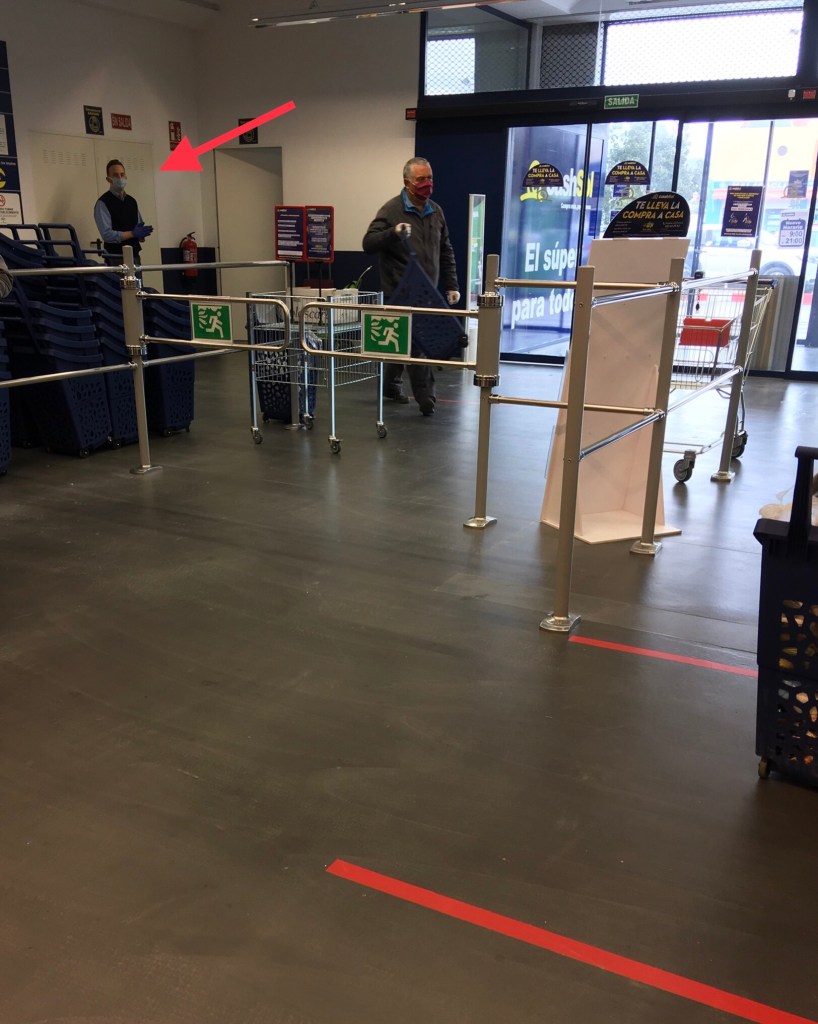
Every store has someone at the front door whose only job is to make sure you put on gloves. The red lines on the floor are to assure proper distance between shoppers
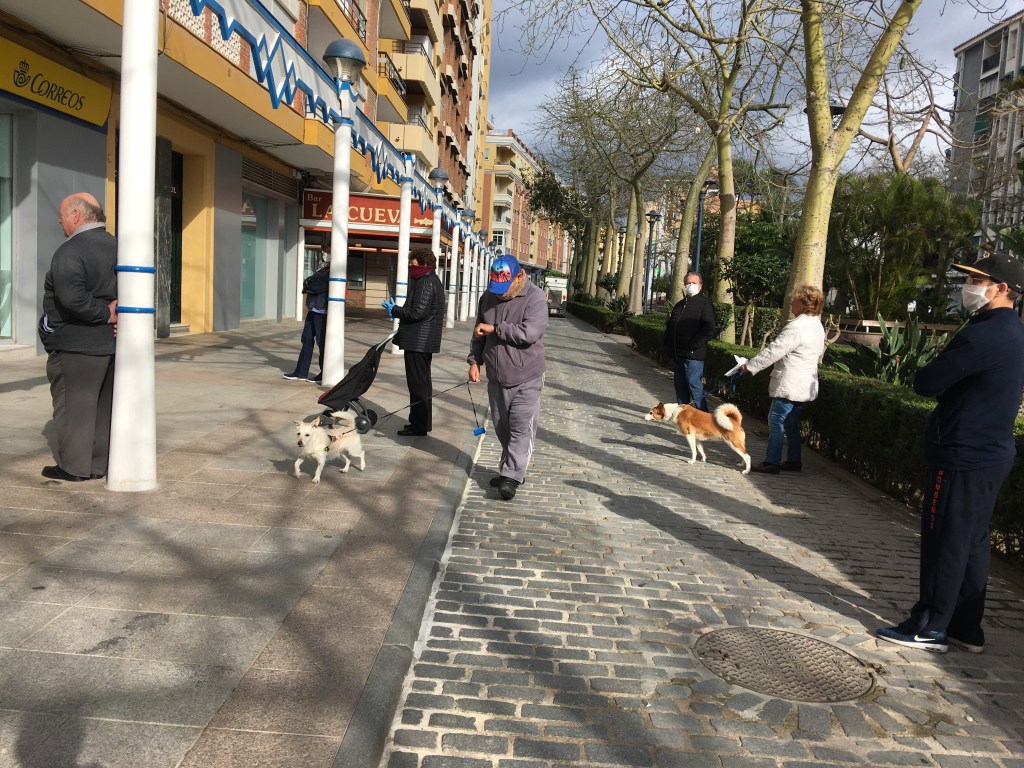
This is the “line” to enter the post office. It was really just a bunch of people spread around in front of the door, waiting their turn to enter. When someone new arrives they simply ask who is the end of the line and people just remember who they follow. It works amazingly well. Unfortunately, after waiting in the “line,” I was told they would not take my return package, since they are only doing minimal services and returns are not included.
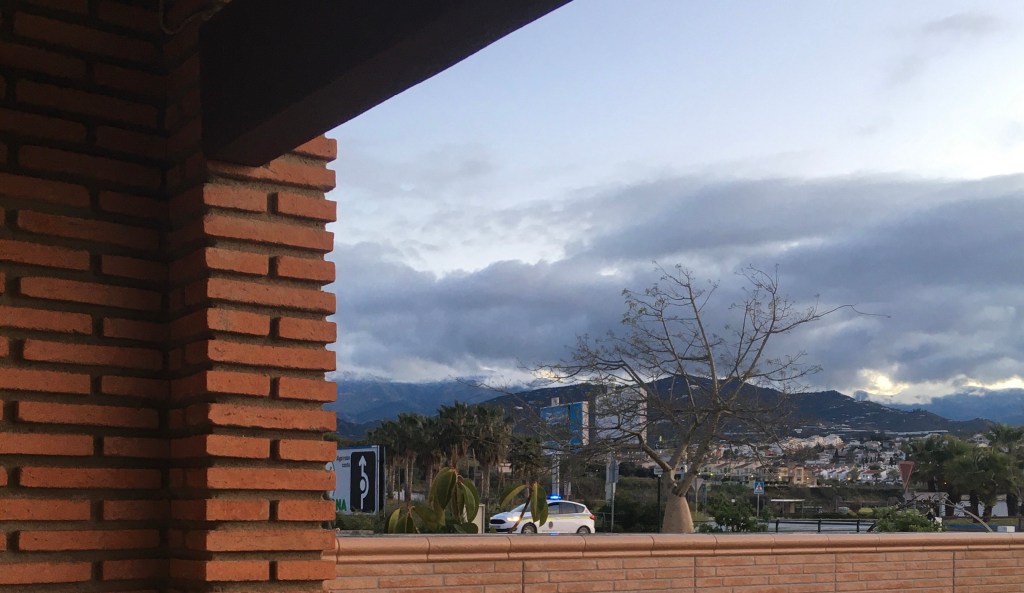
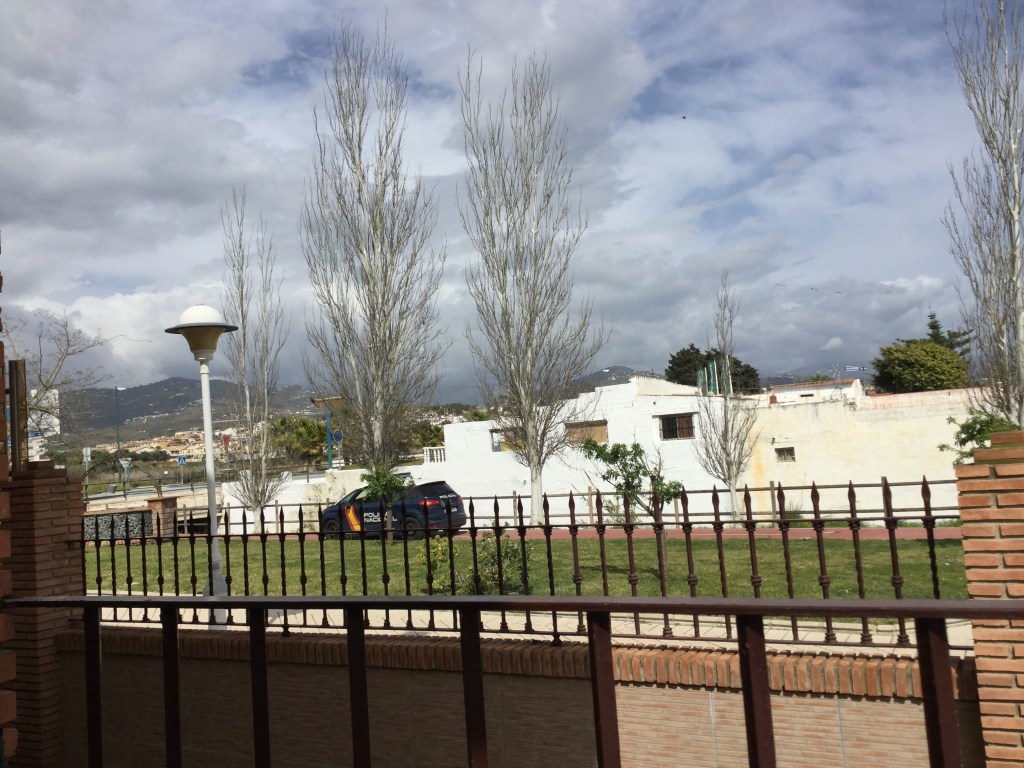
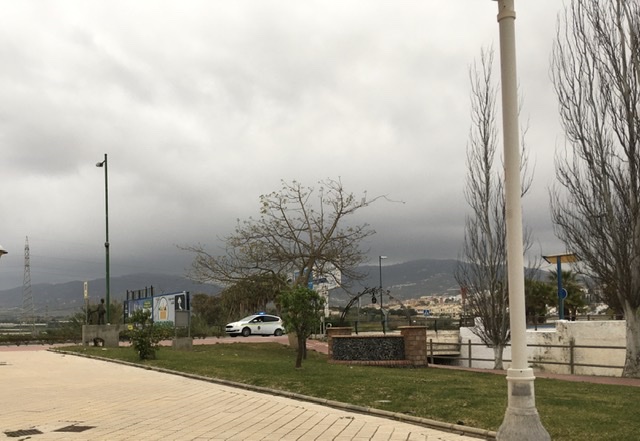
The police continue to patrol, multiple times a day. One morning I counted from my window 5 different police cars (including local police and civil guard) in 2 hours. People are only allowed to drive for approved reasons, and, originally, only alone. If you were found in a car with others you were fined €1000 per person. This was later changed so that you could drive with someone else in a car if each person was in their own row. People from Madrid, which is is the worst hit area, are still trying to leave and get to their holiday homes on the coast. Police have created 30,000 road blocks on rural roads to stop them, fine them and send them back. I even got stopped and questioned one morning when I walked to take the garbage out on my way to the grocery store. They wanted to know where I was going and where I lived, to make sure I wasn’t too far from home.
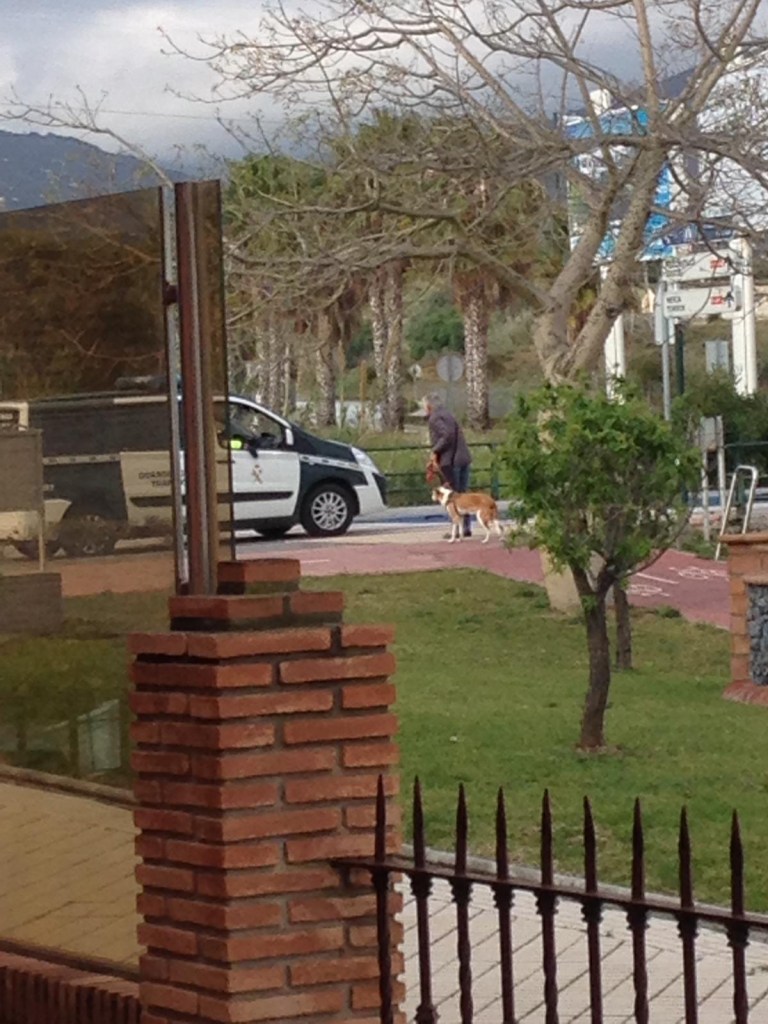
Police stopped someone walking her dog to make sure she wasn’t too far from her house. You are only allowed to go about 150m from home.
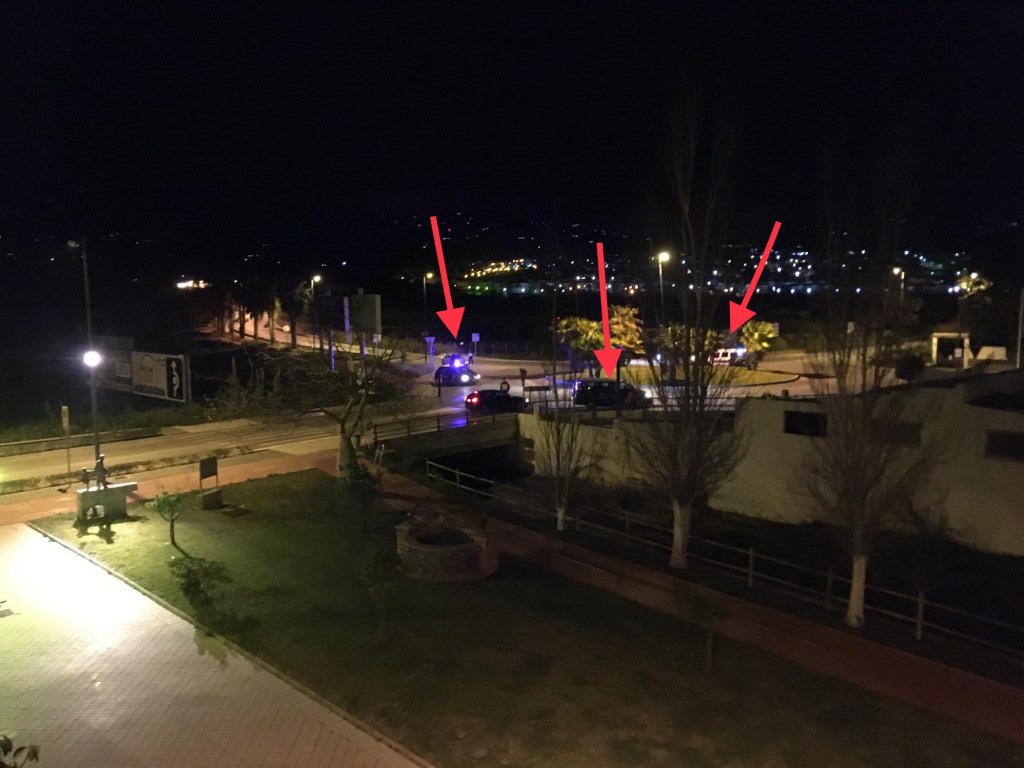
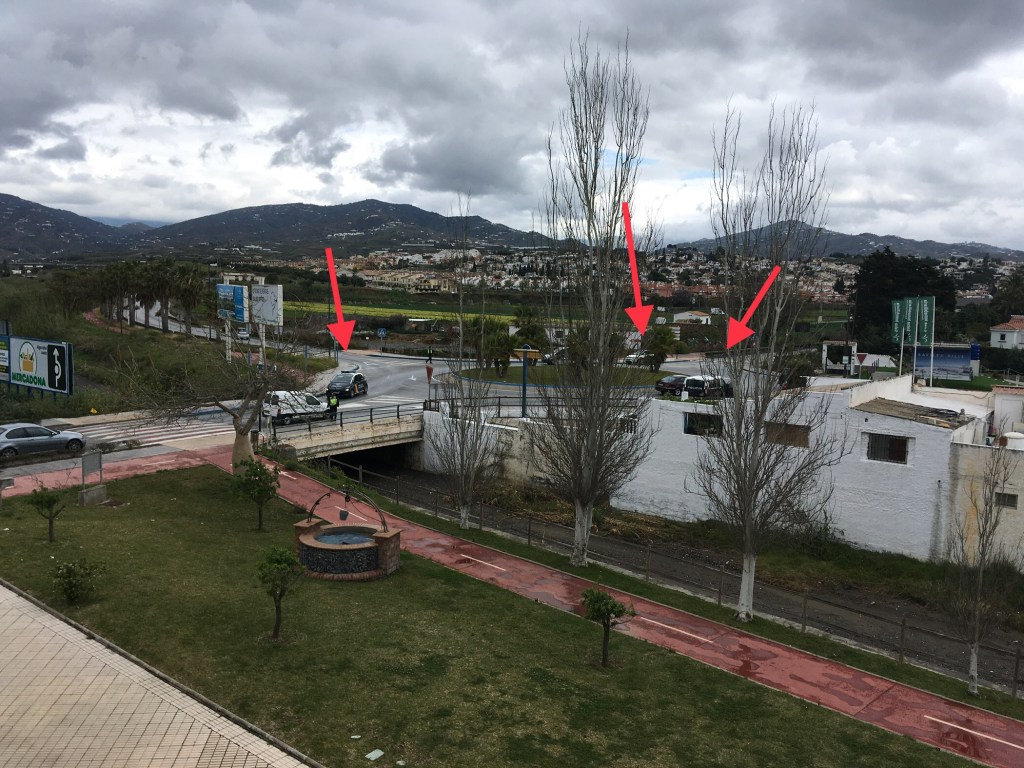
Police set up a road blocks behind our house to check for number of people in each car and where people were heading.
The national army with the help of volunteer farmers and their tractors have been systematically traveling through Spain spraying disinfectant on all roads and sidewalks. Our region will be sprayed this week. They are using a bleach/water solution and people are being told to keep animals inside.
The local buses continue to run so that people can get to essential jobs, but the ones that pass by our house are always completely empty.
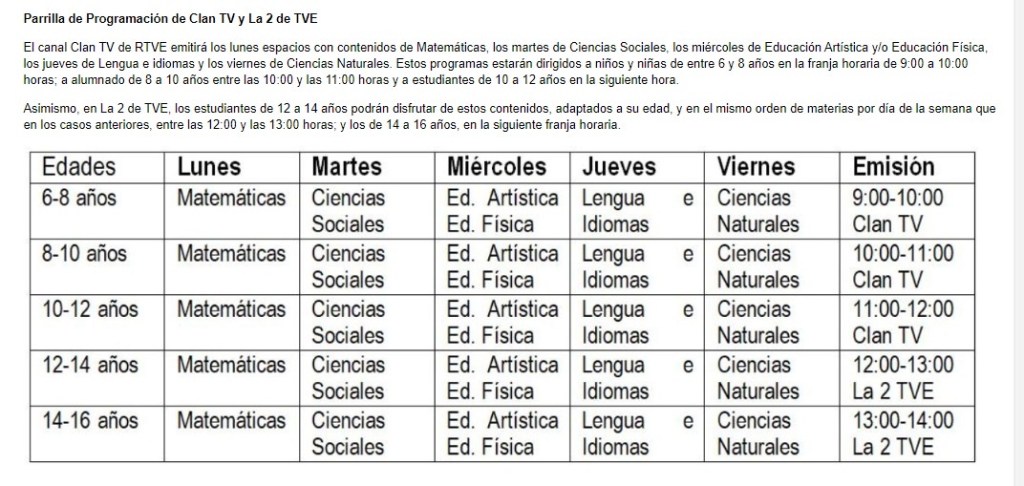
The region’s educational department created educational programming on local TV and the boys continue to receive assignments from their schools. There is unofficial talk that school will not resume until mid-May at the earliest or perhaps the beginning of June for the final 2 weeks.
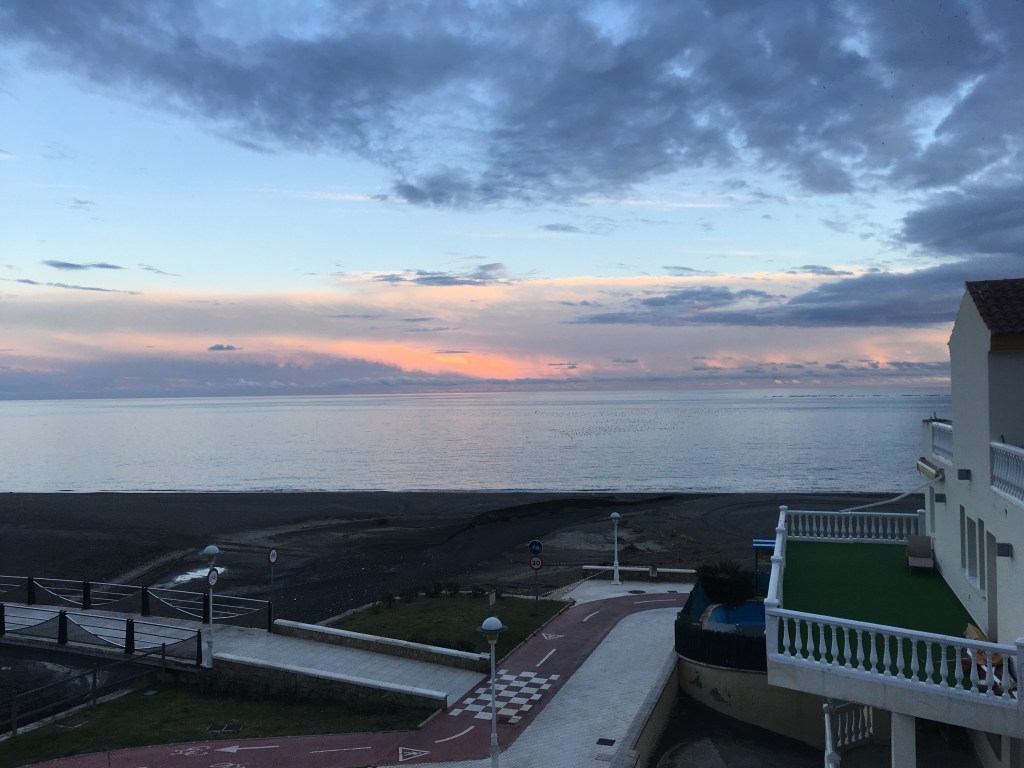
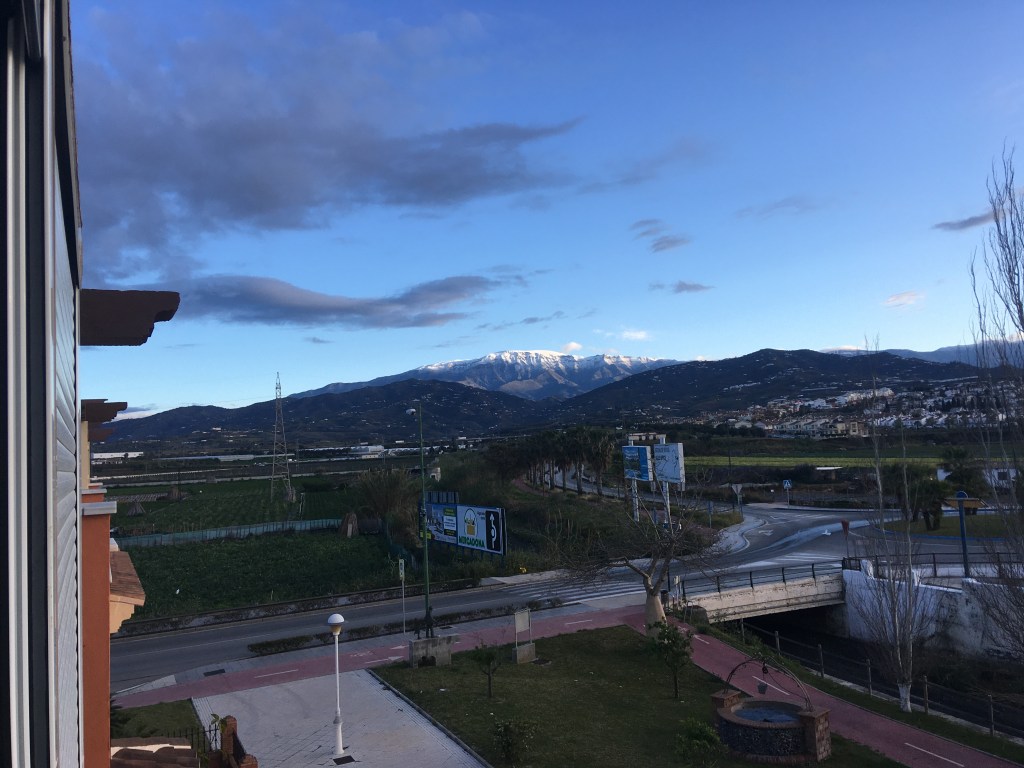
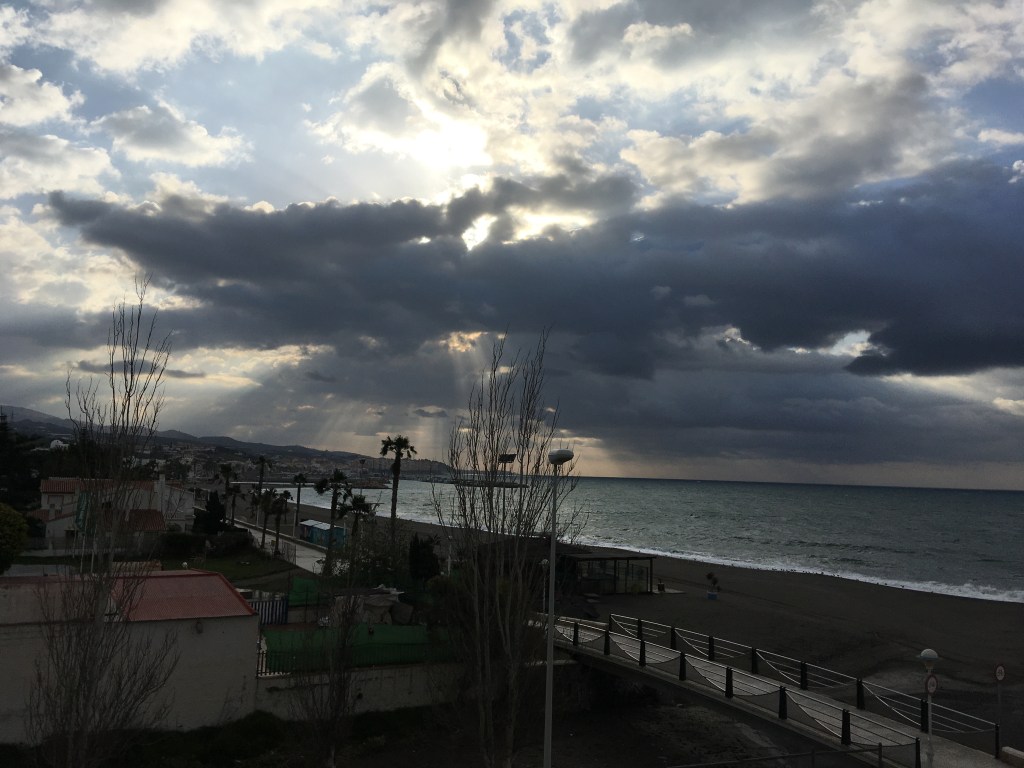
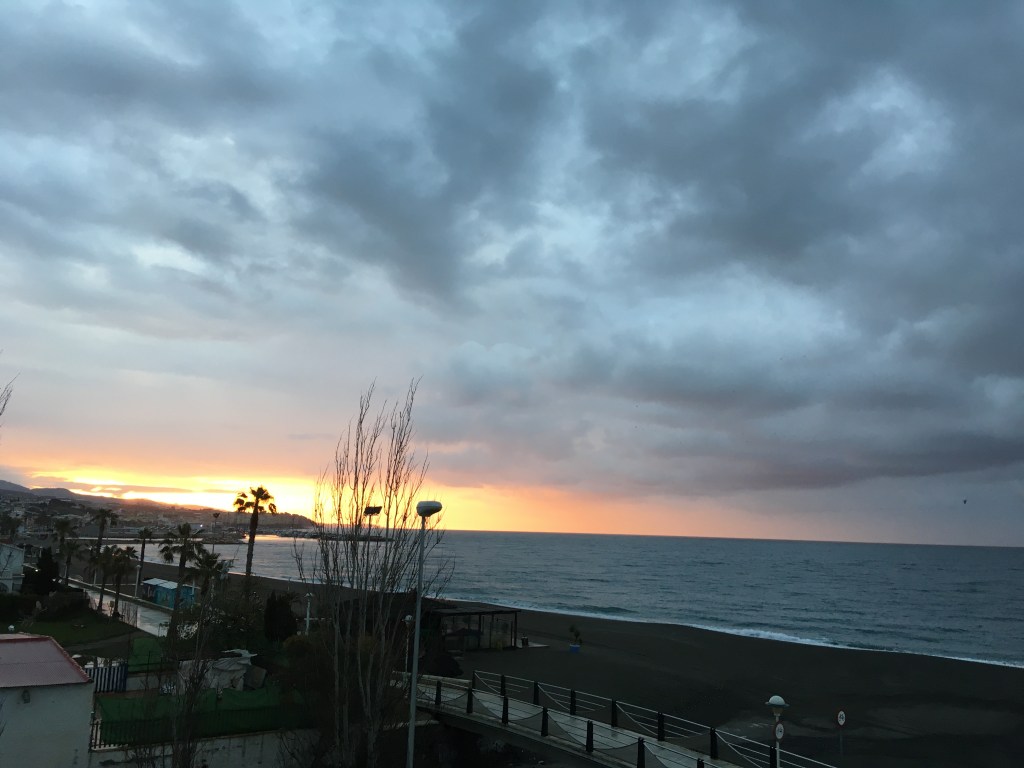
We try to get outside as much as we can and are still enjoying the view.
Snow on the hills behind us
We are very isolated and don’t really have any contact with anyone. We do occasionally see some of our neighbors and we wave and say hello. We continue to join the rest of the country each night on our patio to applaud the health workers. Last night our applause was accompanied by the sirens of police saying thank you.
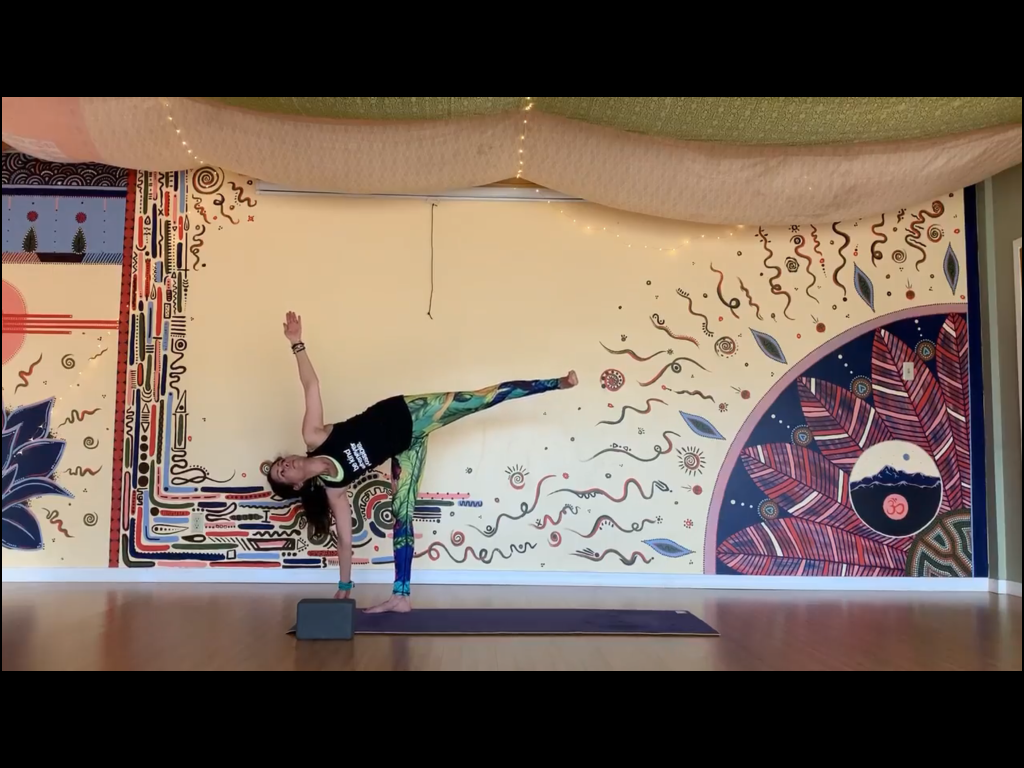
I’ve done some live online yoga classes with my studio from home and with my old workout buddy from Houston who is now a yoga teacher in New Mexico, which provide a welcome connection to the outside world.
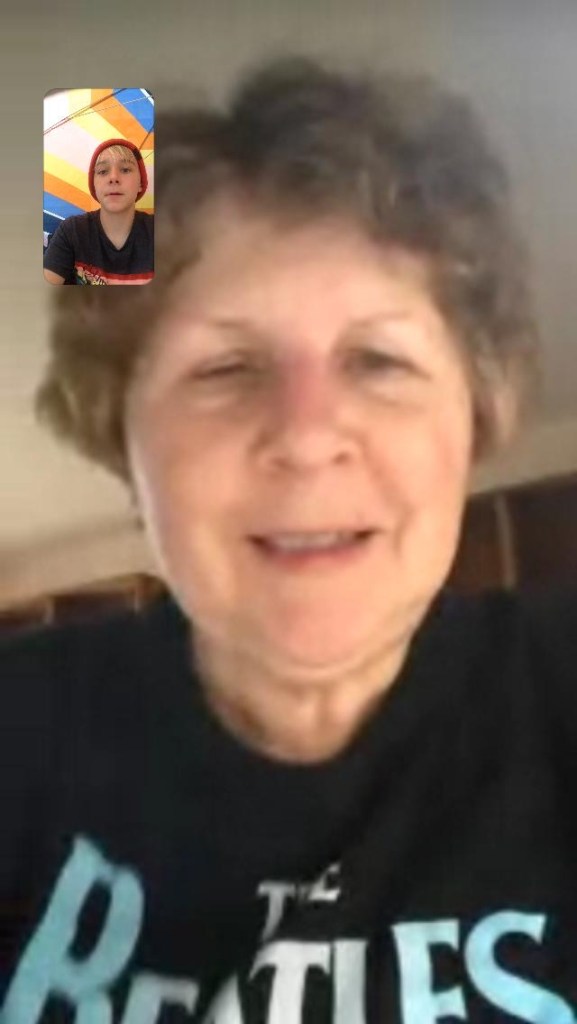
And we continue to enjoy all of our calls from friends and family too far away.
Daily Minecraft date with friends back home
Chatting outside in the rain
Three of us felt a little sick this week, but no fever, cough, or loss smell, mostly fatigue and a sore throat. Hopefully it is just some other little bug or a very mild case.
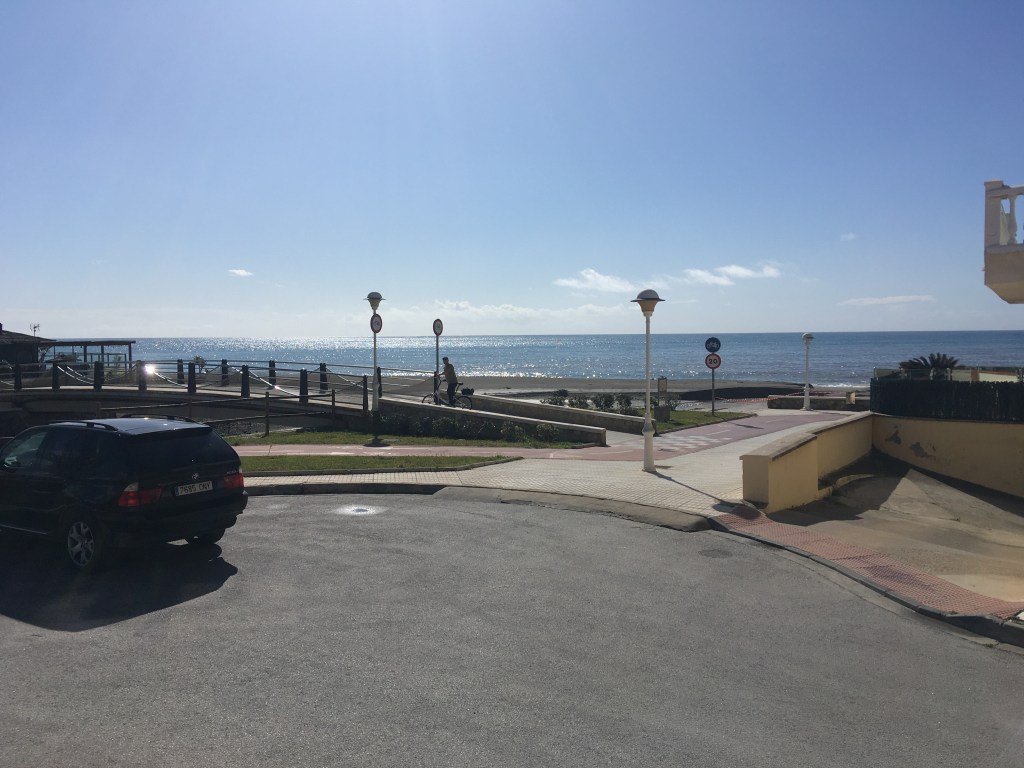
I asked the boys if they were allowed to do one thing they currently couldn’t do, what would they choose. They both answered “go to the beach.” I agree. Actually, Oliver wanted to buy the section of beach in front of us so it could be our yard and we could go whenever we wanted.
I know that similar types of lockdowns are in place in the U.S. now. It is difficult, but it is so necessary. Stay strong, stay healthy, and stay isolated everyone! ❤️
This was written weeks before our current situation…I’m just getting around to post it.
When planning my 2 trips to Spain, Michele asks me what I want to see. I say I want to see and do their daily life. This is what school mornings are like:
First Michele creeps downstairs six-ish. Being very quiet, hoping not to wake kids, and carrying a large hamper of dirty clothes (2 sets a day on soccer days for Oliver). Starts a load of laundry. It takes at least an hour and a half. Longer when the washer decides to recycle itself. Laundry has to be hung up. Usually outside on the third story patio. (Say thank you to your dryers.)
She unloads the dishwasher and makes snacks for morning “recess” for the boys.
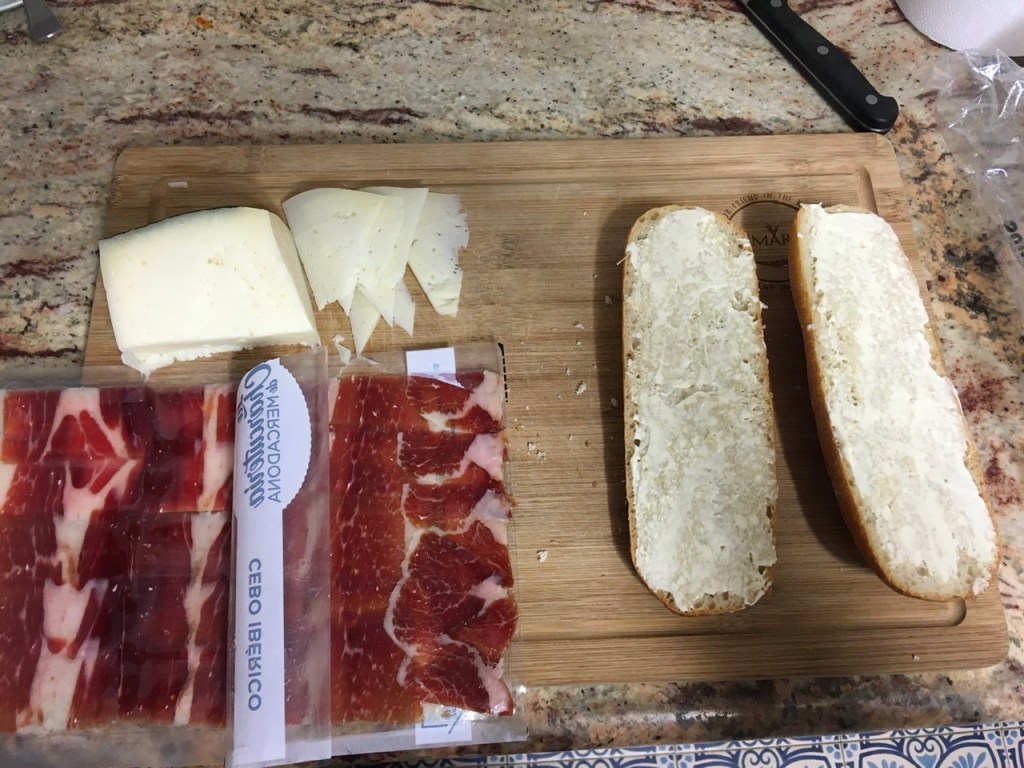
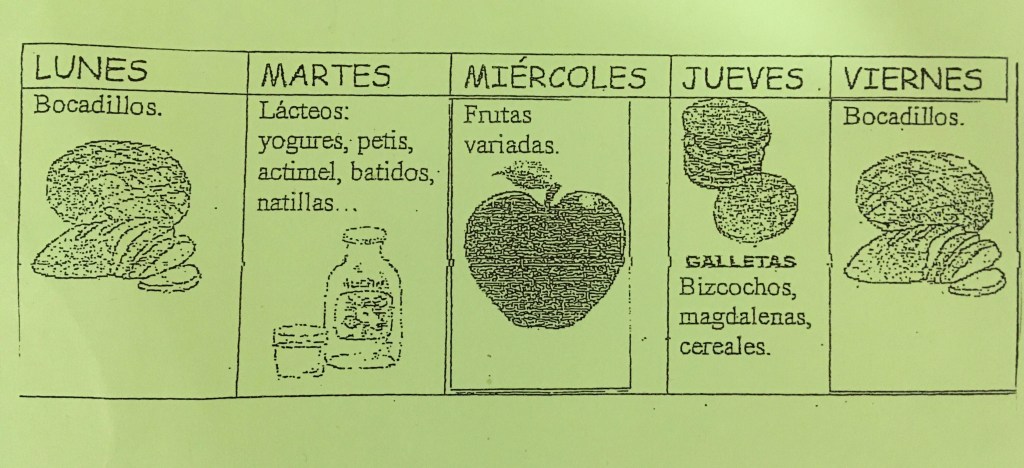
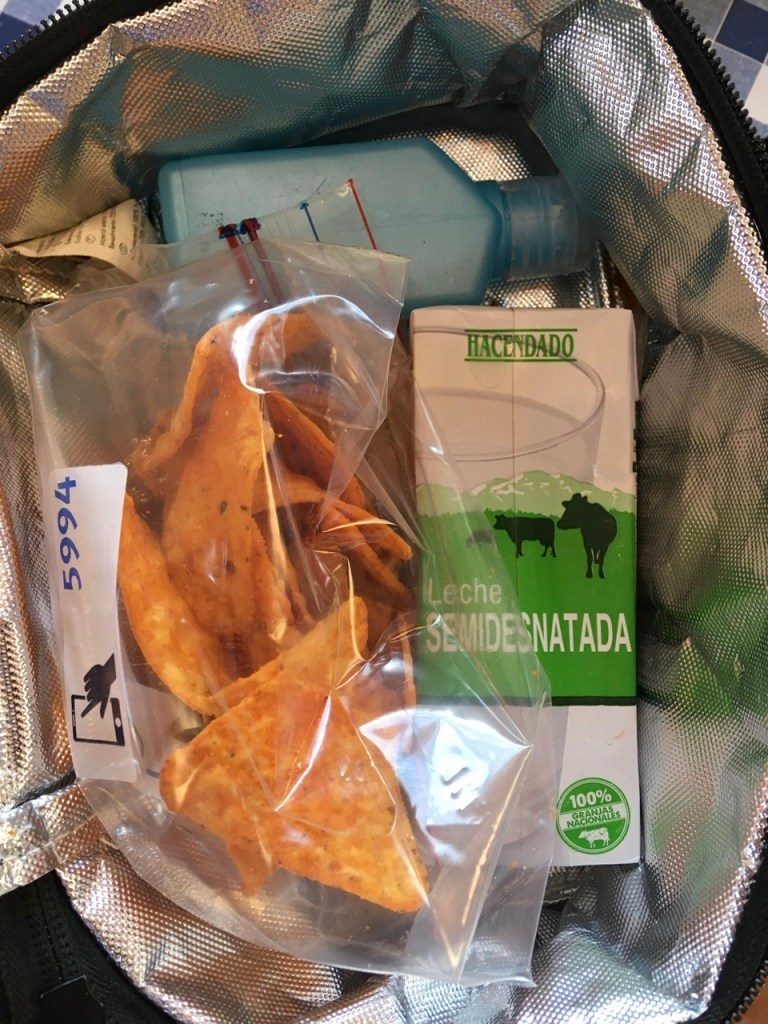
Just about every kid brings a “bocadillo,” which is a bread, like a small baguette, with Iberian ham. Oliver wants to be like the Spanish kids so he eats the same, although his is very atypical with some Manchego cheese and mayo.The government is trying to encourage kids to bring something other than the typical bocadillo and provides a suggested menu that includes a bocadillo only on two days a week.Leo is not at all interested in the bocadillo. This is his “snack” on dairy day. We rebelled a little by providing chips to accompany the milk (and of course there is a small bottle of hand sanitizer included, since they do not provide soap at school).
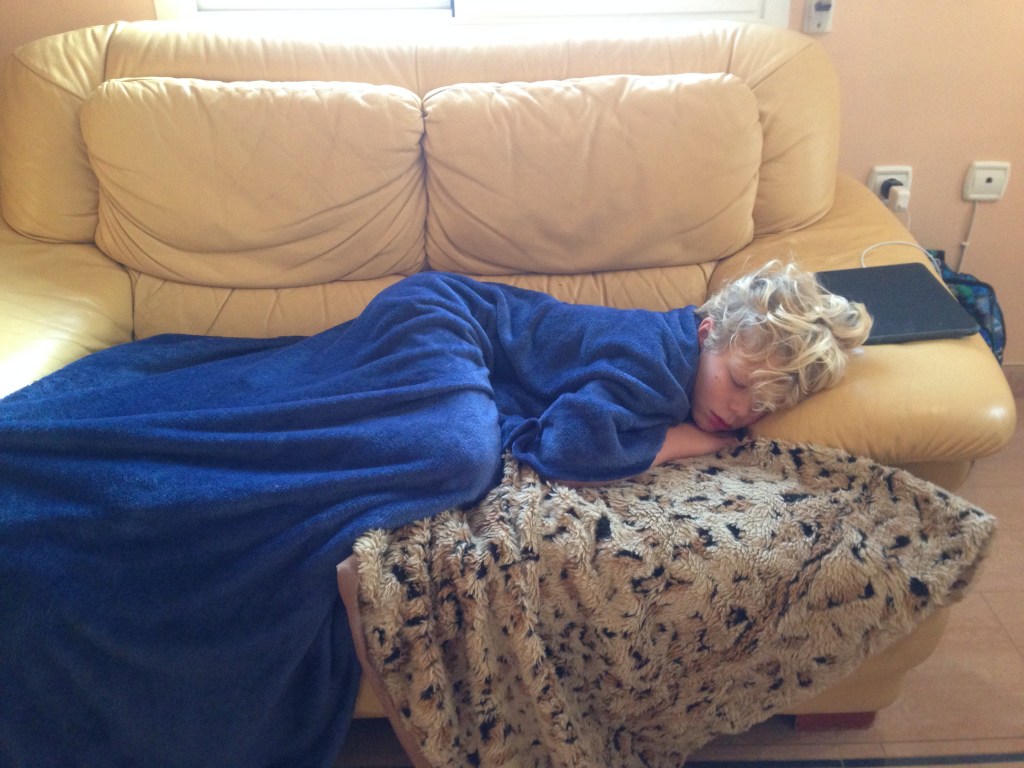
Then starts breakfast. Somewhere in there Leo comes in wrapped in his blue blanket, usually with his earphones on.
“What’s for breakfast?” He always wakes up hungry. And she starts the first parenting coaching of the day. “Good Morning Leo. Say ‘Good Morning Mommy. Nice to see you.’” A muttered “Good Morning. What’s for breakfast?” Anything made on the griddle is good.
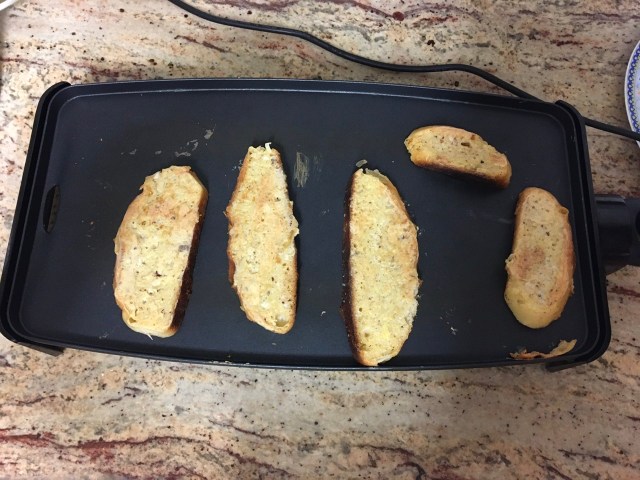
French toast made with Todd’s homemade challah bread is a favorite.
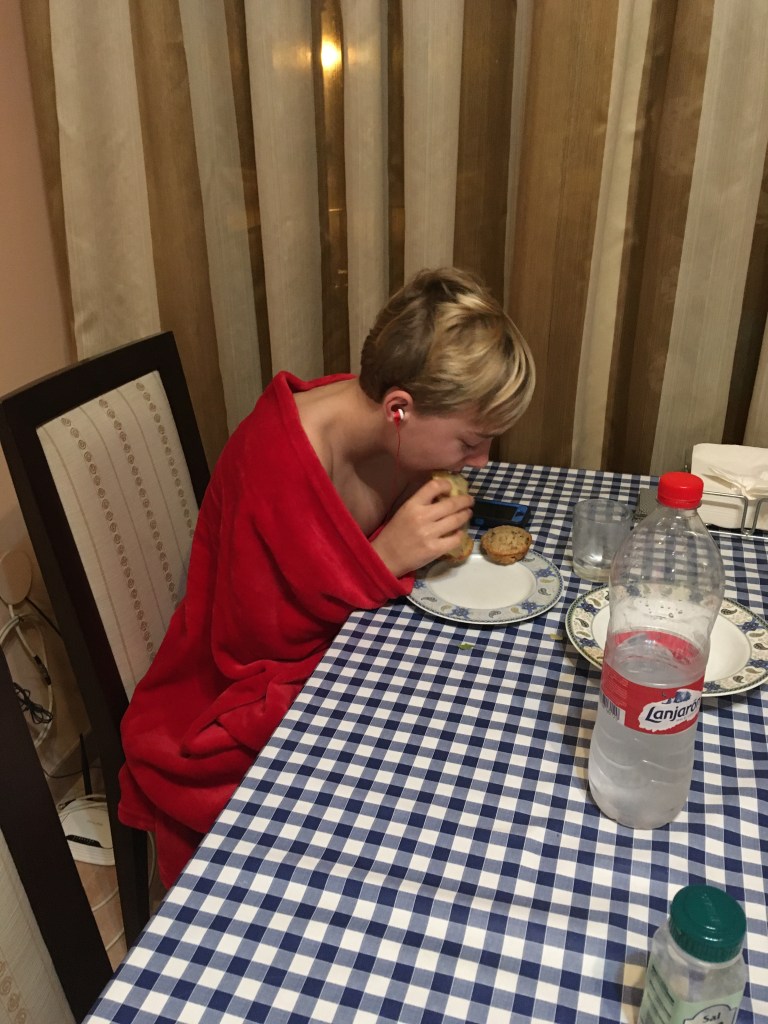
Then it is time to get Oliver up. Never easy. He just can’t get to sleep at night. He comes down silent, wrapped in a red blanket. Drapes himself over the table. Finally says “I’m so tired”. And generally has some comment about what he thinks Leo should or should not be doing (another chronic parenting issue). He has to be urged and prodded to eat, dress, do teeth, get his school bag ready.
Since Mom was here he has gotten quite independent about getting ready. He’s even gotten up a few mornings without us needing to wake him.
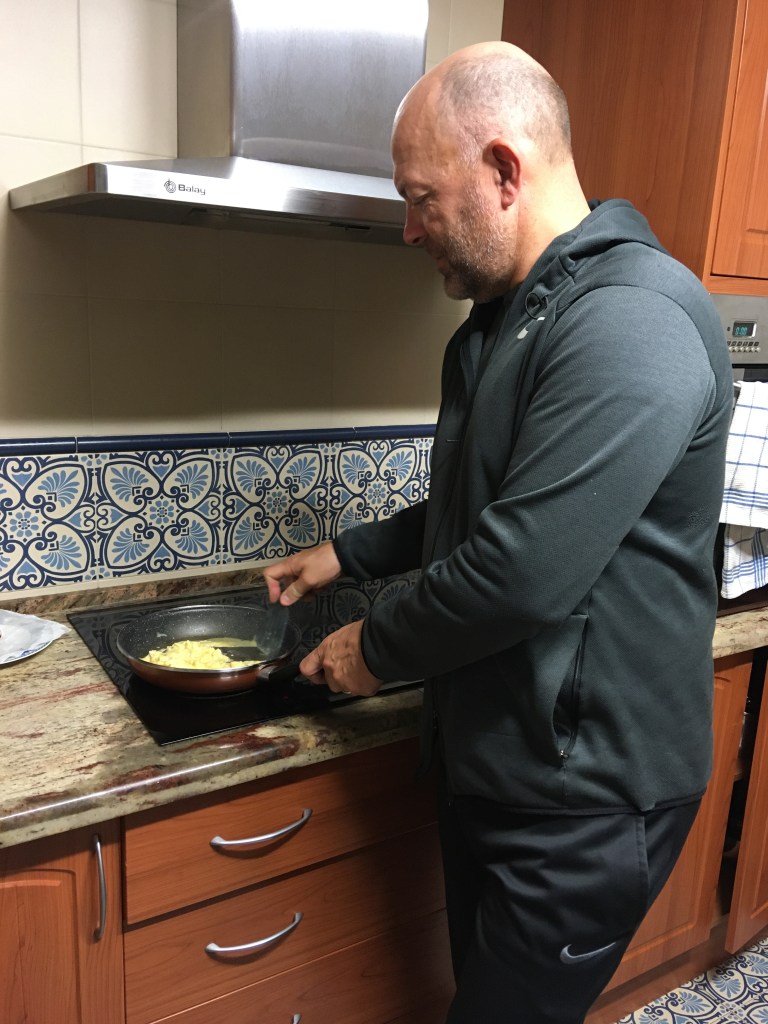
Then Todd comes down amid all this. Often makes eggs for all. Starts first political or Tesla commentary of the day.
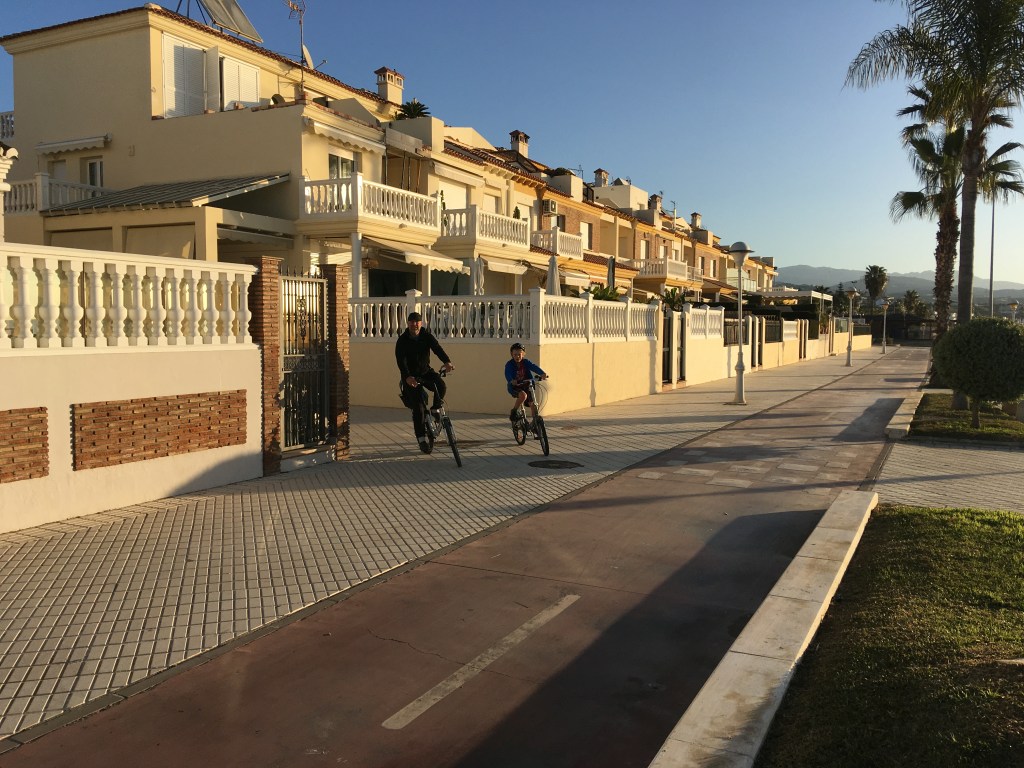
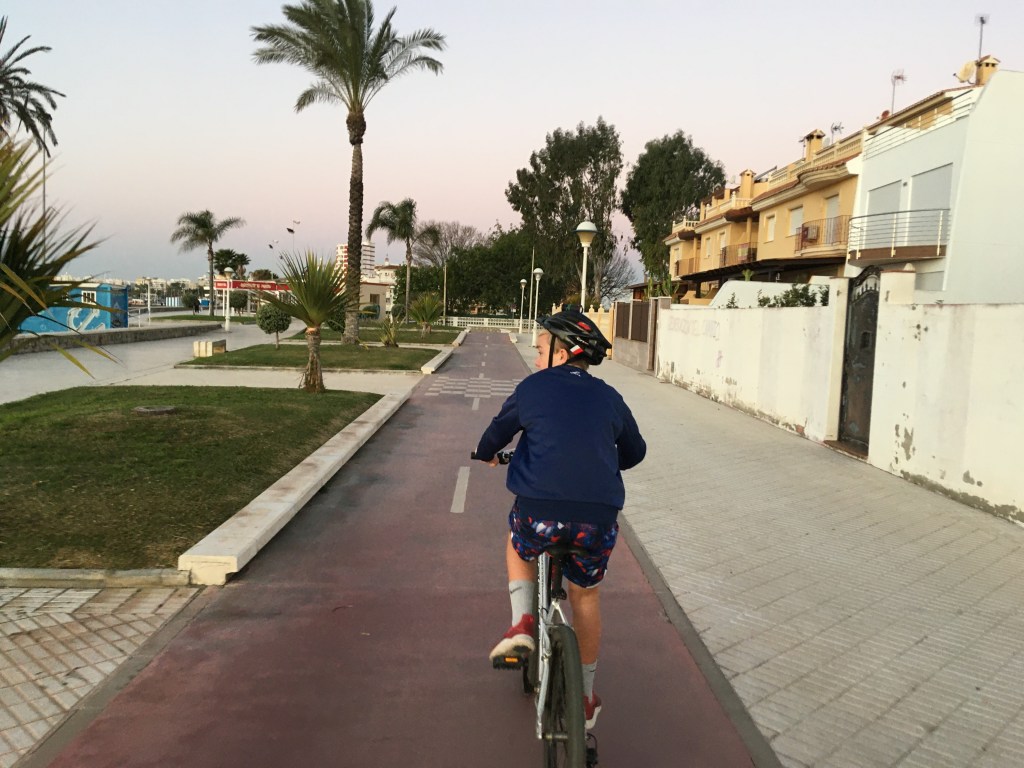
There is a brief discussion as to who is escorting who to school. A parent cycles with Oliver first about 8. The other parent cycles with Leo about 9. Rain or shine. Often in the dark. Leo is known for cycling so slow he almost cycles backward.
Oliver, who dresses very sharply and with his hair well combed, is known for stopping about 2 blocks from the school, handing his helmet to his parent and hugs there (not at school in seventh grade). Not sure what has happened to that well combed hair.
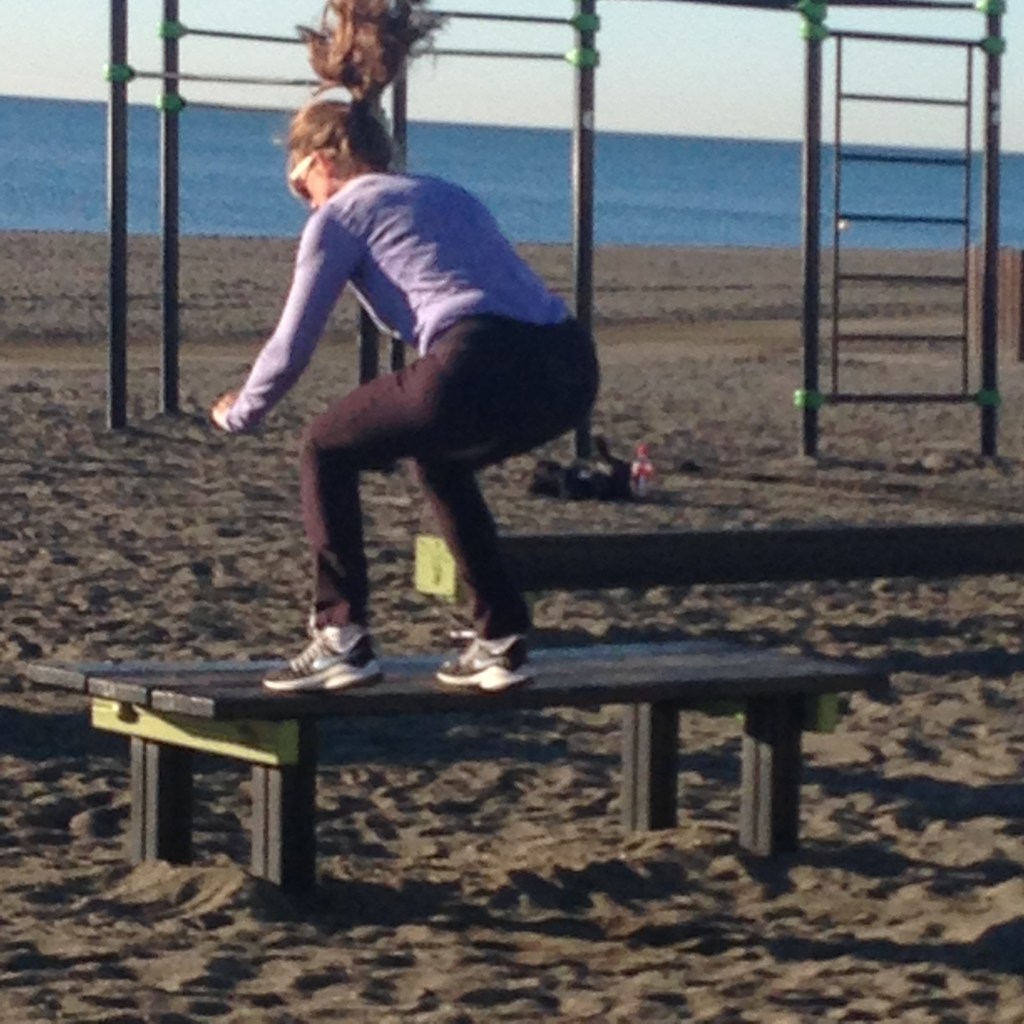
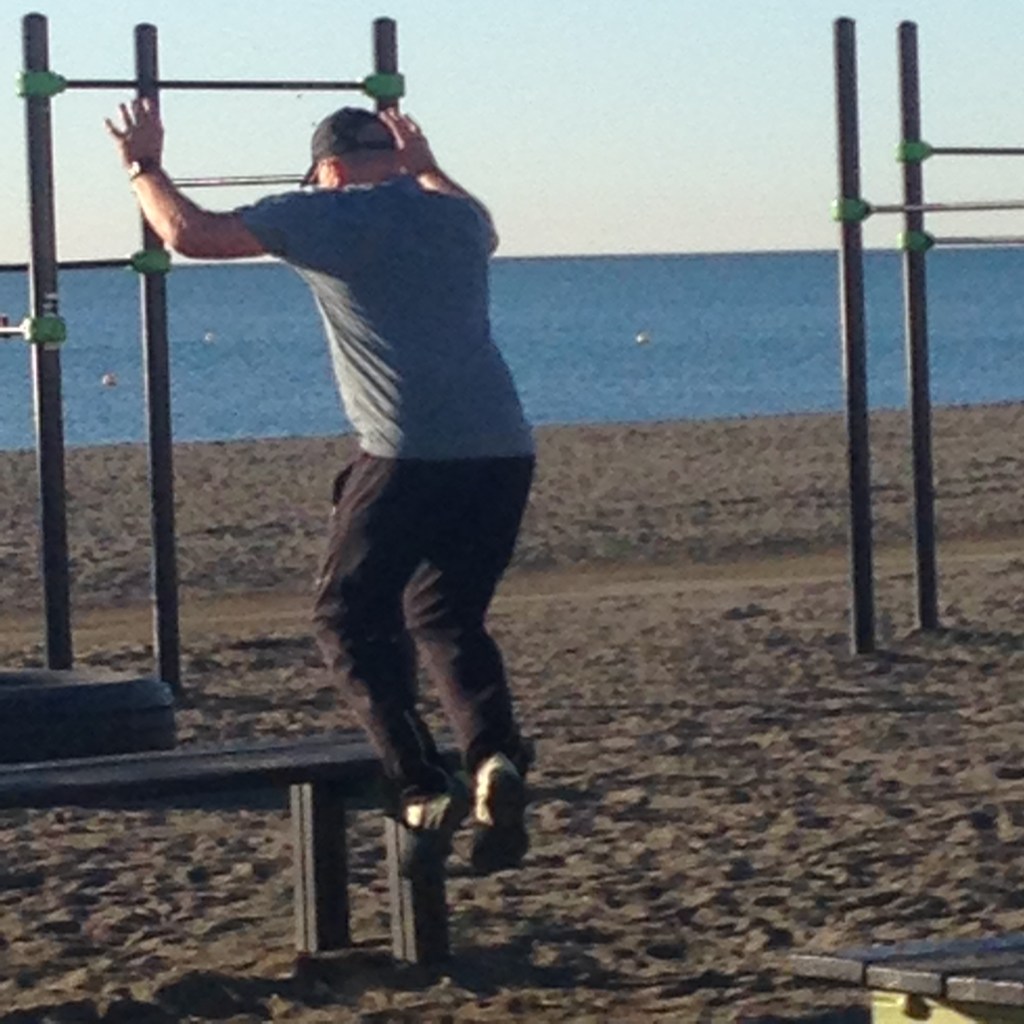
Then comes workouts and grocery shopping. Michele goes for a run, sometimes Todd does too. But not together. Different paces. On the beach is a fine “gym”. Many different kinds of bars at all levels, balance beams, etc. They have a tough routine they do together.
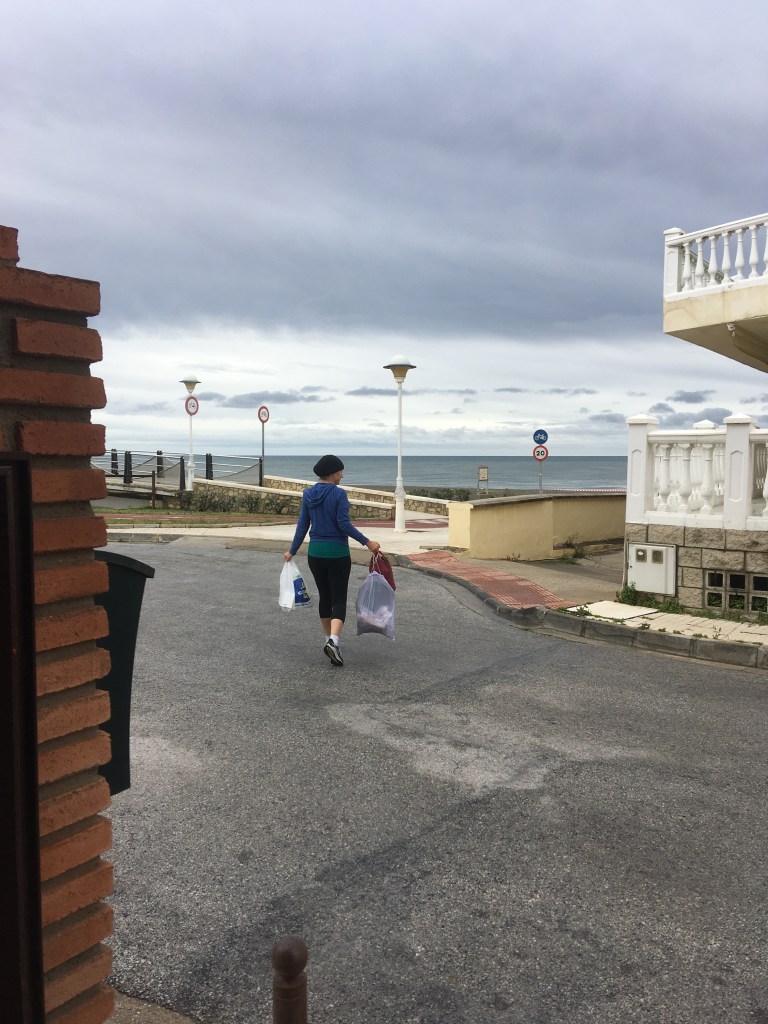
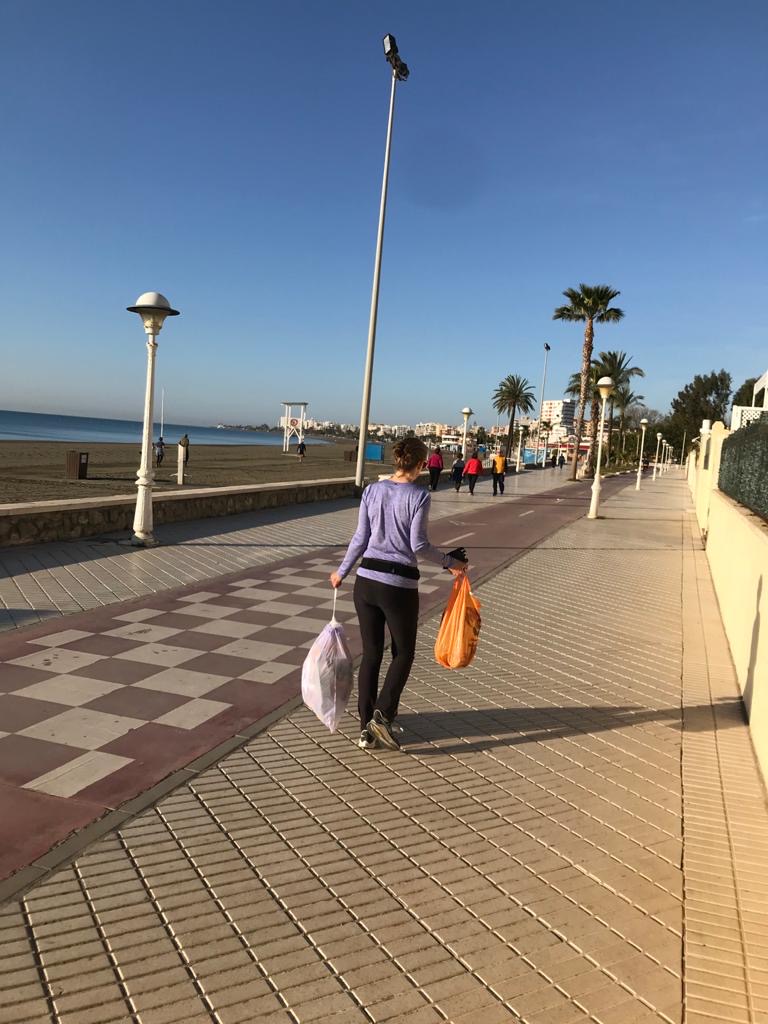
Before heading out to the workouts, garbage and recycling are gathered up and hauled to the bins a couple of blocks away.
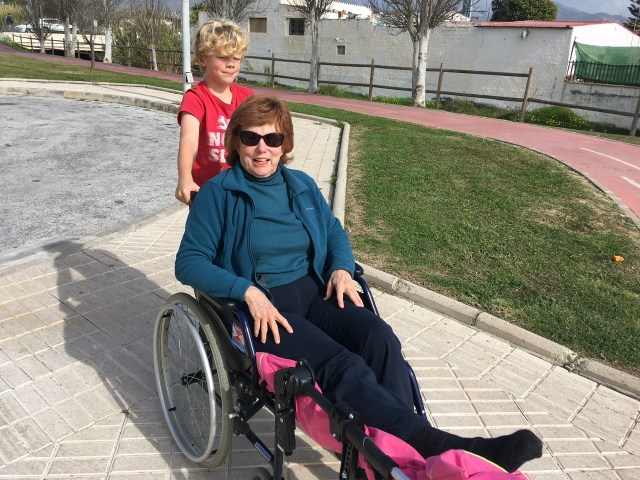
As a personal aside, I was parked in my wheelchair on the path beside the “gym”. Something drew very elderly Spanish men to me. Trying to talk. Wanting to push me in the wheelchair. Then they would bid me goodbye by patting my cheek and caressing my shoulders. Happened 3 times.
Grocery shopping is carefully planned. Only so much you can carry on a bicycle. And often you need to go to 2 or 3 stores. You have to guard your place in line to check out. Or some pushy older woman will shove in front of you. Michele became adept at manuveruring the wheelchair to block them. It is very much a Mom-and-Pop store economy.
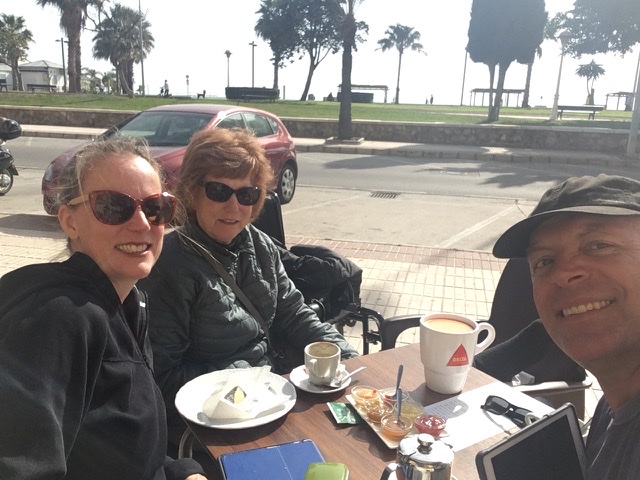
On a well ordered day, there might be time to go for coffee and toasties around 11 or 12.
Then it is quickly time to pick up Leo, start the big lunch meal cooking, and pick up Oliver.
The daily business of life takes up nearly all of the time.
I can almost hear the boys telling their grandchildren about this.
It seems so long ago now, but I realized I hadn’t finished posting about our return trip from our last adventure to Portugal. After leaving our Monsanto, our last stop in Portugal, we still had 7 hours to drive home.
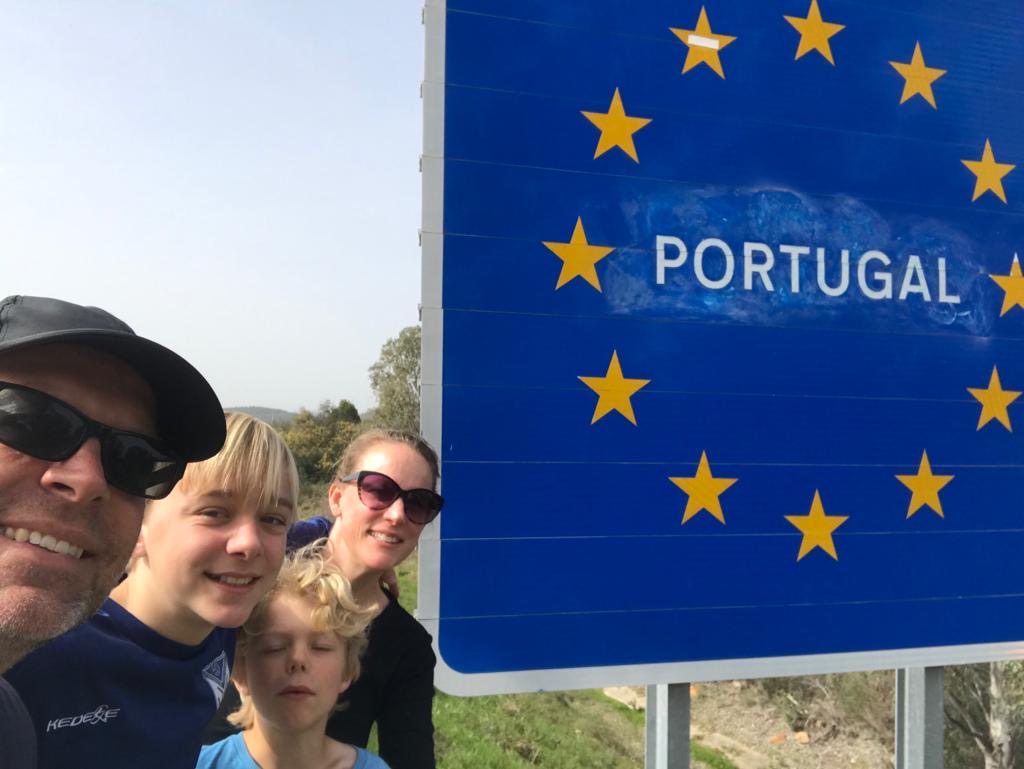
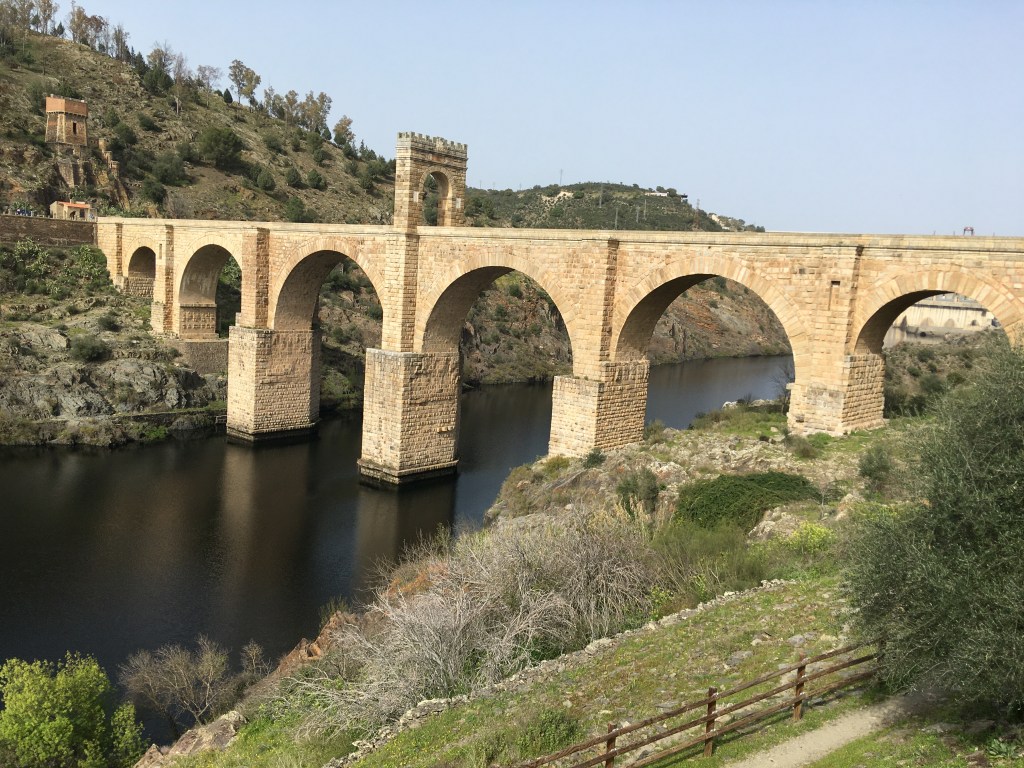
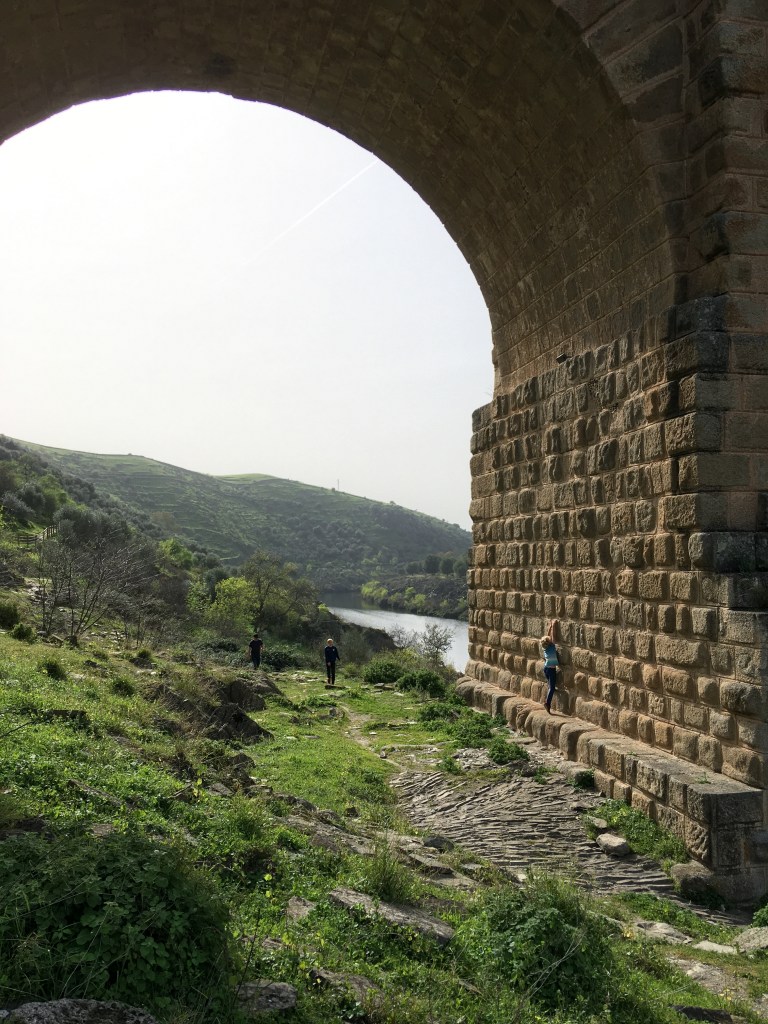
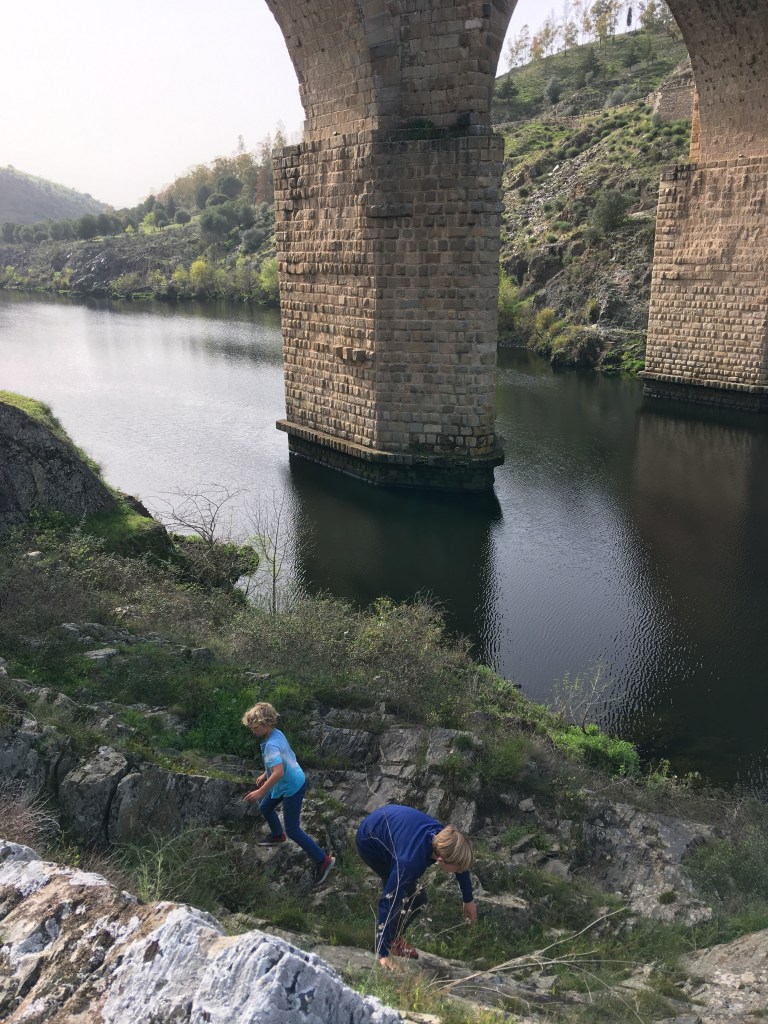
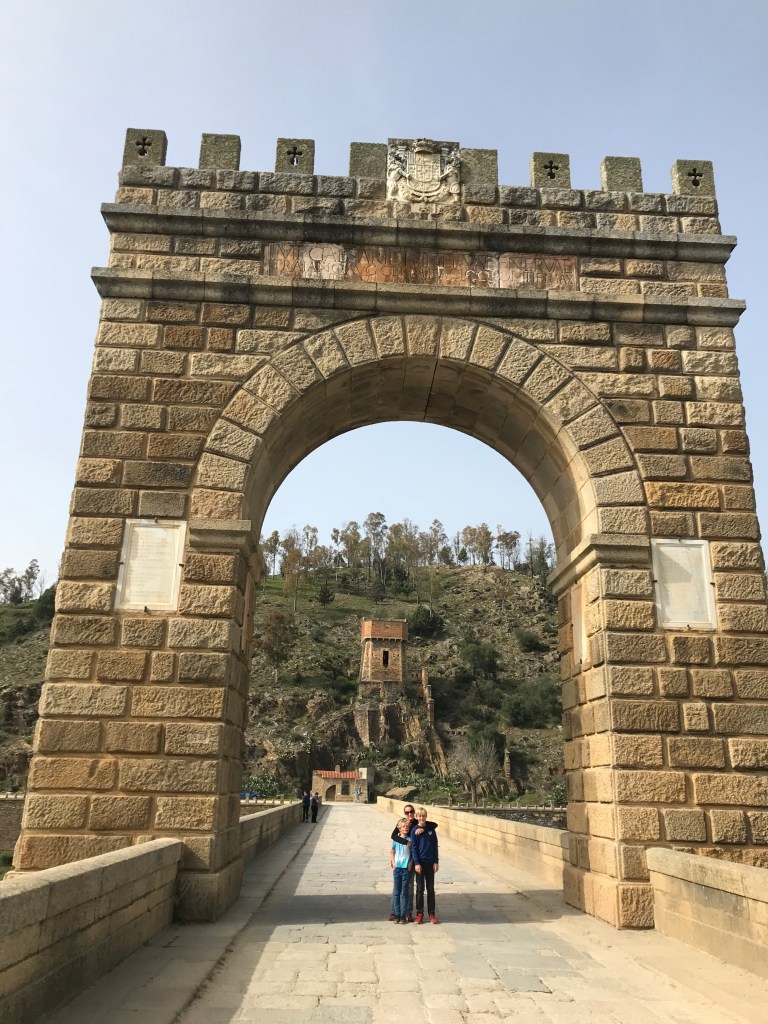
Our first stop was just across the border at the Roman Bridge of Alcántara, built in 106 BC.
The gorge of the Tagus River has made a natural border between Portugal and Spain for hundreds of years. This Roman bridge is the only access to cross the river for 50 kilometers. The sections closest to Spain have been destroyed to keep people out several times. The first time was in the 13th century, and the bridge remained broken for about two centuries. The second was in the middle of the 17th century, in the wars with Portugal. And the third was in the 19th century, in the Independence War of Spain and France.
It was a great place to get a few wiggles out on our drive home.
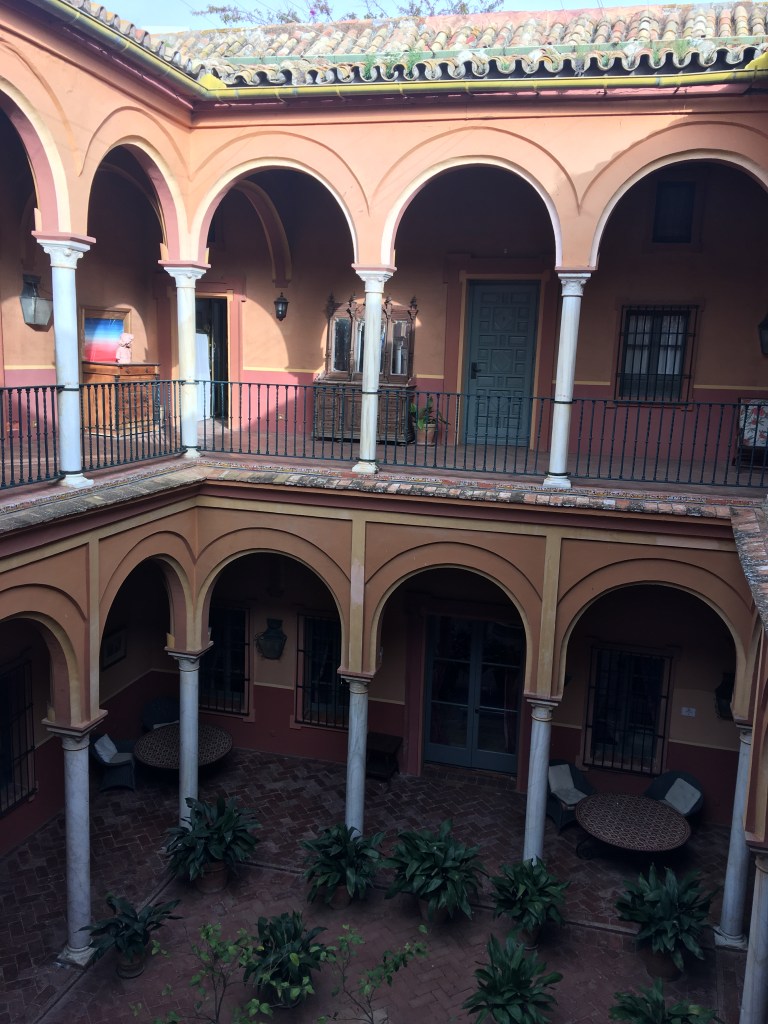
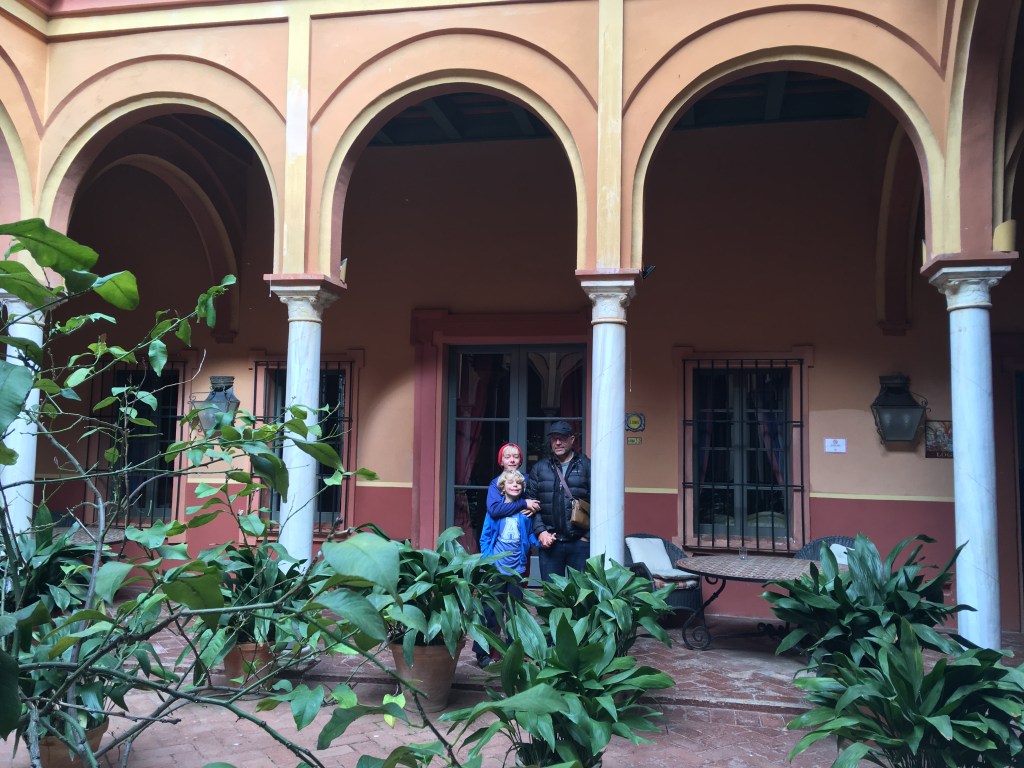
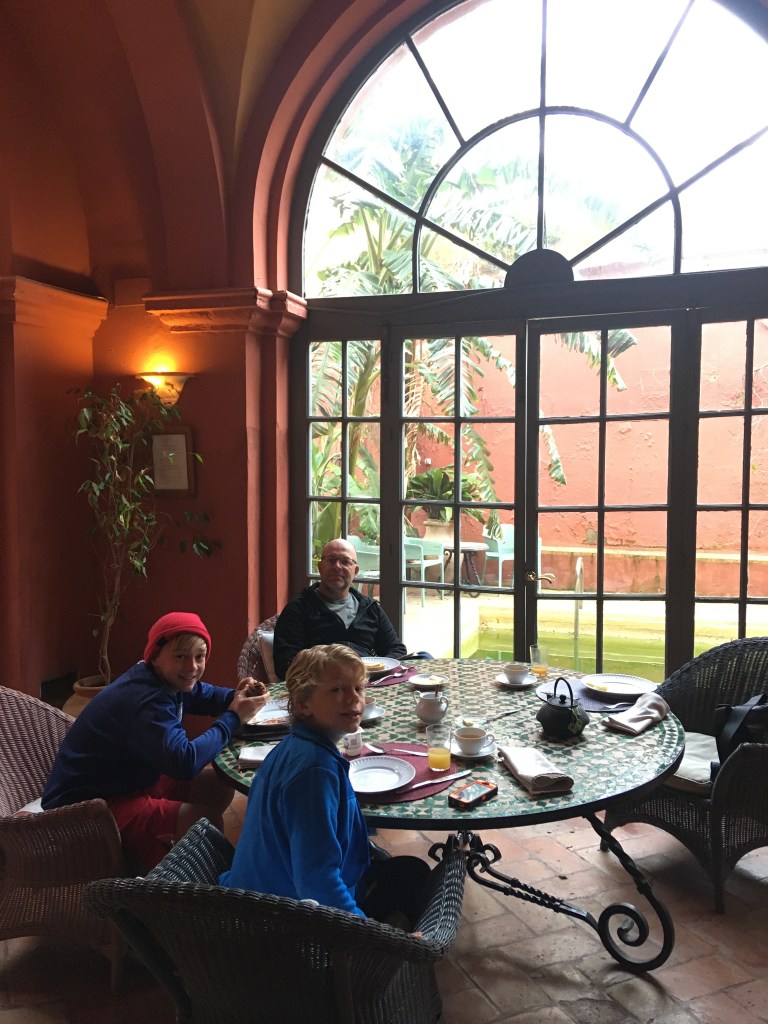
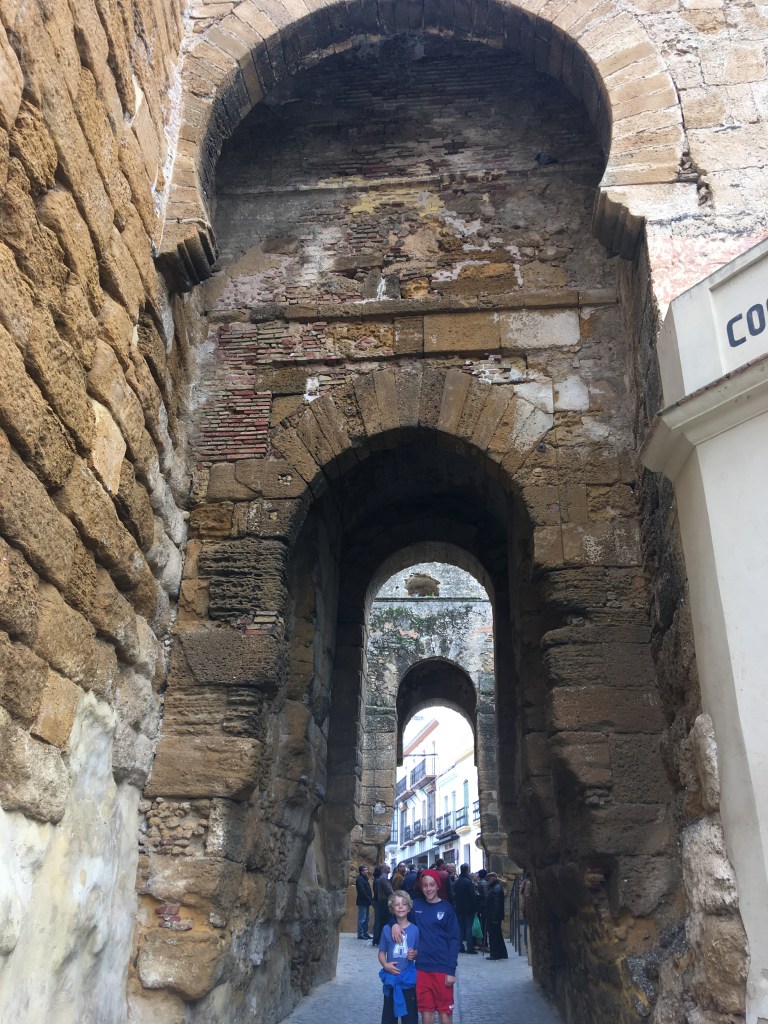
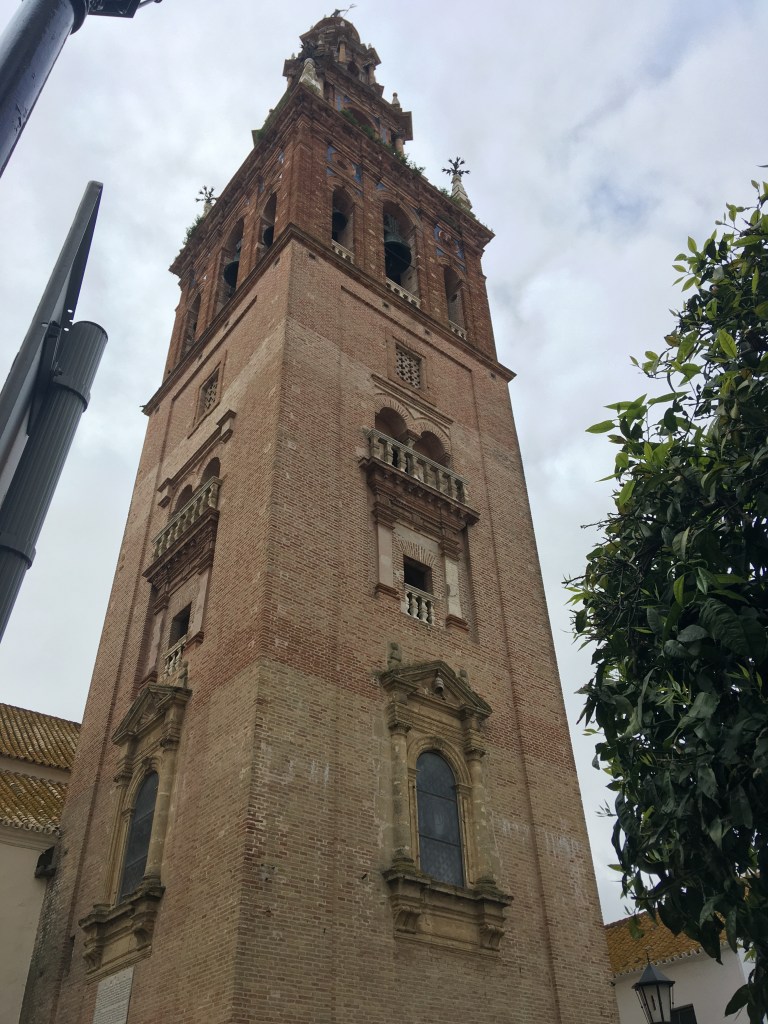
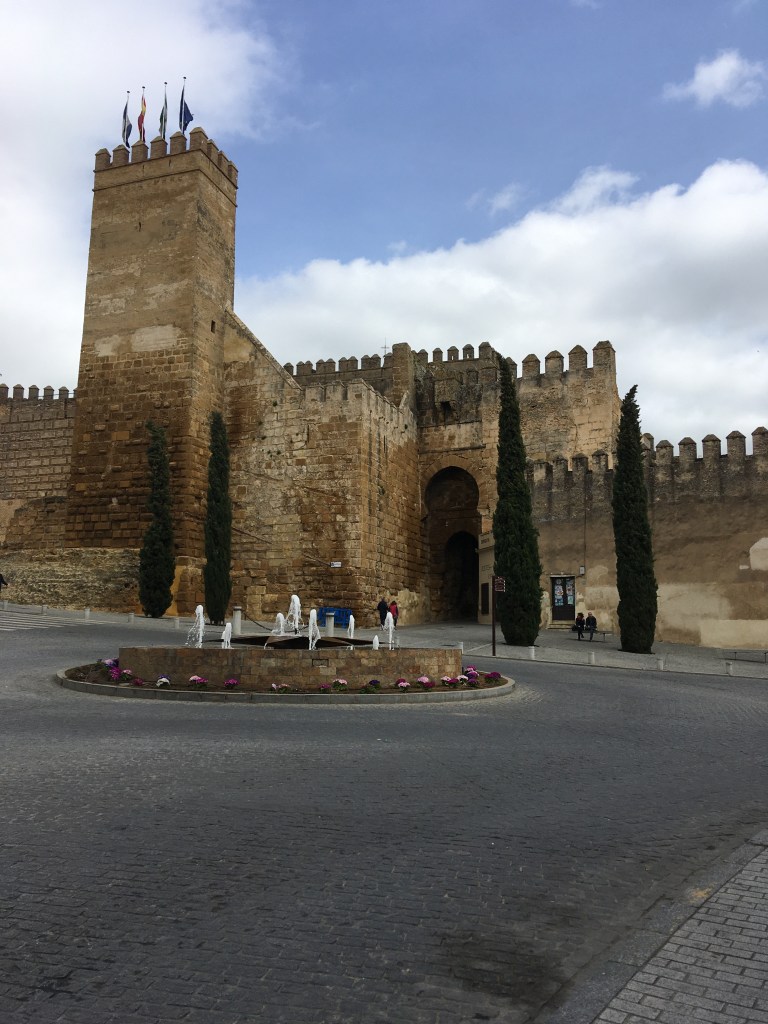
From there, we drove on to Carmona, not far from Sevilla, where we spent the night (because 7 hours is too many hours to drive in one day) in a 15th century palace home.
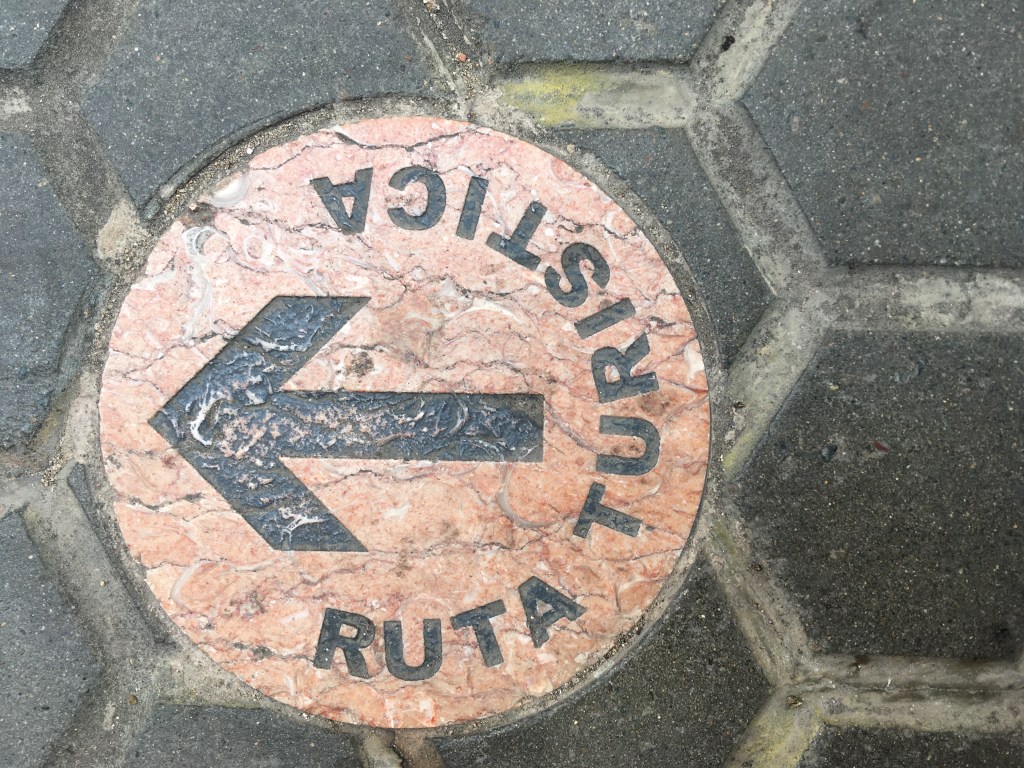
What we loved best about Carmona is the “Ruta Turística” that you can follow throughout the city.
These markers on the sidewalks and cobblestone roads take you for a lovely stroll through town hitting a variety of historical sites that you might otherwise miss (information about each site can be found on their website). The boys led the way as we blindly wandered. We counted 165 before we called it a day.
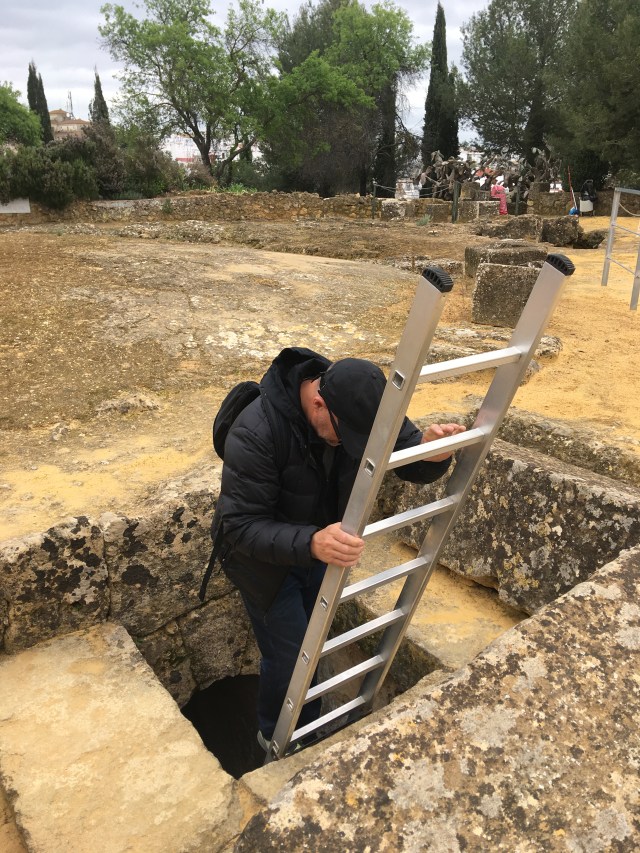
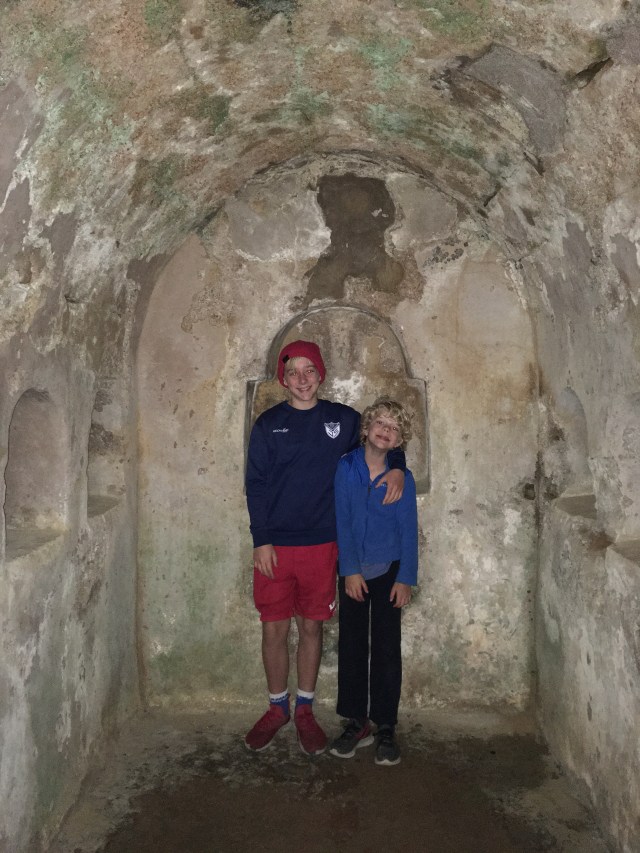
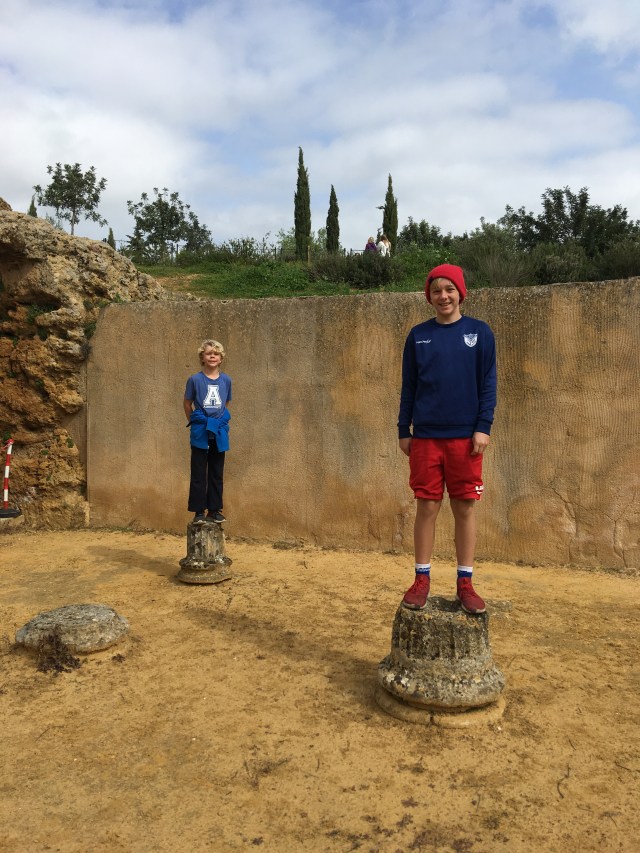
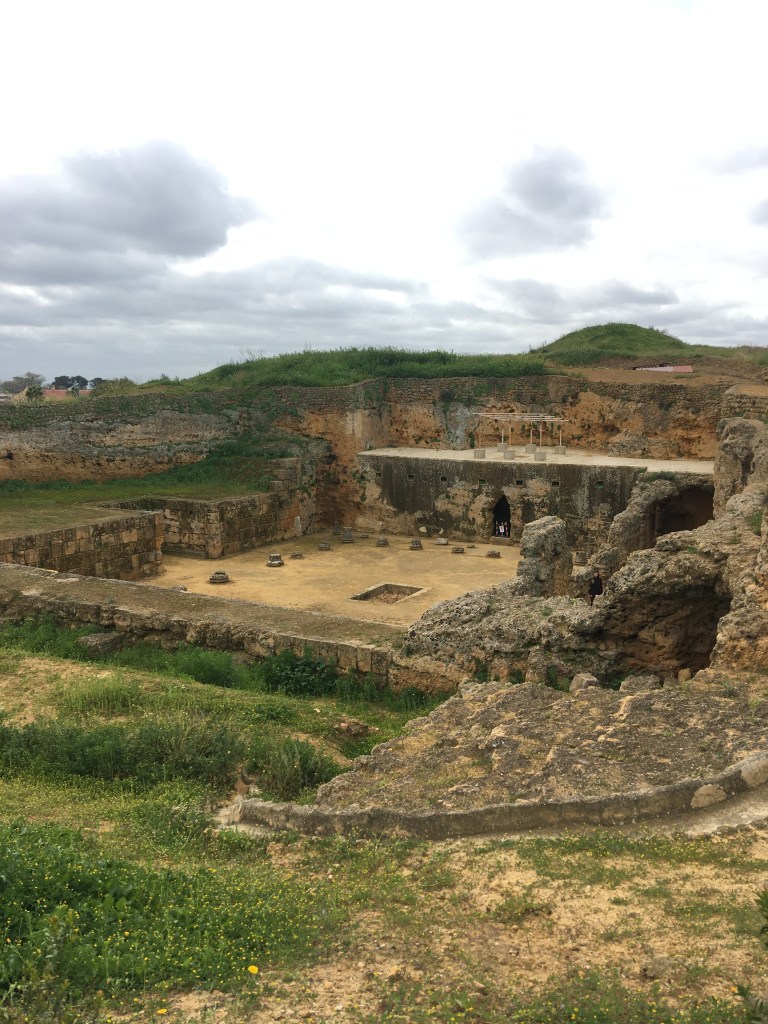
The most interesting spot was the Roman Necropolis (fancy word for cemetery).
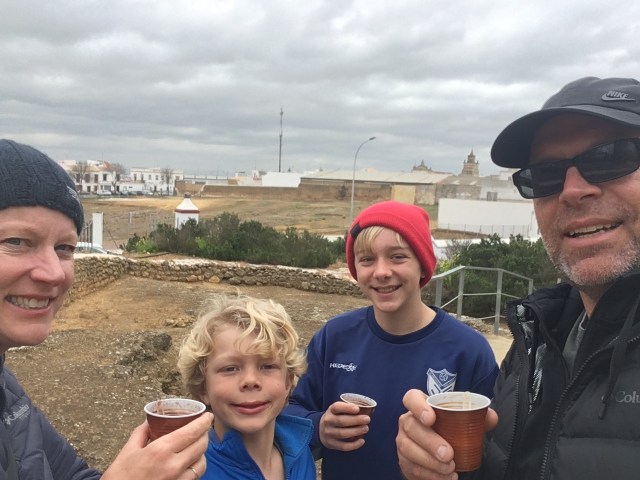
Cocoa and coffee break overlooking the necropolis and amphitheater in the background.
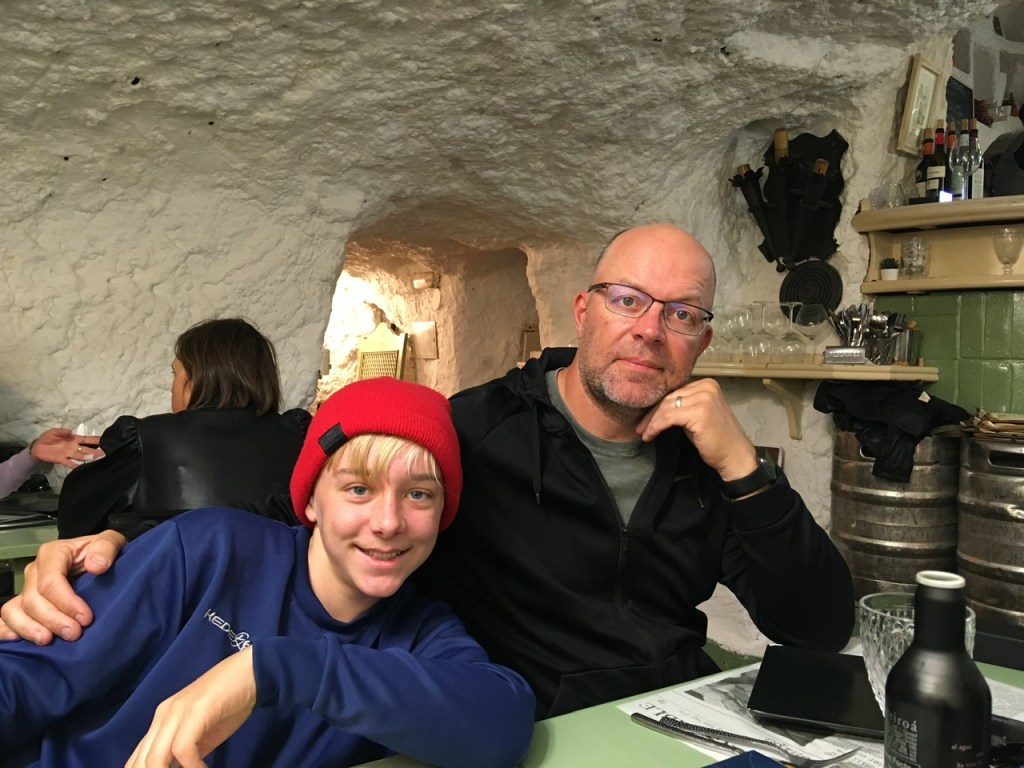
We ended our time in Carmona at a cave restaurant for lunch before getting back on the road.
Little did we know that this would be our last time out of town for a while.
Starting Saturday night, or Monday morning, depending on who you ask, Spain was put in lockdown. Pretty much everything has been closed, except for grocery stores, pharmacies, gas stations and hospitals. We are confined to our house. Spaniards have taken this very seriously, almost no one leaves their homes.
There have been countless video campaigns urging people to stay home.
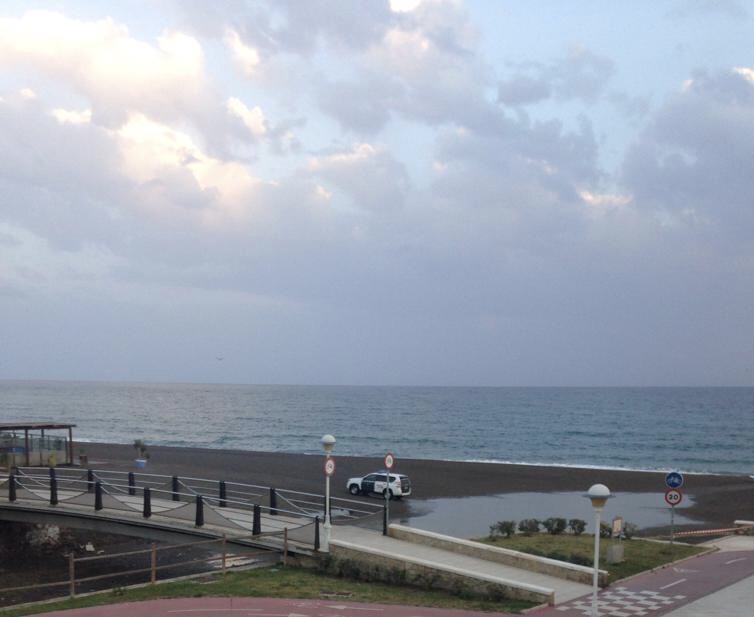
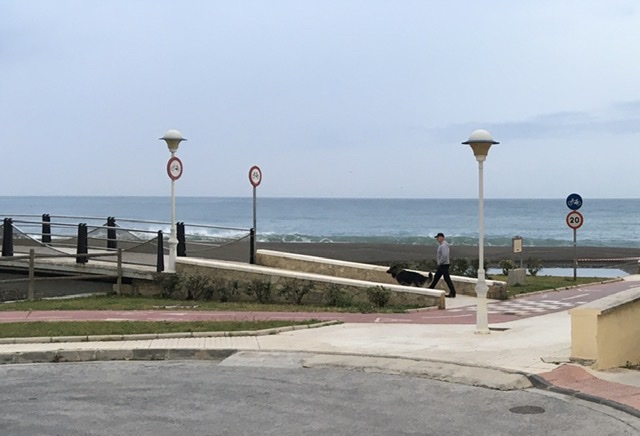
The government is enforcing the lockdown by policing the streets and beaches. If you are found out without an acceptable excuse and proof of your destination, you can be fined several hundred euros or even imprisoned.
Police car patrolling the beach
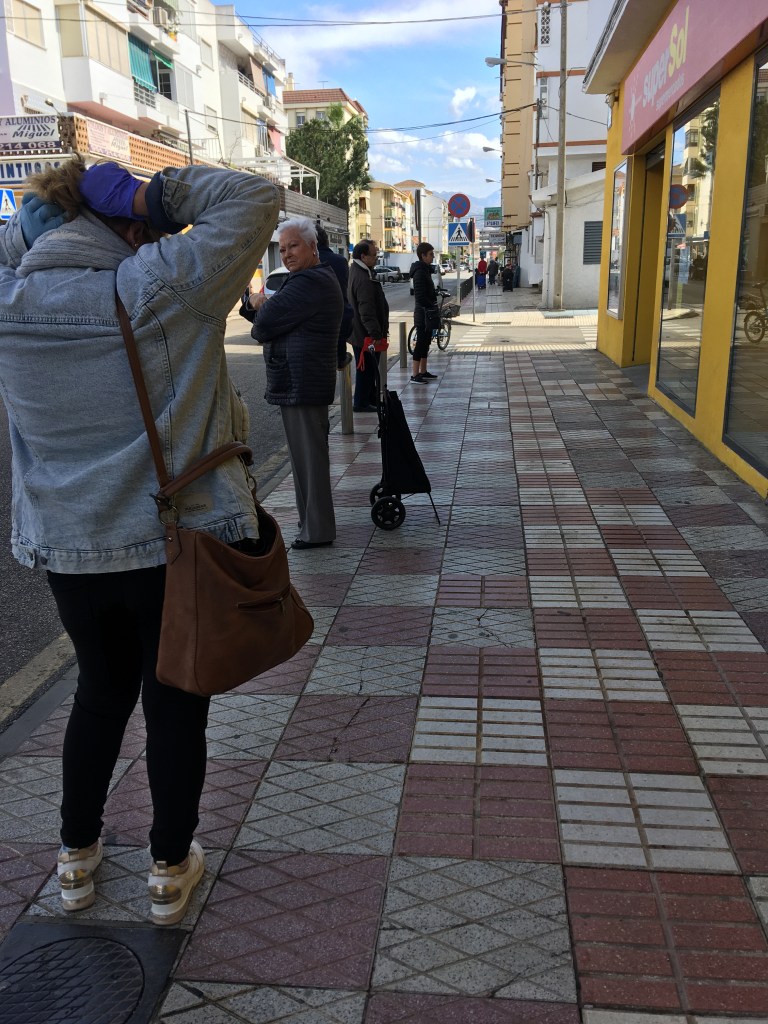
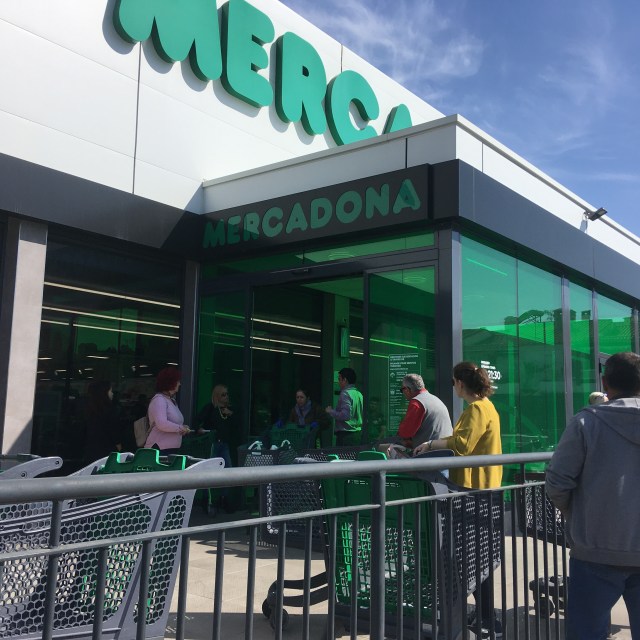
Of the few acceptable excuses for leaving the house, the only one that applies to us is grocery shopping. And then we are only allowed to go out alone. You have to carry your ID and passport. You need to have grocery bags on the way and a receipt on the return. When you do arrive at the grocery store, you must wait in line outside of the store, leaving an appropriate space between people, for someone to leave the store.
You must put on gloves before entering. All employees wear masks and gloves.
We have to wait our turn from a distance
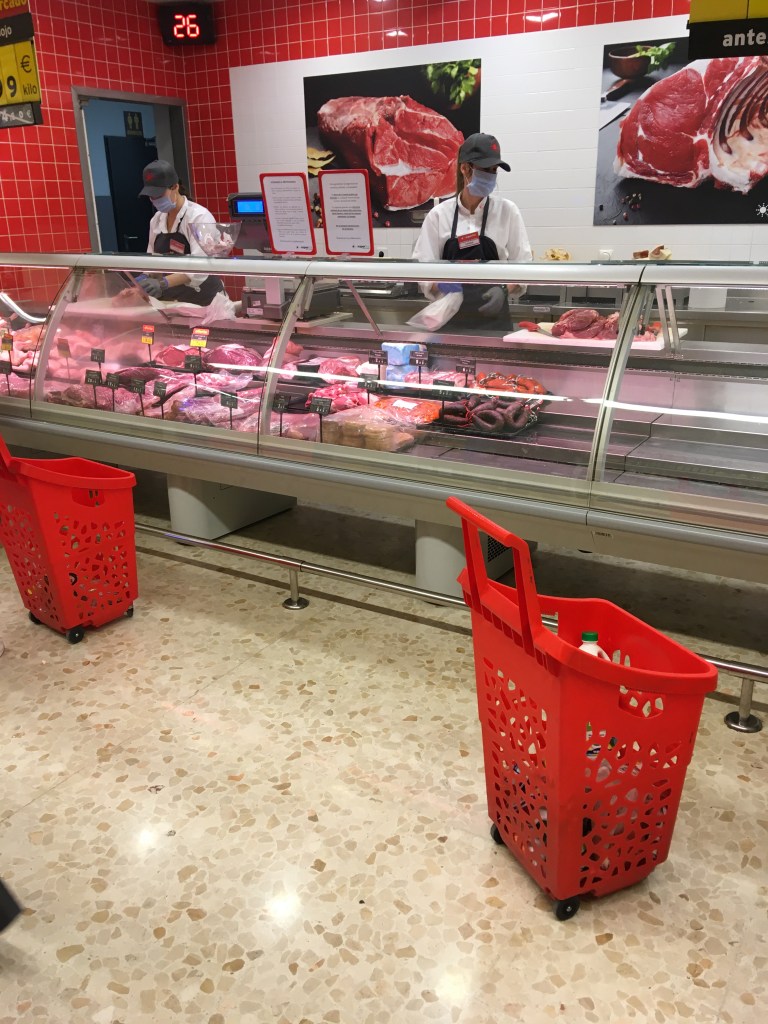
Everyone waits for their meat leaving lots of distance from each other
People are encouraged to use credit cards, instead of cash. The numbers of items being stocked has been reduced. Some items are just sold out, like eggs and flour.
One of the acceptable excuses for getting out is to walk your dog. We REALLY wish we had a dog right now. One man got a hefty fine for taking a toy dog out for a walk. Some people are renting their dogs out to people desperate to get out.
All of the hotels and campgrounds in Spain have closed, not planning to reopen until June. Many hotels have made themselves available to house people who need to be quarantined.
The hospitals in Málaga have reached capacity. All nonurgent medical, dental and vision appointments have been cancelled. I had just gotten around to making a variety of appointments for the entire family to make use of the insurance that we have here. Those appointments have all been rescheduled for mid-April (we’ll see if they get rescheduled again). One of our friends is a nurse is the local hospital and says that hospitals do not have the level of protective gear that they need: specifically face masks with filters and gowns.
Spain’s borders have been closed to everyone who is not a Spanish citizen or a legal resident. Travel inside the country is prohibited. Those who must travel for work can only do so alone in their cars. Police will stop you to check why you are on the roads and to assure that there is no more than one person in the car.
The streets are nearly silent except for every evening at 8pm, when everyone in the country goes to their balconies and applauds the medical workers. Living in a townhouse at the edge of town makes it harder to participate, but we go to our balcony every night and listen for the applause in the distance and clap for our end of town (at first the kids thought we were really weird, but they are starting to come around and participate).
The medical community responded in kind:
We have somehow made life work confined to our townhouse.
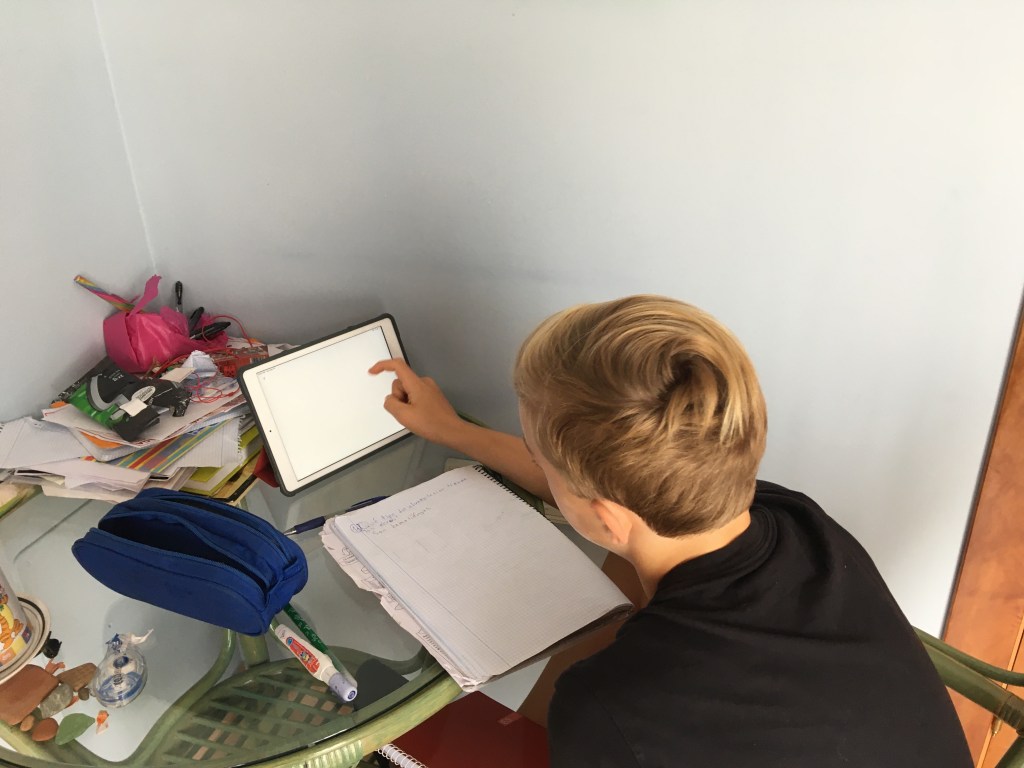
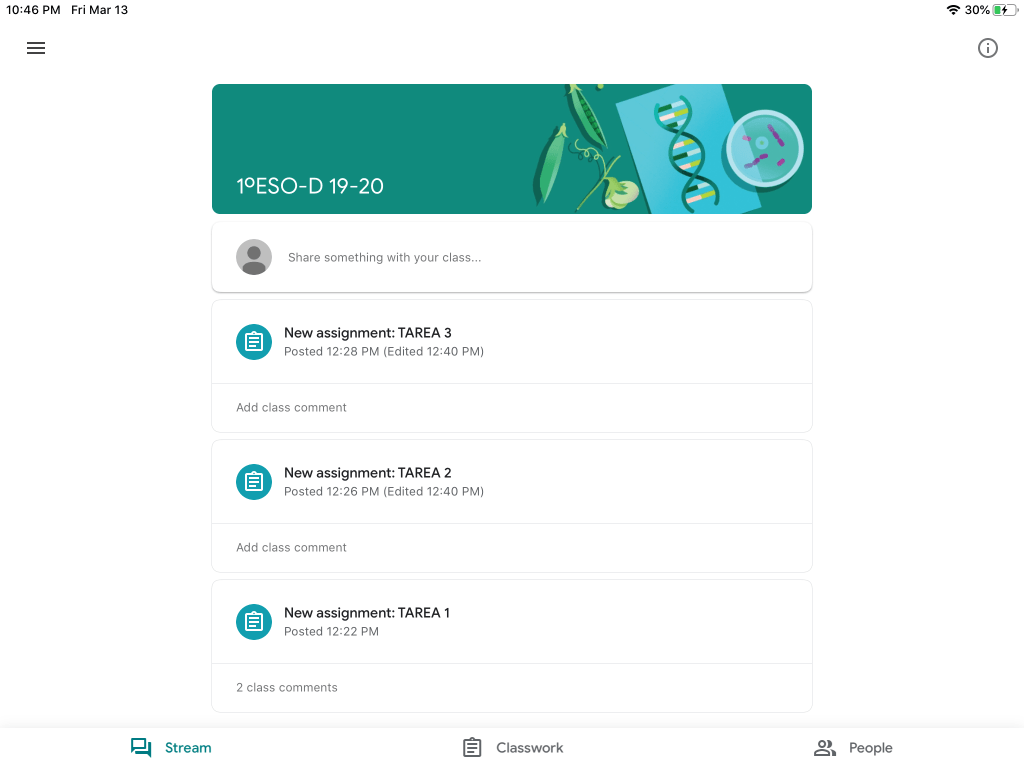
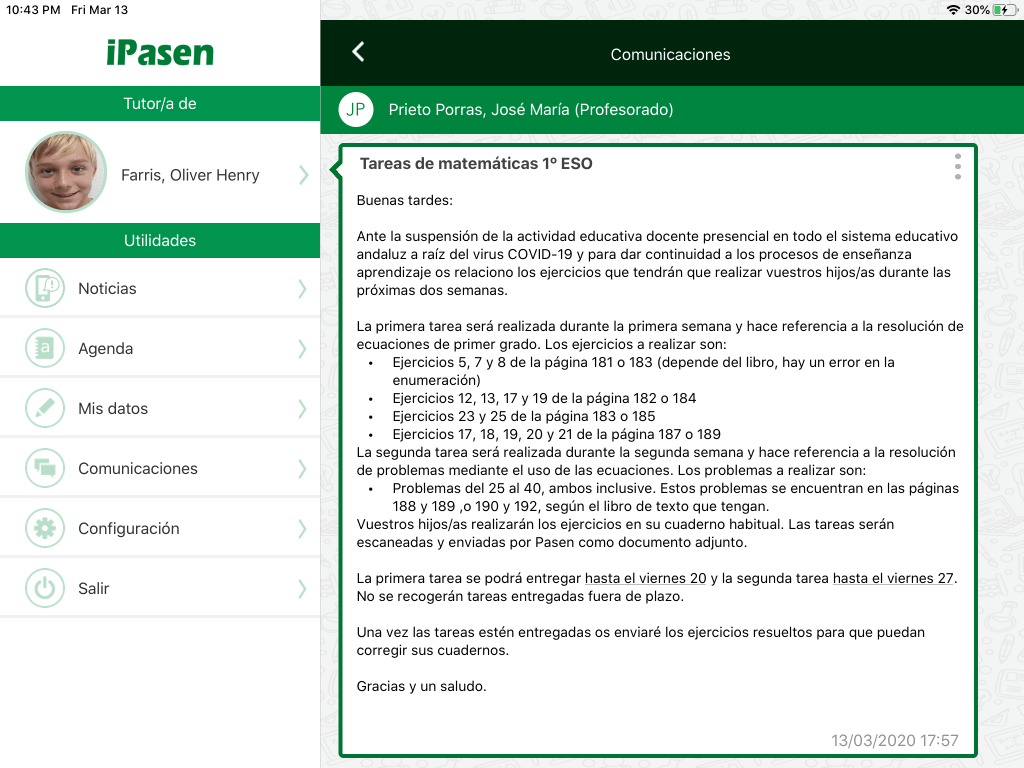
The boys spend some time each day doing schoolwork sent by the schools. Before the lockdown, the boys had zero access to technology in the schools, which was shocking to us. Now they are sent all of their work digitally. Unfortunately, the teachers do not use the same kinds of technology, so we have had to figure out four different systems.
Leo’s work is sent through a combination of WhatsApp messages and email. Oliver’s work is sent through email, Google classroom and Aula Virtual. I know that many people here do not have WiFi in their homes (many people are used to going to the libraries or hanging around businesses with WiFi) so I’m not sure how those families are accessing the work. Some of Leo’s work requires us to print out assignments (which is challenging since we, like many others, don’t have a printer). Surprisingly, copy stores are allowed to stay open so that people can make copies of urgent messages, but I don’t think the kids’ school work is that urgent (we’ll figure something out).
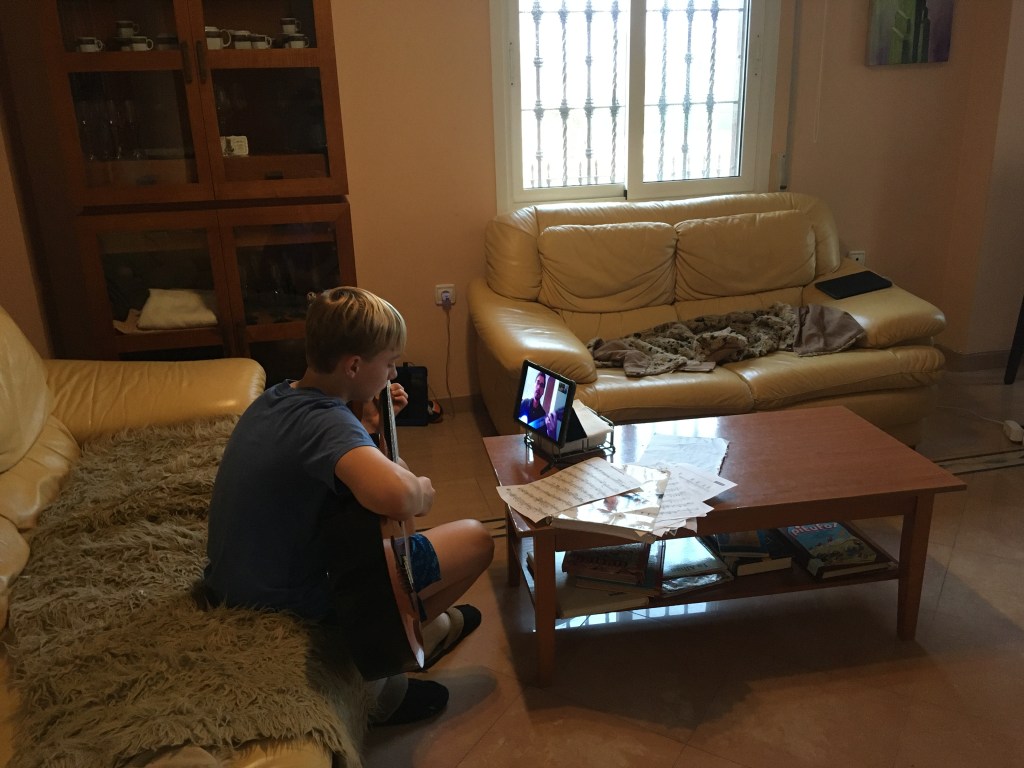
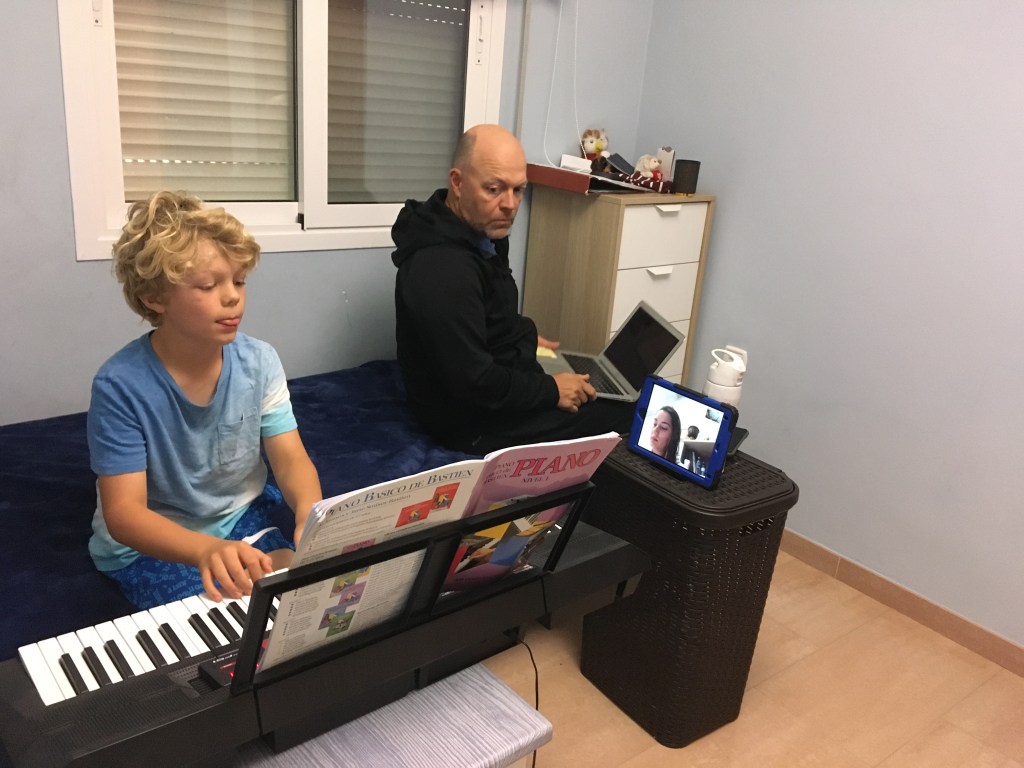
The boys’ music classes are done through Skype.
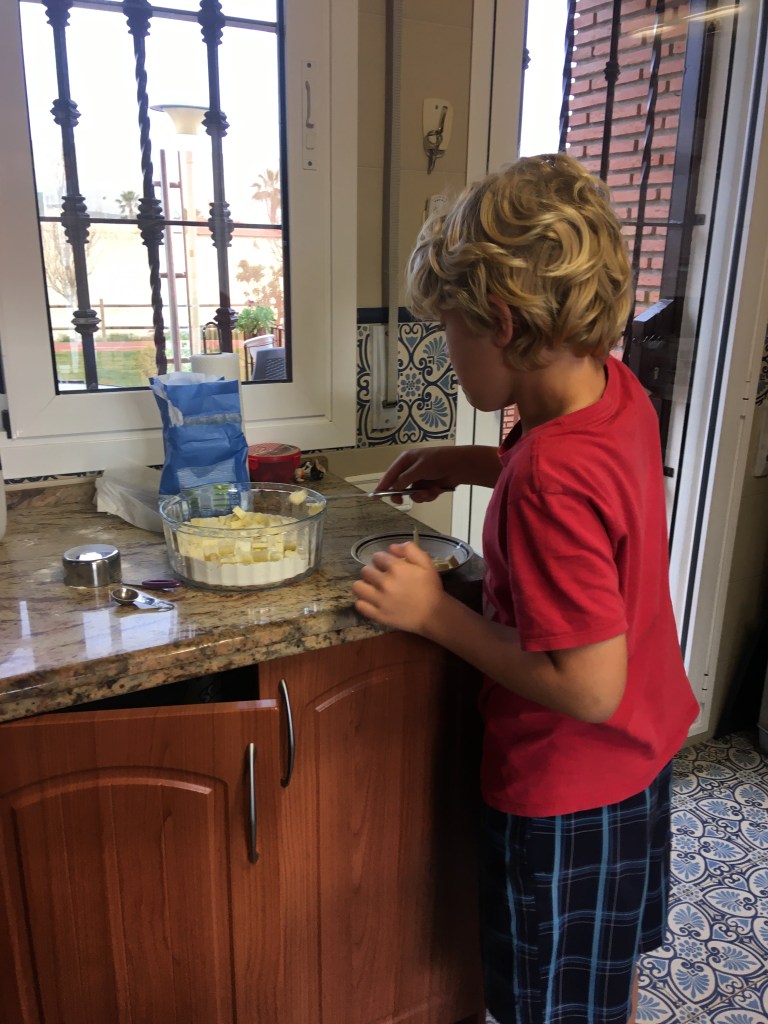
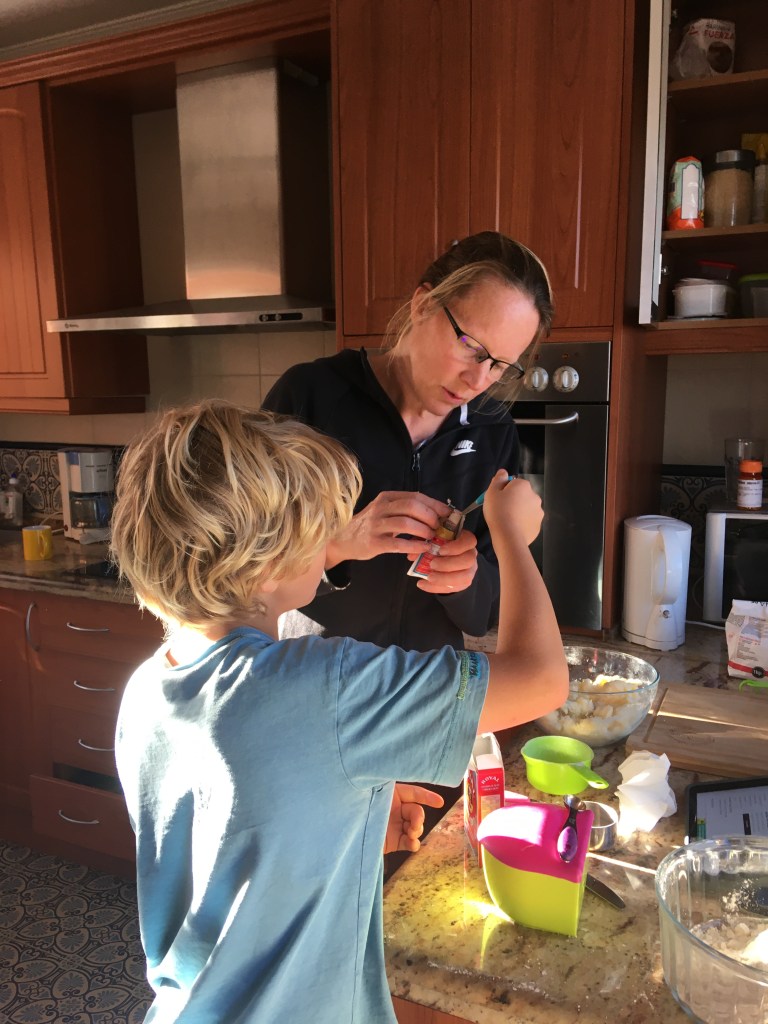
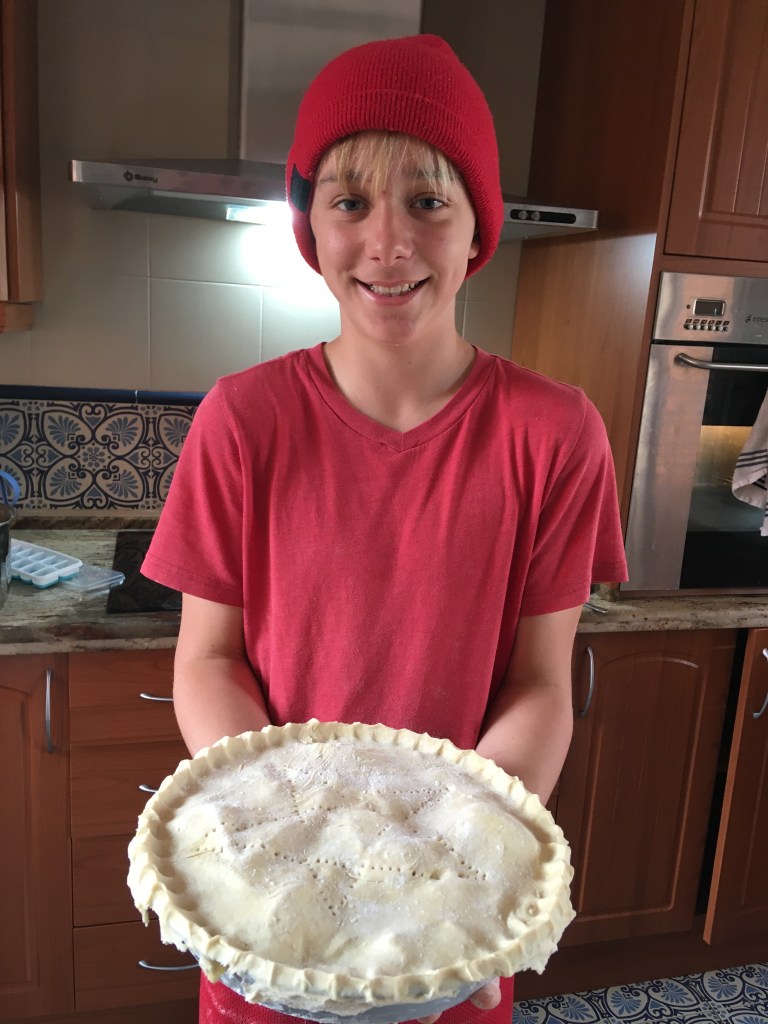
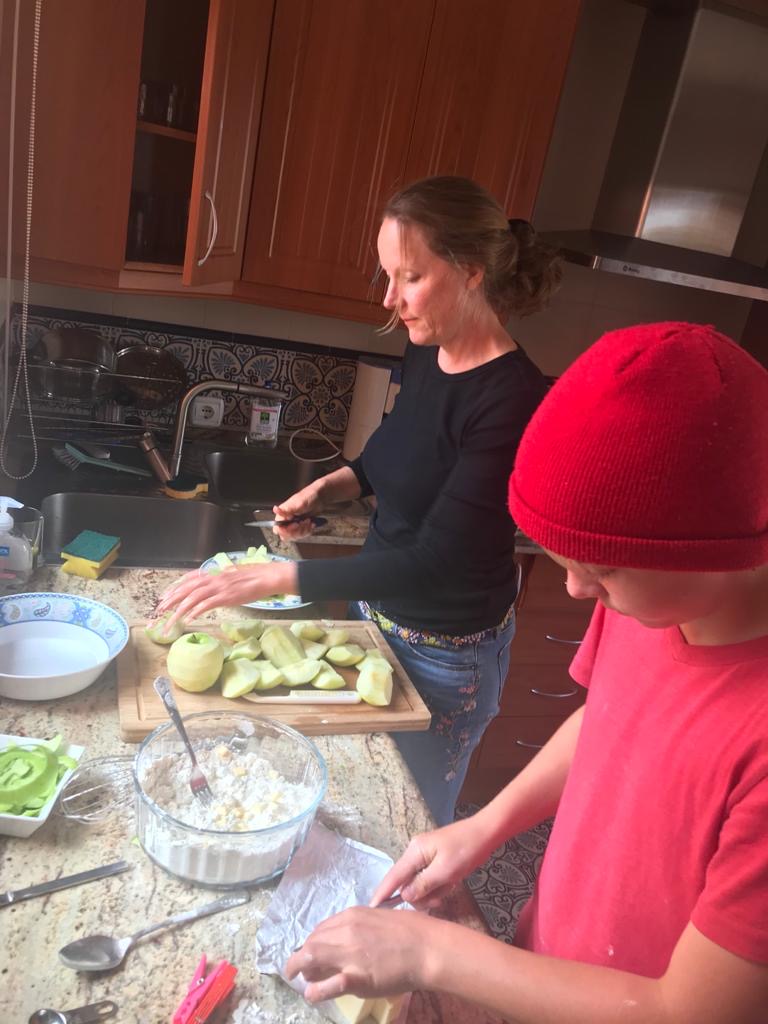
We feel very fortunate to have an oven (many people do not) to be able to bake. We’ve tried to sweeten life a bit, with each kid learning to make a treat of their choosing.
Leo chose to make snickerdoodle cookies
Olive chose apple pie
We also feel very fortunate to have so much space. Our townhouse is considered big by Spanish standards. We have multiple floors, multiple rooms, 4 patios and a teeny tiny yard. Most people live small apartments in multi-story buildings with their only access to the outside being small balconies. They are not allowed to be in the hallways or stairways of their buildings. We are making good use of everything we have.
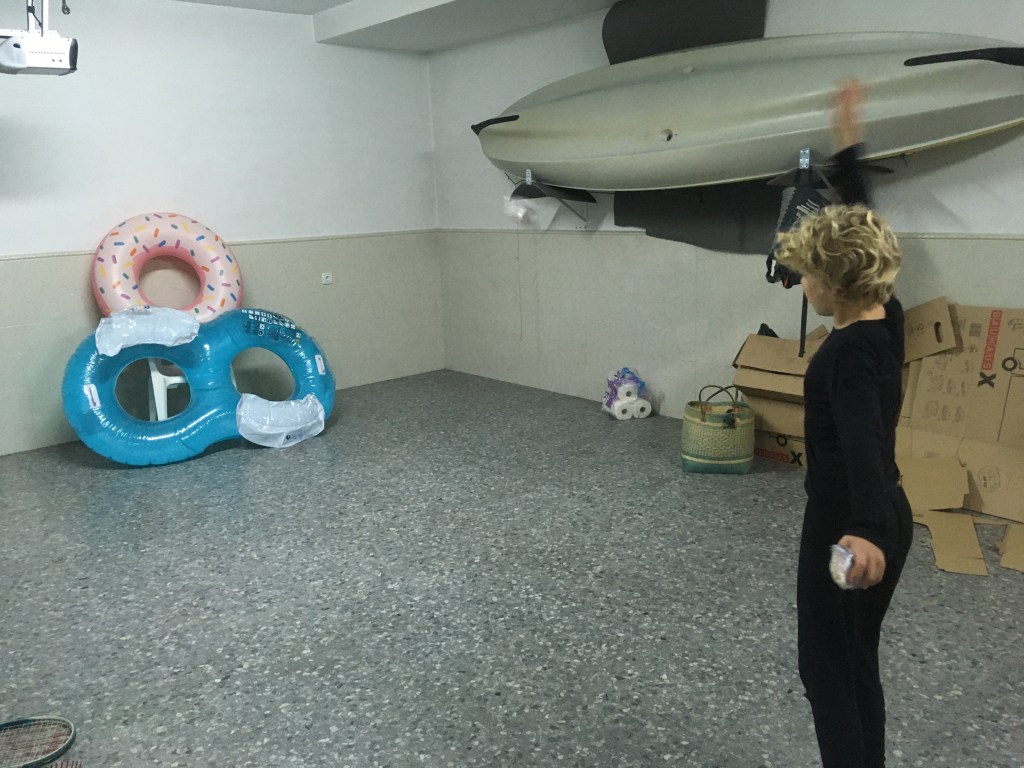
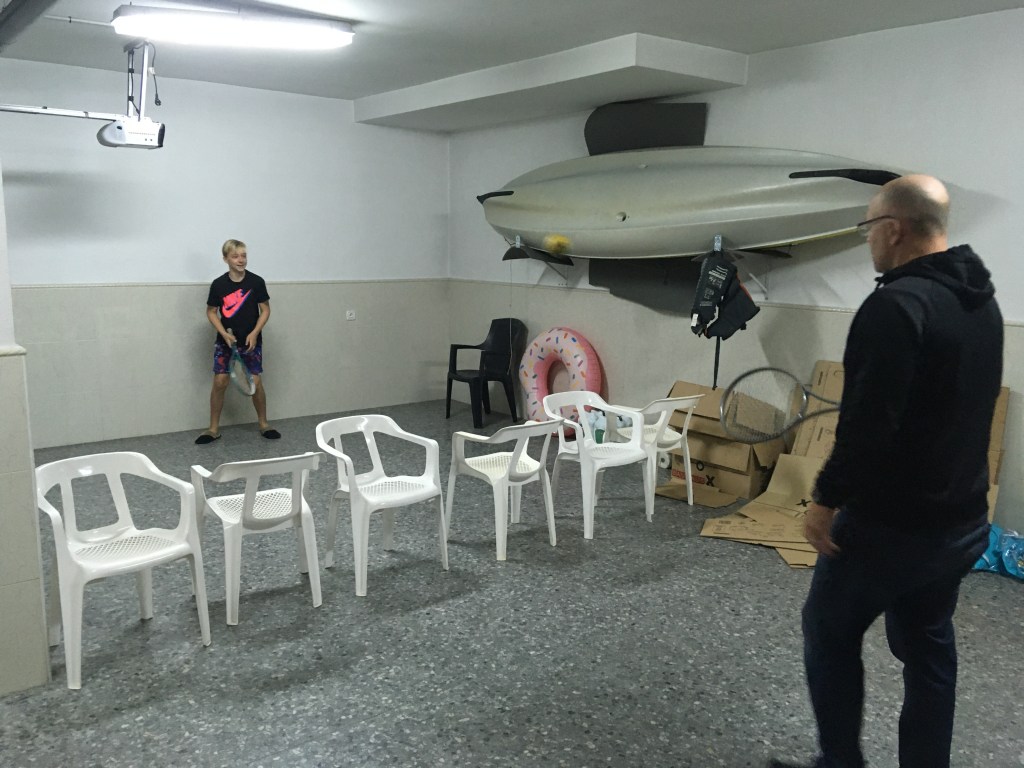
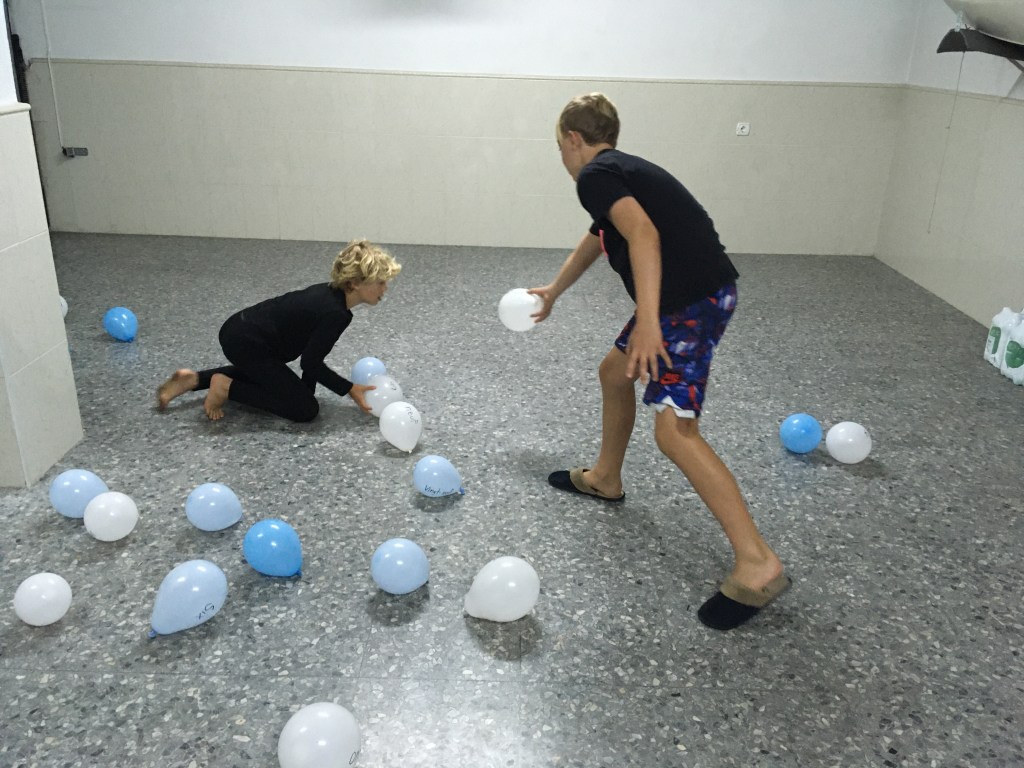
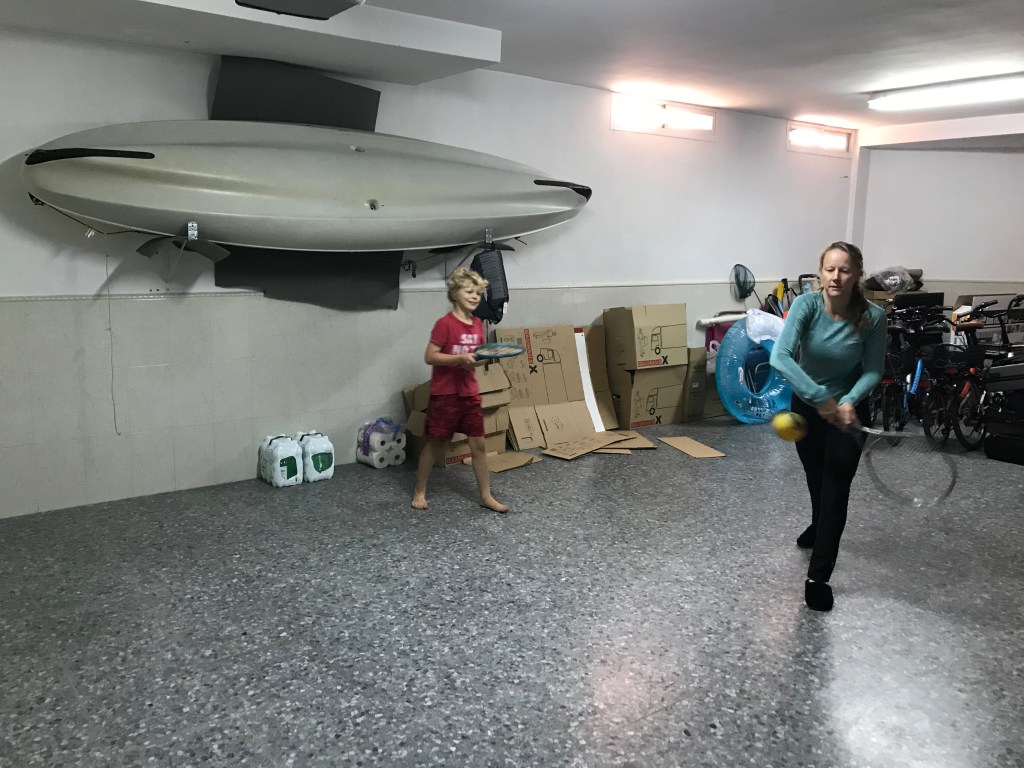
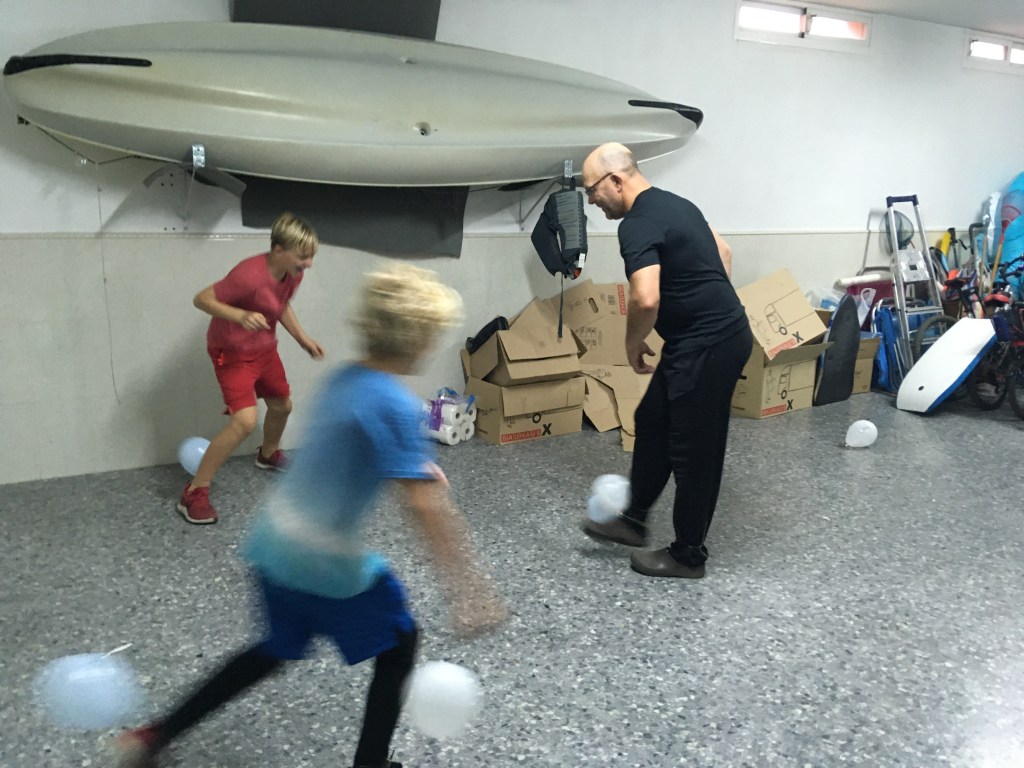
The garage has been a great playroom.
Tennis
French homework (sorting balloons by number)
Racquetball
Pop the ballon tied around the ankle.
Our teeny tiny yard is great for exercise and access to fresh air and sunshine. I actually did a 40 min jog running from one side to another.
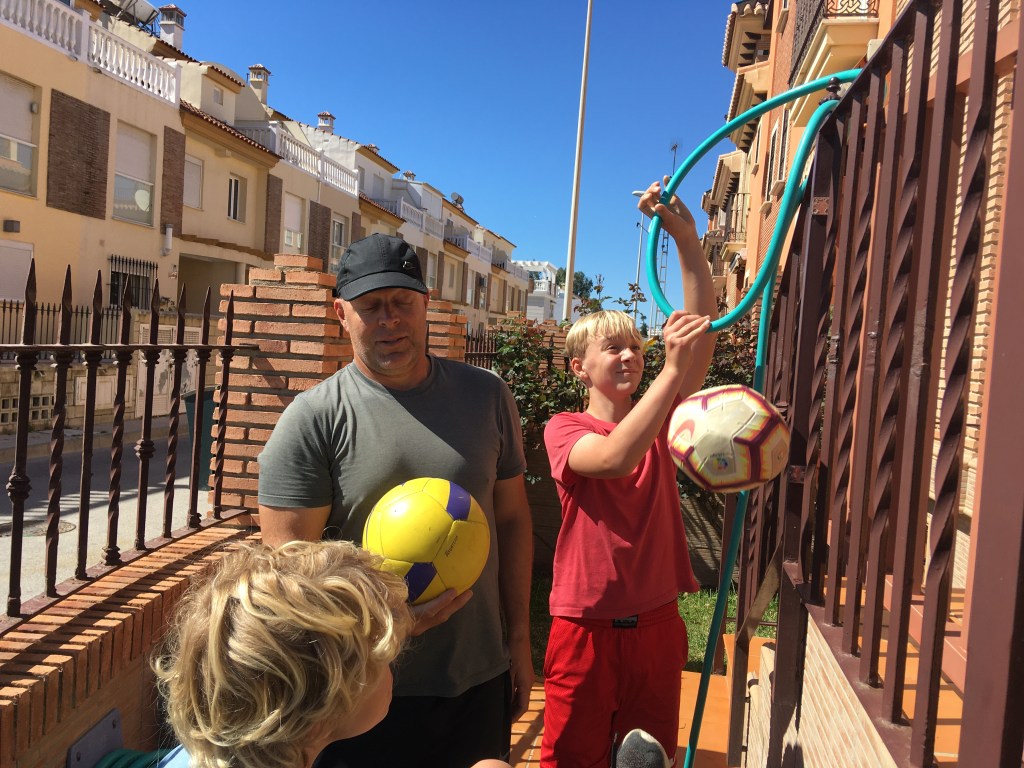
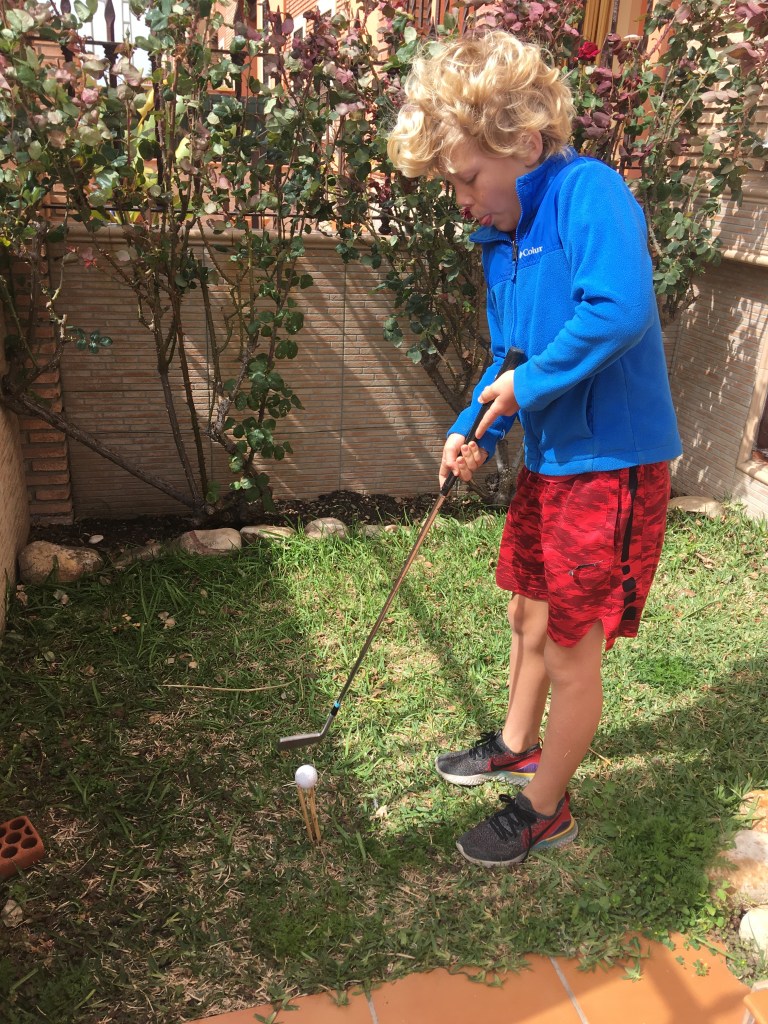
Setting up soccer minigolf
Putt putt
Doing a workout video
Monkey in the middle
And just extra living space.
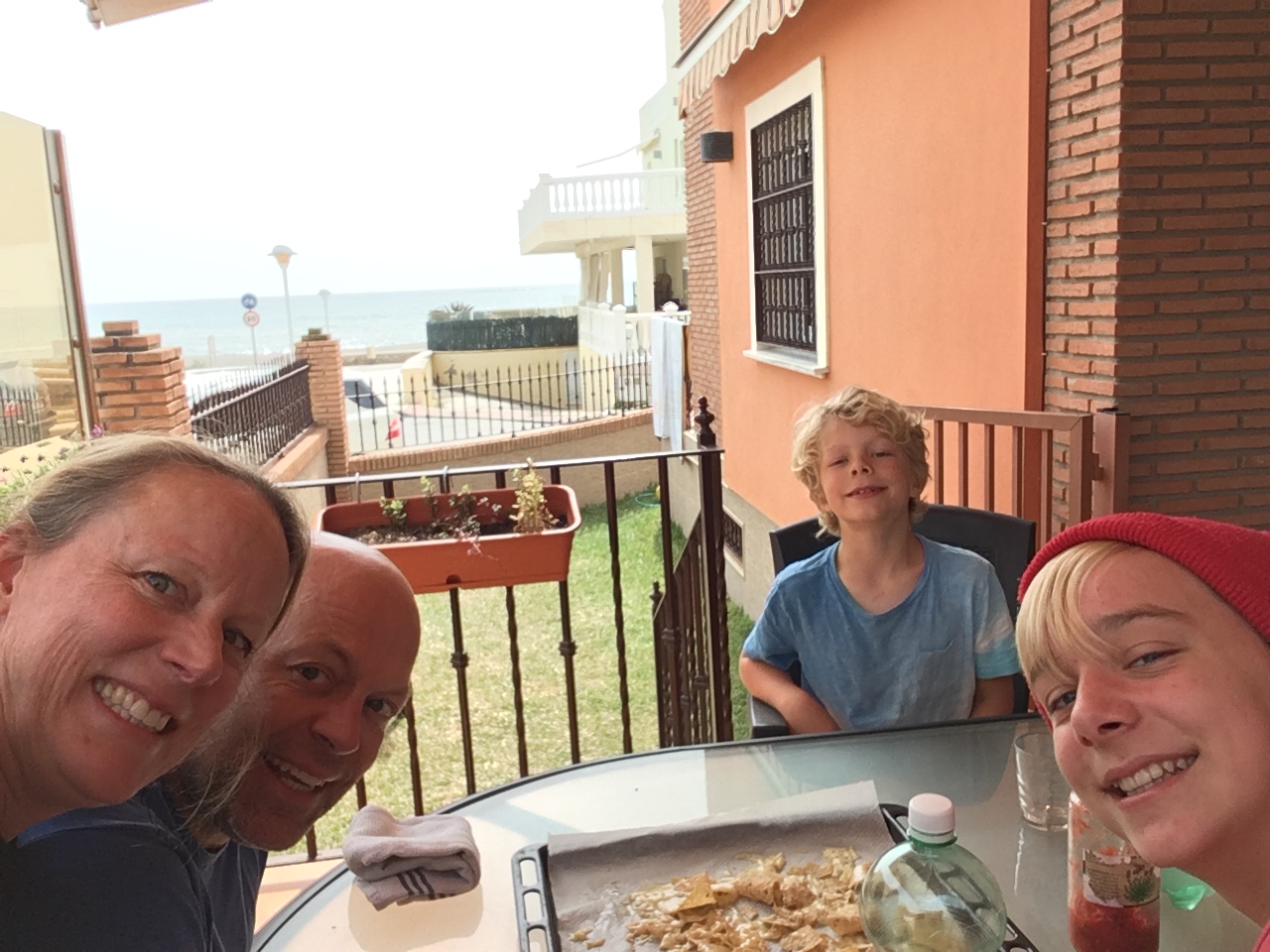
Lunch on one of the patios
And we’ve established an hour break time when everyone goes to separate rooms to have some time apart.
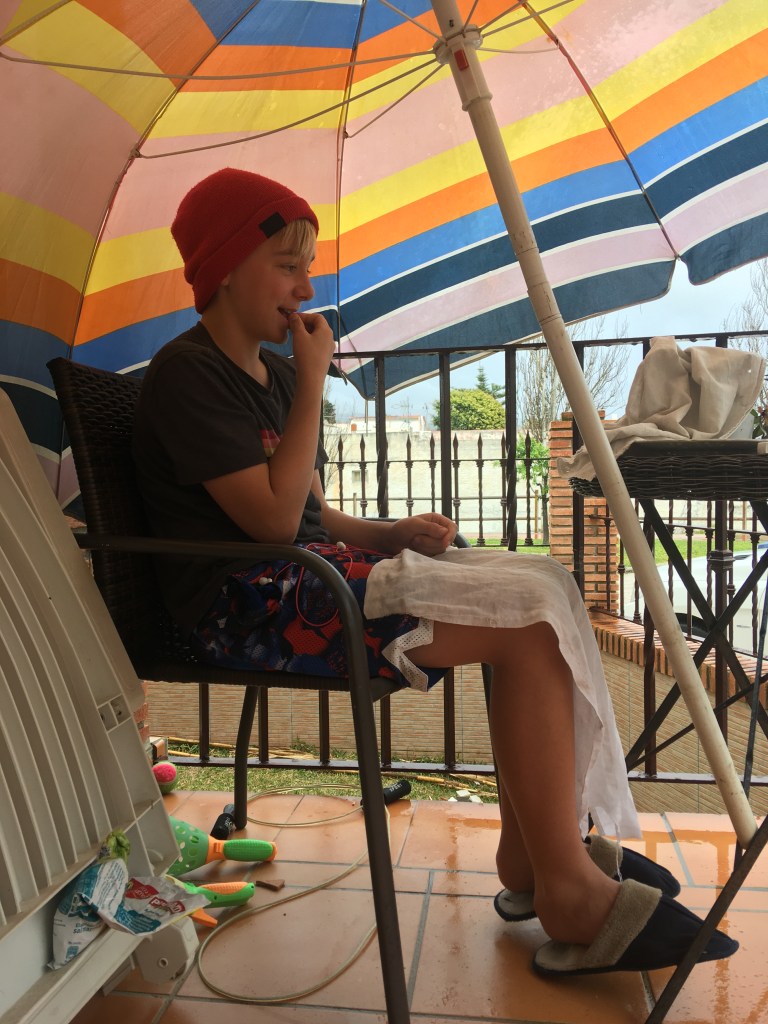
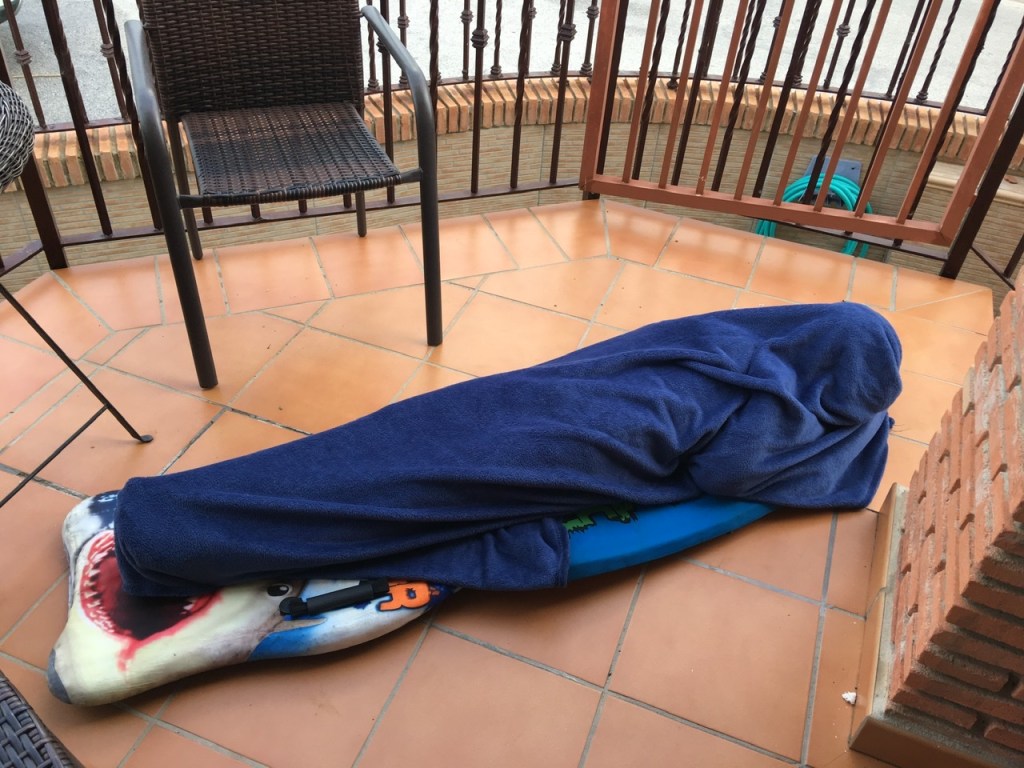
Leo decided to take a break on the front patio.
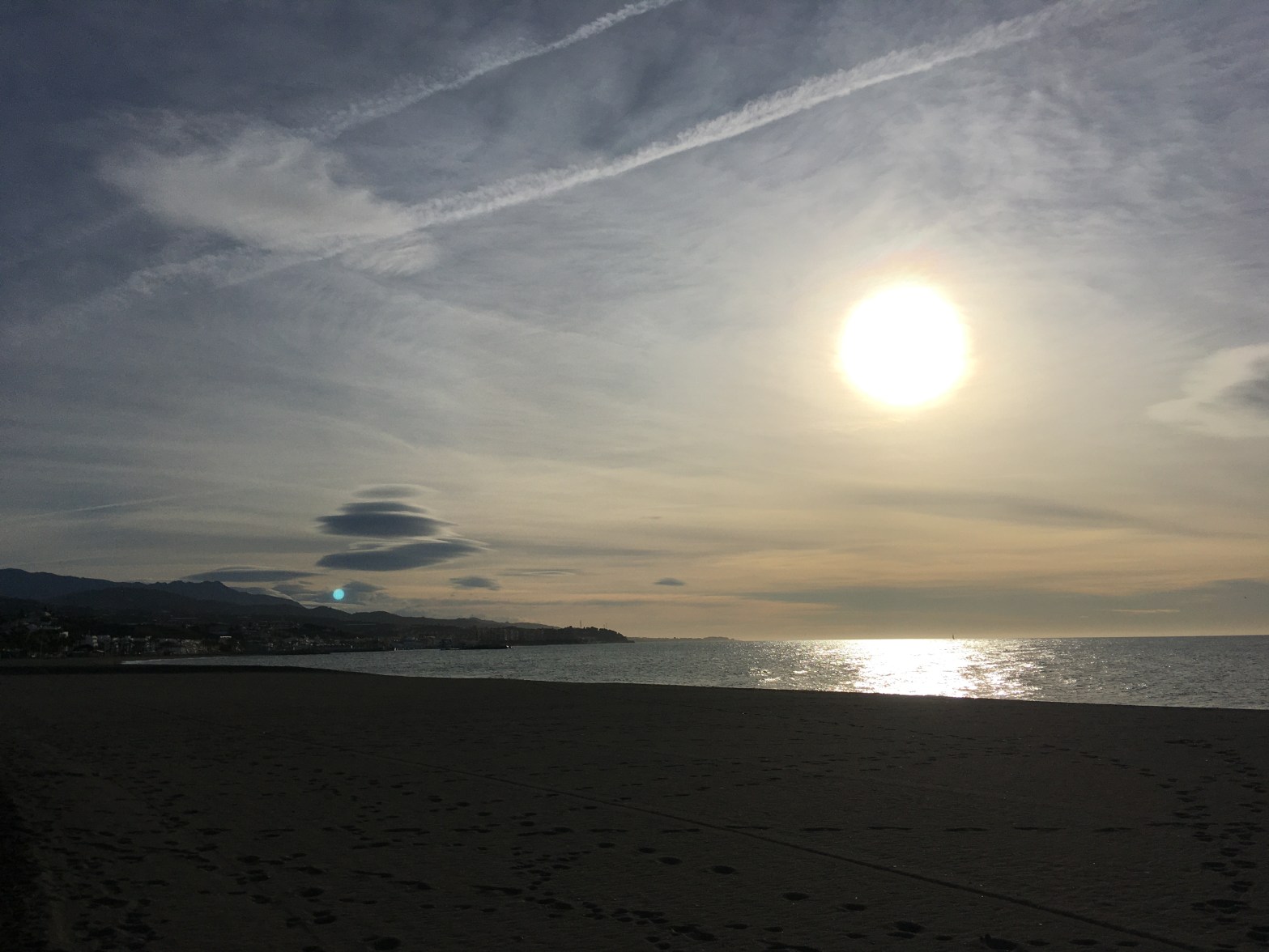
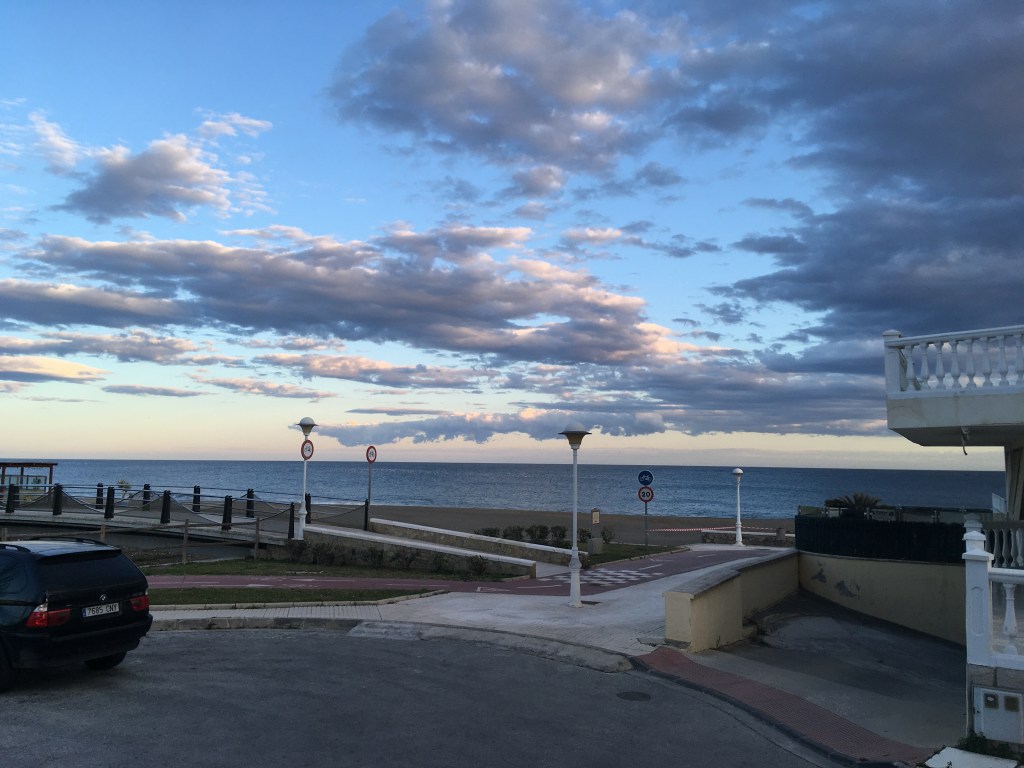
And we enjoy the views as much as possible.
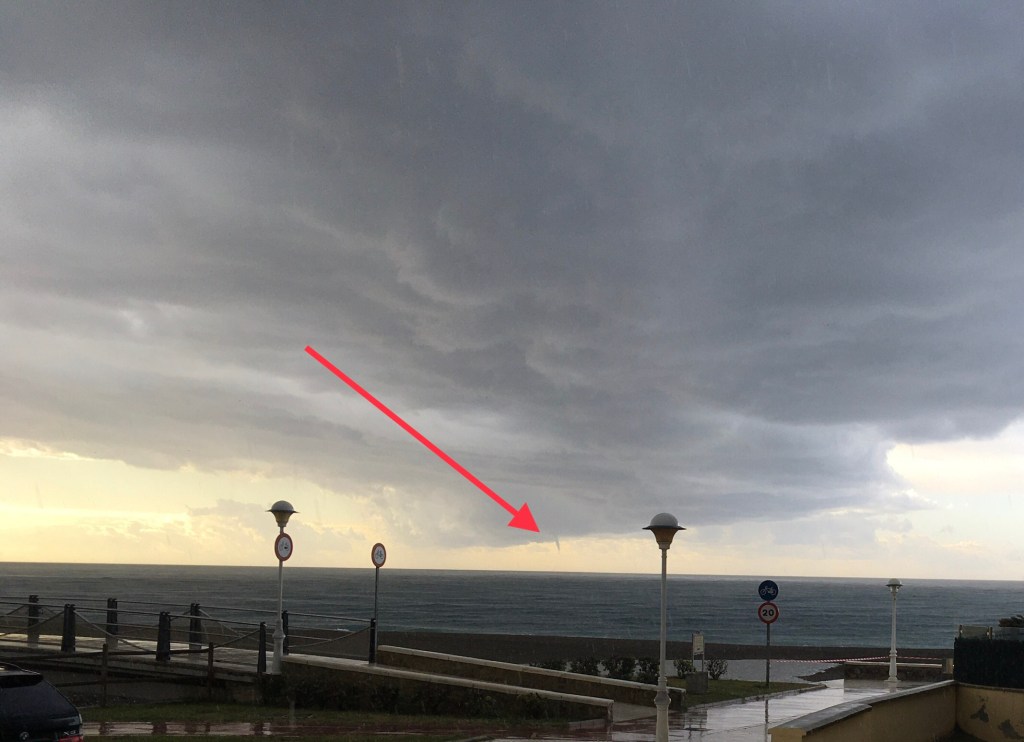
Funnel cloud over the sea.
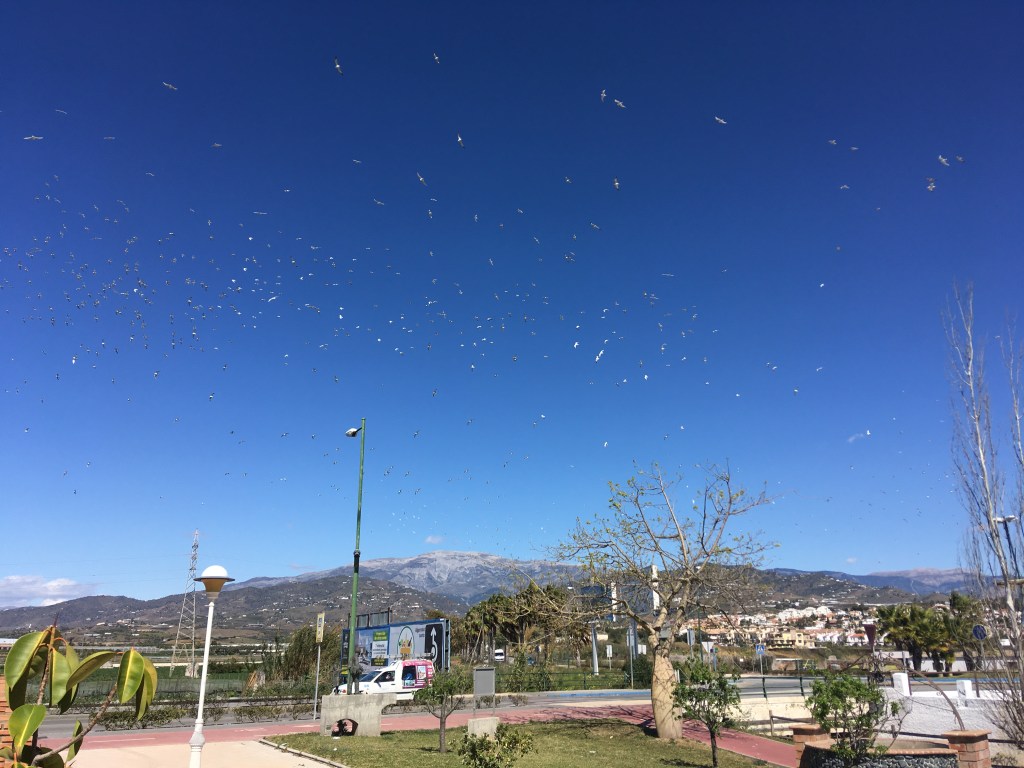
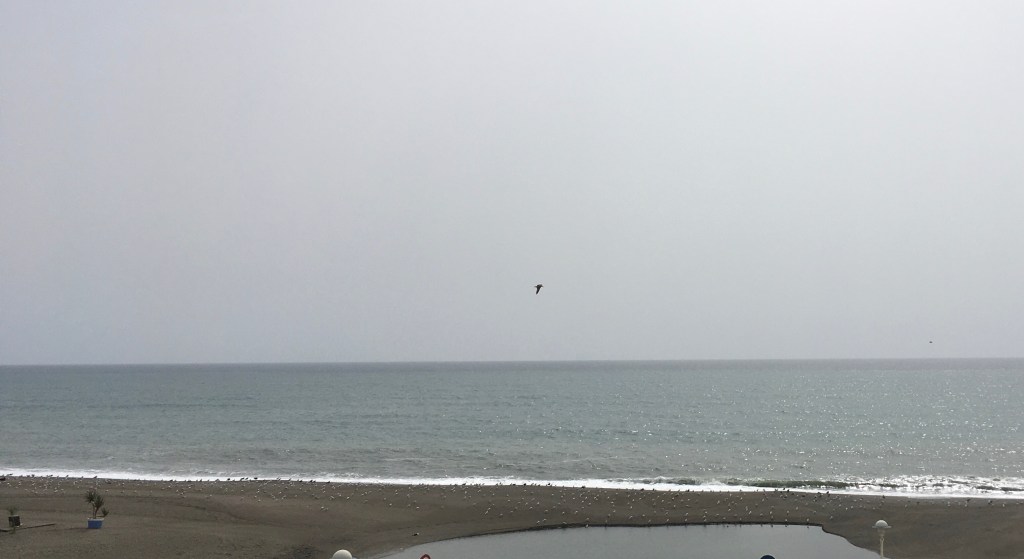
I think the birds are enjoying having the beach to themselves.
Look closely and you will see a bird about every foot.
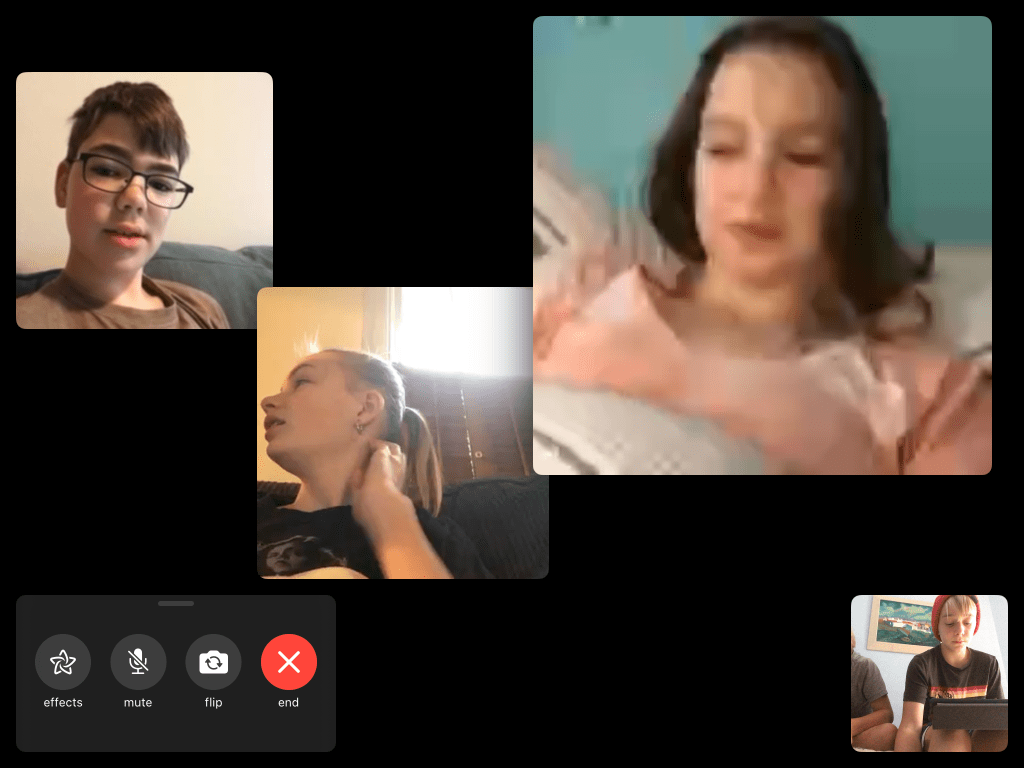
It is lonely and we are glad for our WhatsApp and FaceTime chats.
We had a trip planned for the boys’ week off school for Semana Santa (Holy Week), which we have cancelled. Luckily we’ve gotten refunds from at least one airline, and all of our housing.
We just heard that the U.S. State department has said to come home now or shelter in place. We have decided to shelter in place. Even if we could get home (flights are few and far between), we believe that things will be far worse in the U.S. since people have barely started social distancing. Although this lockdown is not fun, Spain is taking this virus seriously and we believe, because of that, it will be a better place for us to weather this pandemic.
Most importantly, we are healthy. We are safe. We have each other.
Like the rest of the world, we watched as the Coronavirus hit China, then Italy, and then it came fast and furious to Spain.
Originally, it was concentrated in Madrid, the Basque Country and Mallorca. Then it started hitting closer to home. Spain’s government acted fast.
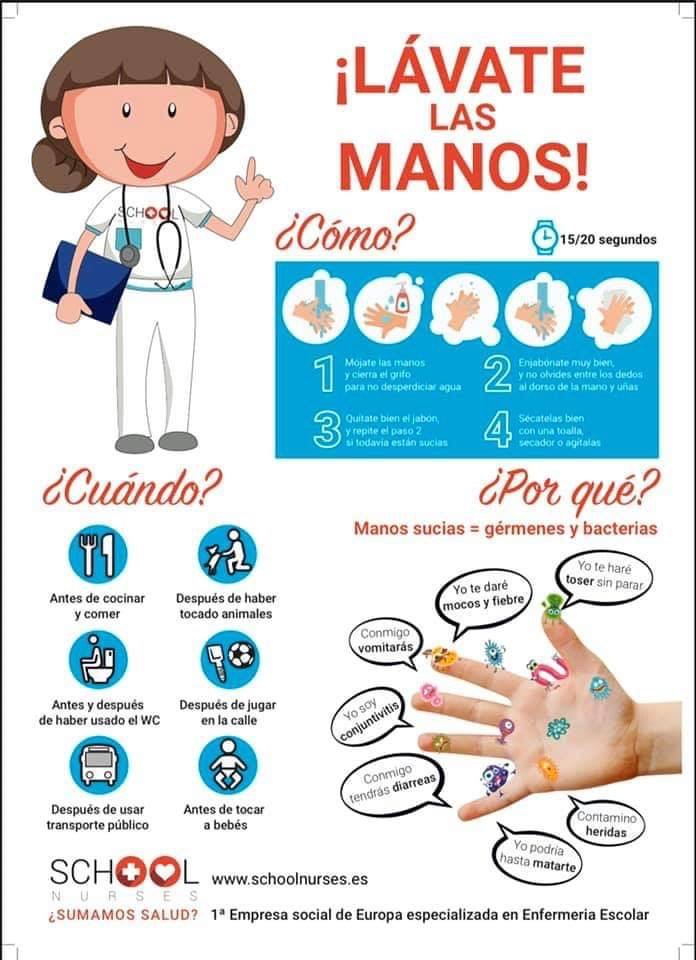
The first signs of changes in our town that we noticed was the boys’ schools informing people to wash hands and cover coughs. Unfortunately, neither boy’s school provides soap in any of the bathrooms (I have sent hand sanitizer in their lunch boxes since the first day of school), so these efforts would not have been very effective.
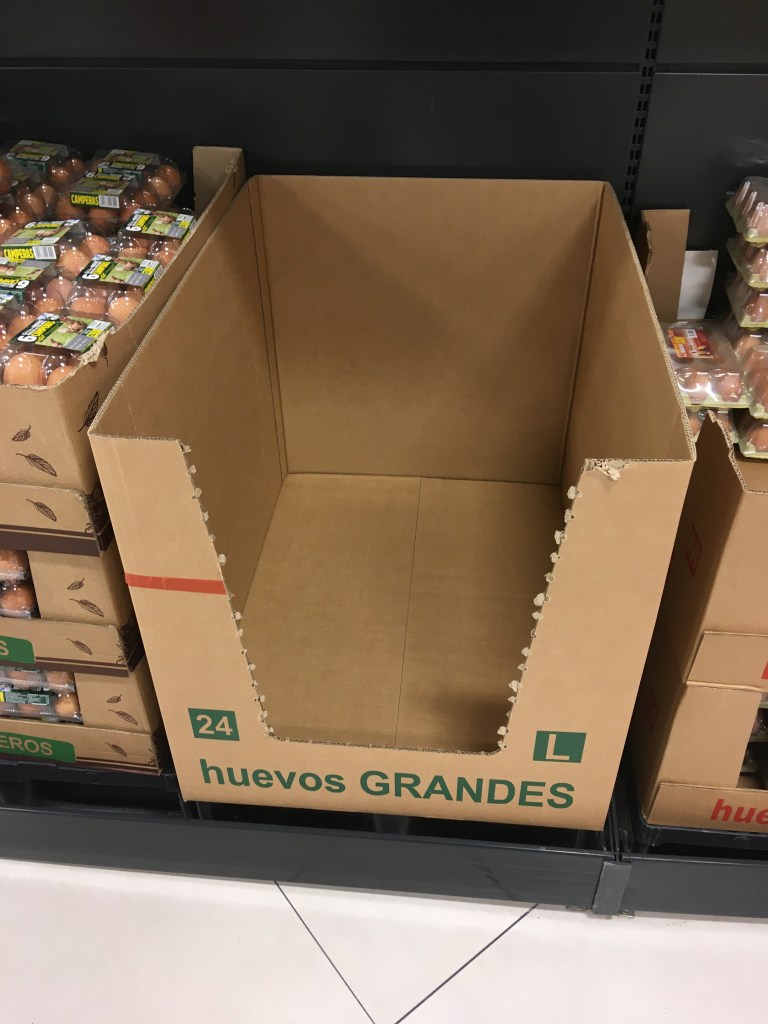
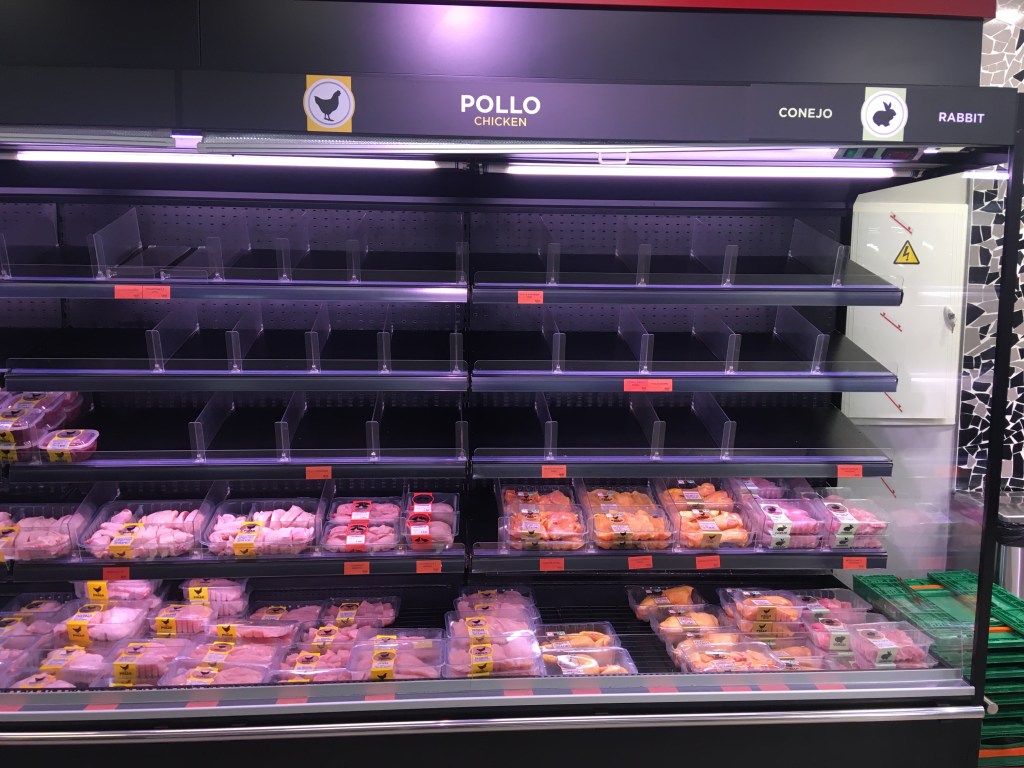
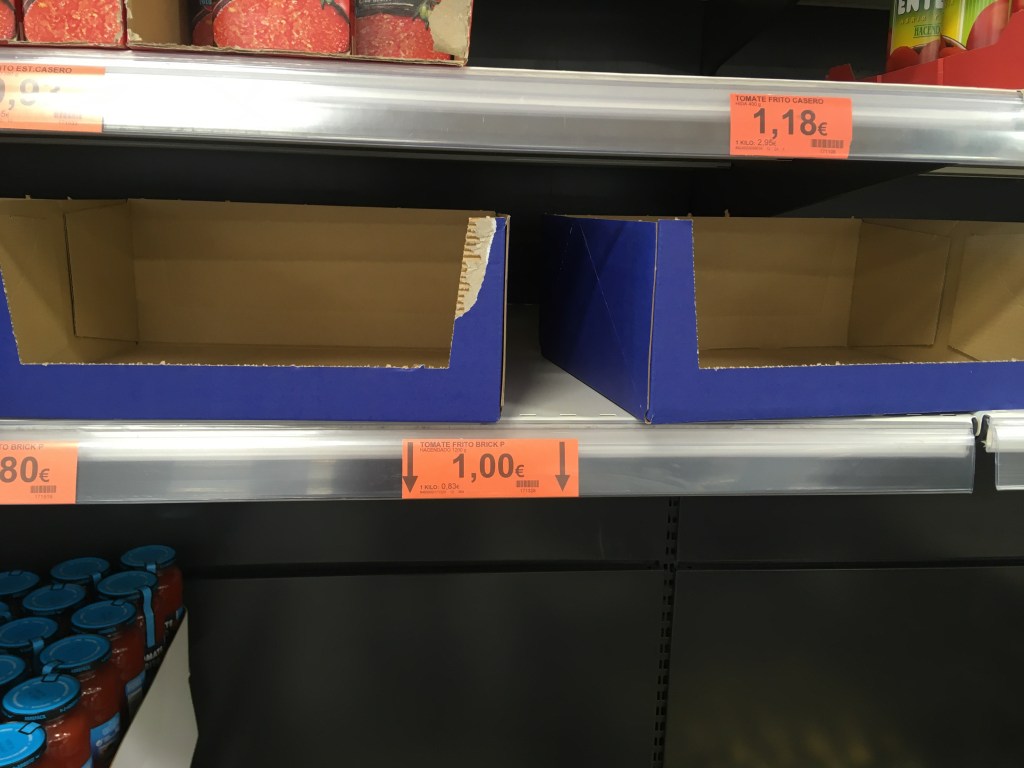
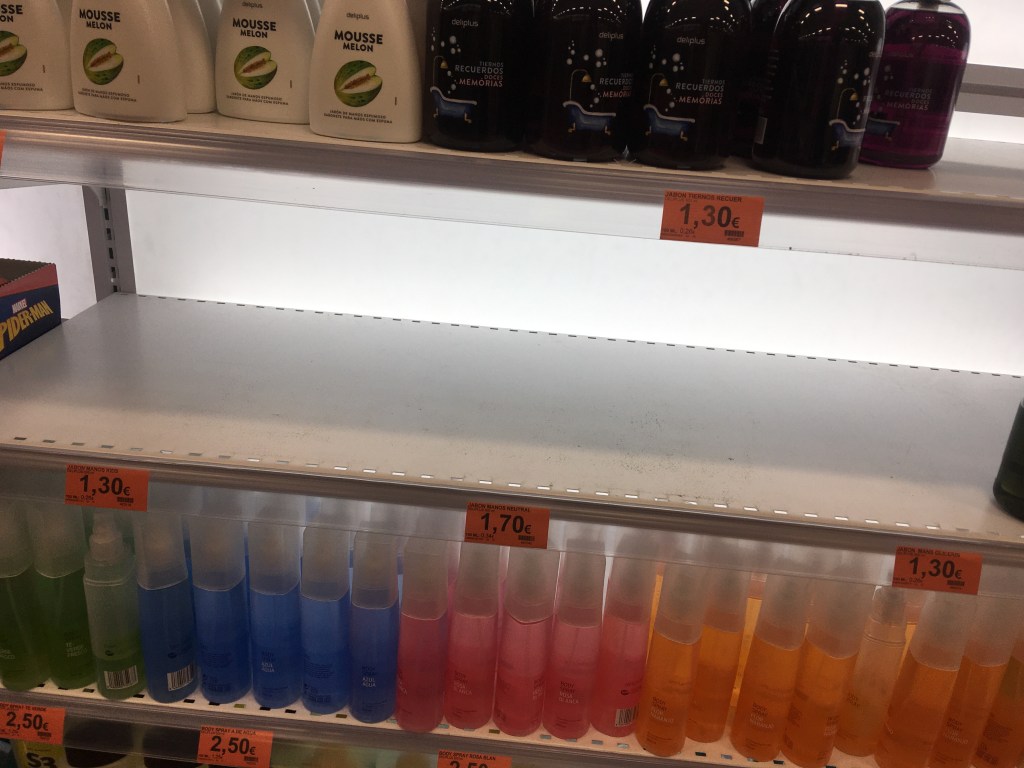
Then one afternoon Oliver arrived at soccer practice to find no one there. The police had come across a woman at a bus stop wearing a medical mask and feared she might be infected, so emergency protocols were put in place. All extracurricular activities, including sports practices and games were cancelled (unfortunately, we hadn’t yet been added to the WhatsApp group and hadn’t gotten the message). The entire region’s bus fleet was sanitized over night. The next day people started talking about closing schools. People hurried to grocery stores to stock up and supplies started to run out.
eggs
Chicken
canned tomatoes
Soap
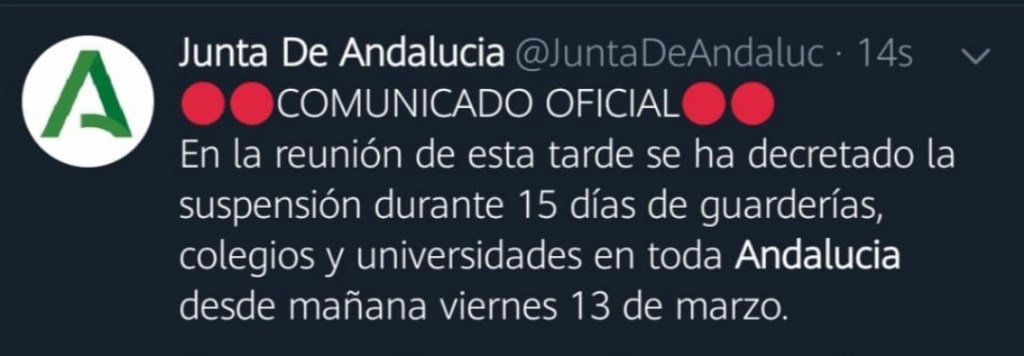
By evening the president of Spain recommended all schools and universities to close, but it was up to each region to make an official decision. By bedtime, the government of Andalucia officially closed schools for 2 weeks.
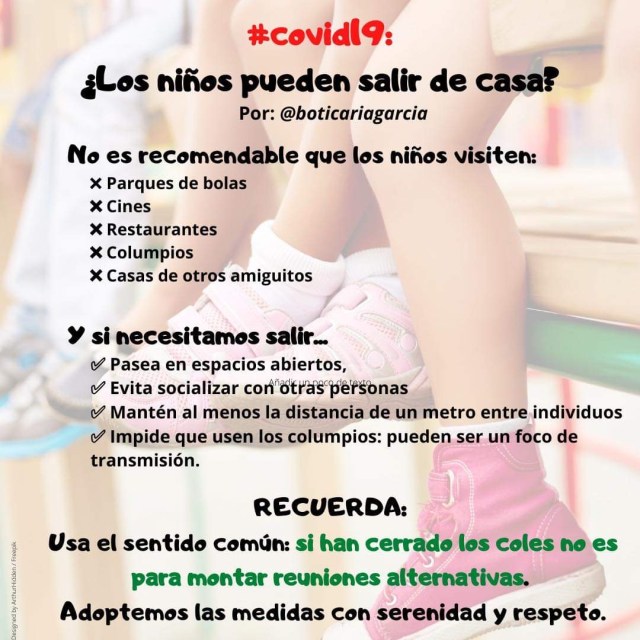
By the next day, bars and restaurants were closed in many regions of Spain and a campaign was started “Quédate en casa,” urging people to stay home and not to use the two weeks off school as a vacation hanging out with friends.
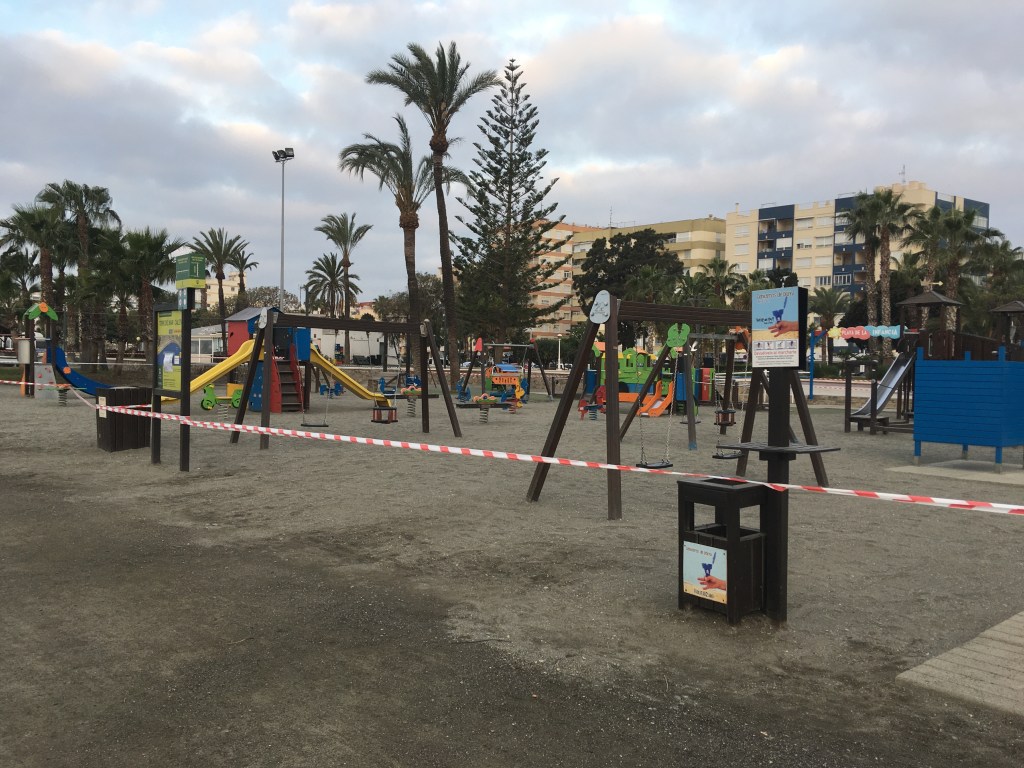
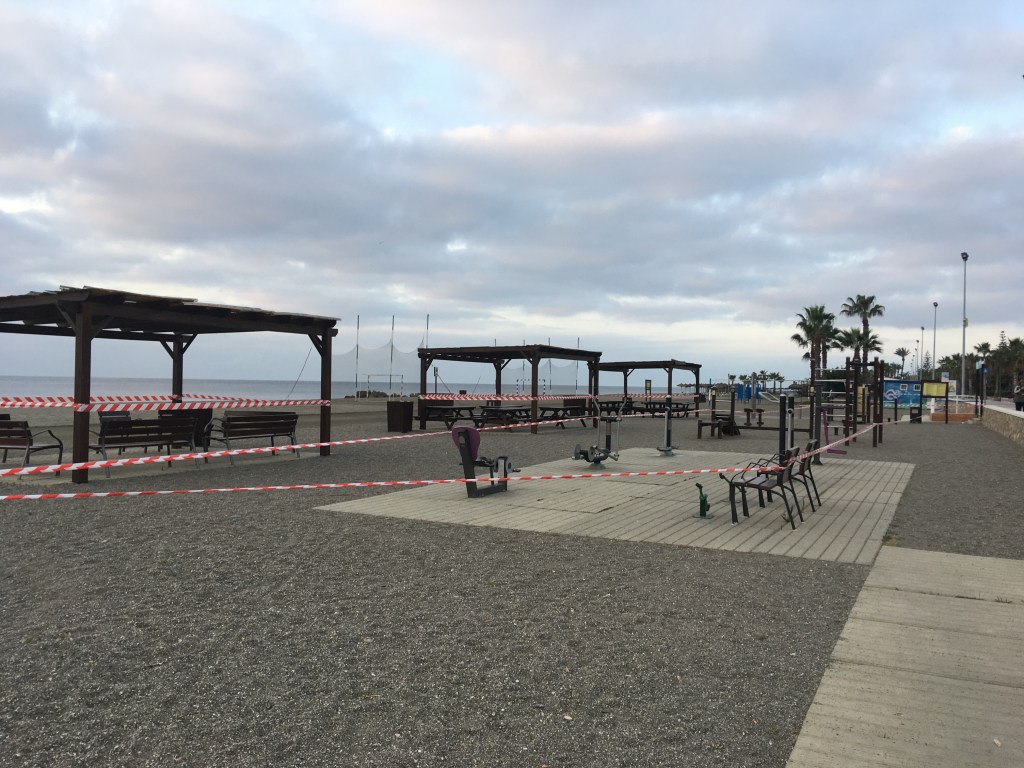
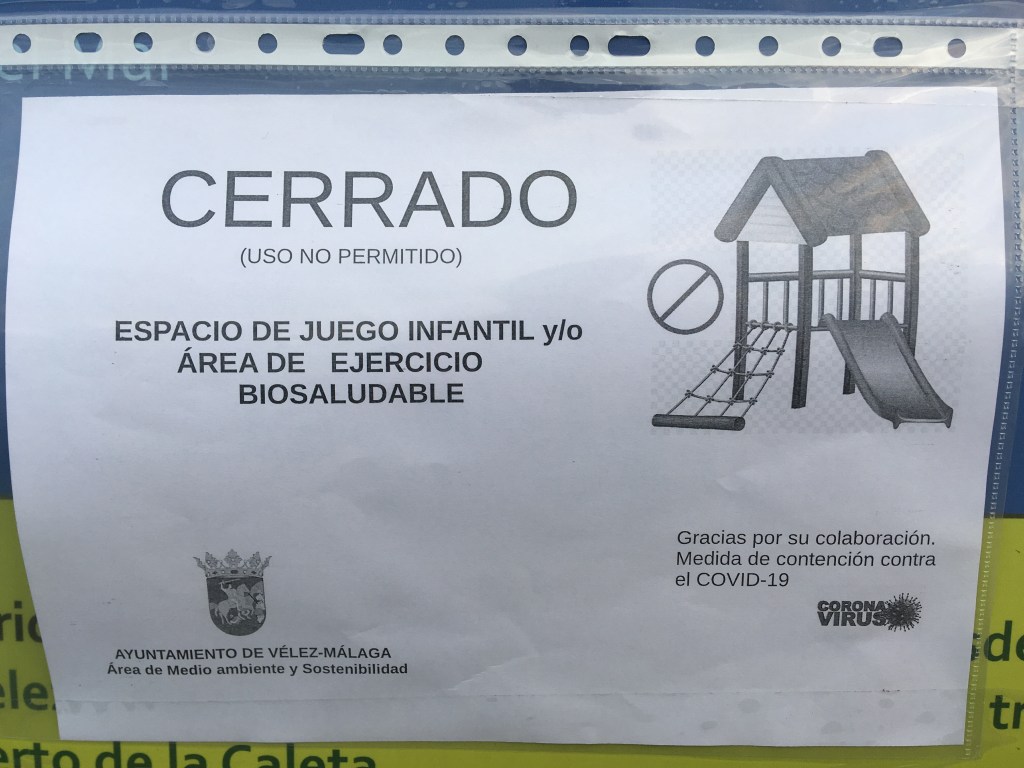
Picnic areas and playgrounds were closed.
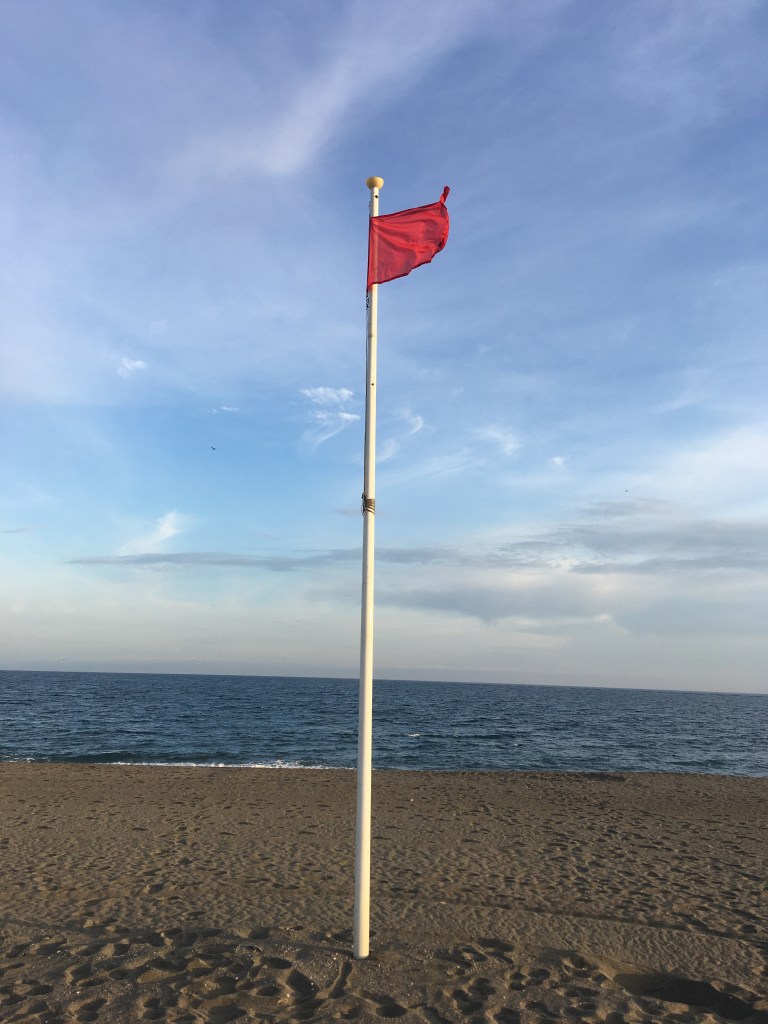
And then they closed the beach.
Red flags are usually used to warn against high surf or jellyfish, this time it is to discourage people congregating on the beaches.
Part of the reason for the beach closure is to discourage people from Madrid from coming. Madrid has been hit hardest and is now under lockdown, with all bars, restaurants, stores, etc. closed. Many people have fled the lockdowns and headed to the coastal towns, possibly spreading the virus (one infected man actually traveled hours by train from Madrid to Murcia, then went to the grocery store before being taken to the hospital). On one of our few outings Todd spoke to the owner of the Lebanese restaurant. He was closing his restaurant for 20 days in response. He pointed to the apartment buildings around his restaurant saying that usually they are vacant until the summer when the owners from Madrid come to escape the heat. He had seen lights on in many of them. He preferred to be home with his family.
Runs on the grocery stores continued. There were lines down the aisles and people actually had to wait outside because the store was too full. Many products were completely unavailable.
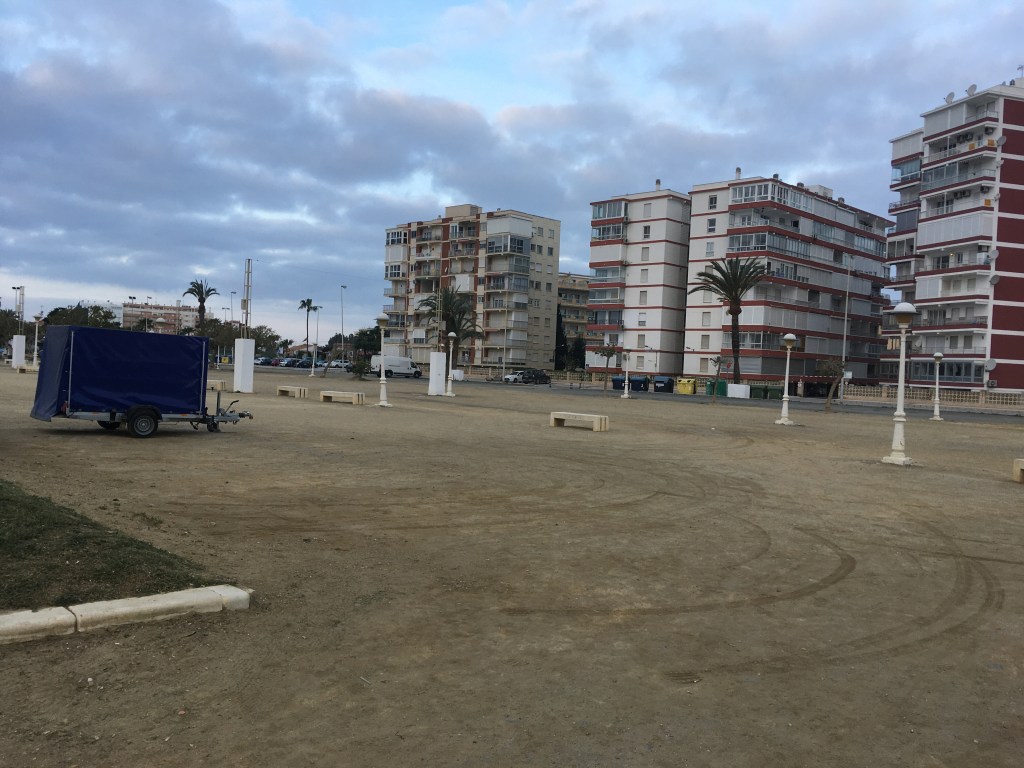
It is oddly quiet around here. People are staying indoors. Even the parking lots that are usually full of camper trailers for tourists from England, Germany and Denmark are completely empty. I’m not sure where they went.
Keeping two active boys contained all day for 2 weeks has the potential of being challenging. We created a list of required activities to keep them busy, helpful and intellectually engaged.
Oliver has been given school work digitally through Google classroom and through the online communication system iPasen.
Each day the boys have to do chores. They practice their instruments (next week’s lessons will be provided through Skype). We’ll try to keep Leo’s brain engaged with reading, writing and Kahn academy math, but eventually assignments will be sent by email.
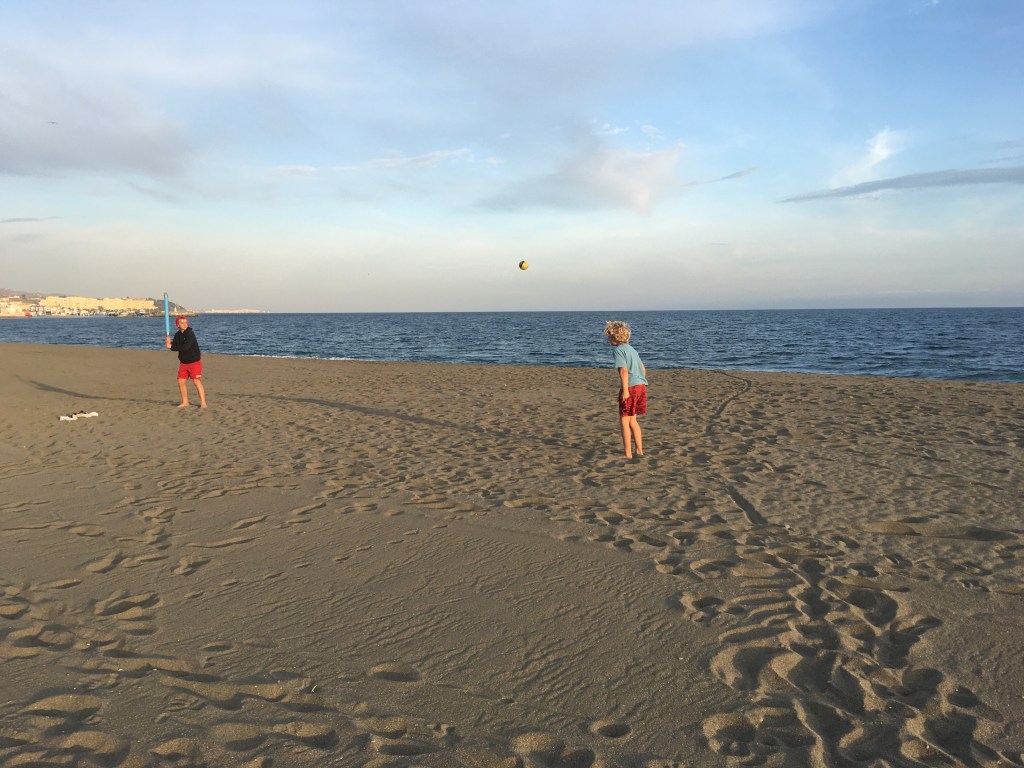
And we want to ensure that they go outside and are active each day. For the first day living right on the beach was helpful, we were able to be out without coming into contact with people. Now that they’ve closed the beach, we may need to play in our little yard.
baseball
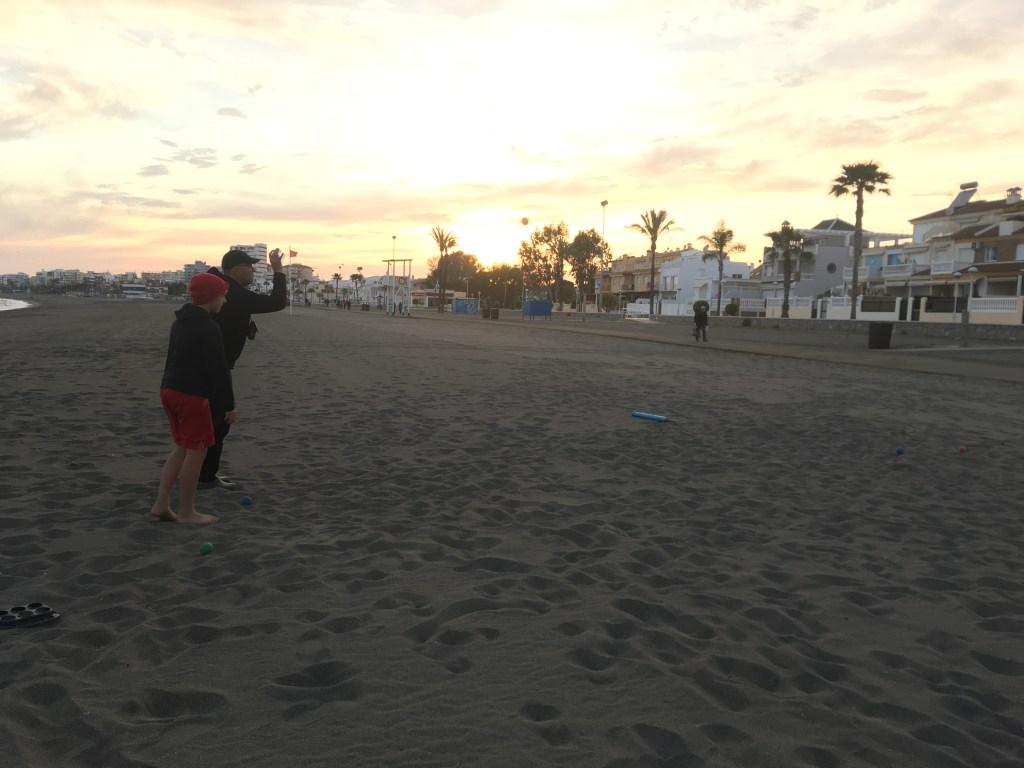
bocci ball
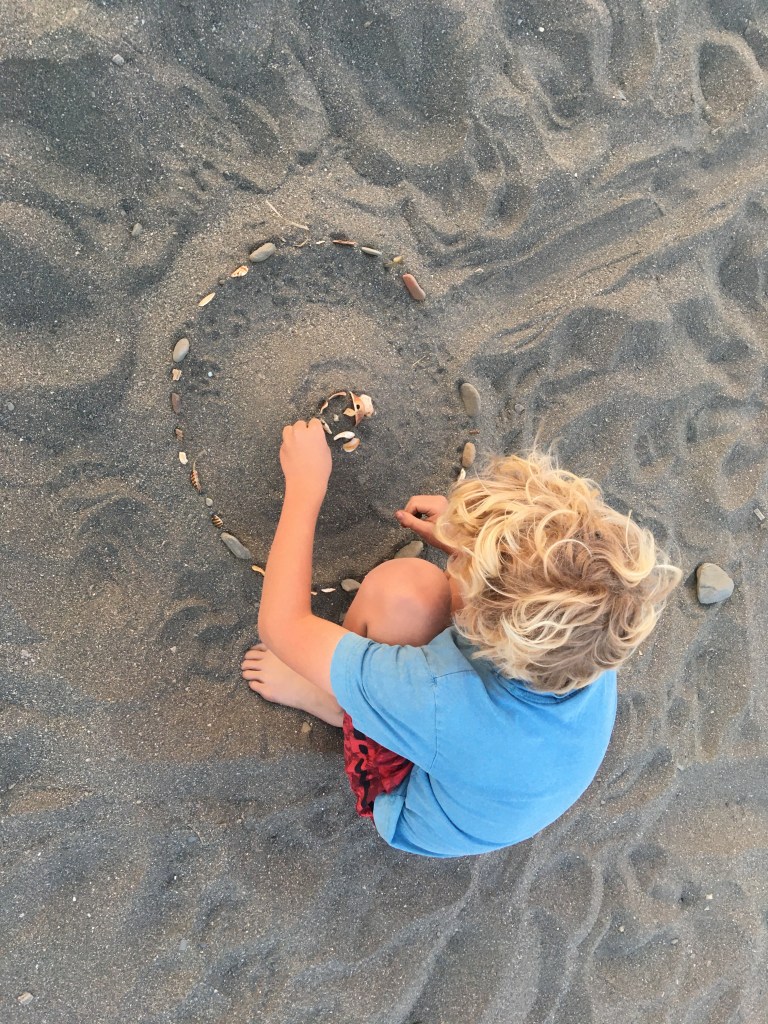
Sand art
They earn time for Garage Band, and computer games. Extra time can be earned for positive behavior and kindness towards their brother (we need to keep the peace).
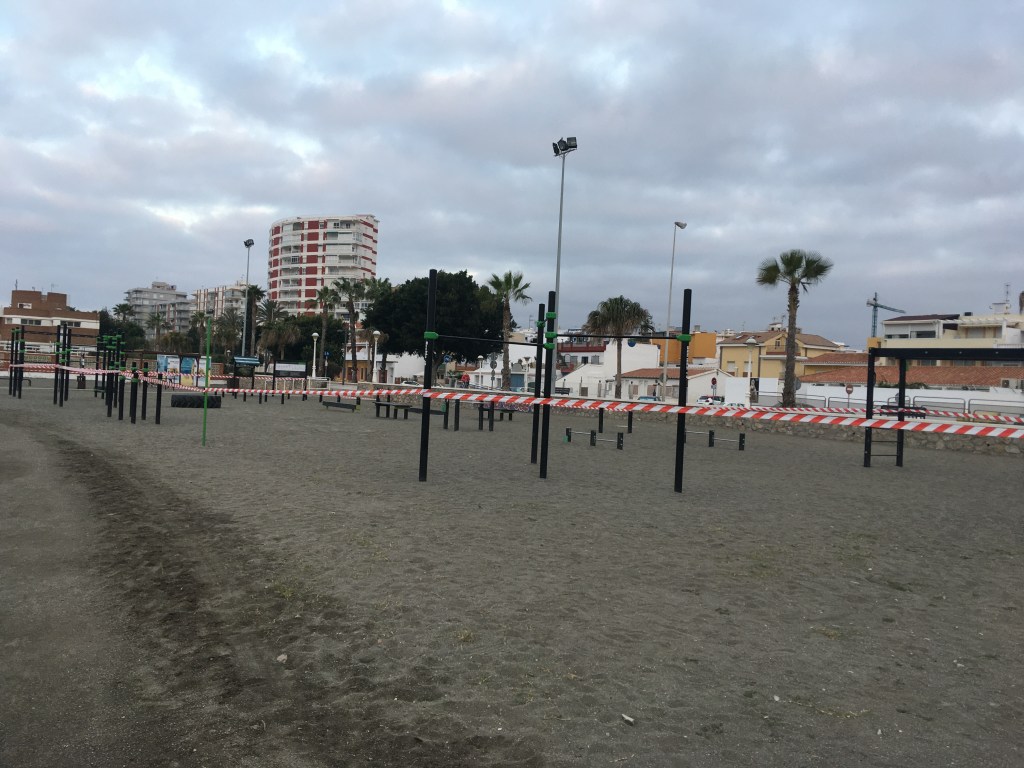
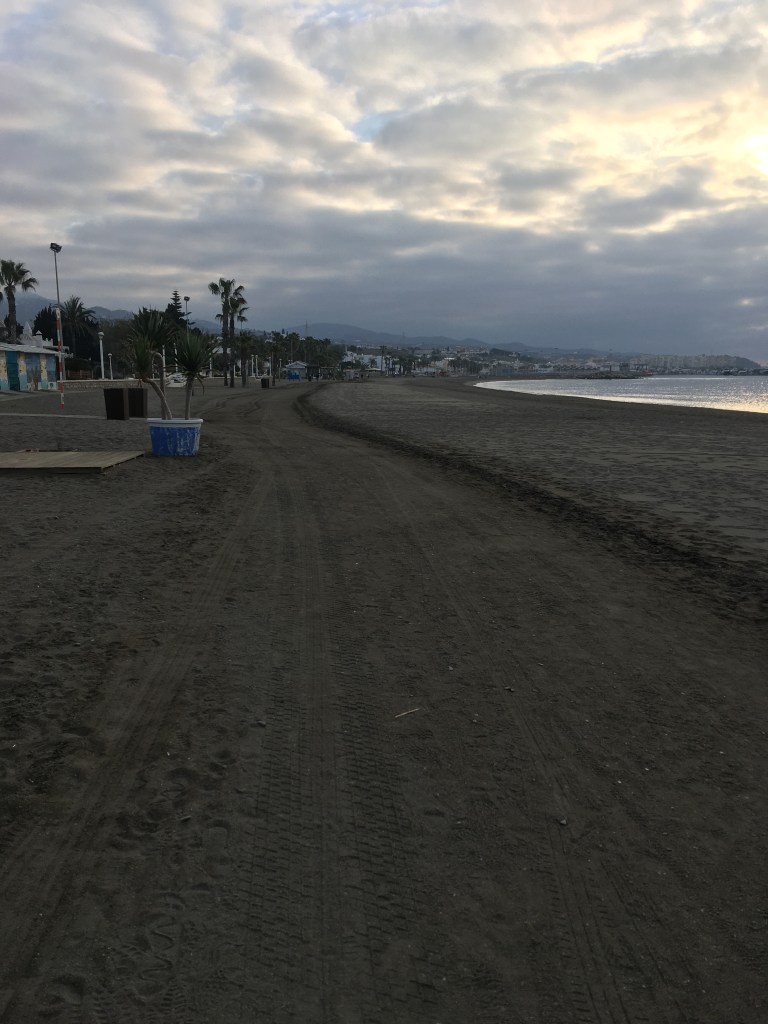
In effort to retain some sanity, I still need to work out. Our beach workout park has been closed, but I can still get up early while no one is up and go for a run on the beach trail (I think).
We were supposed to have a visit from our dear sister-in-law, but together we decided it would be best to postpone her visit for a variety of reasons. First, the US government has prohibited travel from Europe (although it only actually applies to “aliens”). Second, Spain’s government has implored people not to travel unless absolutely necessary. Third, she would travel from Oregon (where there are cases), through Seattle (where there are lots of cases), through Paris (more cases) and into the Málaga airport (the hotbed of cases in our region). Traveling through so many infected places would put her at risk, risk spreading anything she came into contact with and probably ensure that she would be put into quarantine upon returning home, not to mention our concerns for Todd’s dad, currently living with her, being exposed. And finally, since Spain was basically put on lockdown, everything that she wanted to visit has been closed.
It’s a little lonely to be so far away from home during this, but I think that Spain may actually be a better place than the U.S. at this point. Be safe and be healthy wherever you are, and wash your hands!
Update: The first big changes started Wednesday, with soccer practice being cancelled. Now it is midday Saturday, and this was just announced:
As of today, Saturday, freedom of movement will be severely restricted with citizens required to stay at home for the next 15 days.
The Royal Decree issued today says citizens will only be able to use public roads for the following reasons:
Acquisition of food, pharmaceuticals and basic necessities.
Visits to health centres.
Travel to the workplace to perform work or business-related activities.
Return to the place of habitual residence.
Assistance and care for the elderly, minors, dependents, people with disabilities or especially vulnerable people.
Visits to financial entities.
Due to force or need.
Any other activity of an analogous nature duly justified.
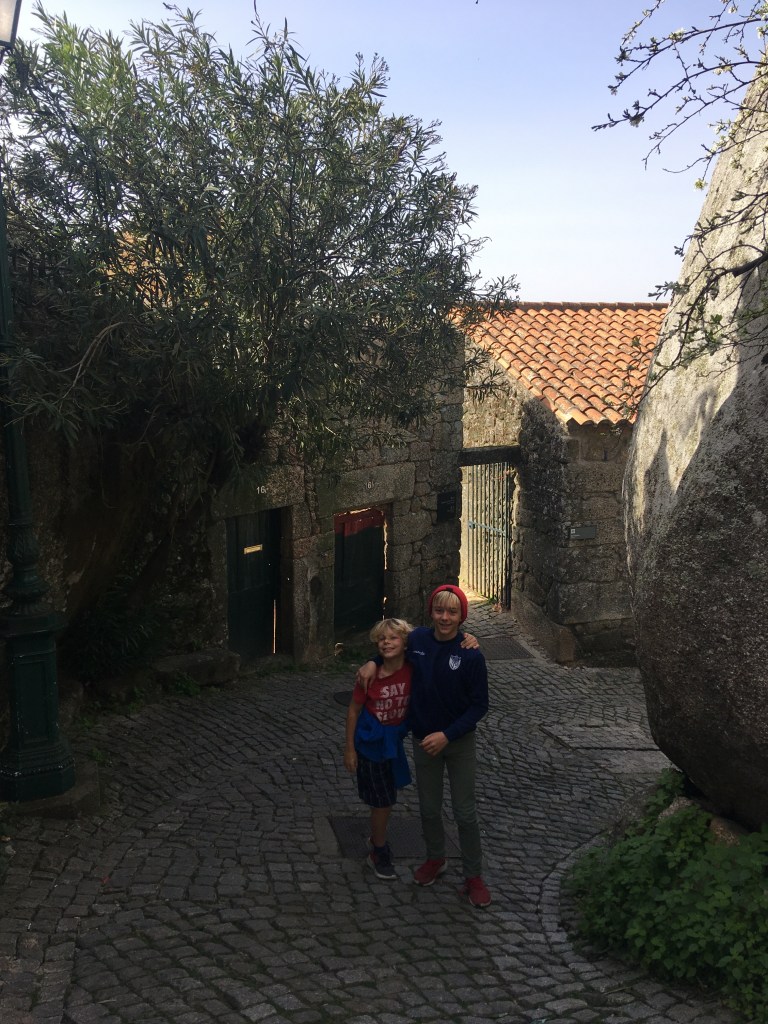
Monsanto is located basically in the middle of nowhere, but it looked so fascinating, I had to add it to our Portugal itinerary. And it turned out to be a definite favorite.
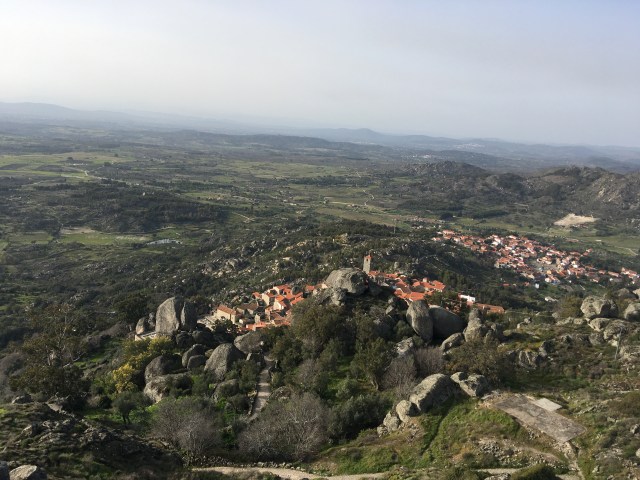
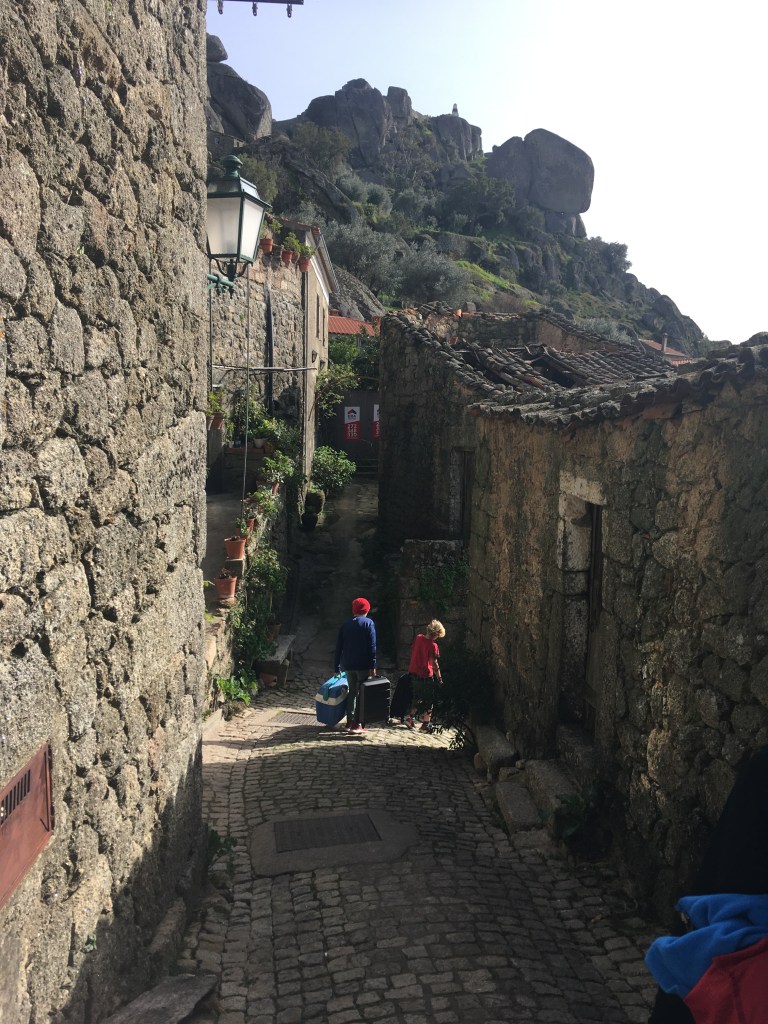
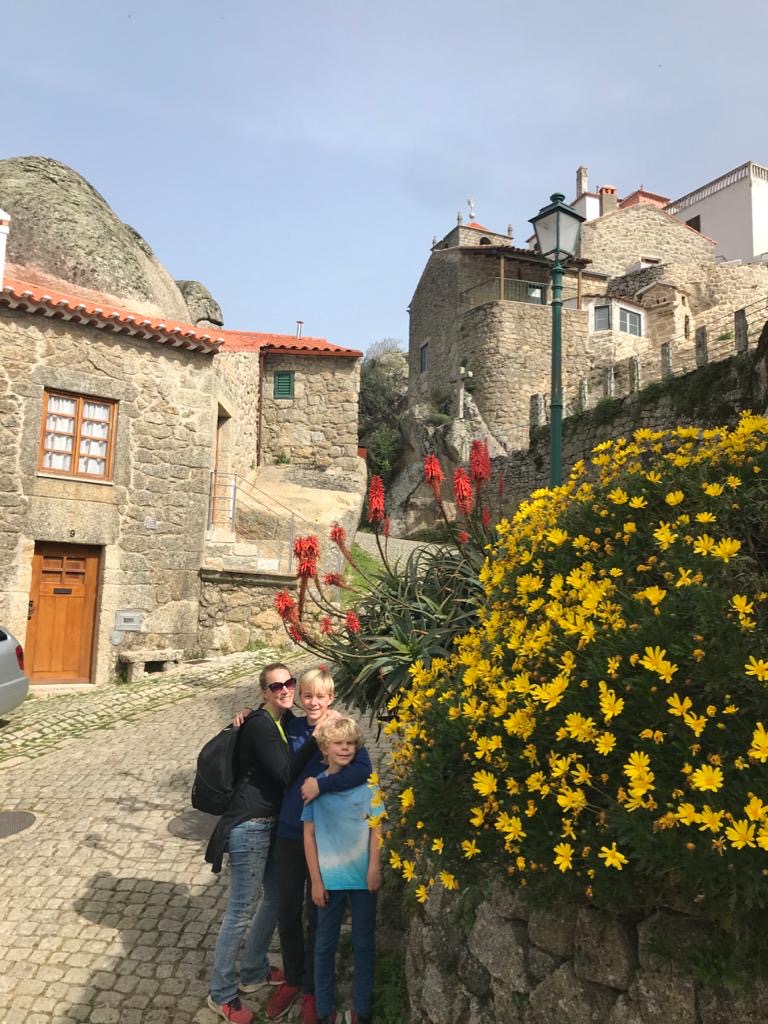
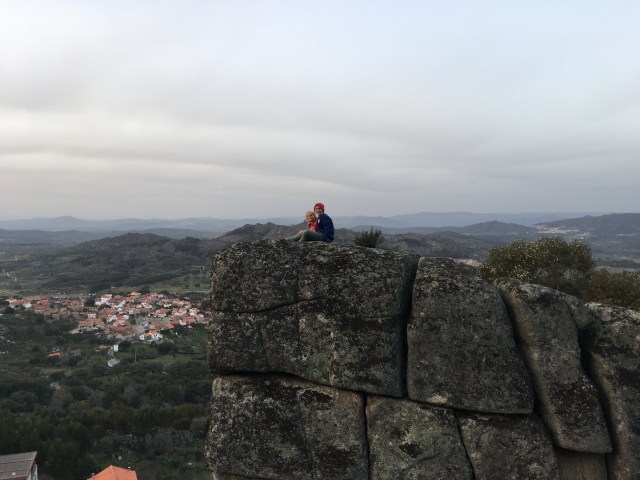
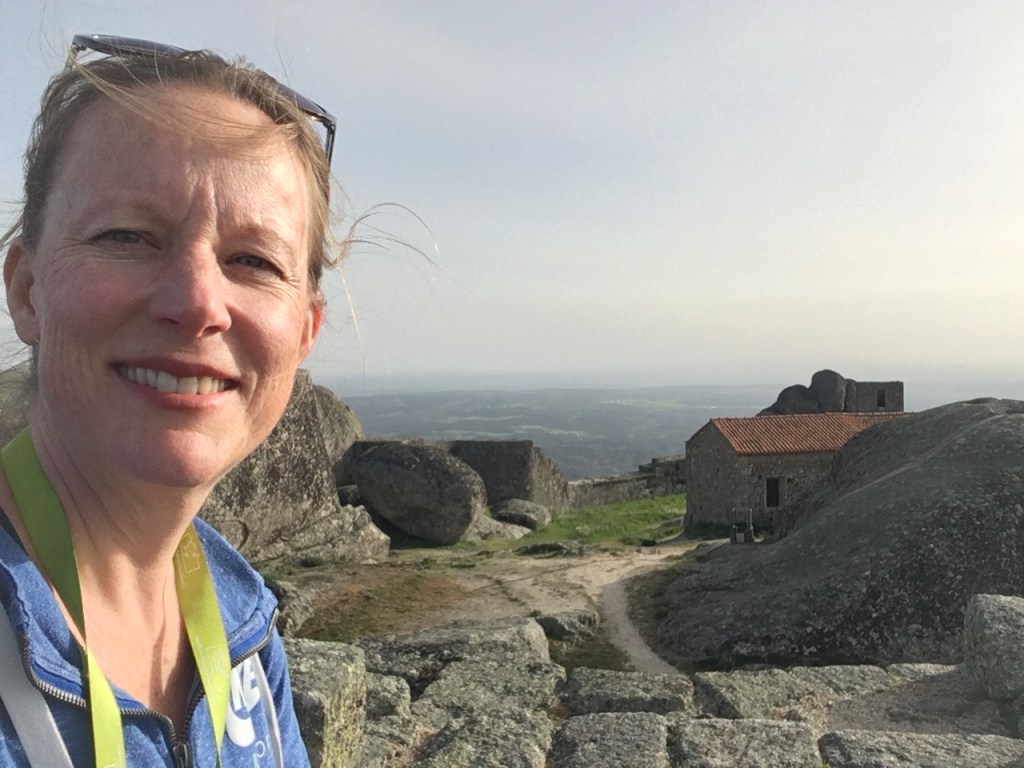
Monsanto is a very small medieval town high up on a hill near the middle of the border with Spain. Monsanto was voted the most Portuguese town in Portugal in 1938 and has worked hard to maintain its historic character.
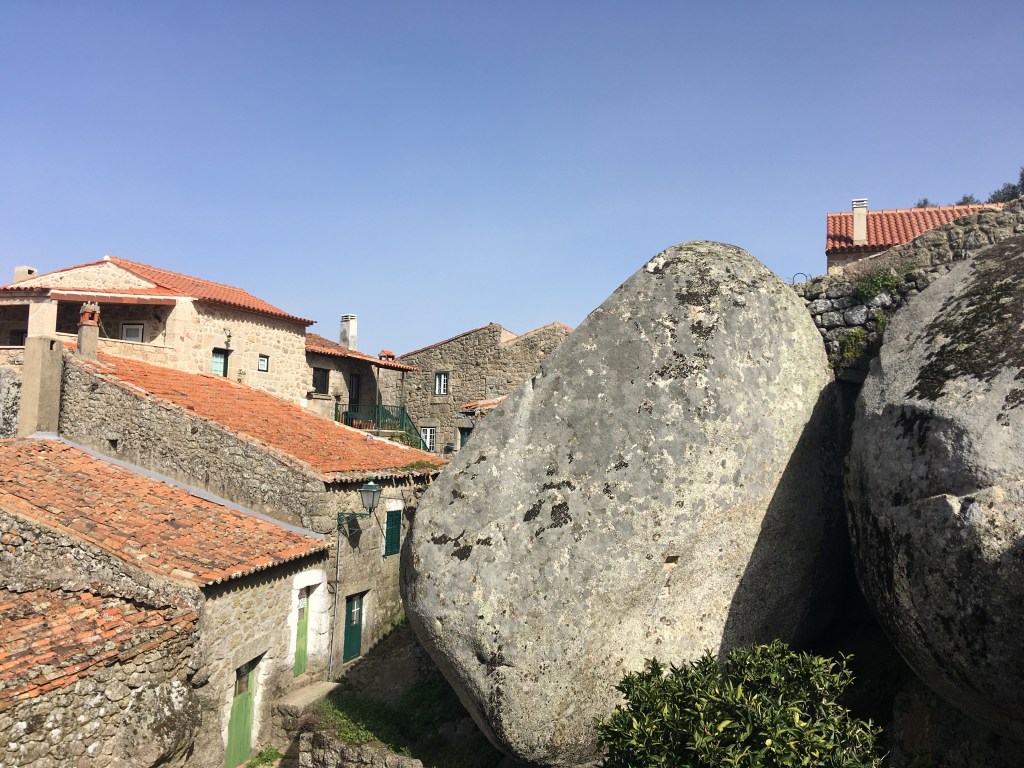
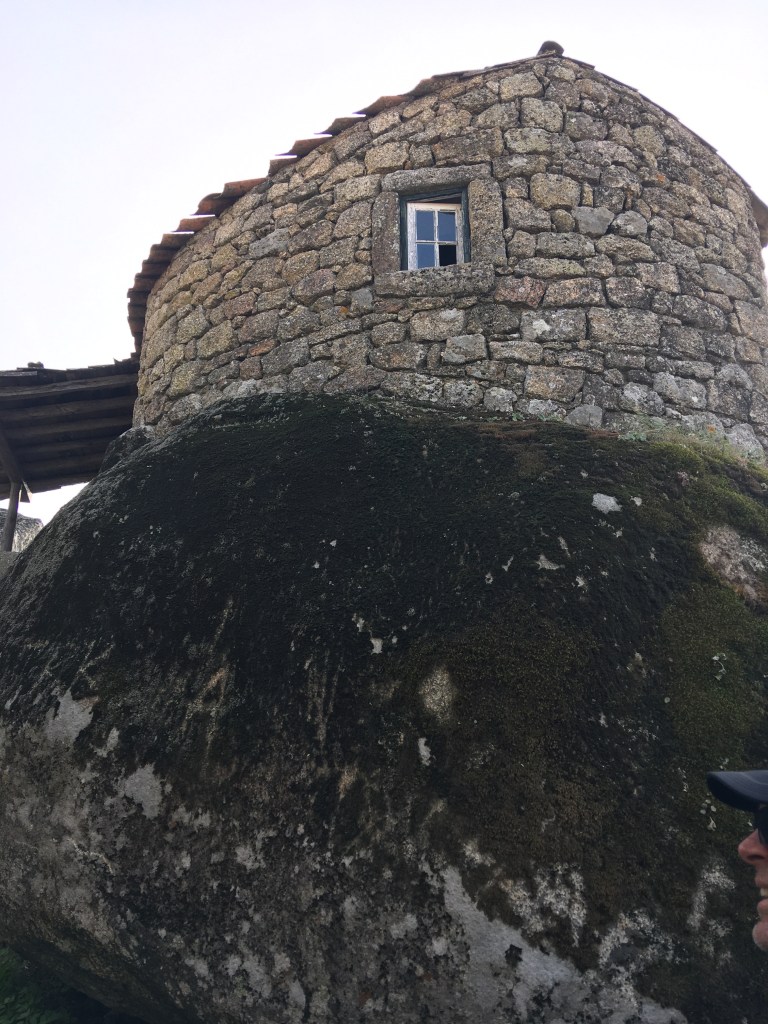
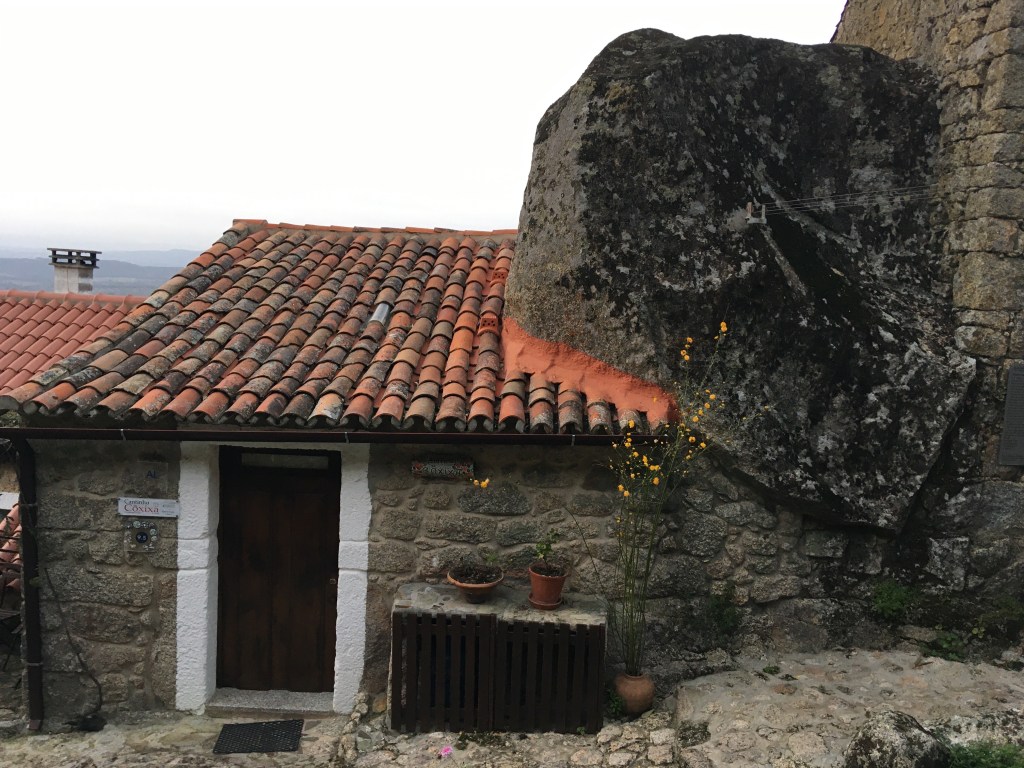
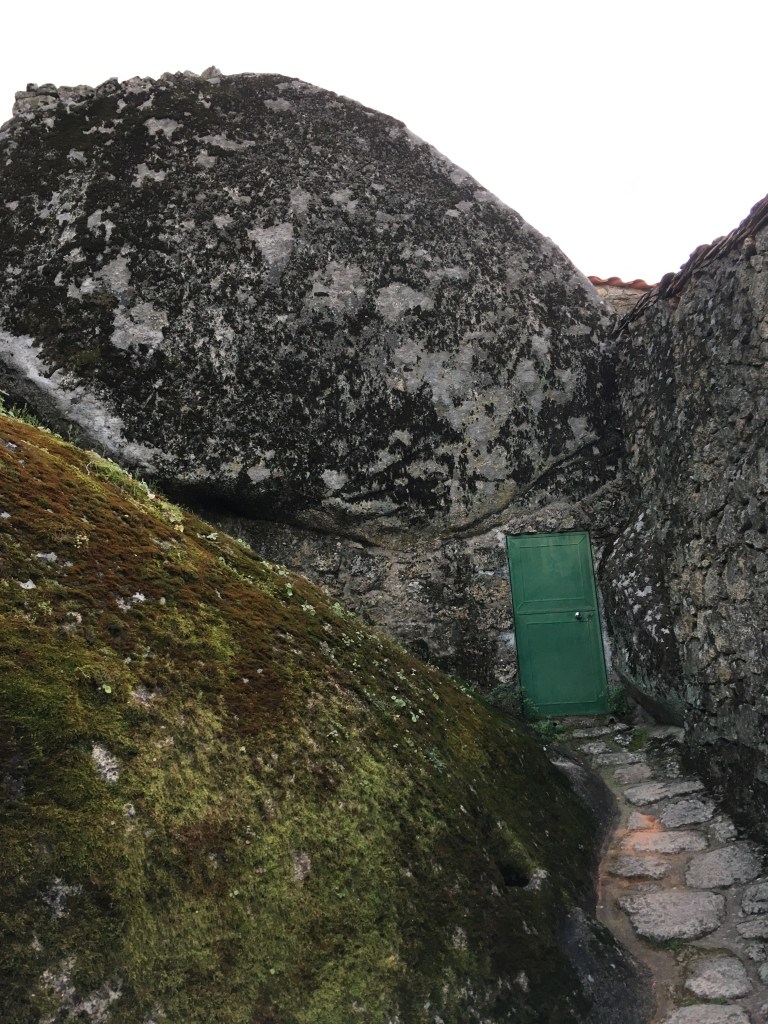
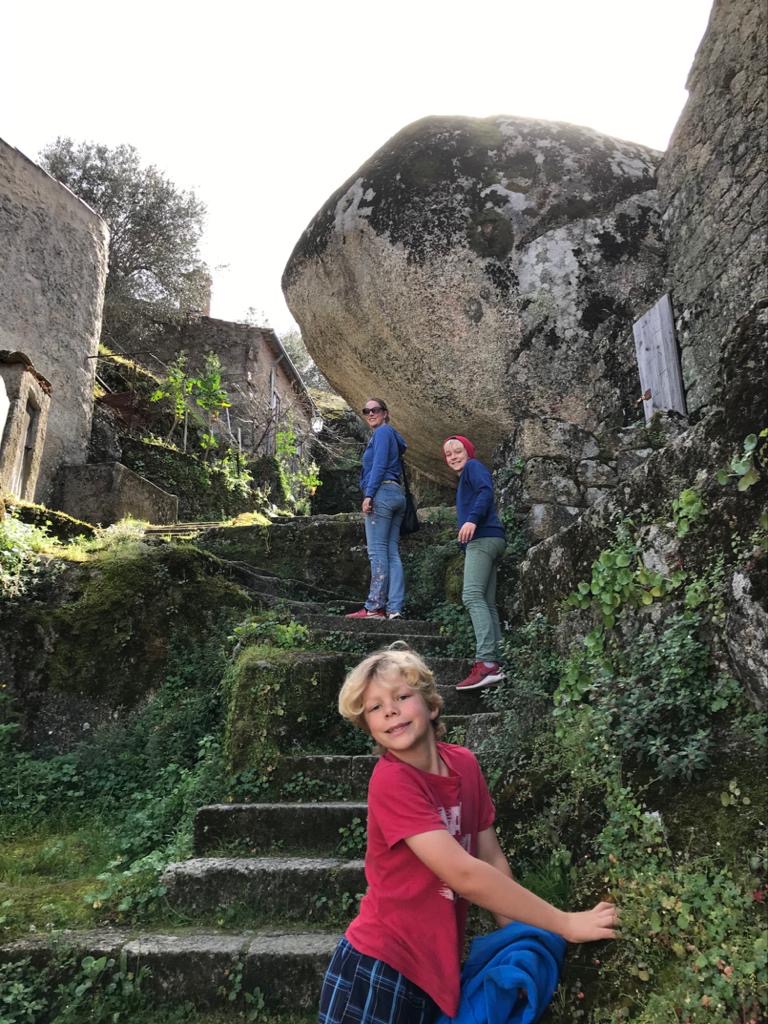
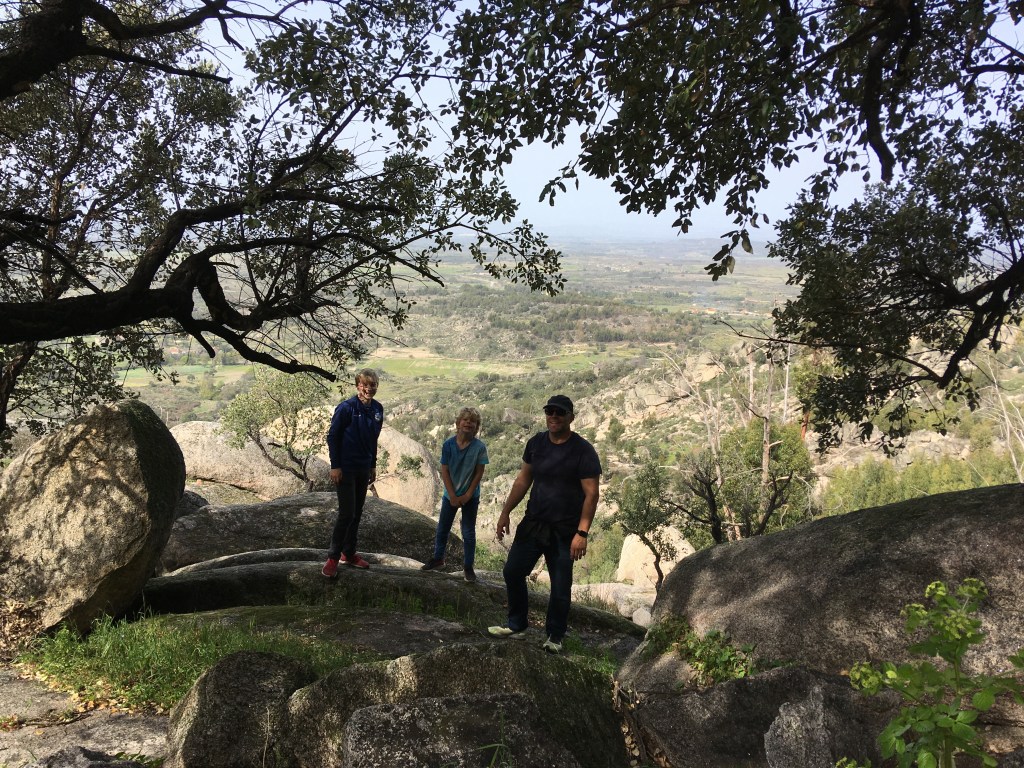
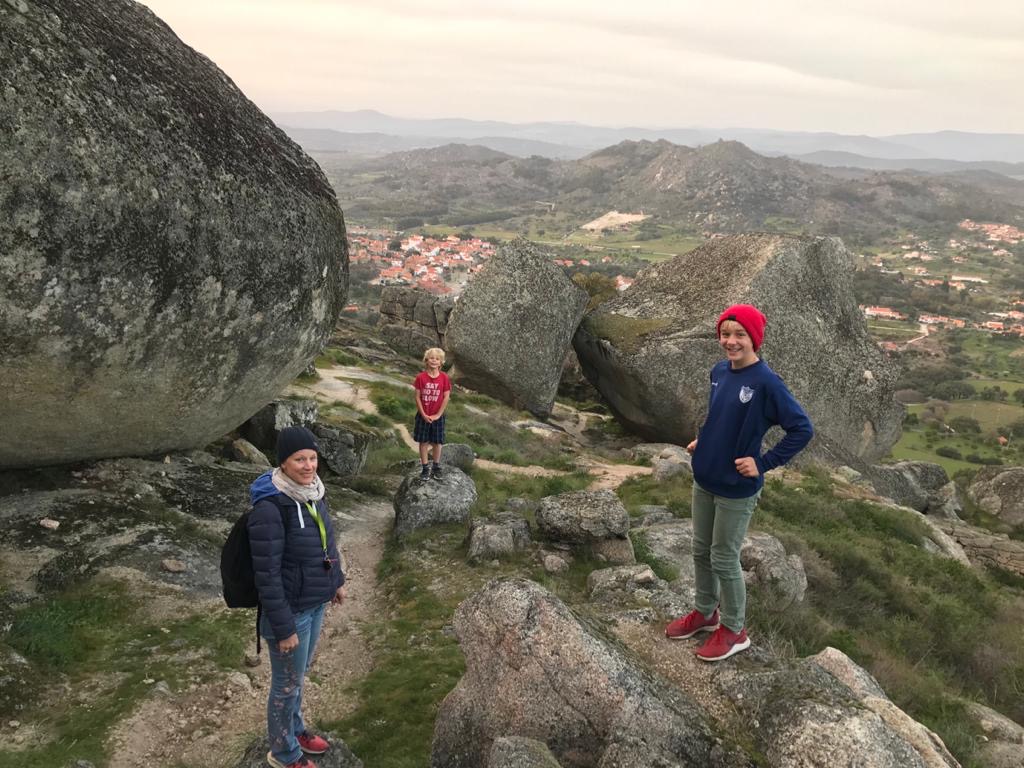
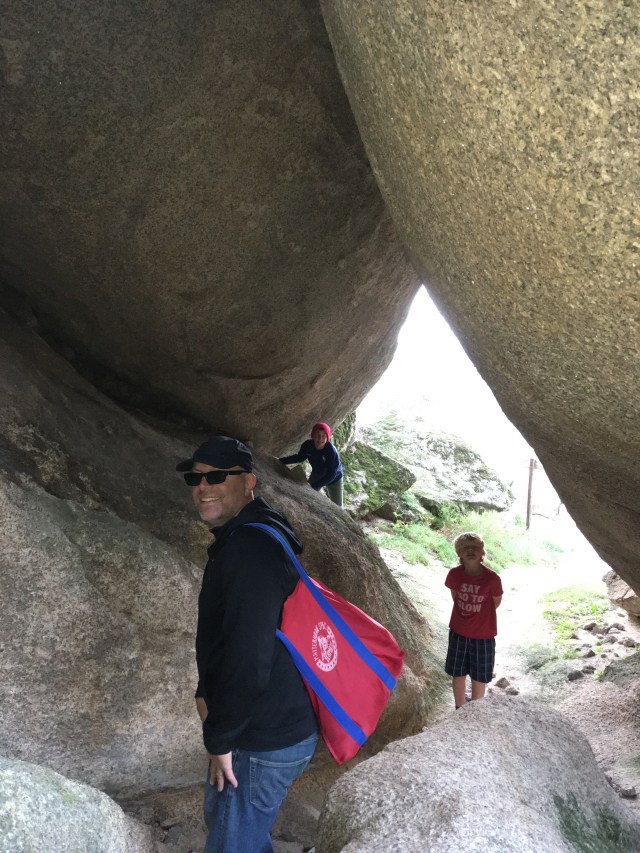
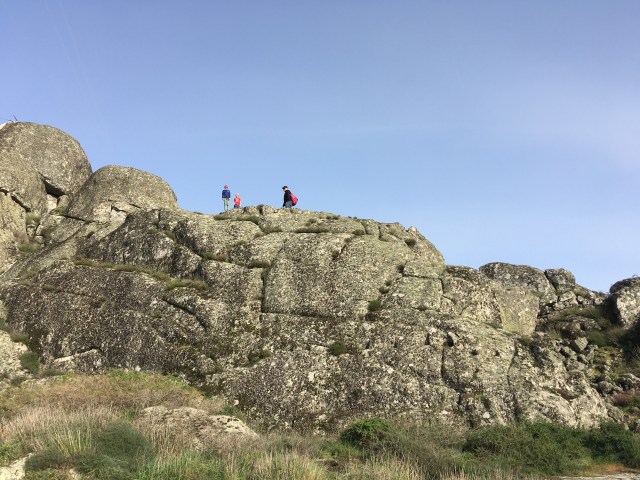
What makes it fascinating is that it is town built amongst and into the gigantic boulders that dominate this area.
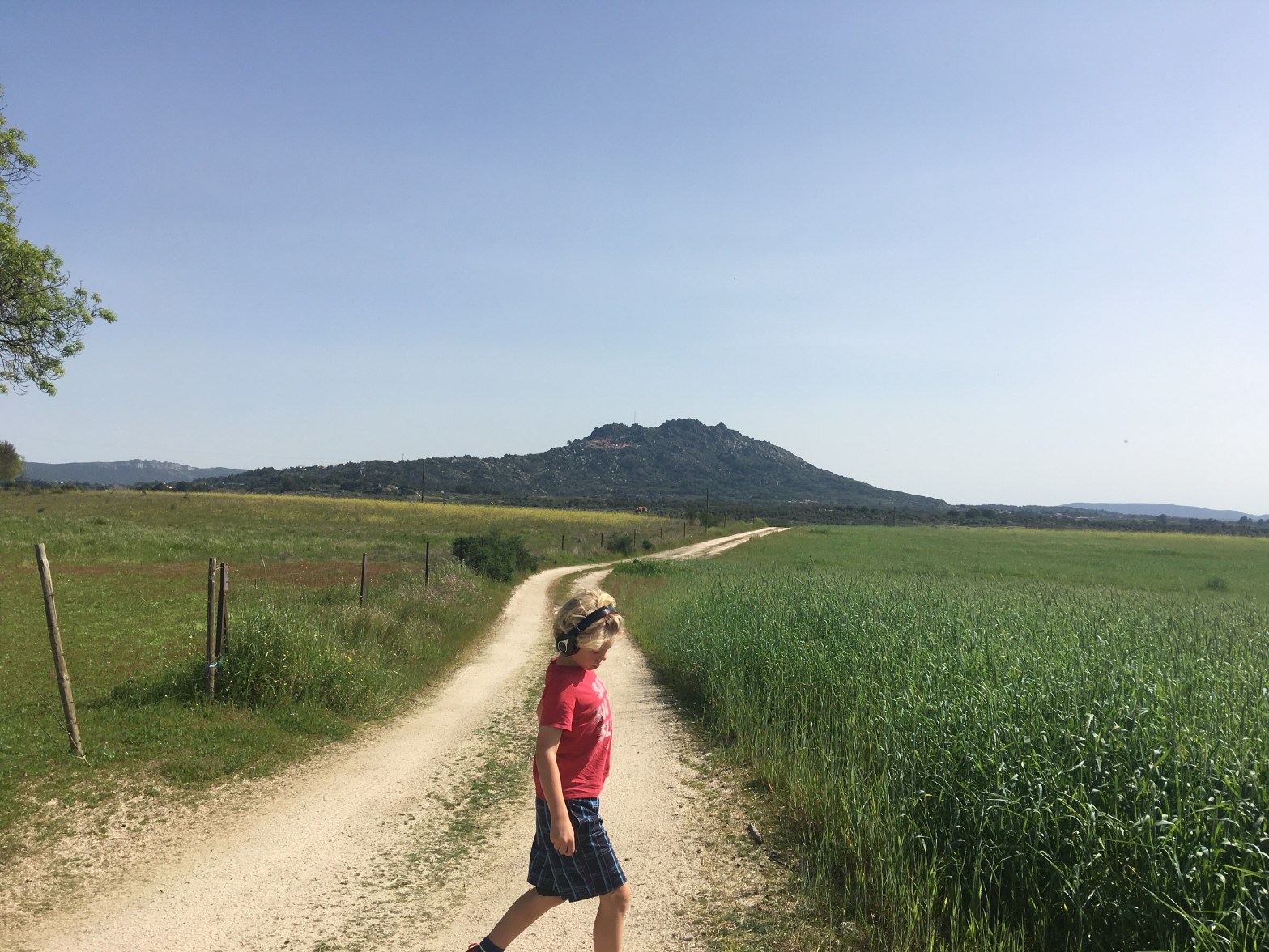
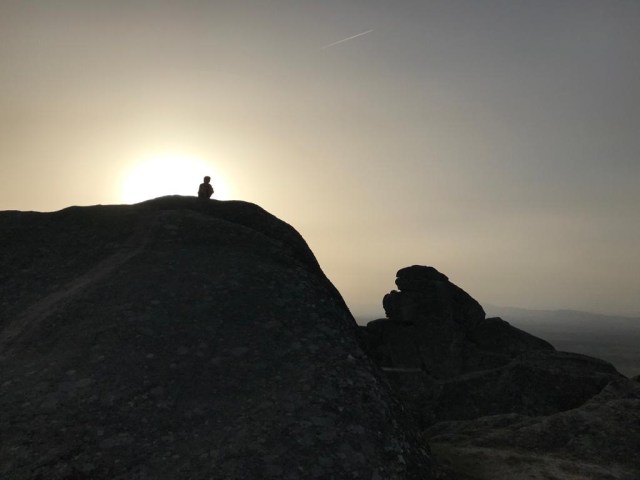
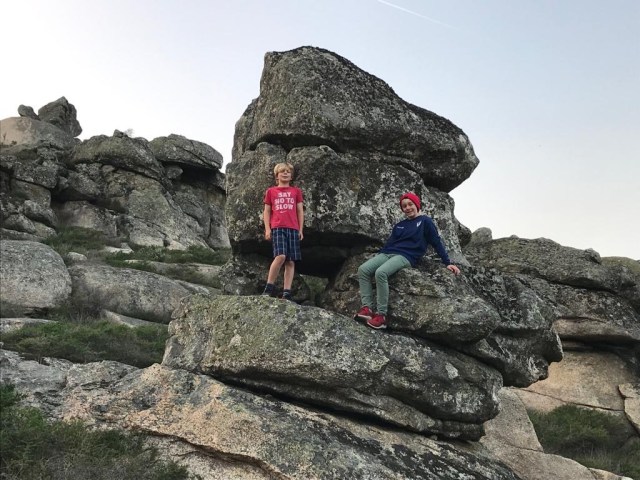
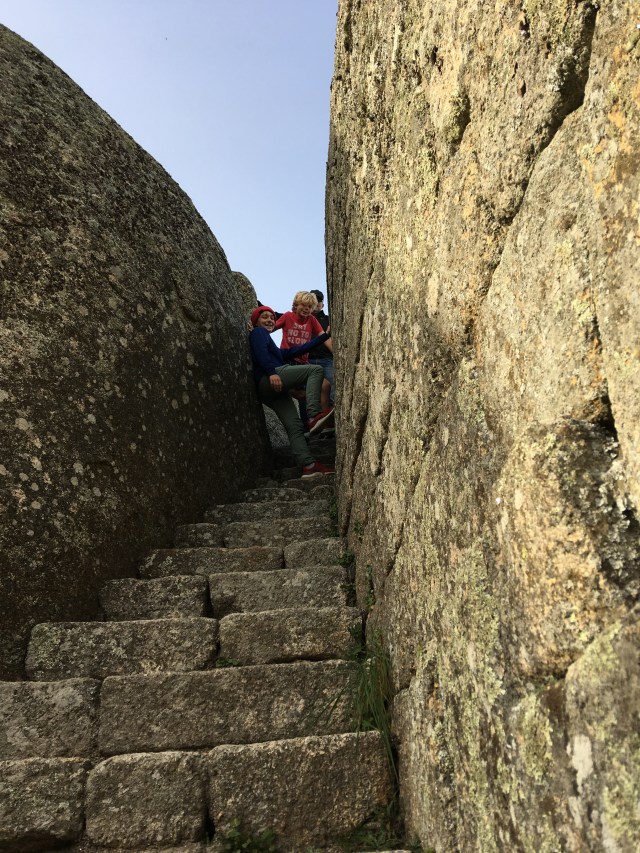
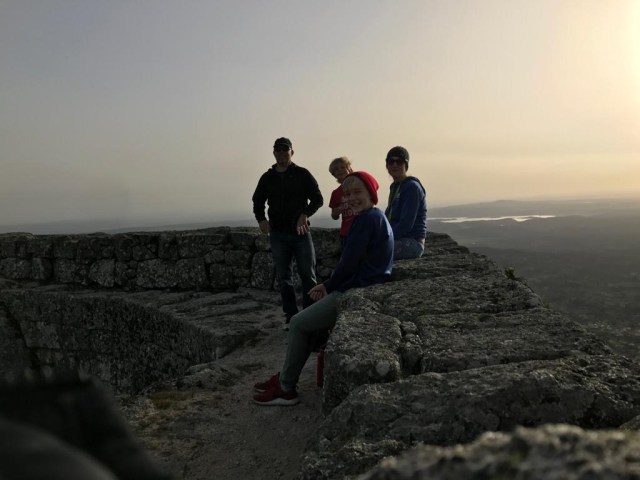
The boys were overjoyed at the opportunity to boulder to the top of the hill and back into the town.
“We wanted to do some bouldering, so we went to the biggest boulders in the world.” Oliver
In Leo’s words; “Monsanto was really cool. There were lots of boulders. They were the biggest boulders in the Iberian Penninsula. Wow! How cool is that?”
“The first day we spent a very long time bouldering, which is like rock climbing but on boulders. I am a very good climber. We climbed big rocks. We climbed small rocks. We climbed lots of rocks.”
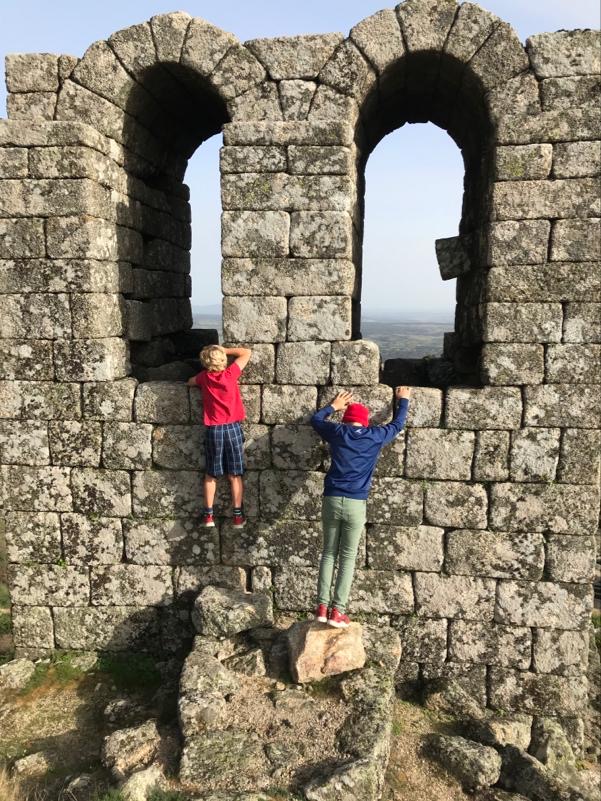
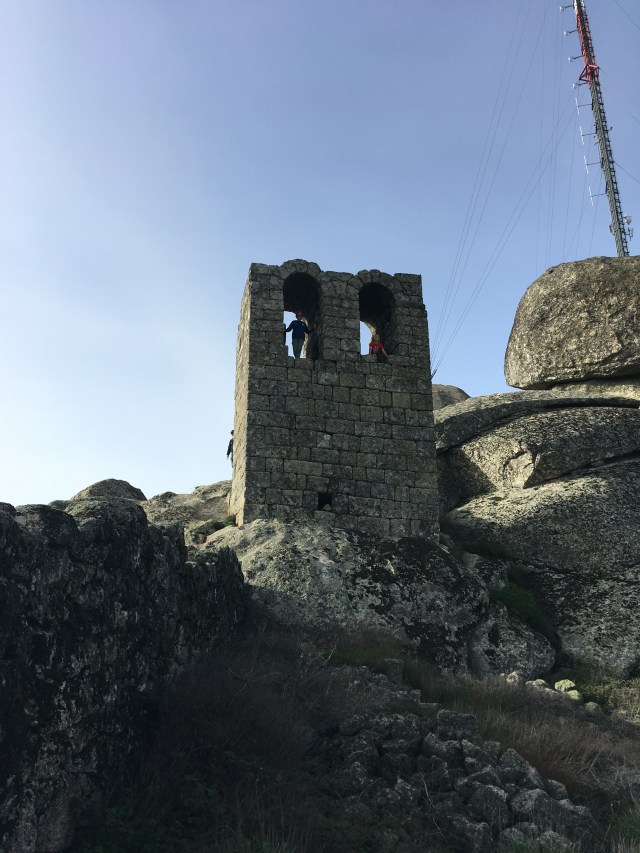
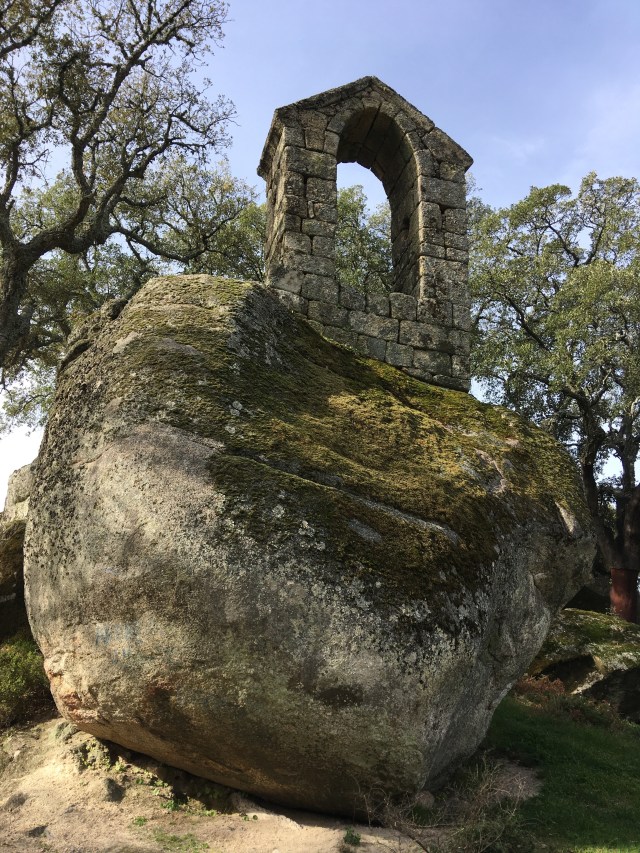
“And then we got to a bell tower on top of tons of boulders. We got to the base of the bell tower we decided to climb it. It was pretty hard regarding the stone brick walls but we did it.”
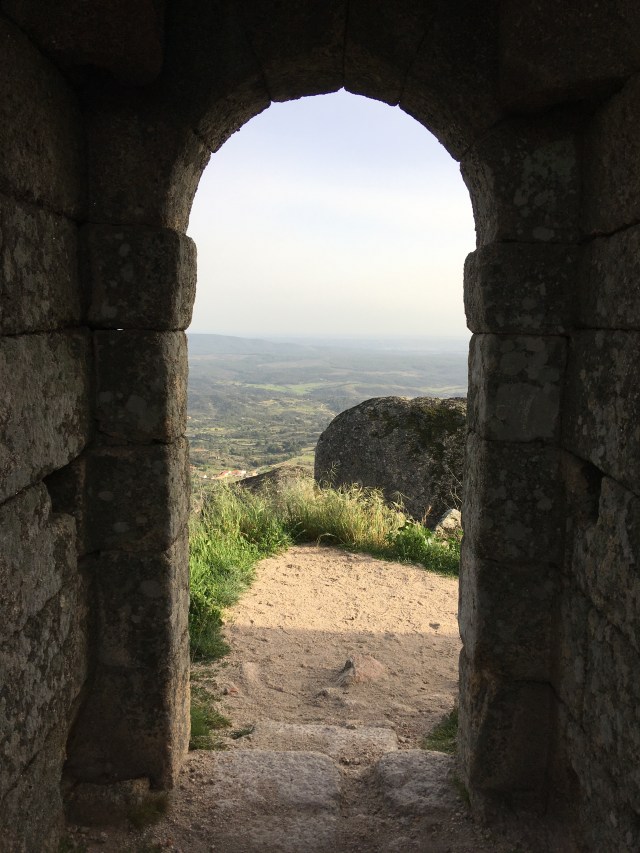
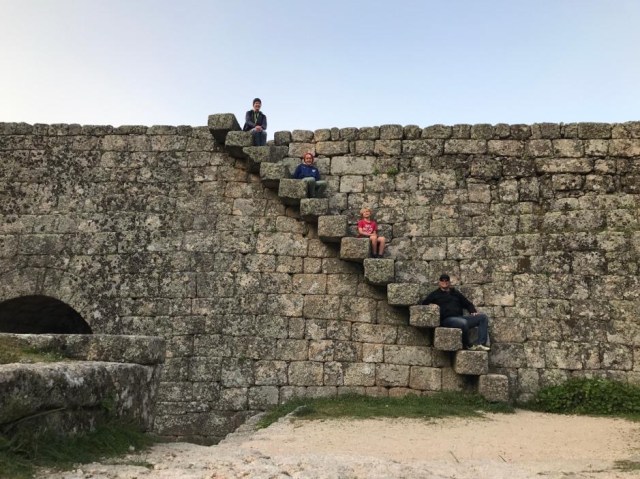
“My mom went to the castle that was right next to the bell tower and we were going to try to climb to where my mom was, but it was too steep and we didn’t want to get hurt. So we went around to the main entrance and then we looked all around the castle. The castle also had boulders inside it so we explored it.”
“I decided to boulder on the rocks that were inside the castle walls. I got a few scrapes. That hurt! It bled a lot but that didn’t stop me.”
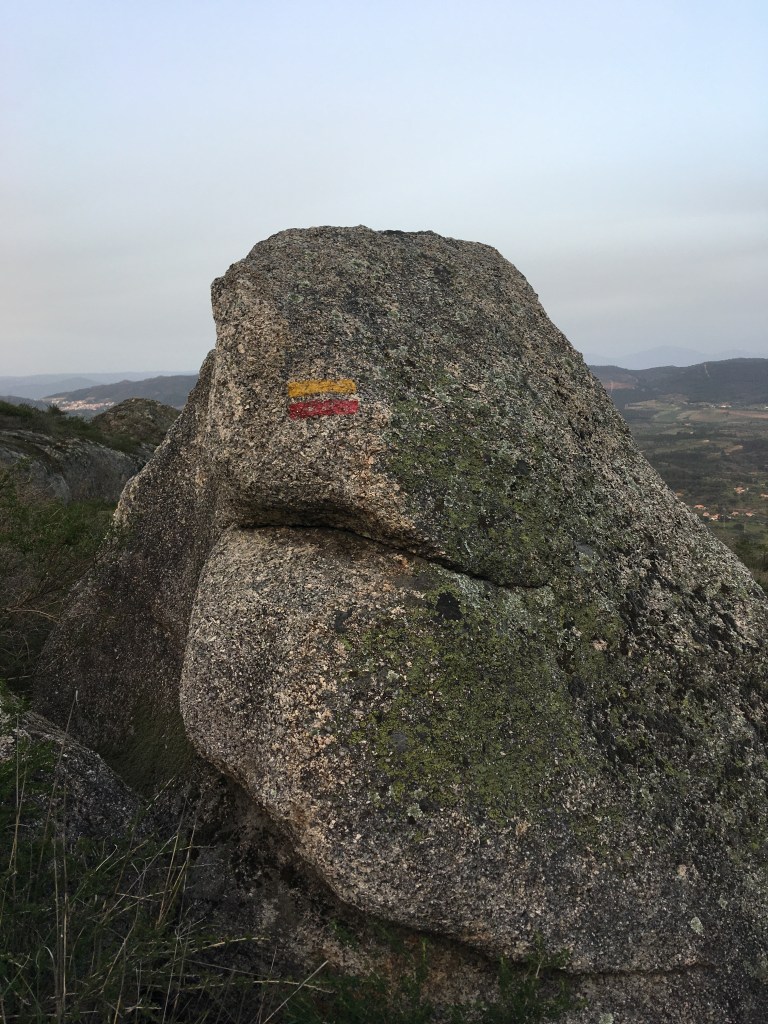
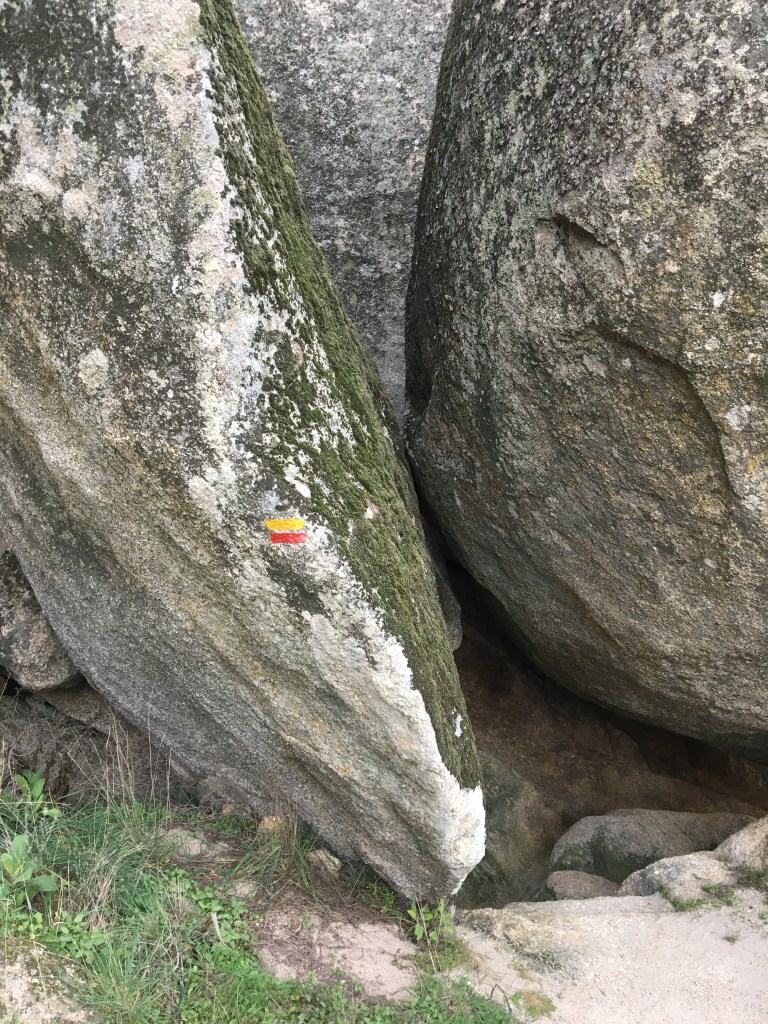
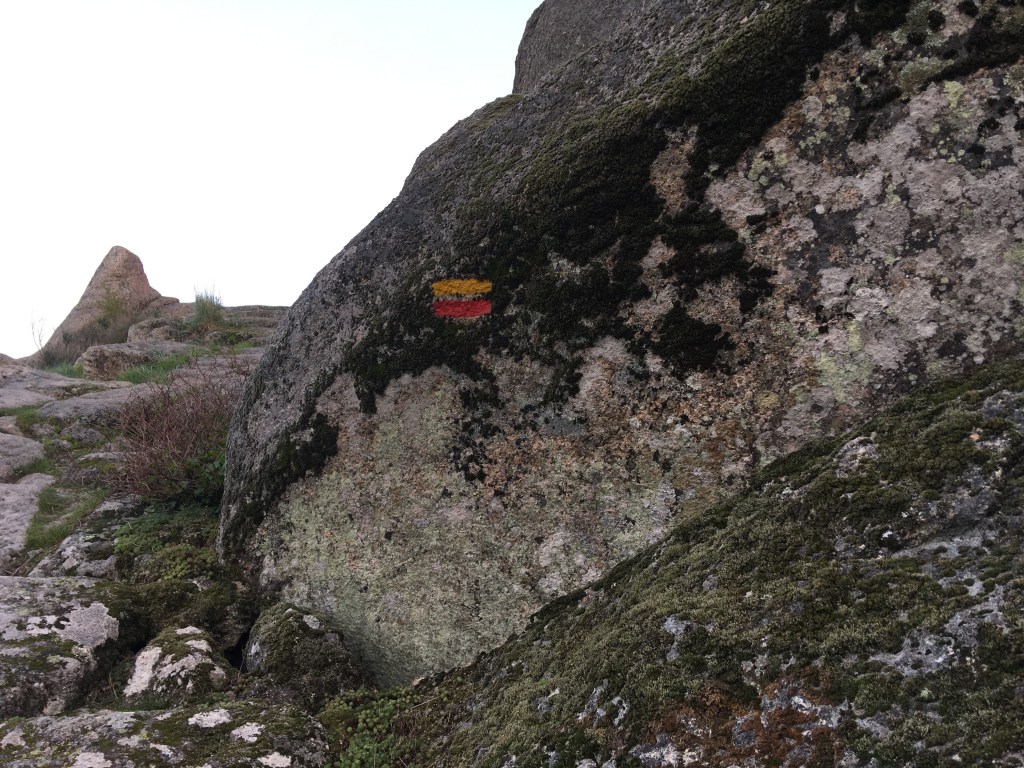
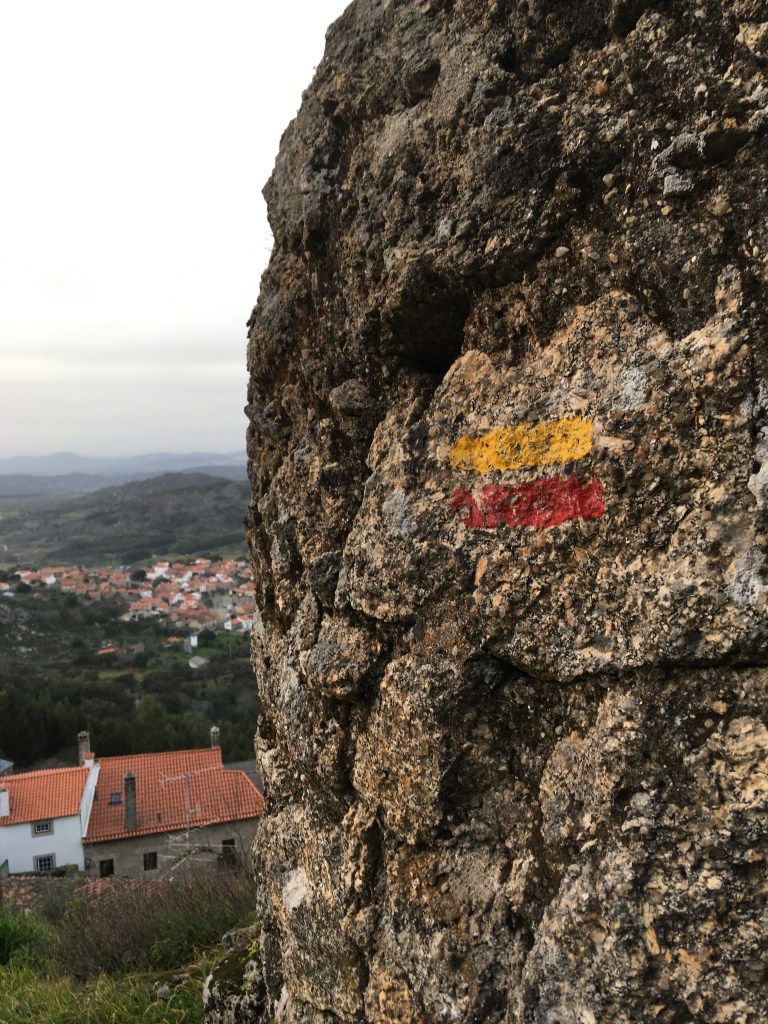
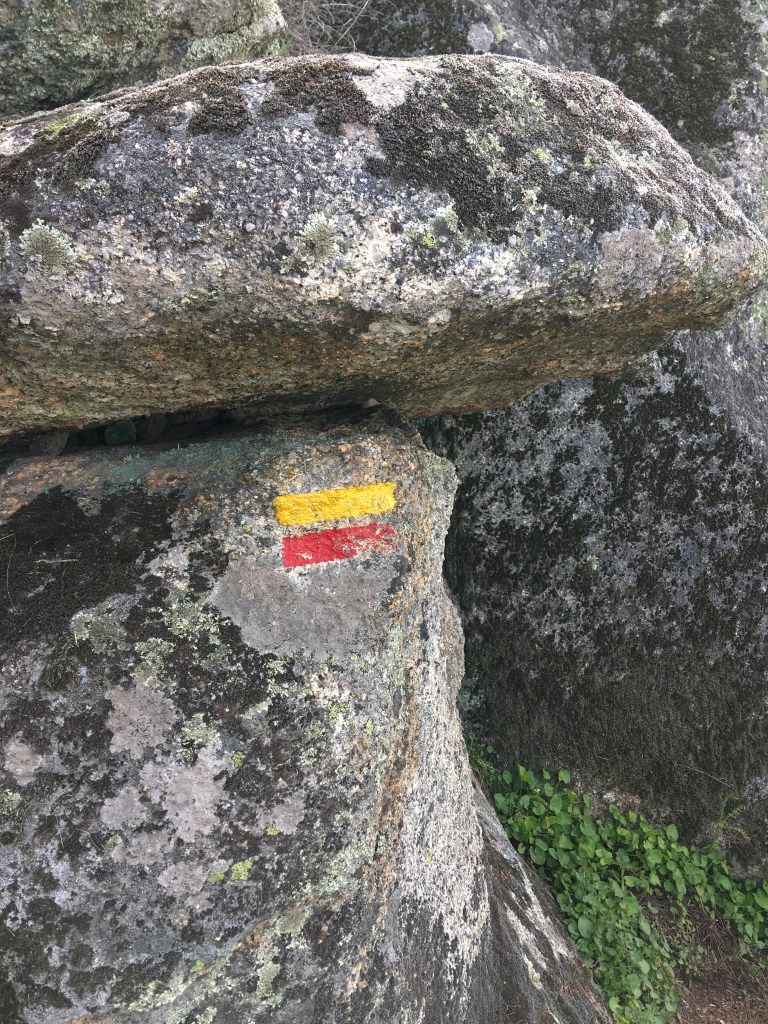
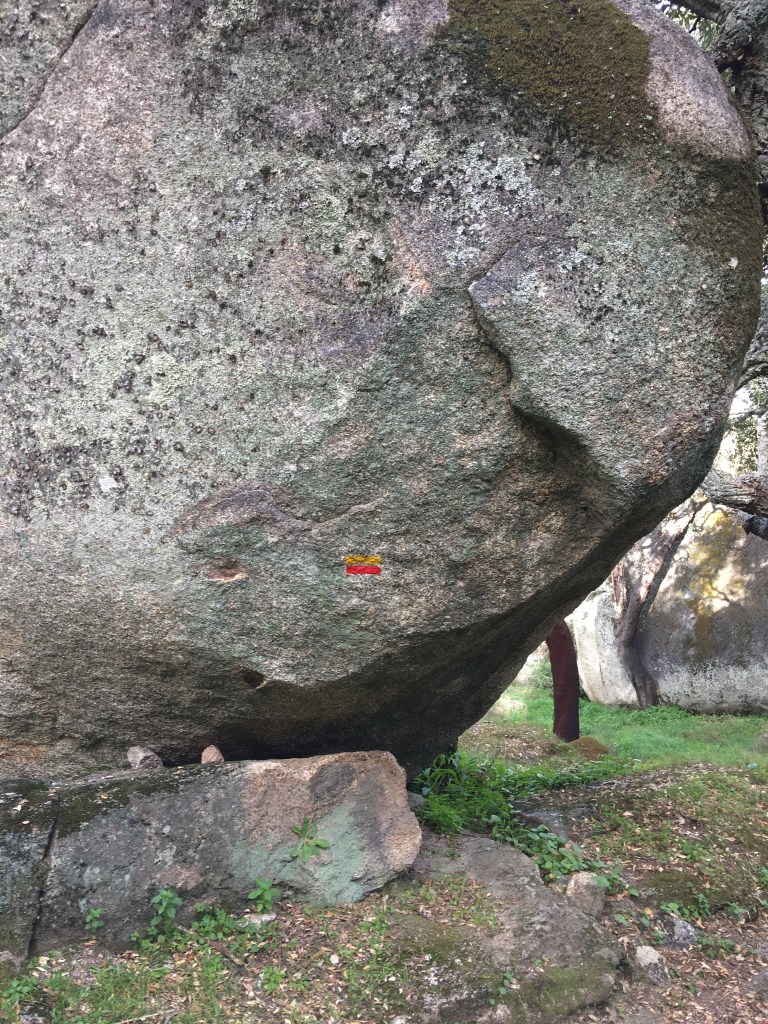
Given that much of the trail was over boulders, we were directed down the other side of the hill with yellow and red lines painted on the rocks.
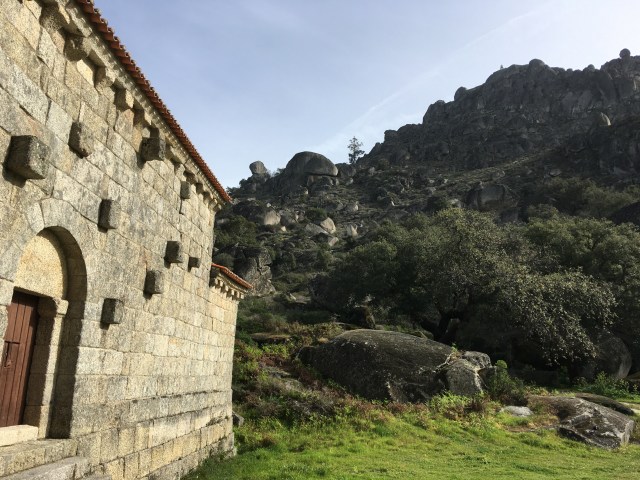
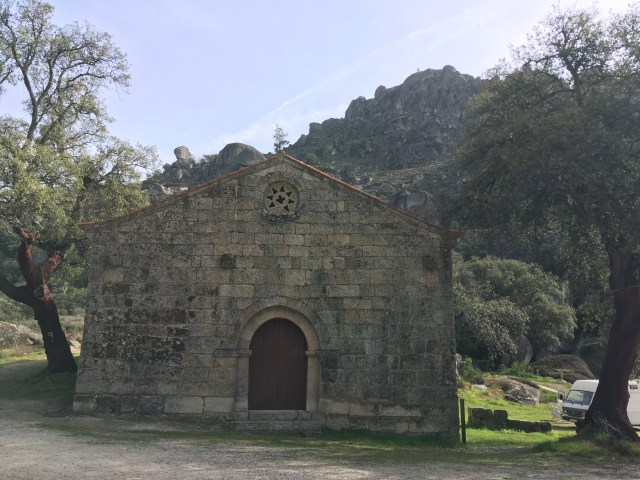
The boys had such a great time we had to make a second outing the next day. This trail took us down into the valley to a chapel.
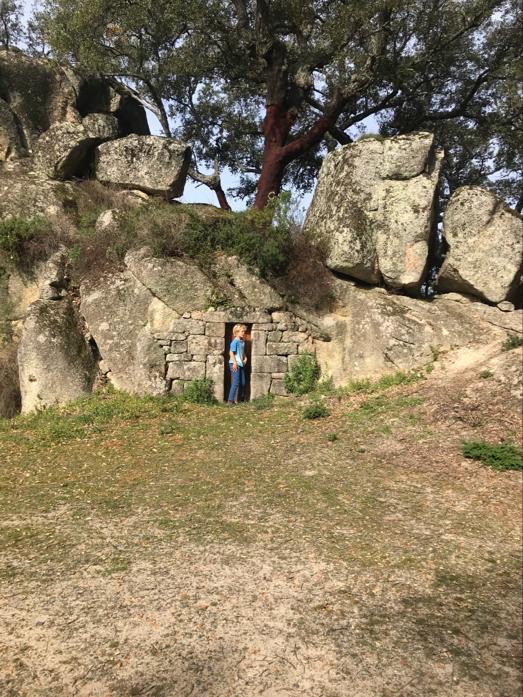
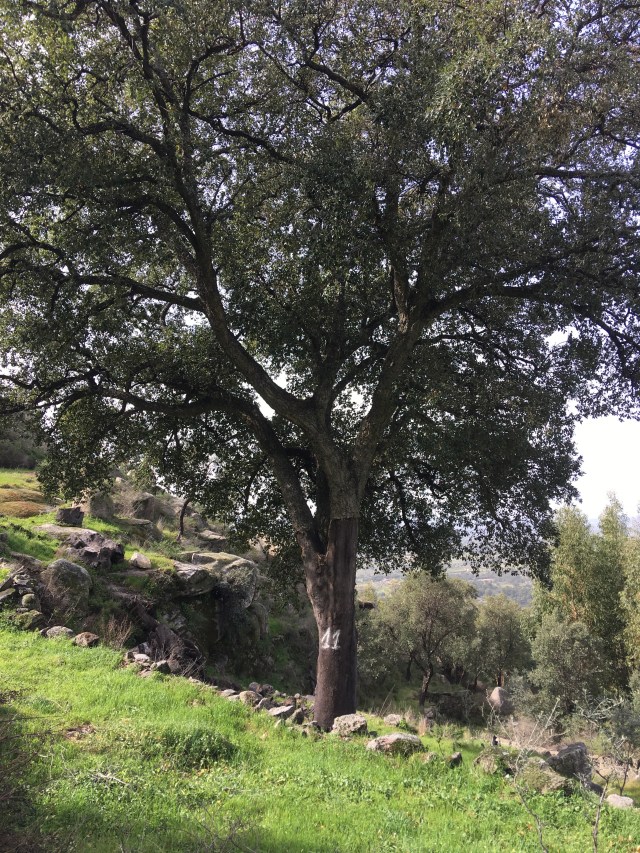
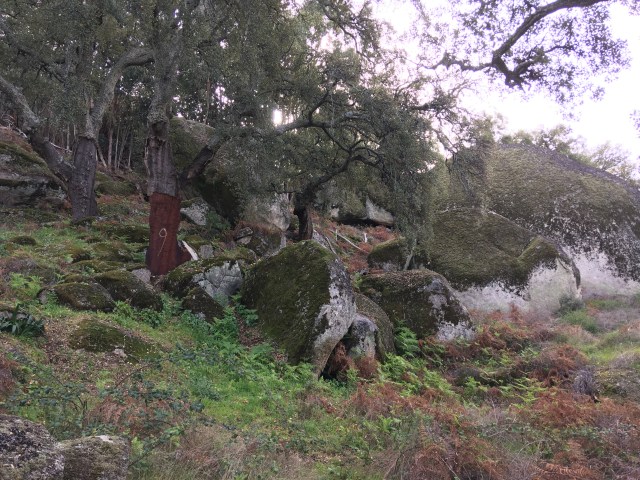
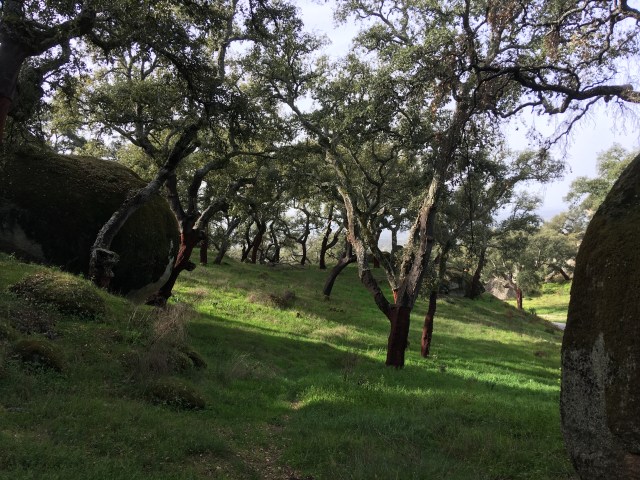
And through a cork forest.
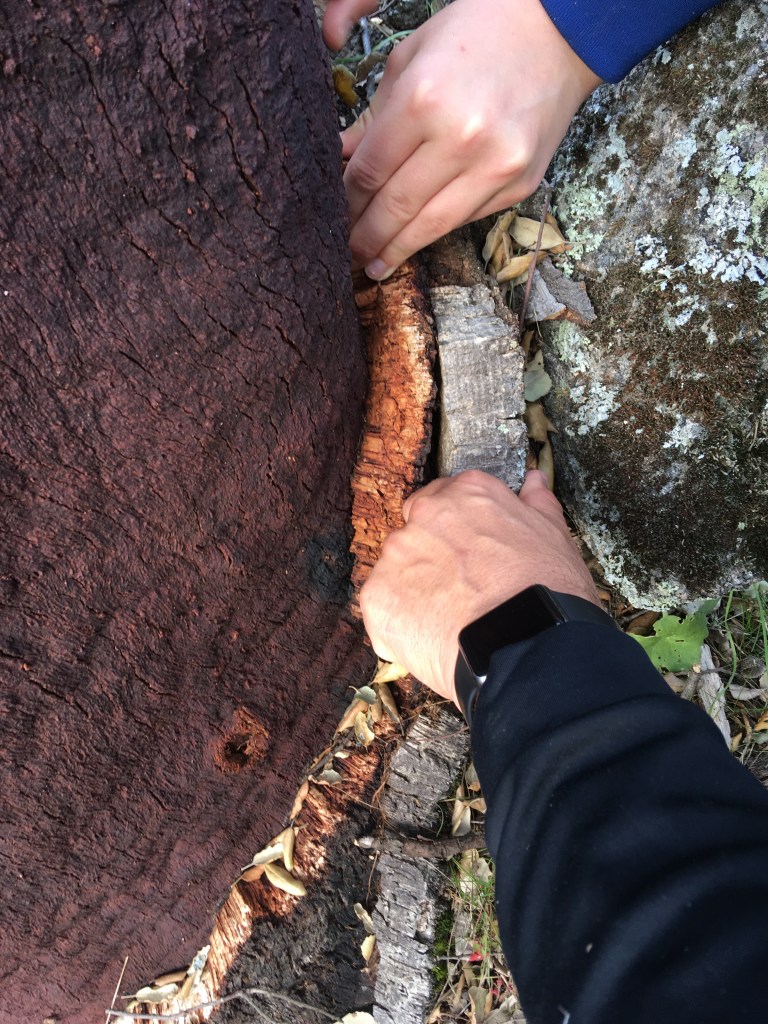
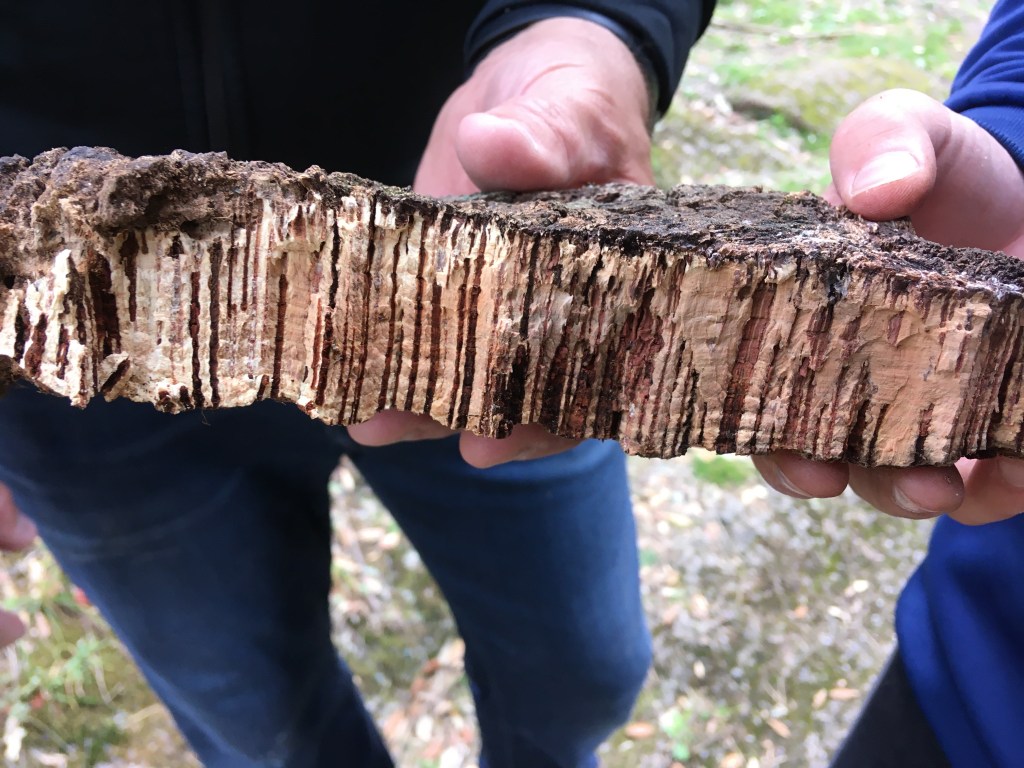
Each tree’s bark is harvested every 10 years. They mark the tree with a number to know when to harvest it next.
Only the outer layer of cork is harvested, allowing the tree to grow a new layer of cork.
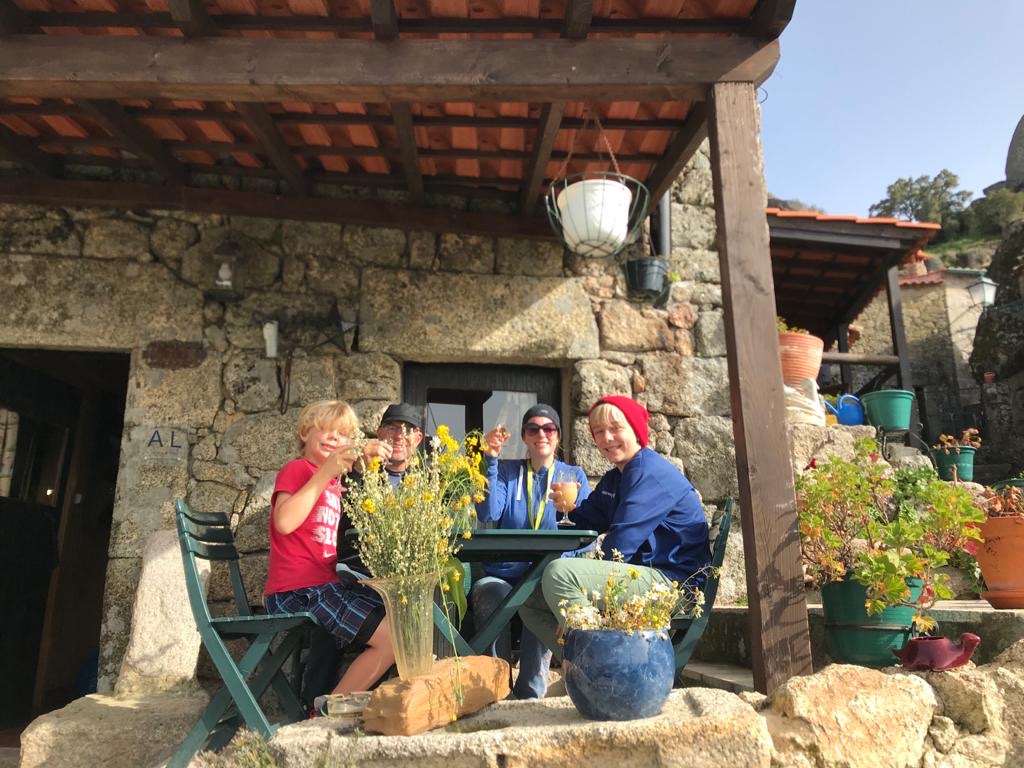
Apart from the boulders, our favorite part of Monsanto was our rental house.
Our rental house was an old typical rock home that originally would have housed 3 families. They had since been combined into one home; the first floor for the kitchen and dining room, the second floor for the living room and a bedroom, with a second bed in a loft, and another loft for a third bed. Because the town is built amongst the boulders, one of our bathroom’s walls was made of a boulder and the floor of one of the bedrooms was mostly covered in the top of a boulder.
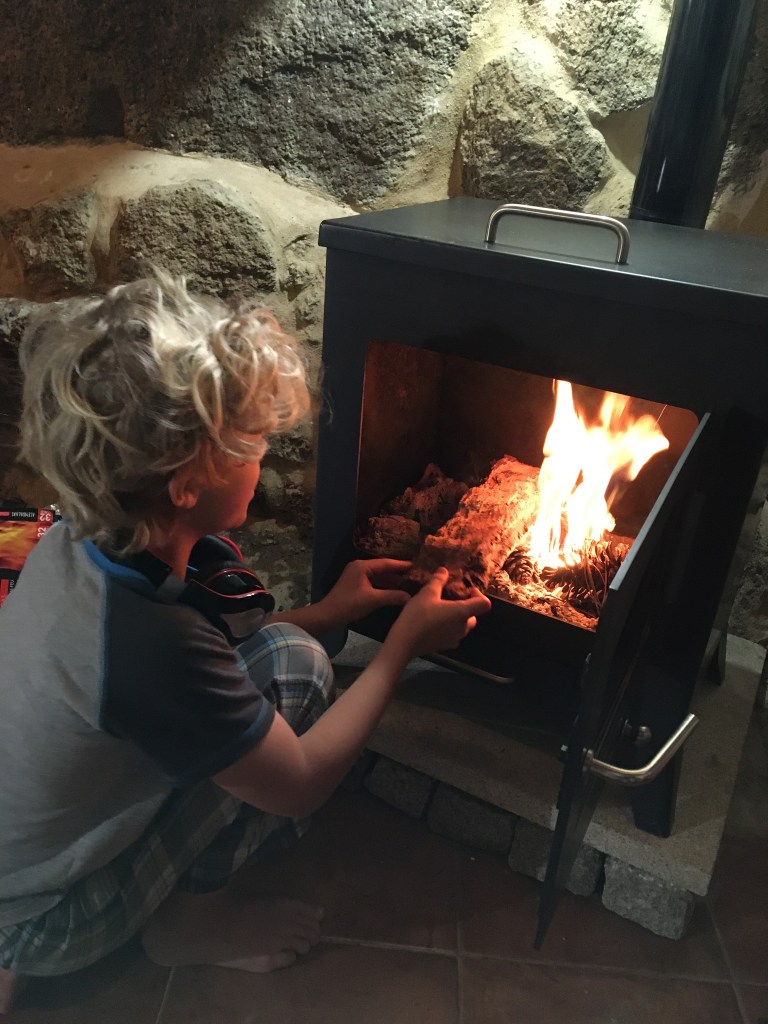
Rock houses stay quite cool, so we were all excited to make a fire to heat things up in the evening and early morning.
The best feature of the house was our hostess Eloíza, who lived next door. Eloíza is actually from Brazil, but has lived in Portugal for over 30 years, and in Monsanto for just 3. She spoke a little Spanish, but mostly Portuguese, and loved to talk. If we all listened really hard we got about 70% of what she said.
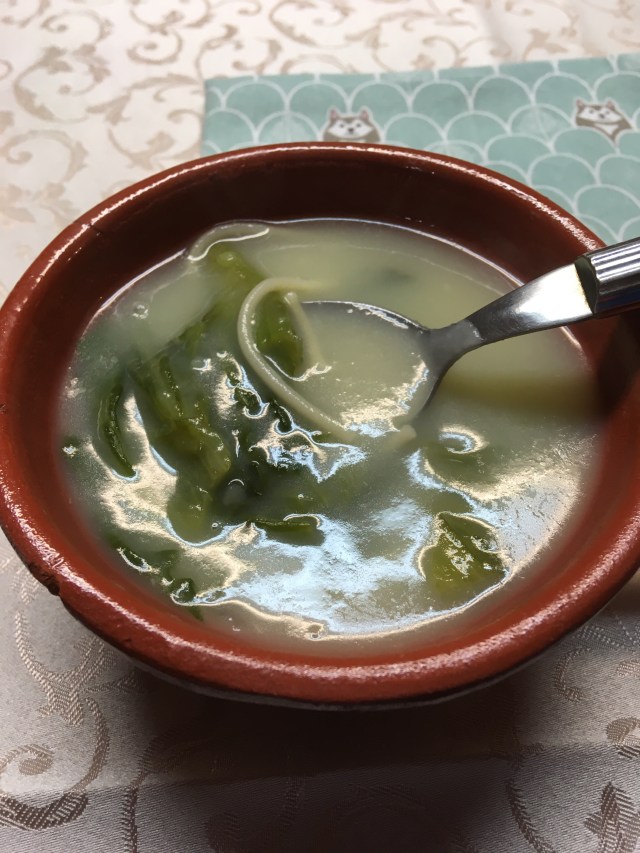
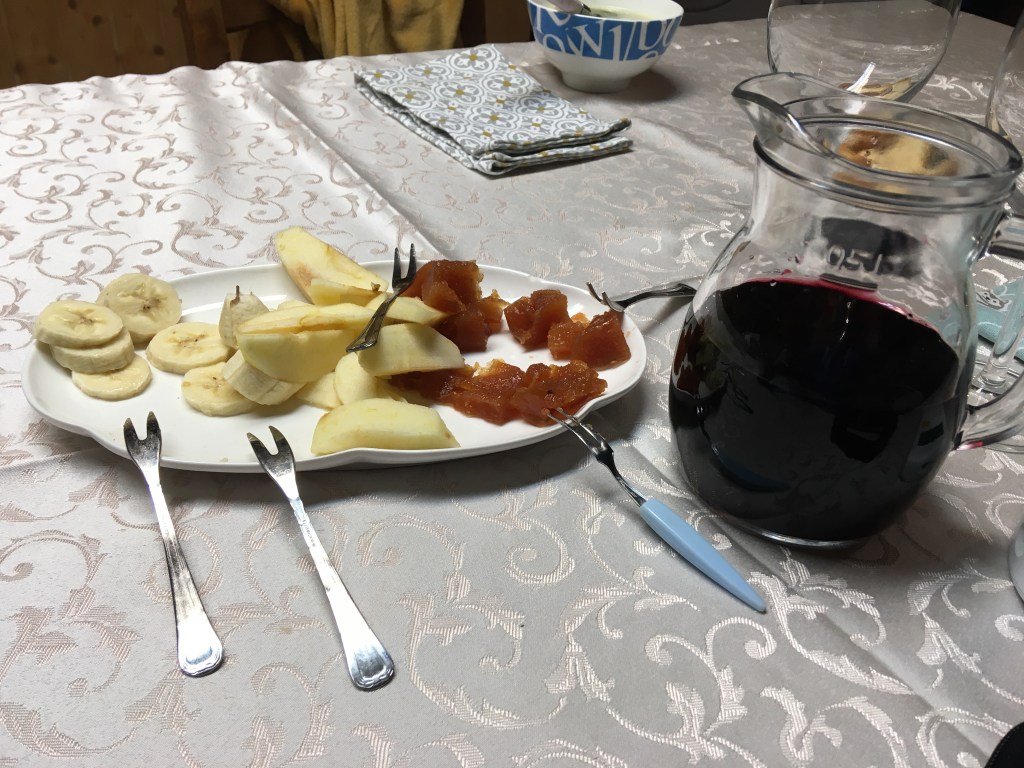
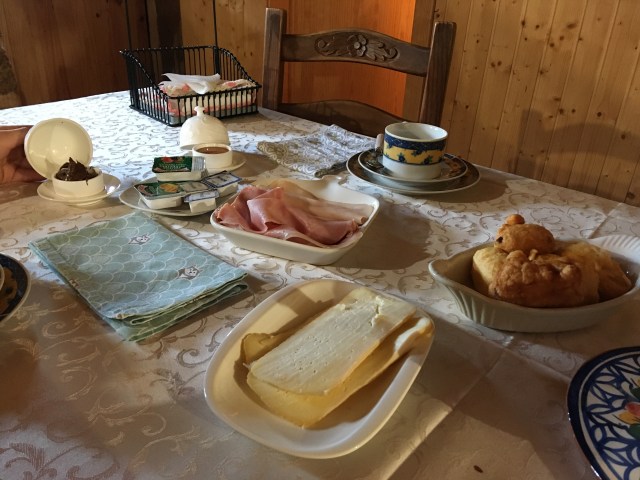
She treated us to light supper of traditional Monsanto vegetable soup, wine and fruit with quince preserves. Then in the morning she greeted us with fried banana bread, cold meats and cheese, juice and hot cocoa and coffee.
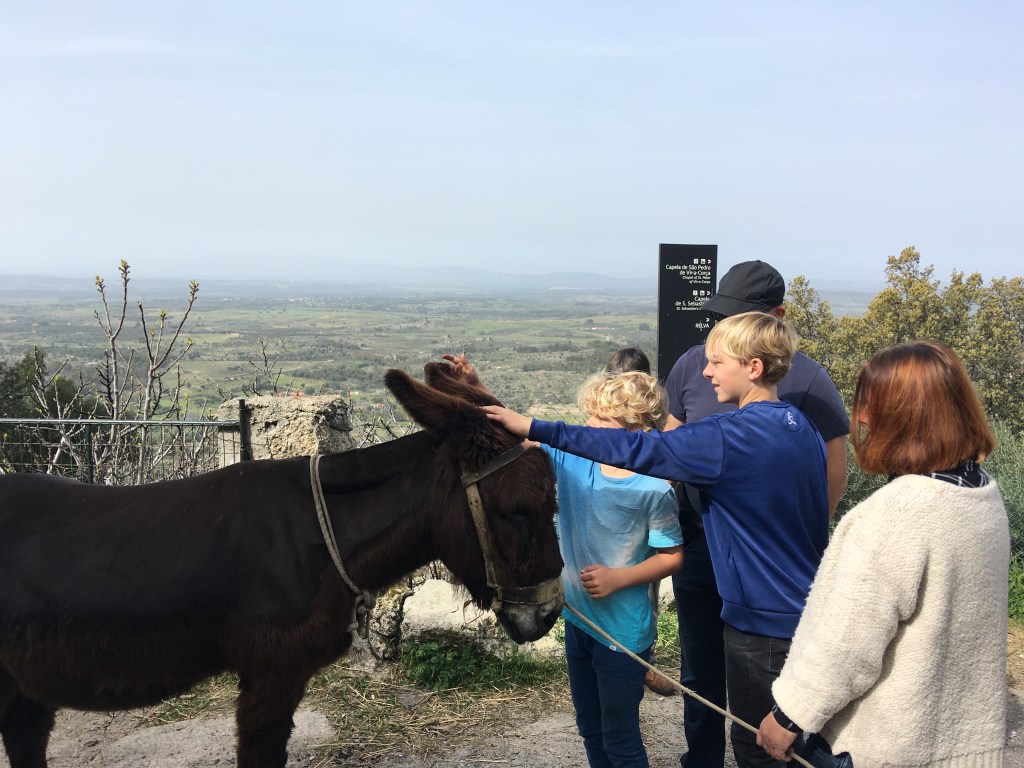
And took us to meet one of the town’s mules.
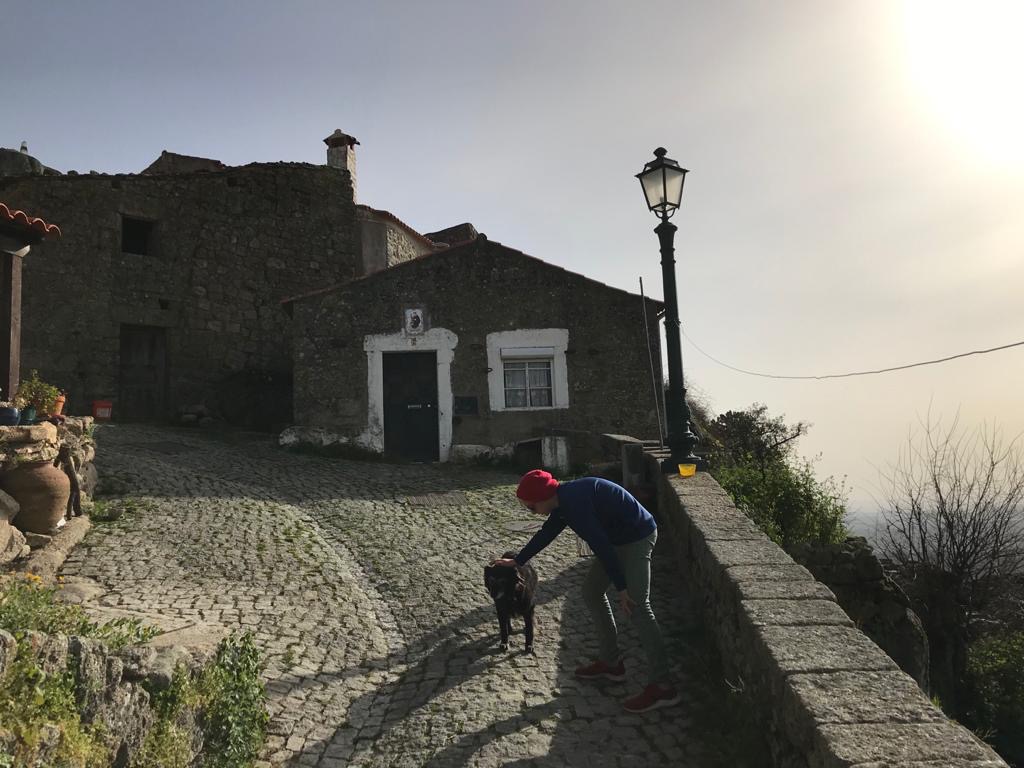
And shared her wonderful, old dog, Bau-Bau.
We all loved our time here and it was definitely a high point of our visit to Portugal.
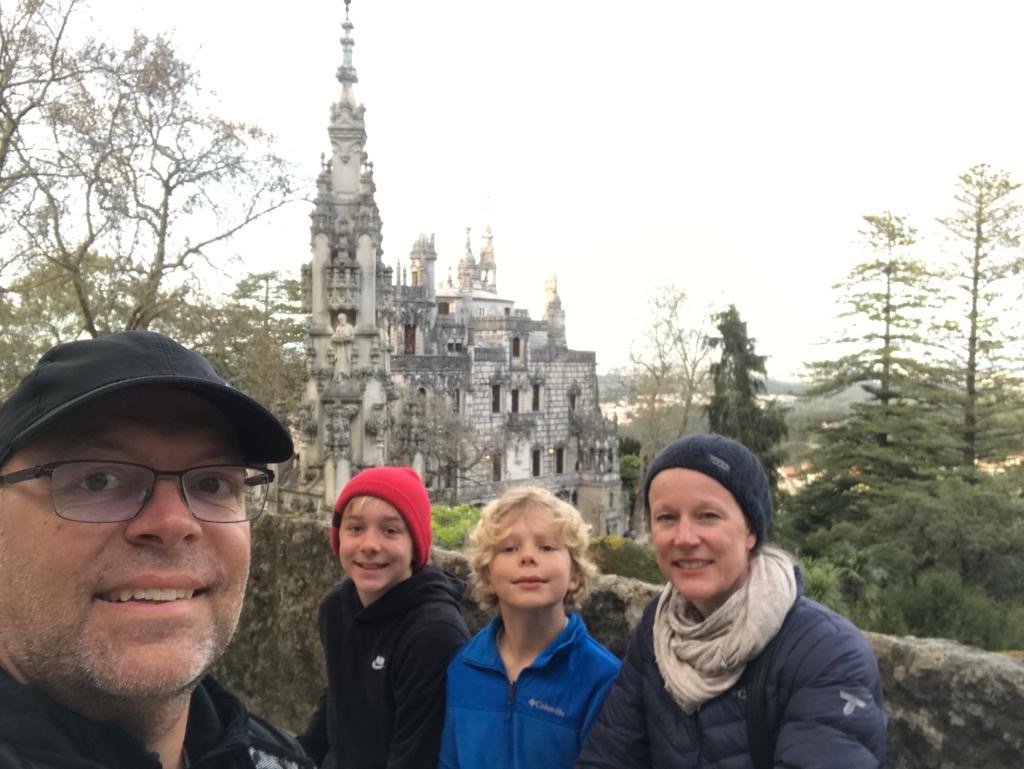
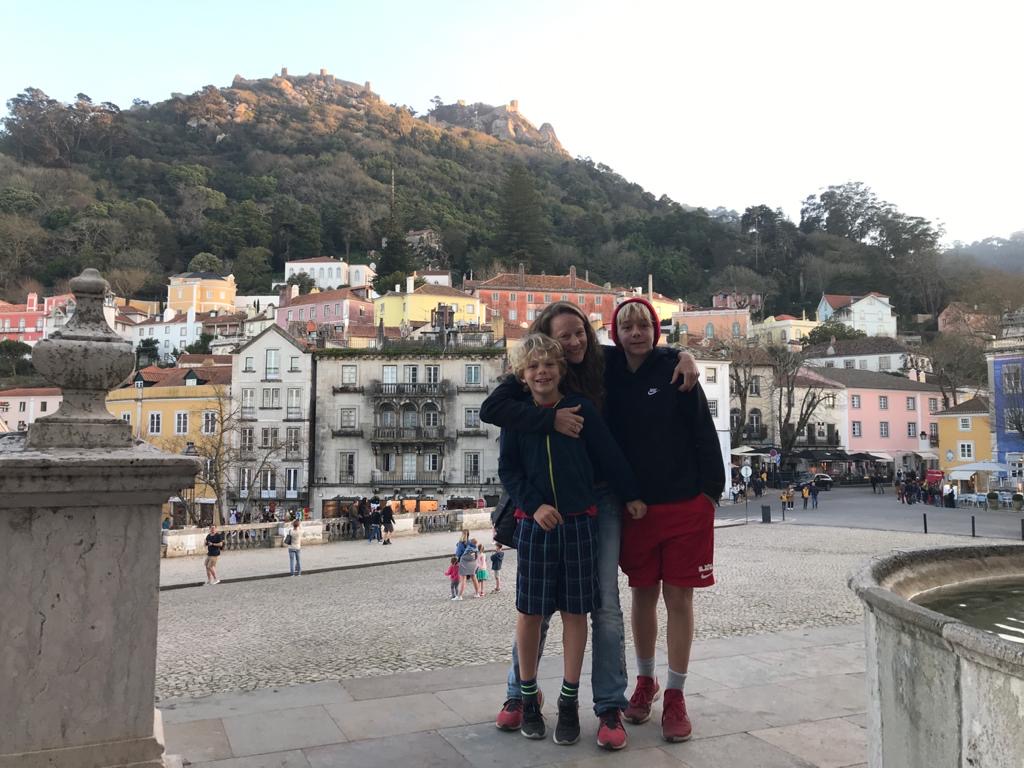
Oh, Sintra. What a beautiful and magical place. We pretty much loved everything about this region.
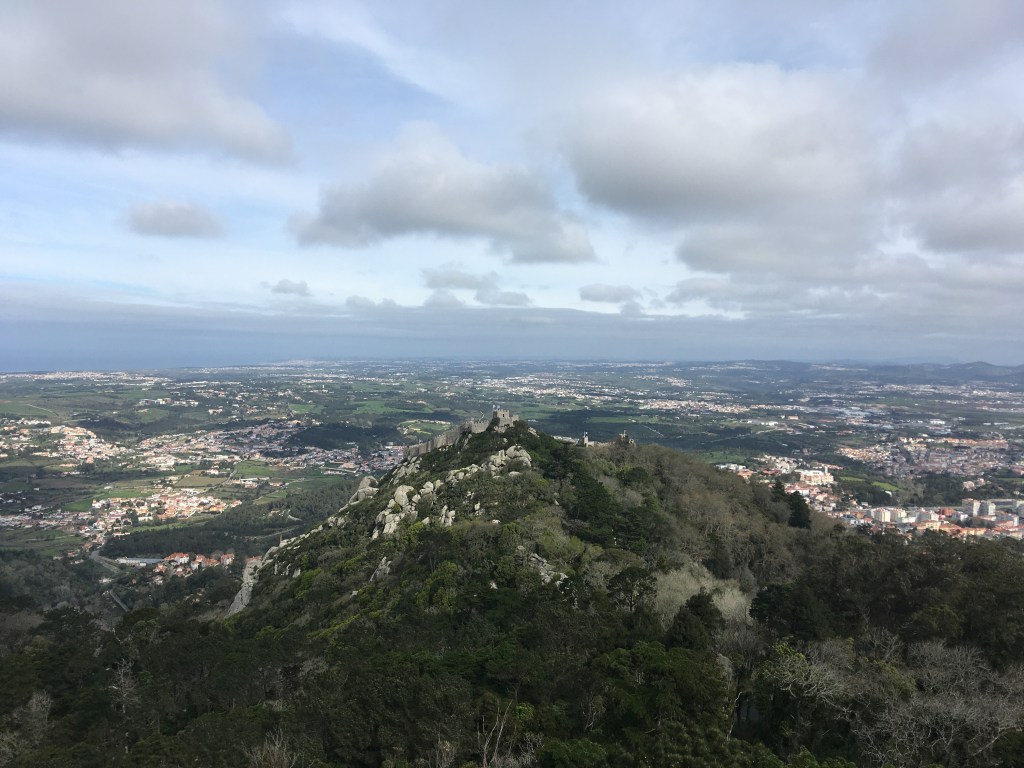
Sintra is lush and green. At the heart is a historical town filled with palaces and crowned with a Moorish Castle.
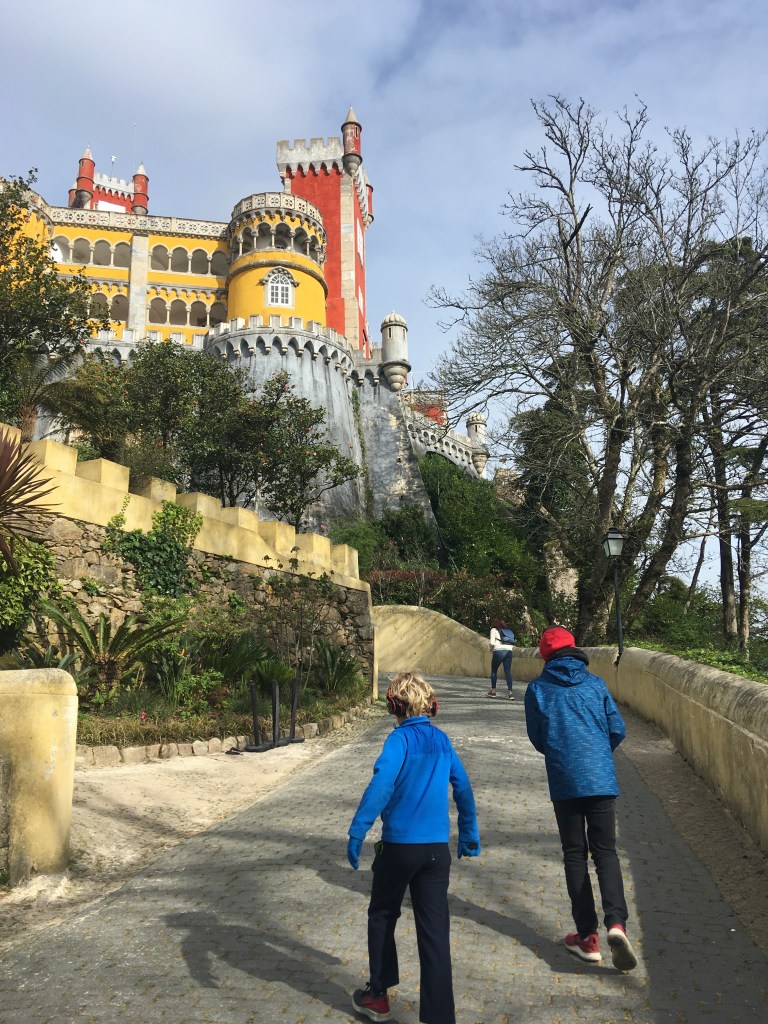
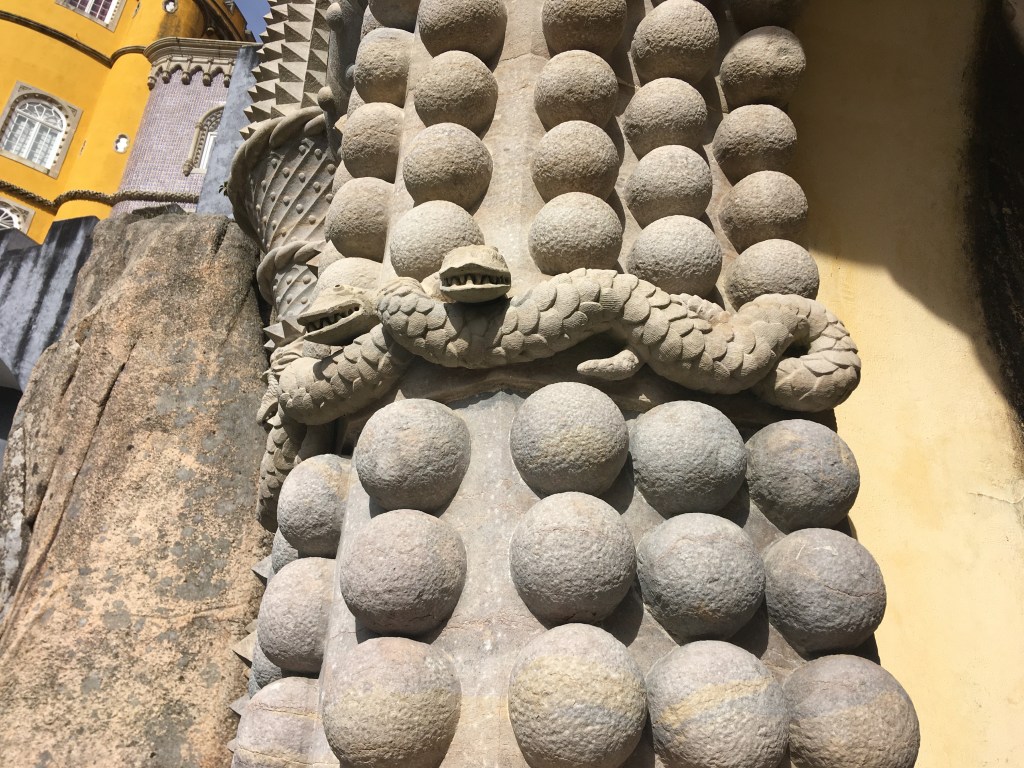
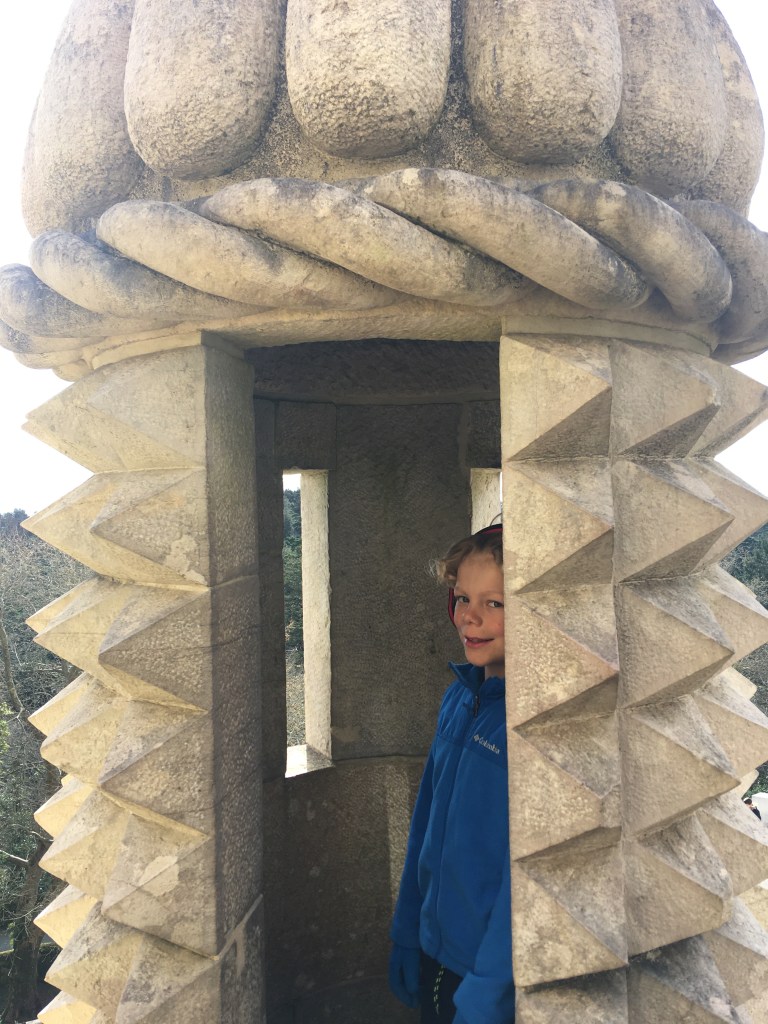
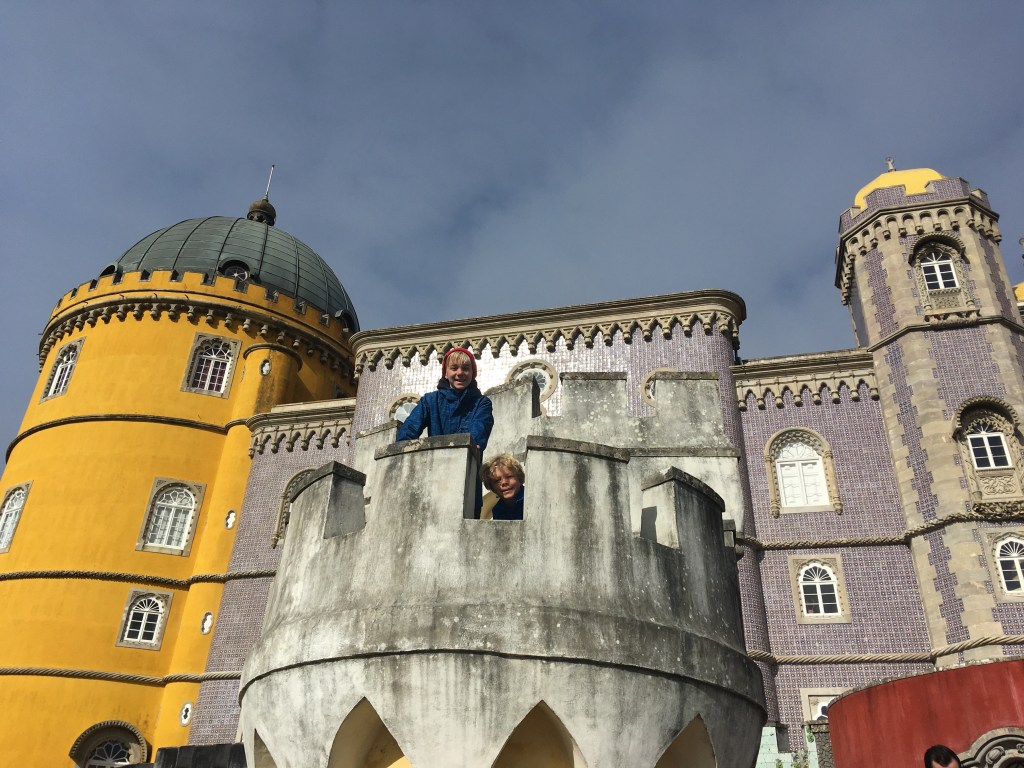
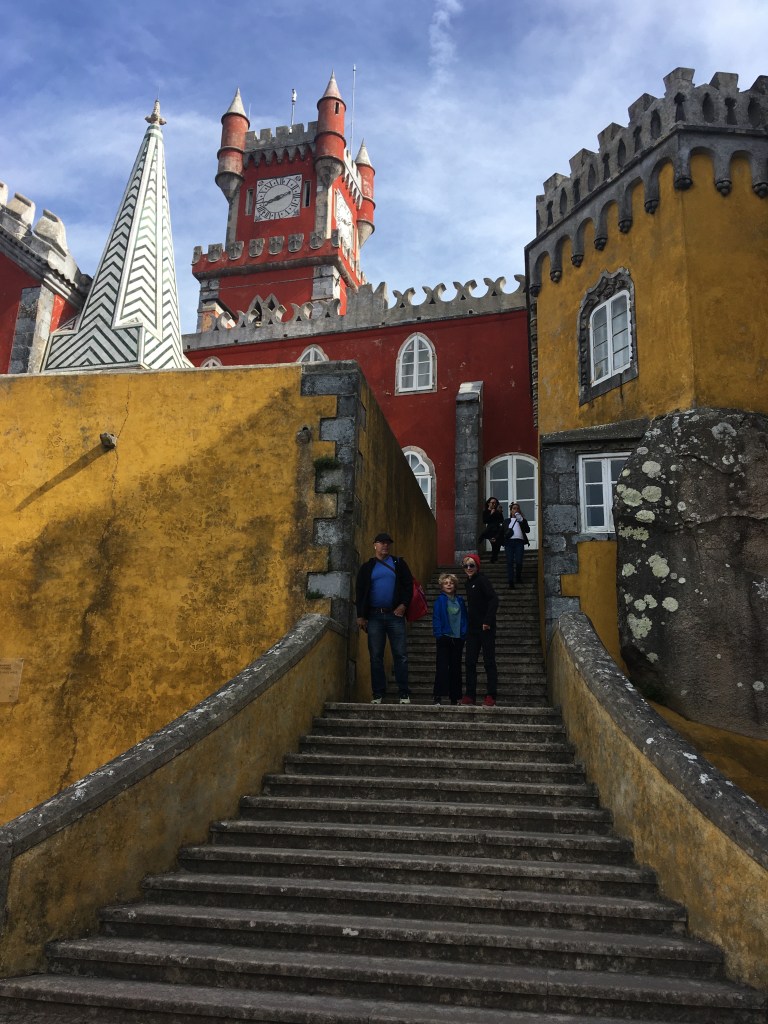
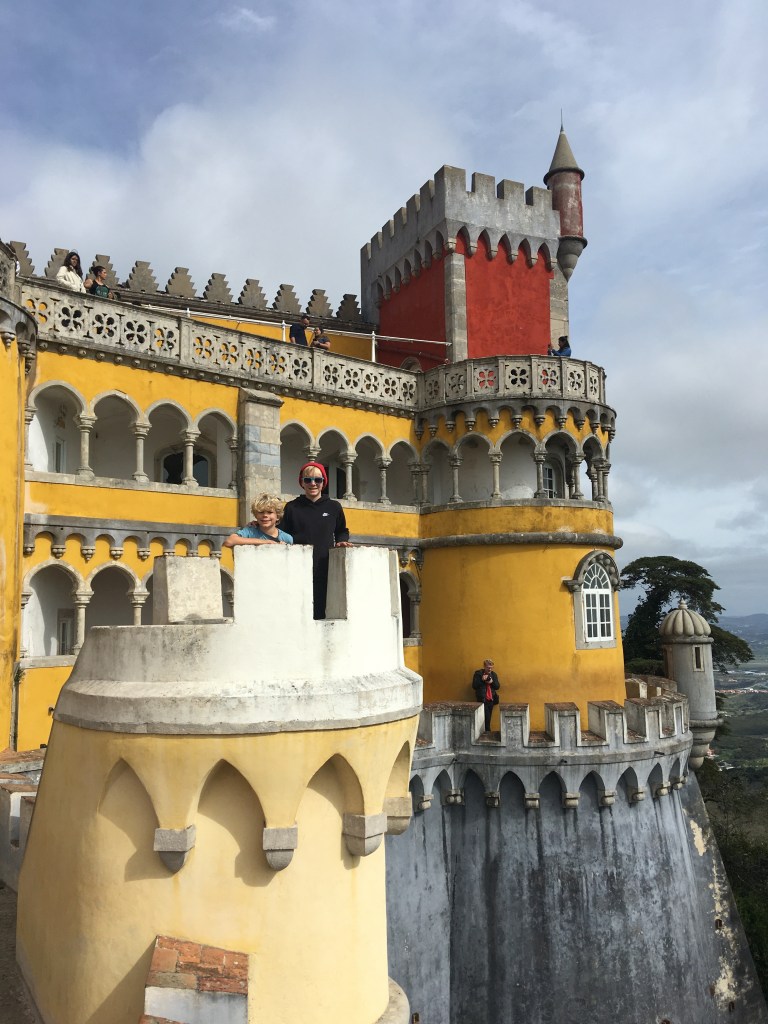
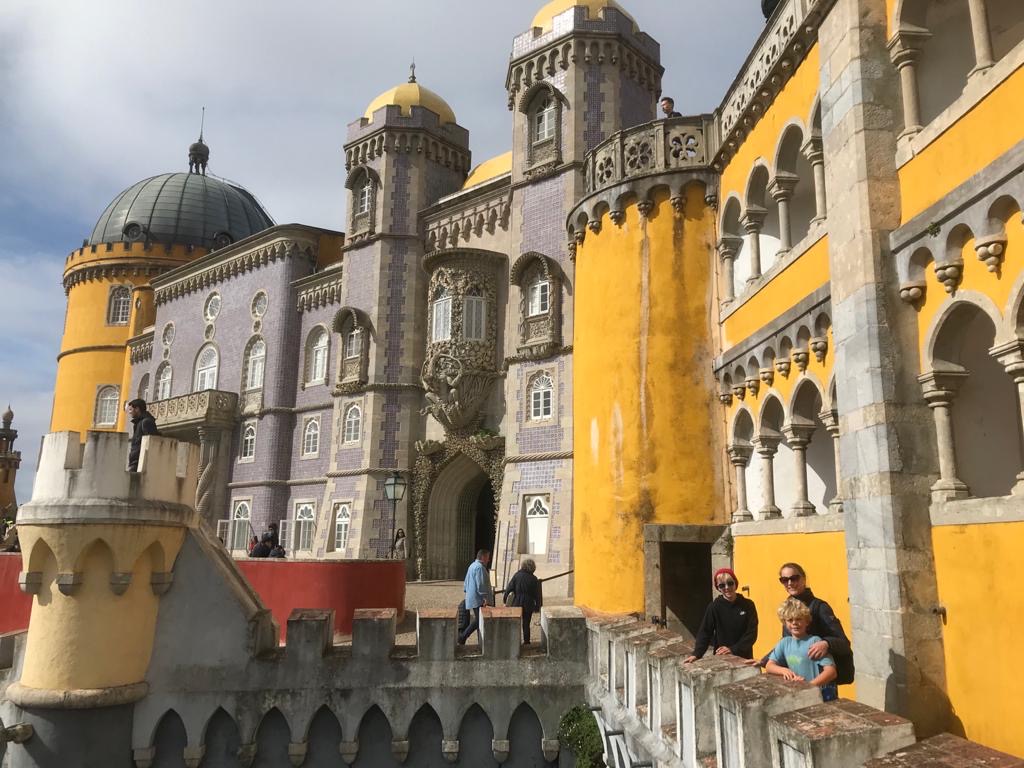
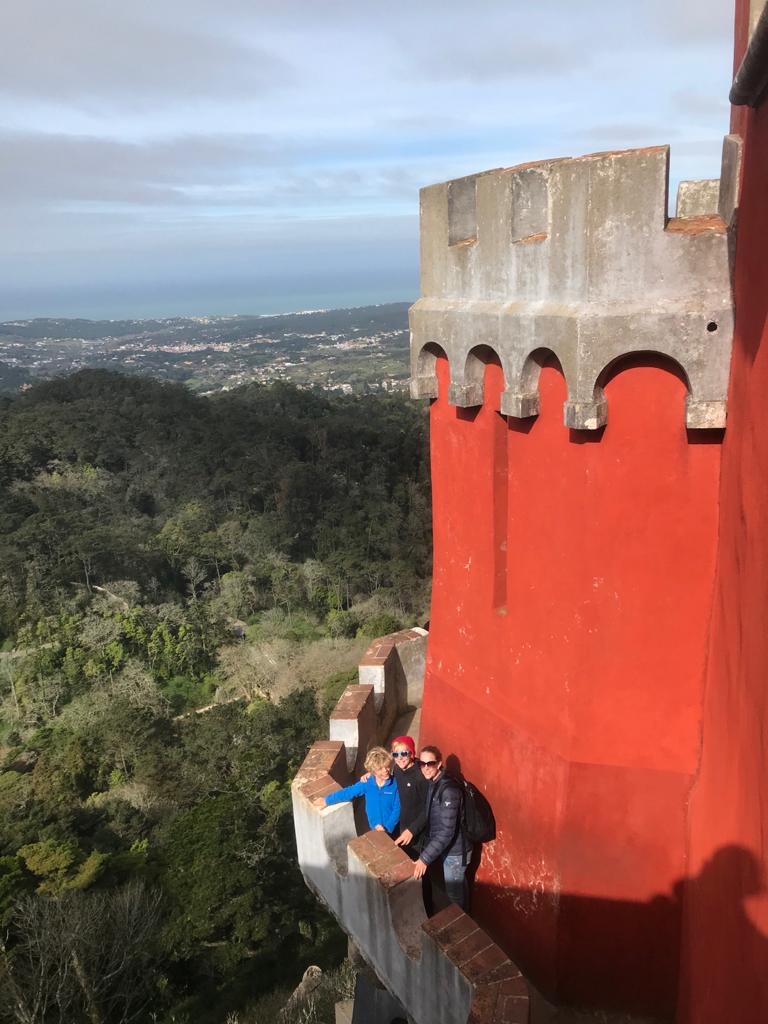
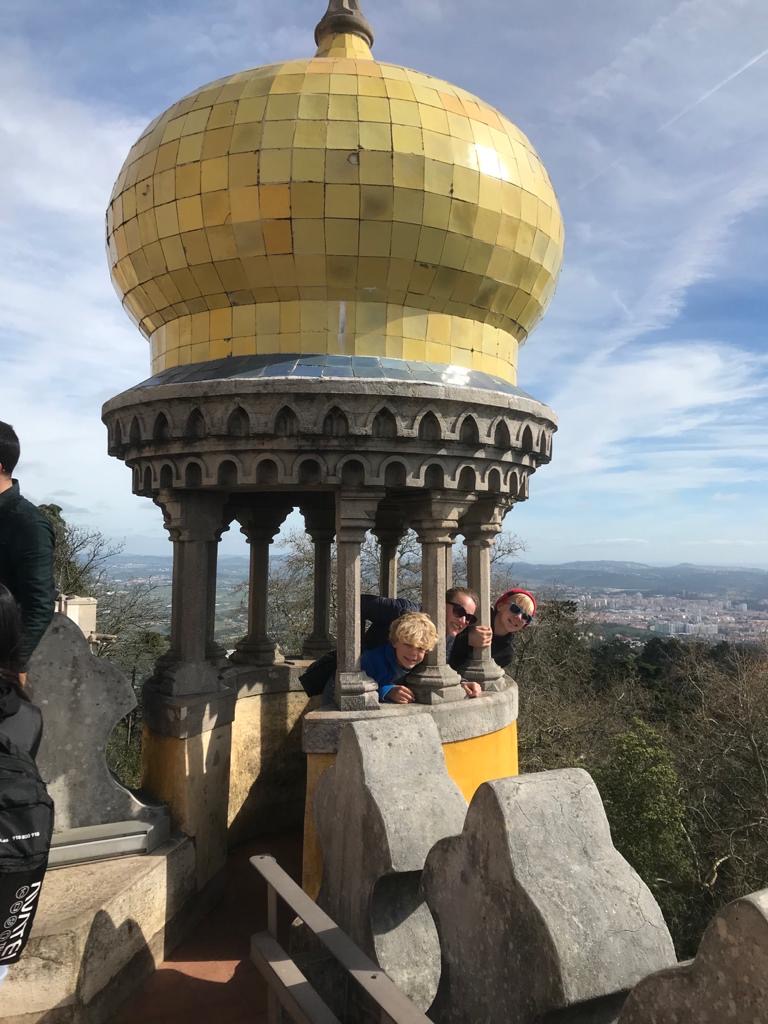
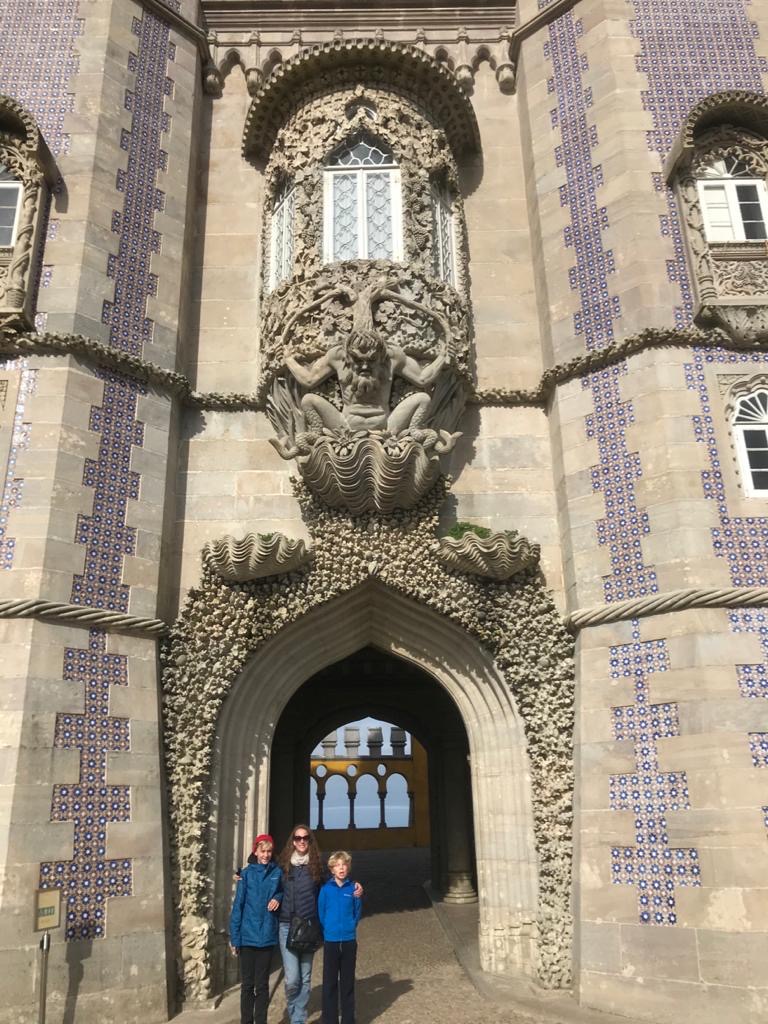
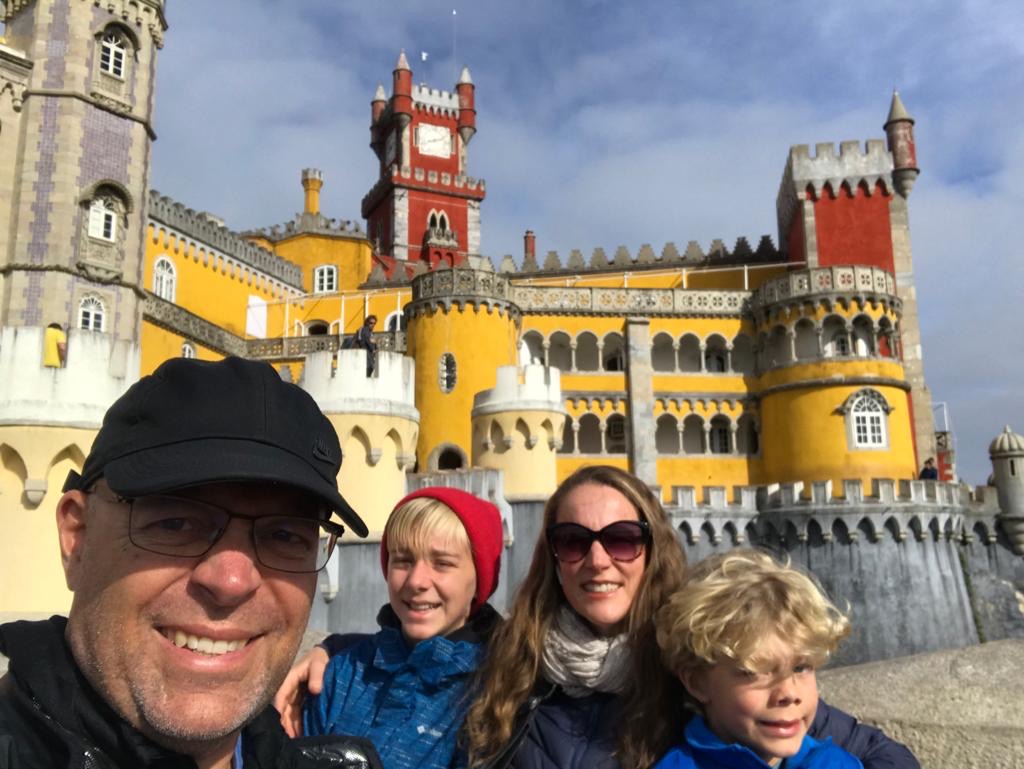
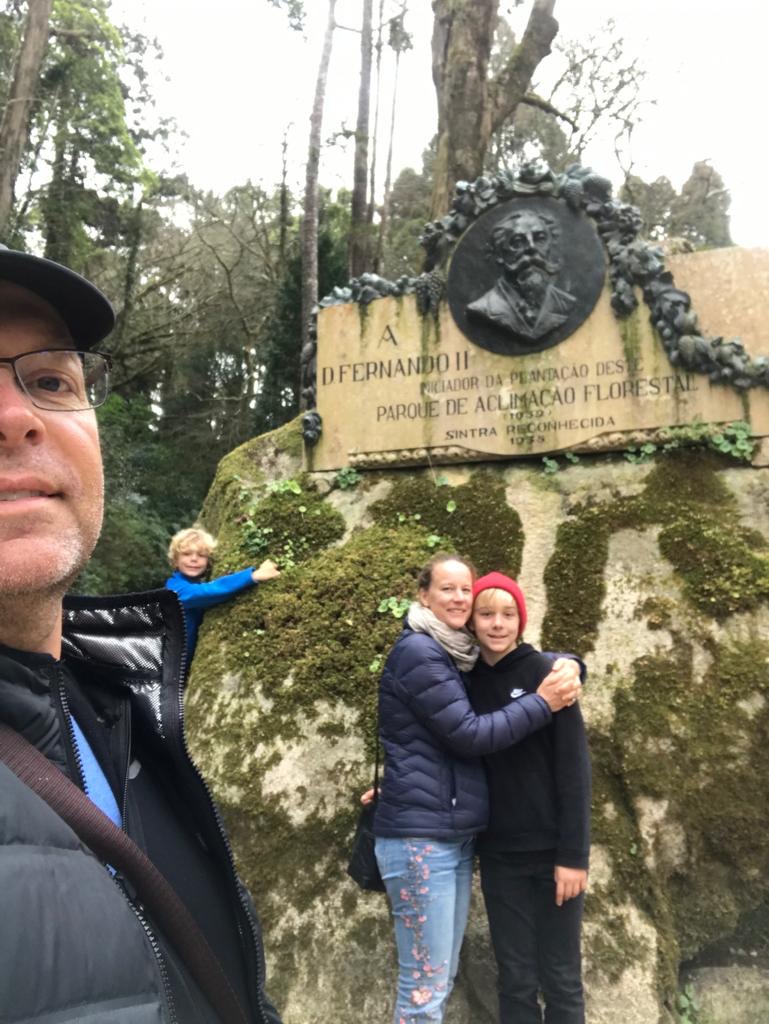
Our first stop was Palacio Nacional da Pena (Pena Palace), built by King Ferdinand II in the 19th century.
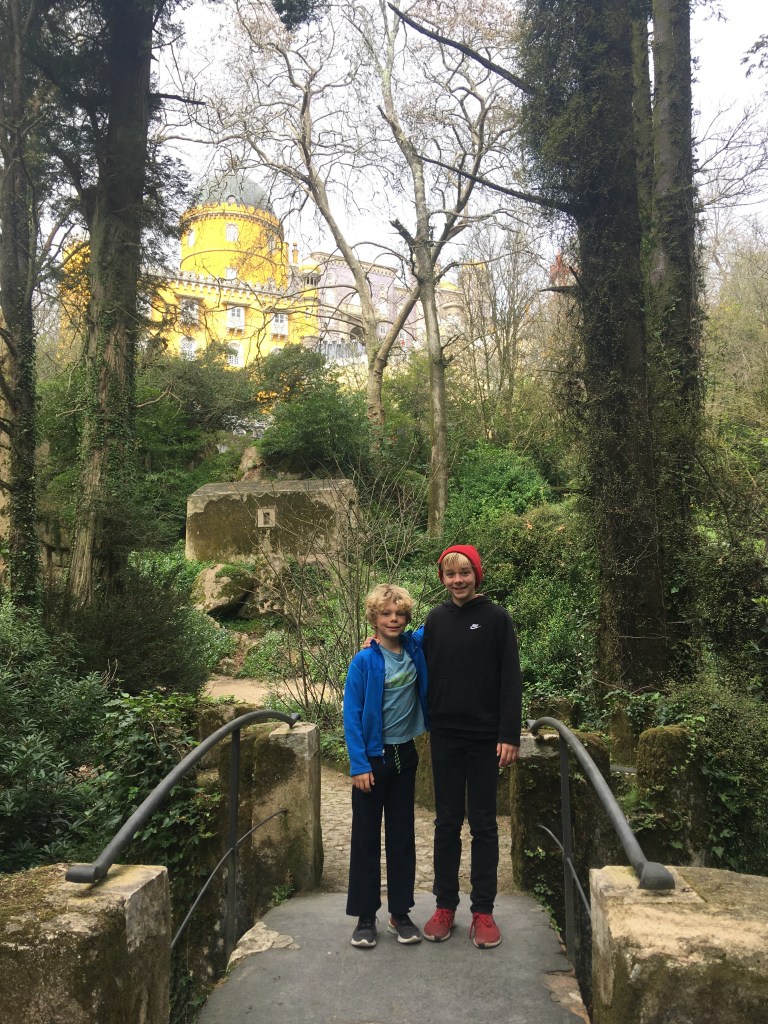
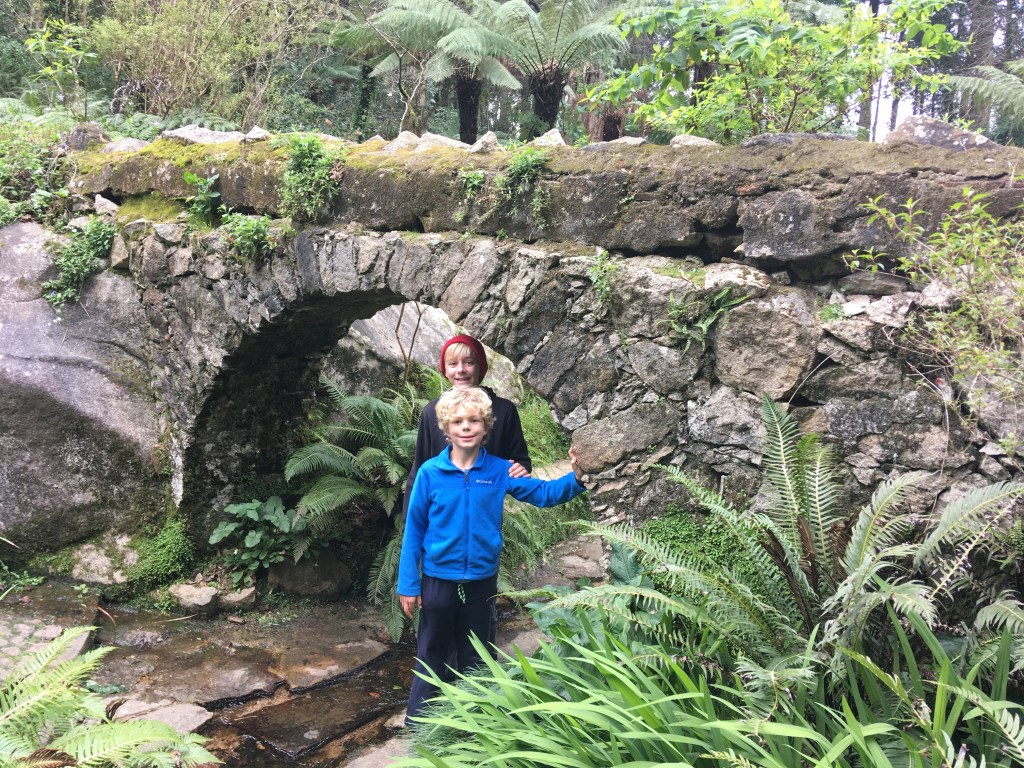
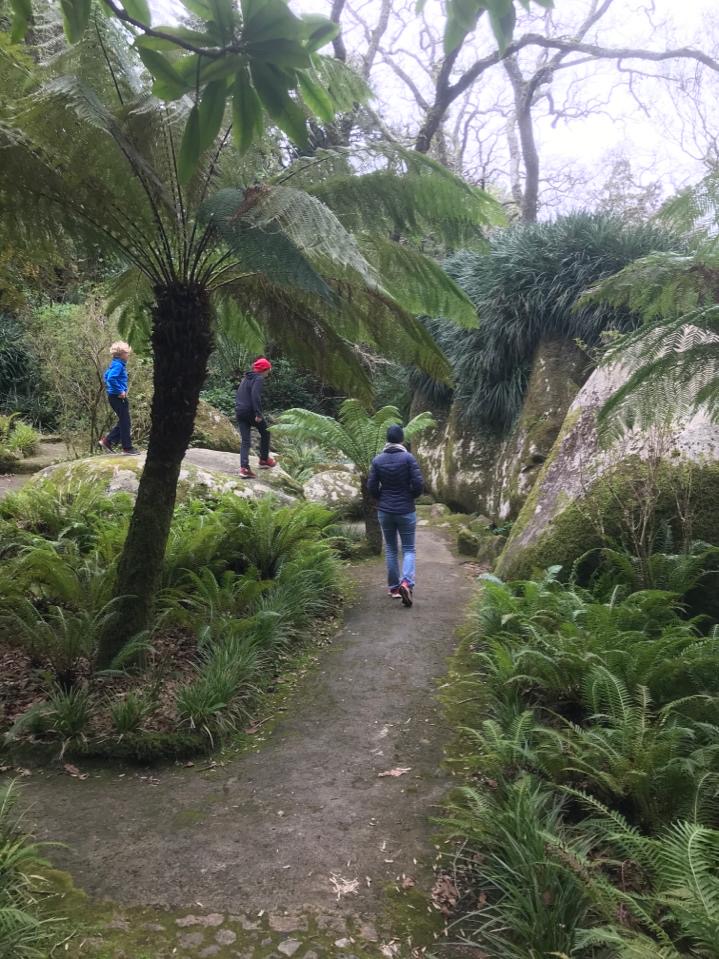
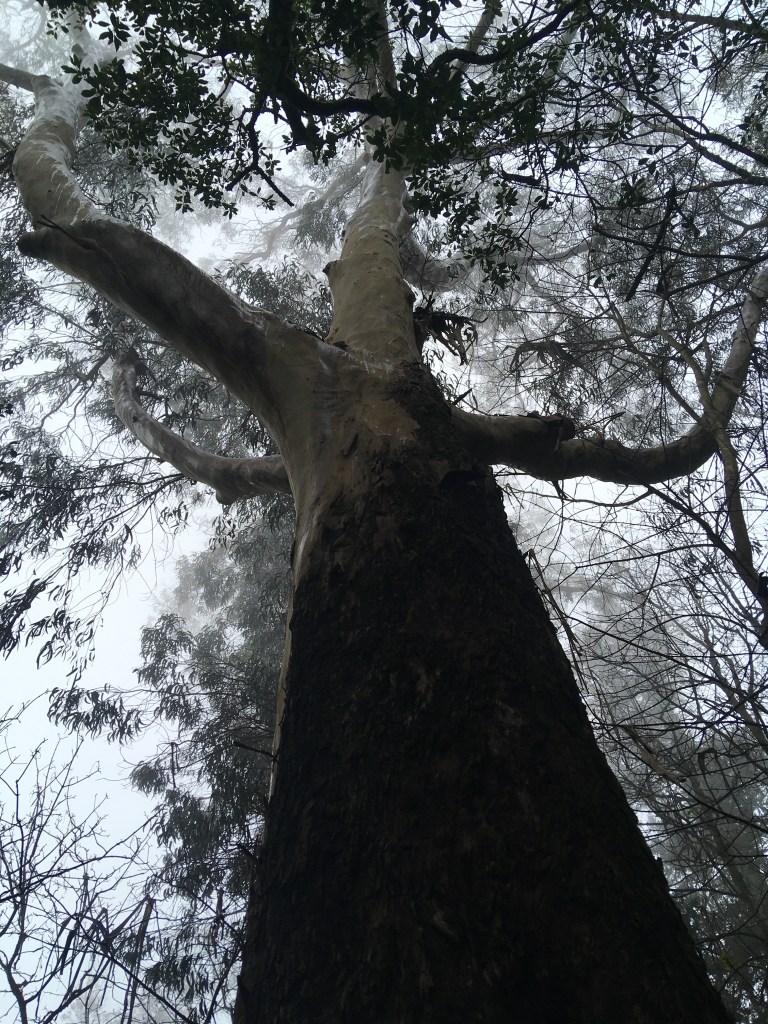
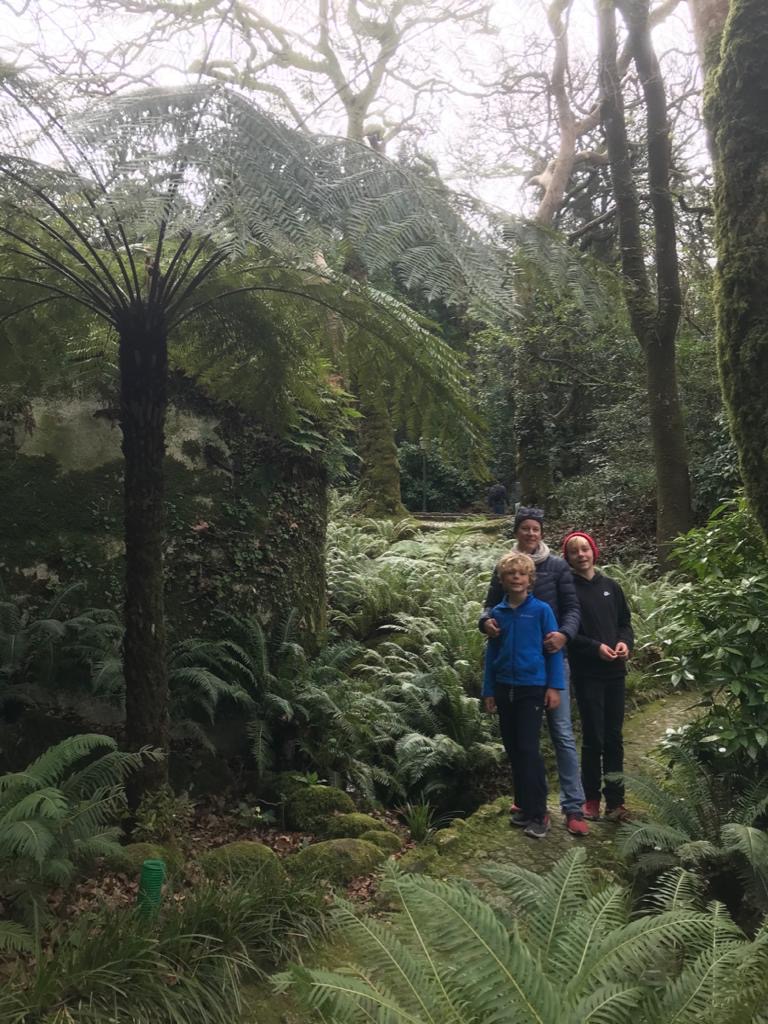
The woods around Palacio Nacional da Pena are filled with gardens, water features and plant specimens selected by King Ferdinand II.
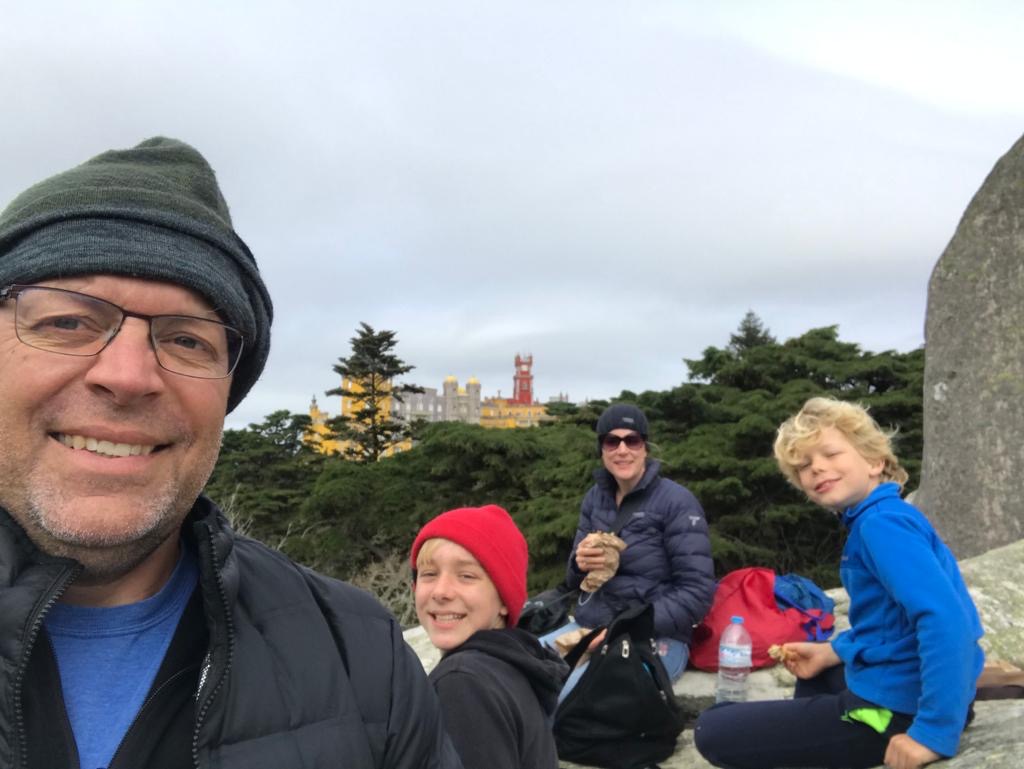
Part way through our walk through the woods we scrambled up a few boulders and found a perfect spot for a picnic.
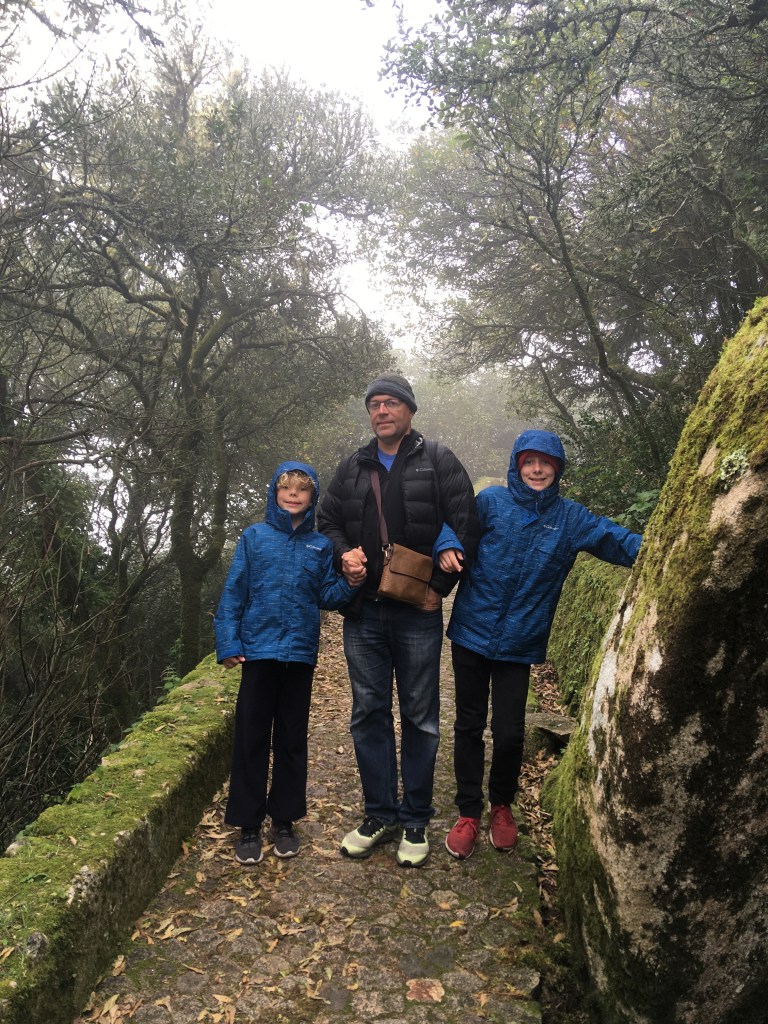
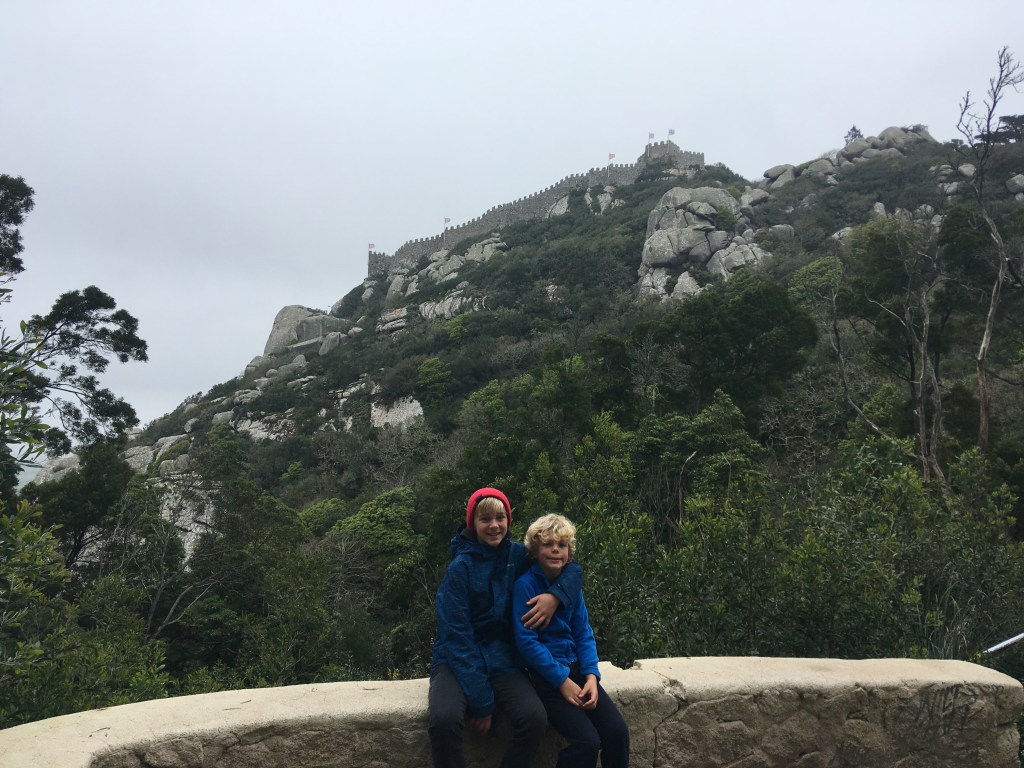
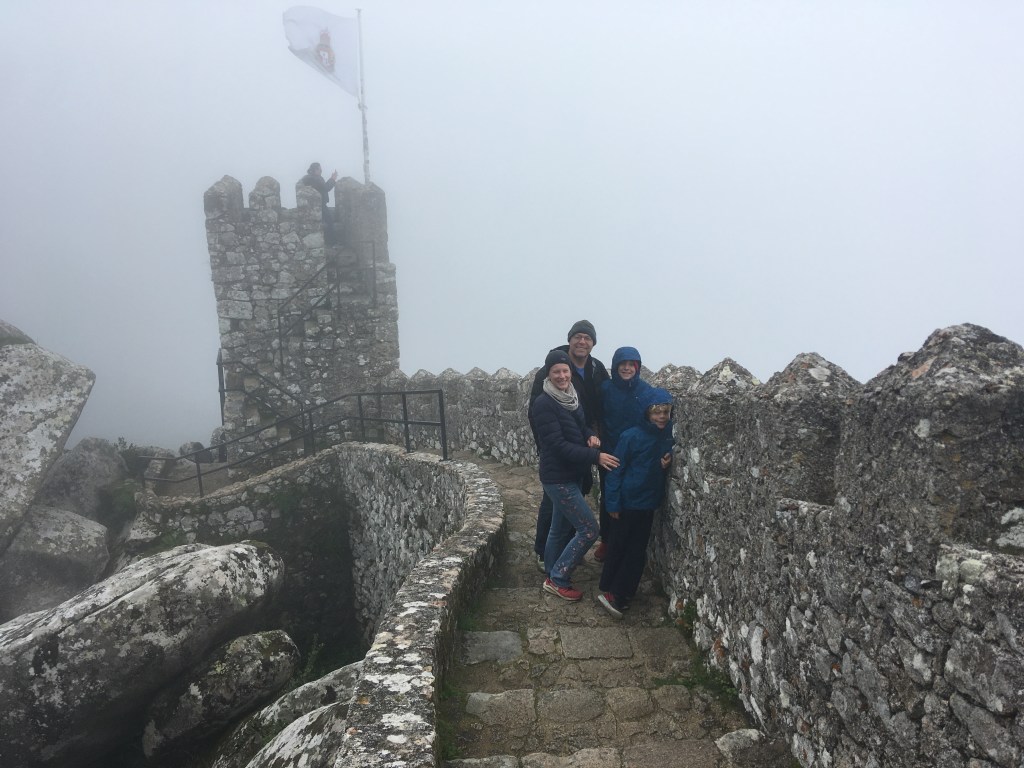
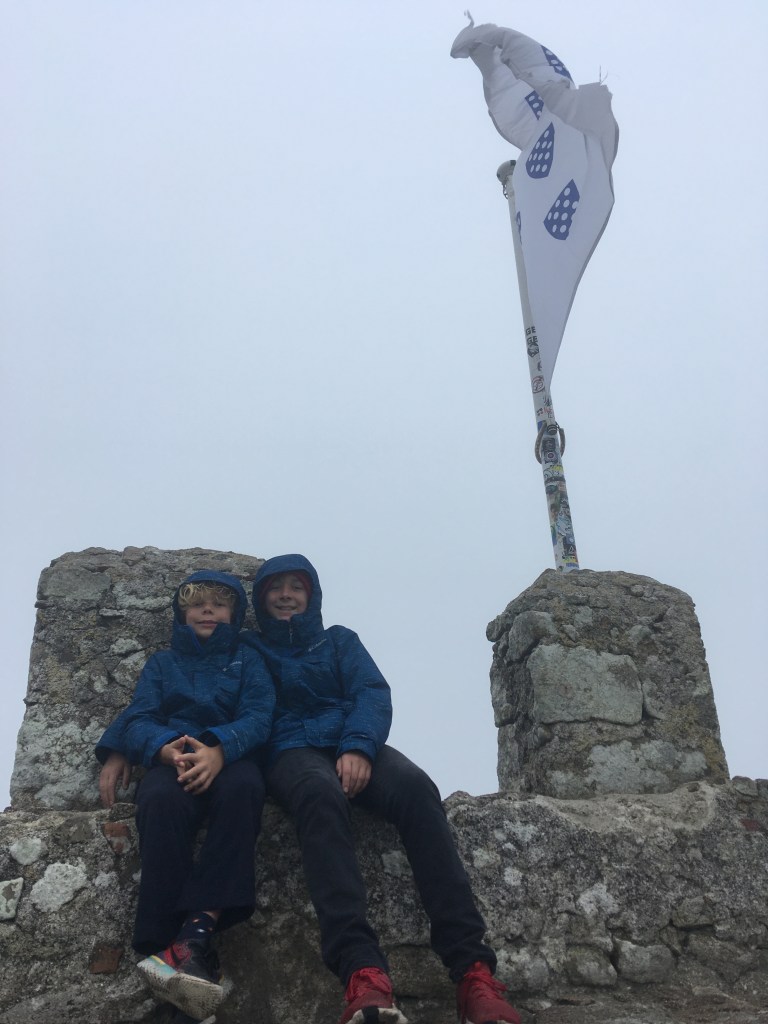
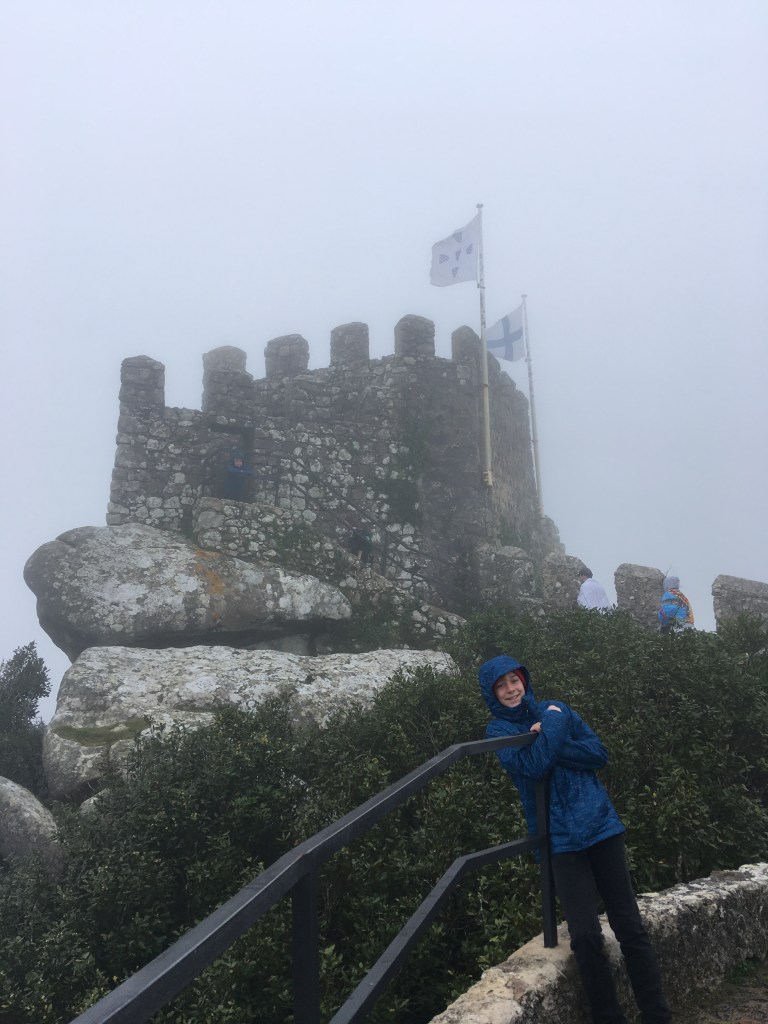
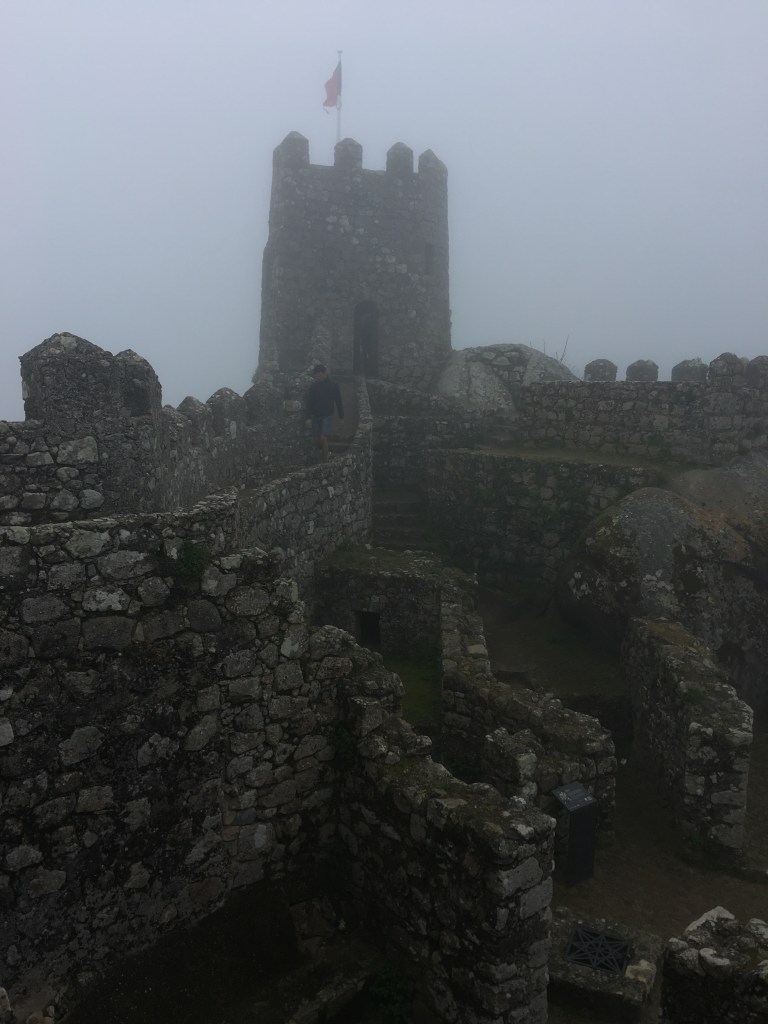
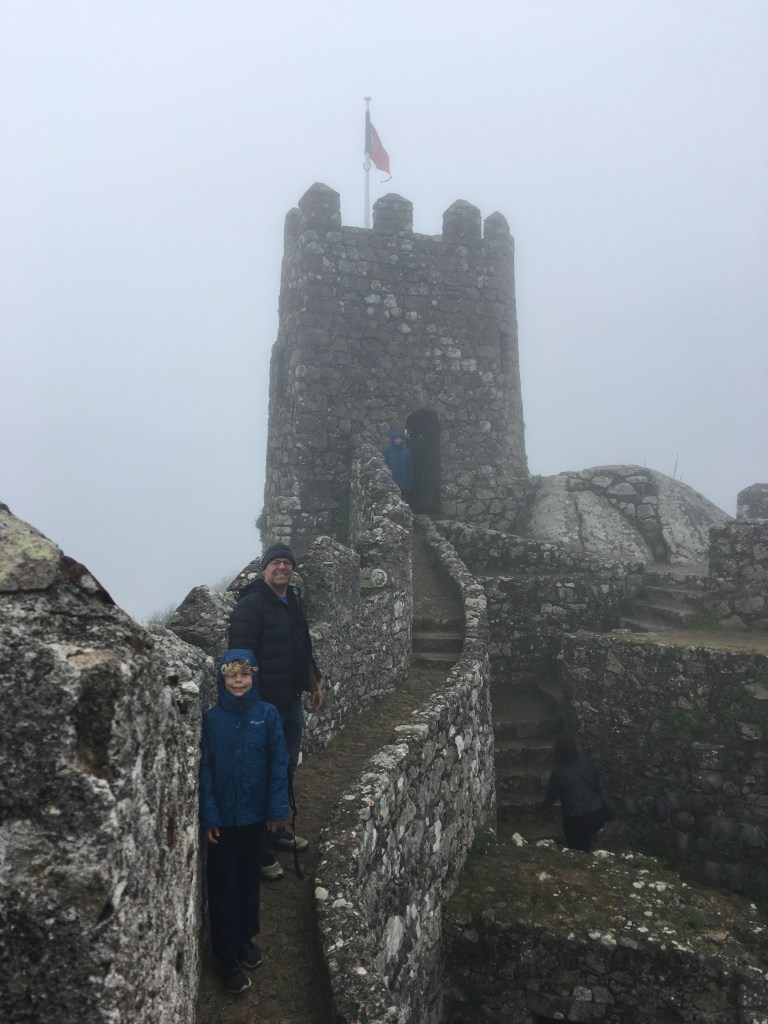
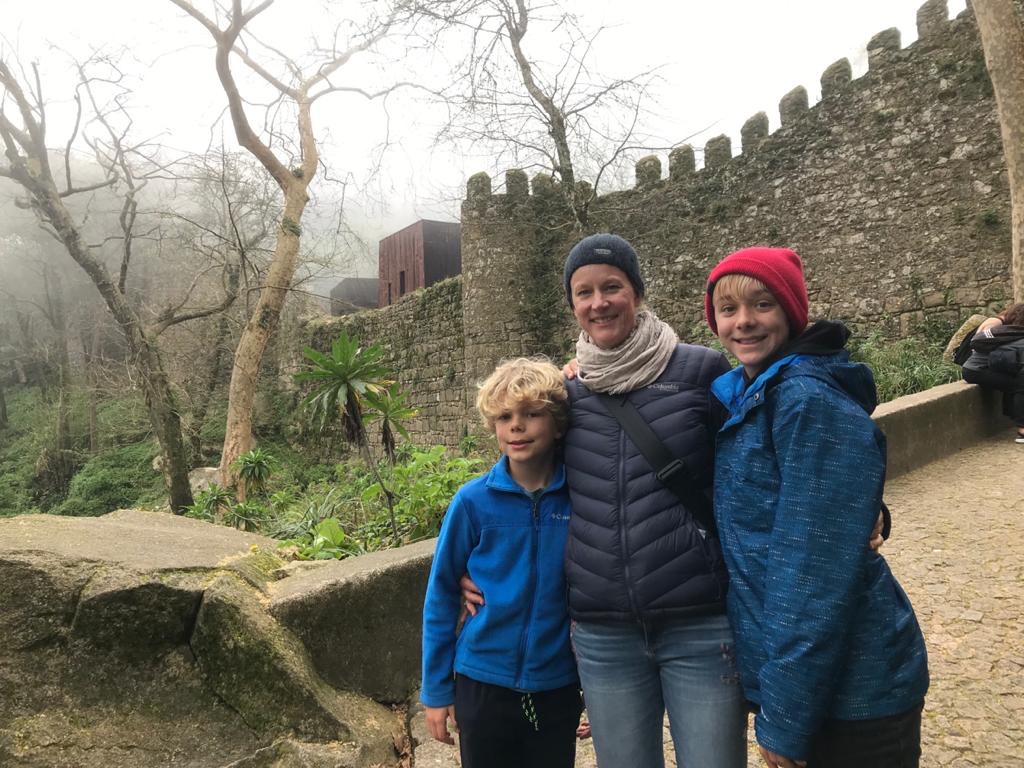
And then continued just a little ways more and found ourselves in a cloud and at Castelo dos Mouros (Castle of the Moors).
The fog made it extra mysterious, but we did miss out on what would have been some amazing views.
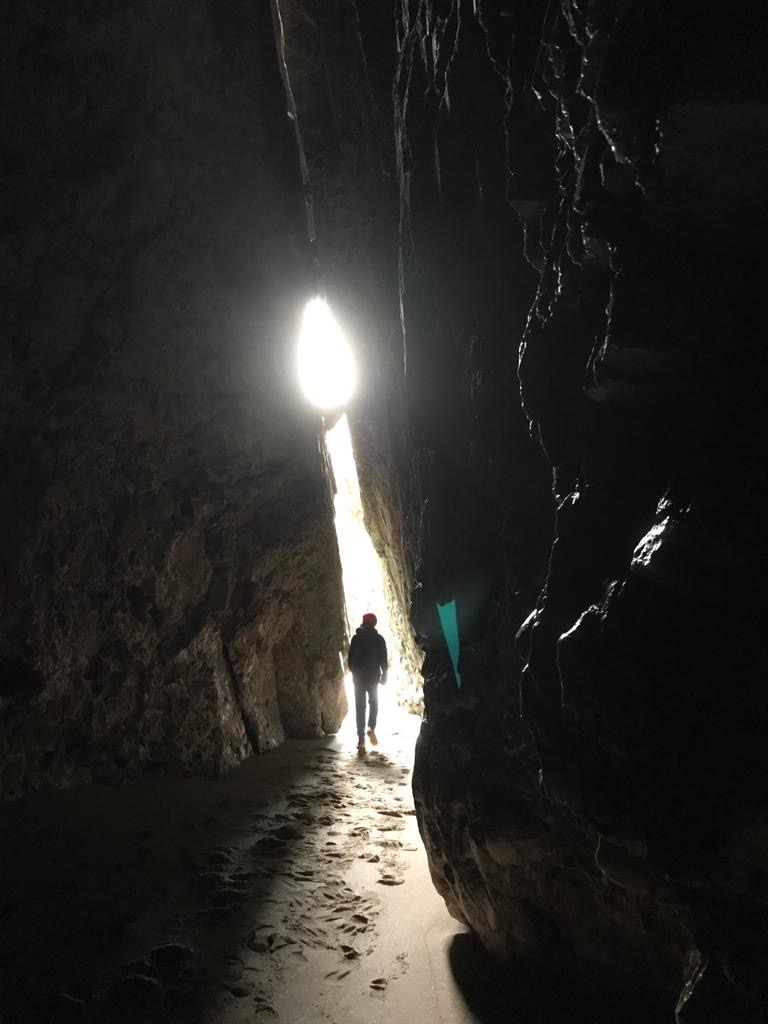
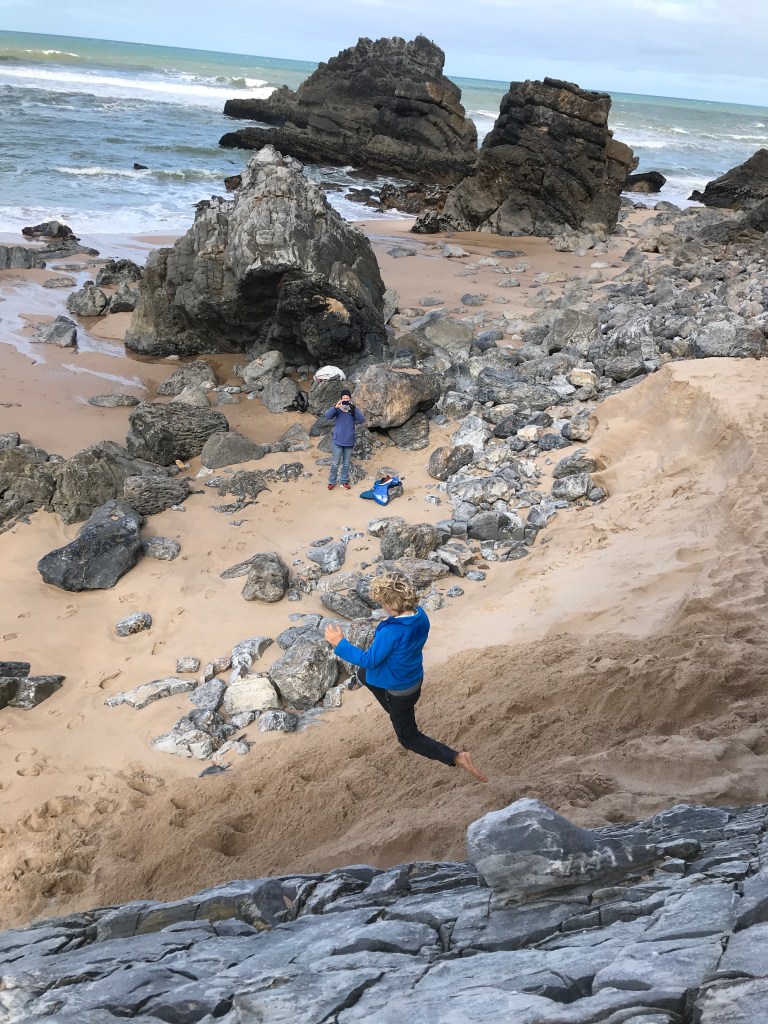
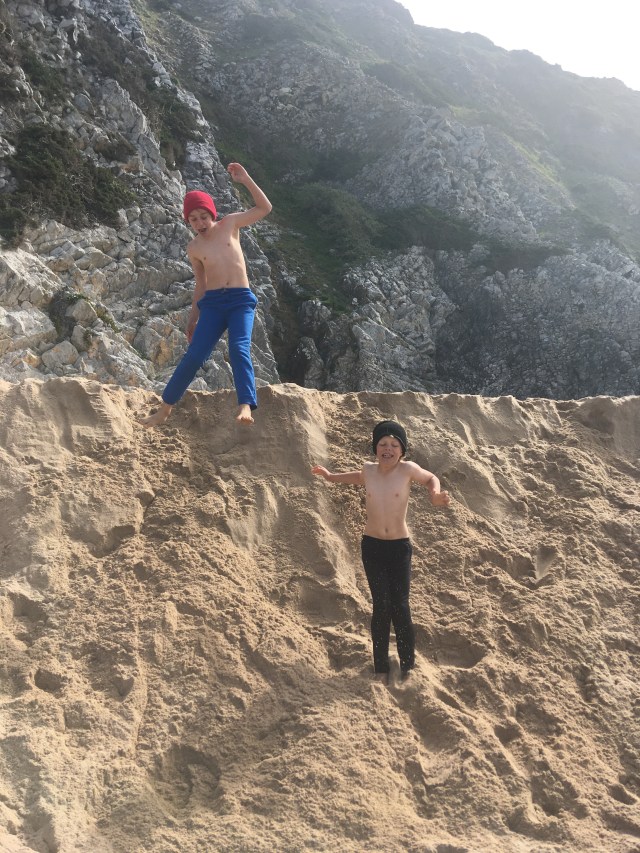
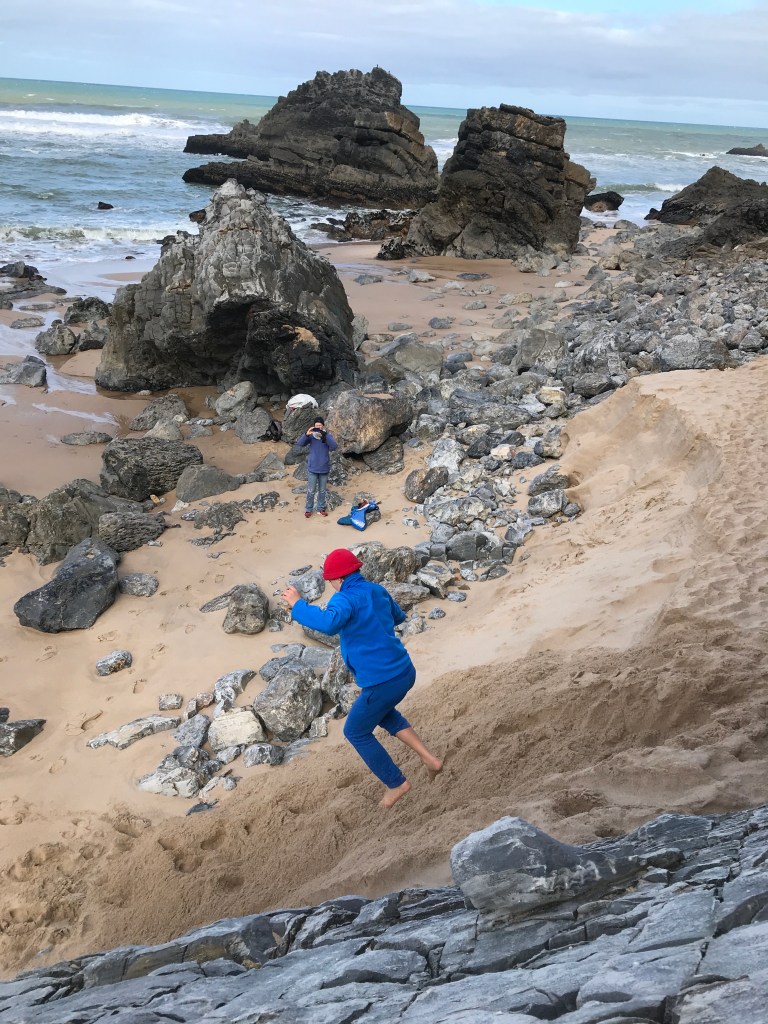
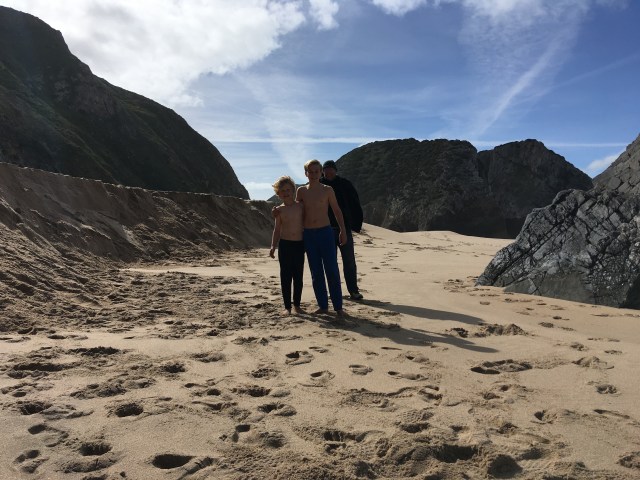
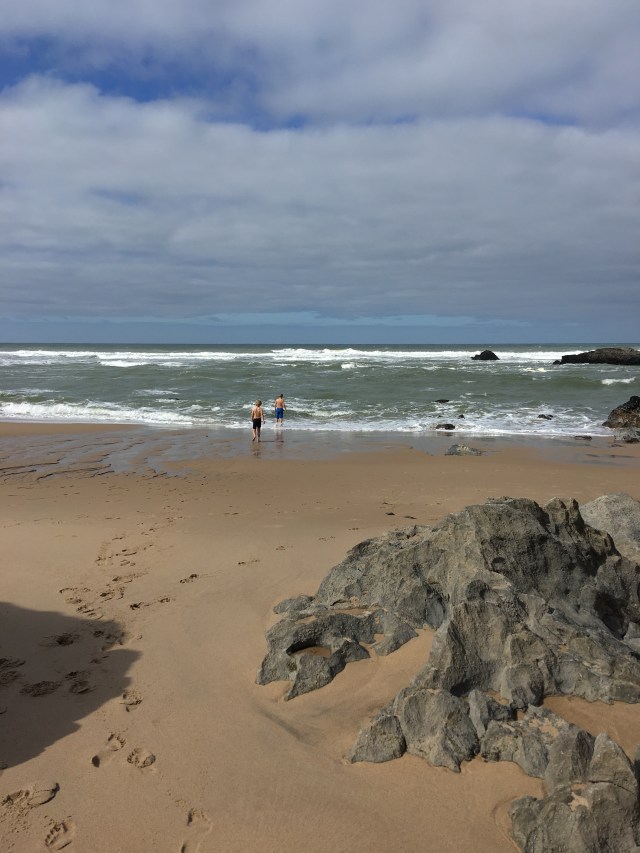
The next day we took a break from the castles and palaces and went to the beach.
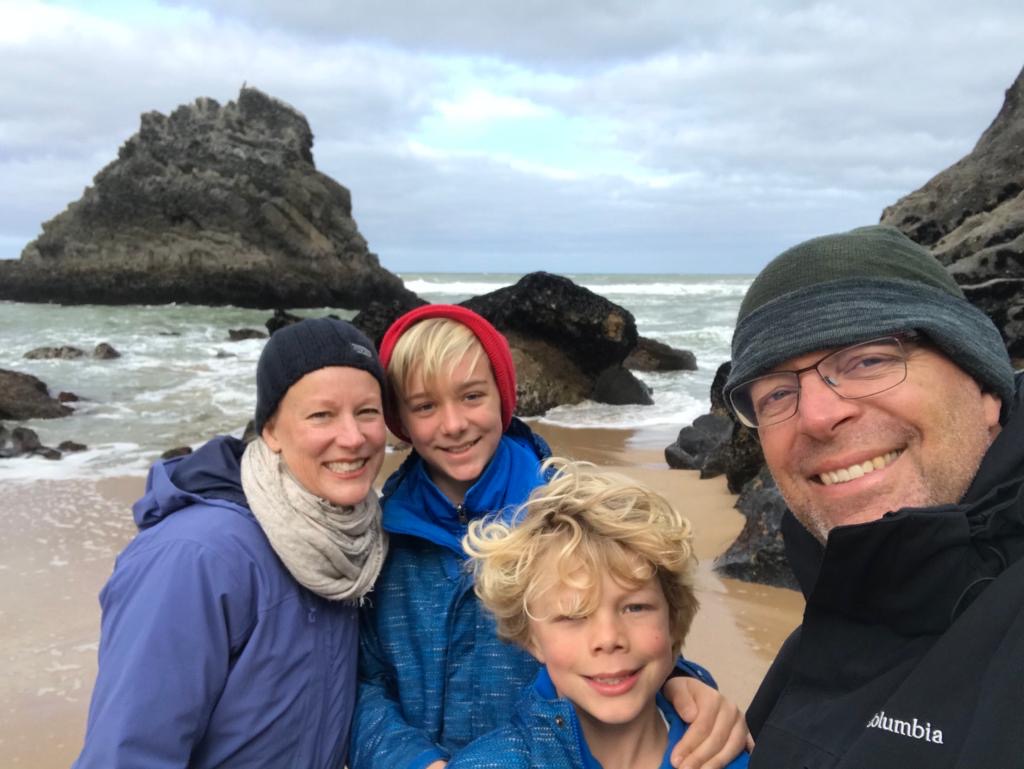
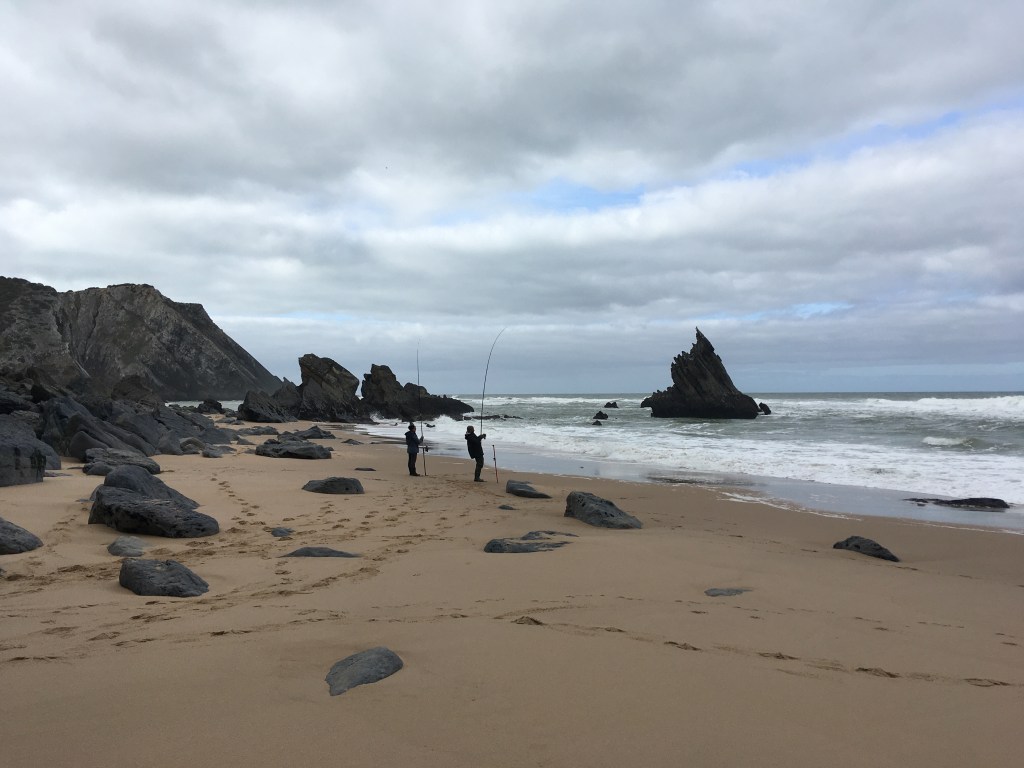
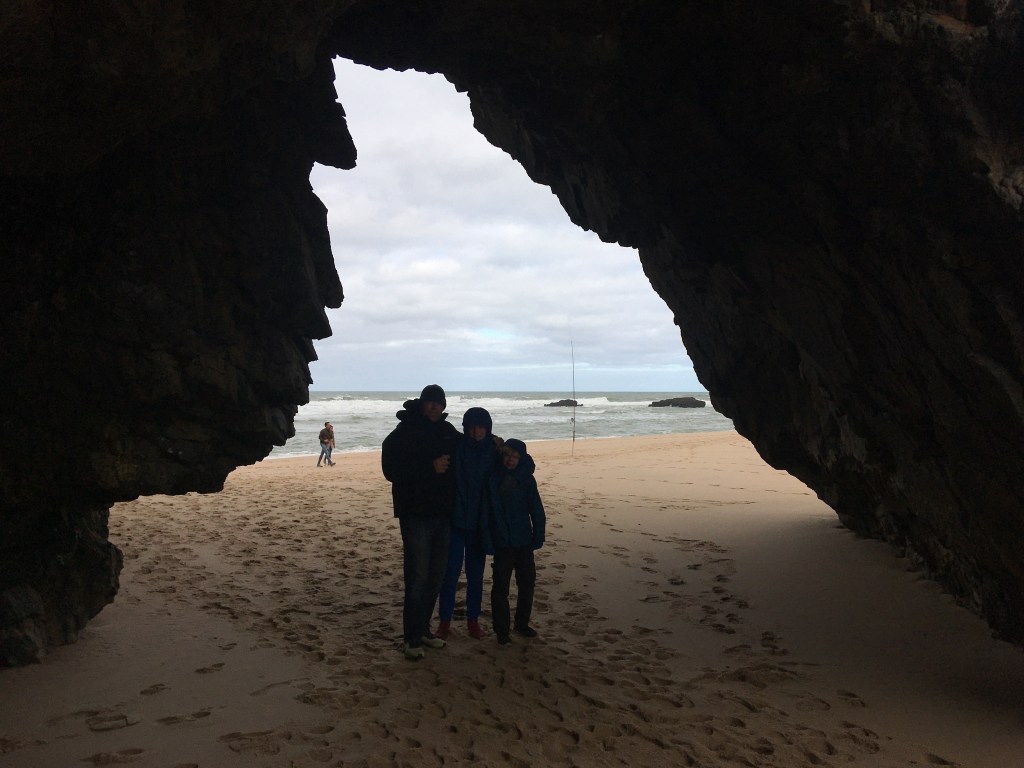
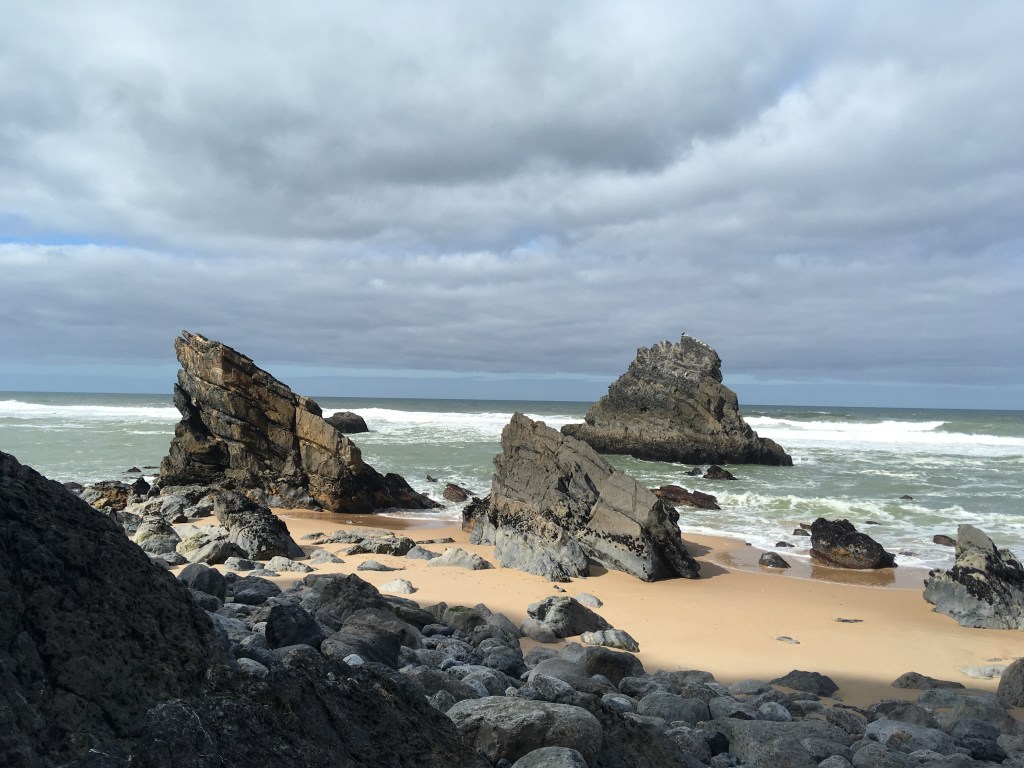
Within 30 minutes in multiple directions from the palaces are several beautiful beaches. We chose Praia da Adraga.
The boys were ready for some serious play.
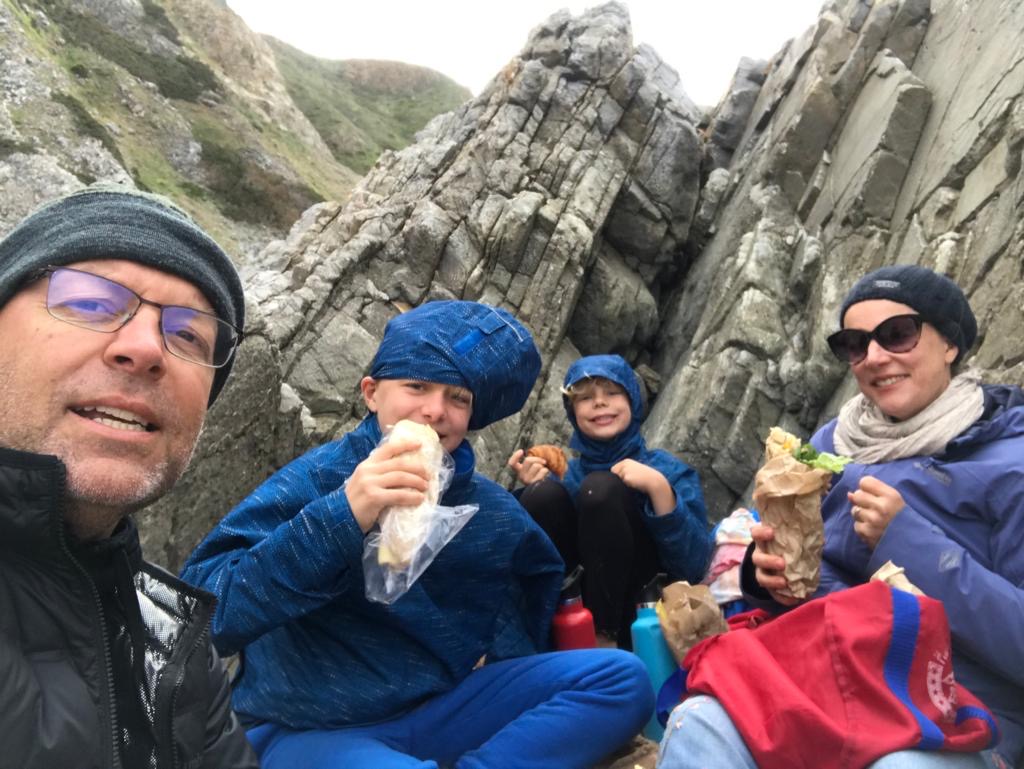
And we found a perfect spot for another picnic.
When the sun went behind the clouds the wind made it quite chilly.
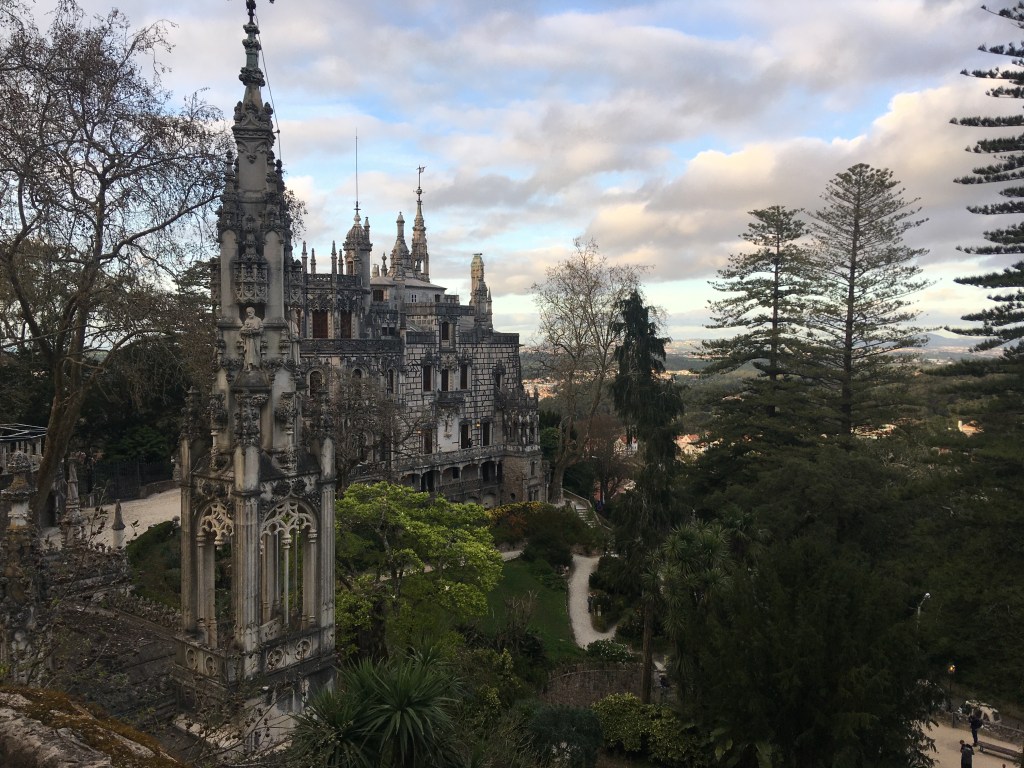
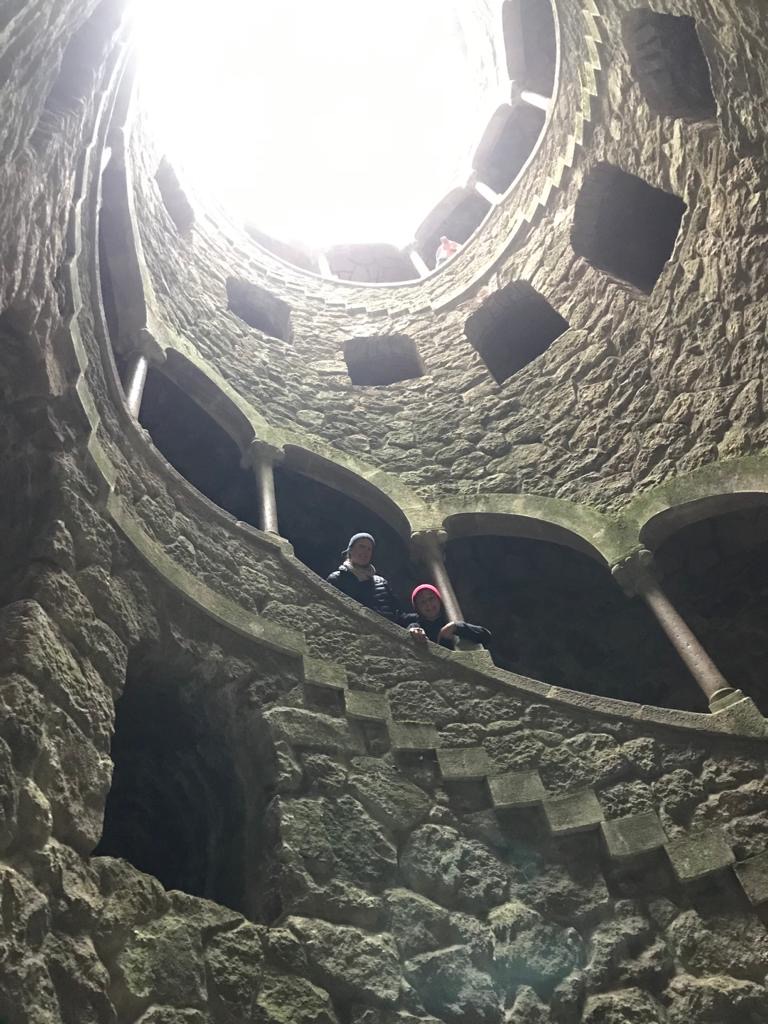
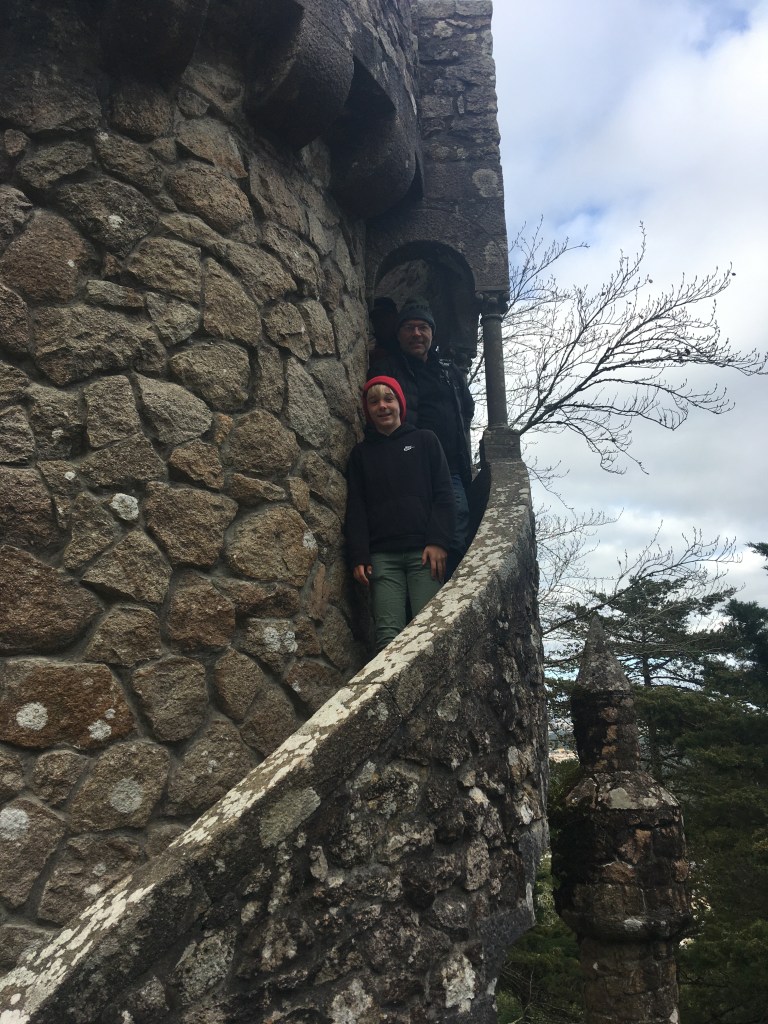
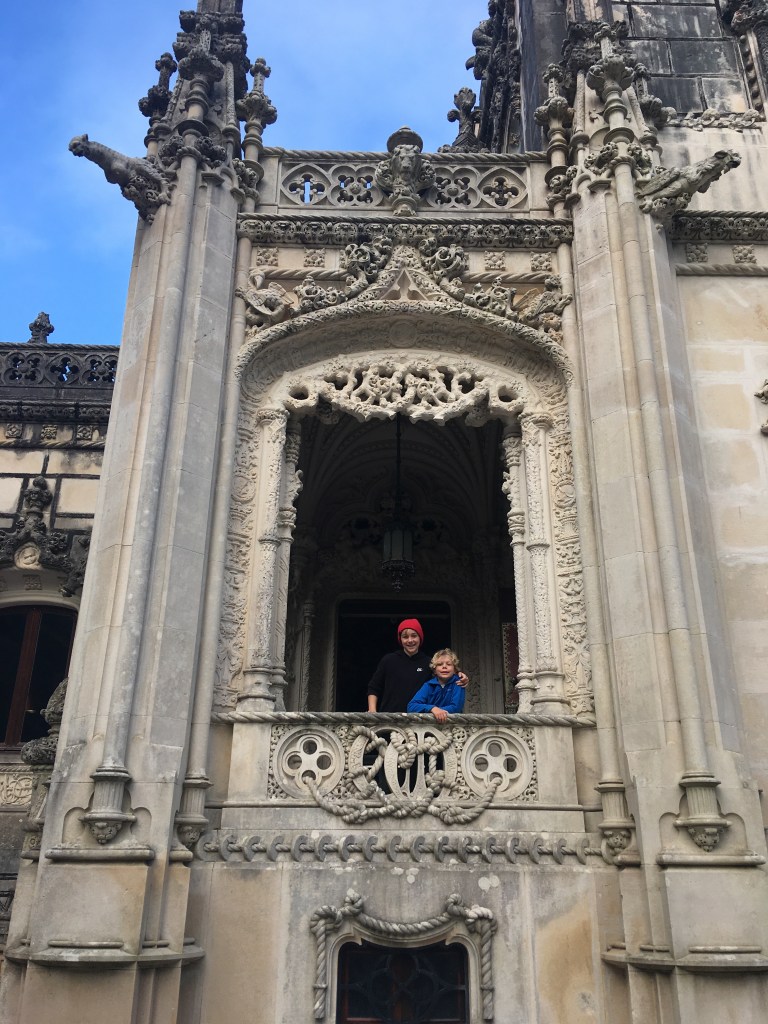
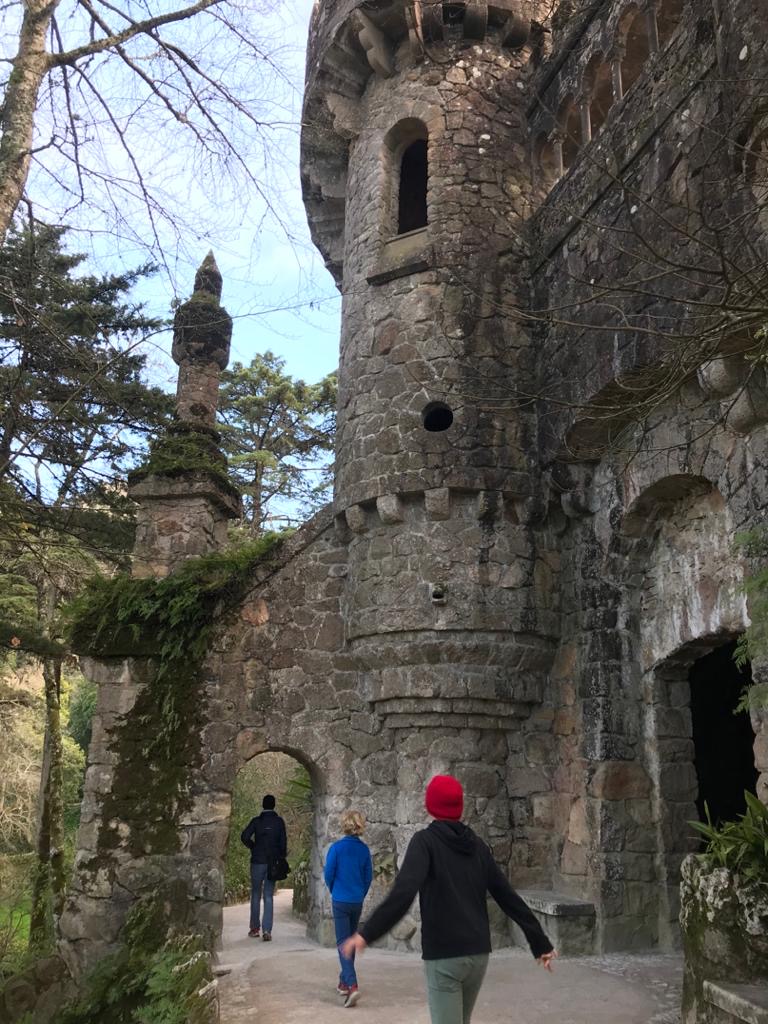
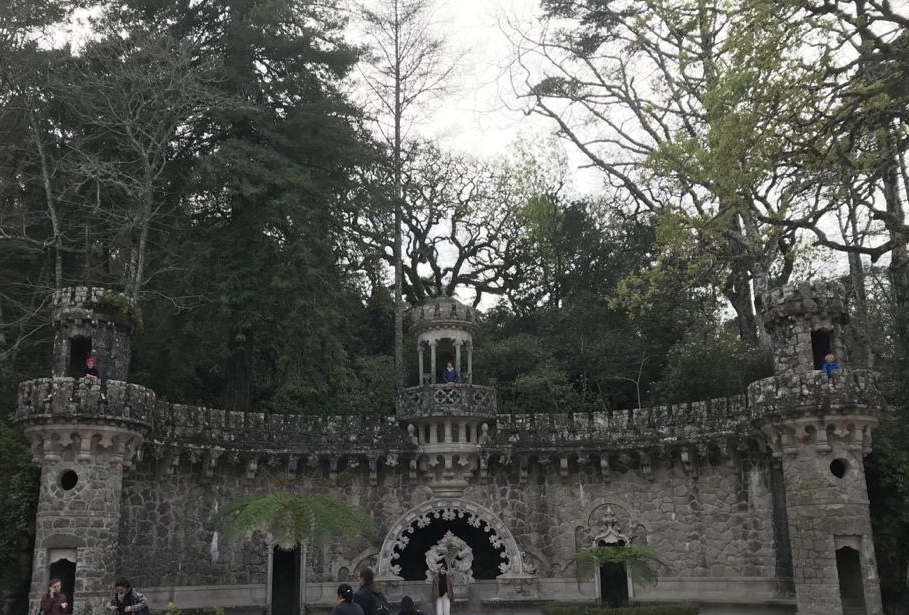
Then it was back to the palaces. There are so many in this region and we just didn’t have enough time for all them. We decided to make Quinta da Regaleira The last one we’d see in Sintra.
This mansion sits on an enormous piece of property with extensive gardens filled with endless surprises. At first Oliver was not particularity interested in seeing another historic building. That quickly changed.
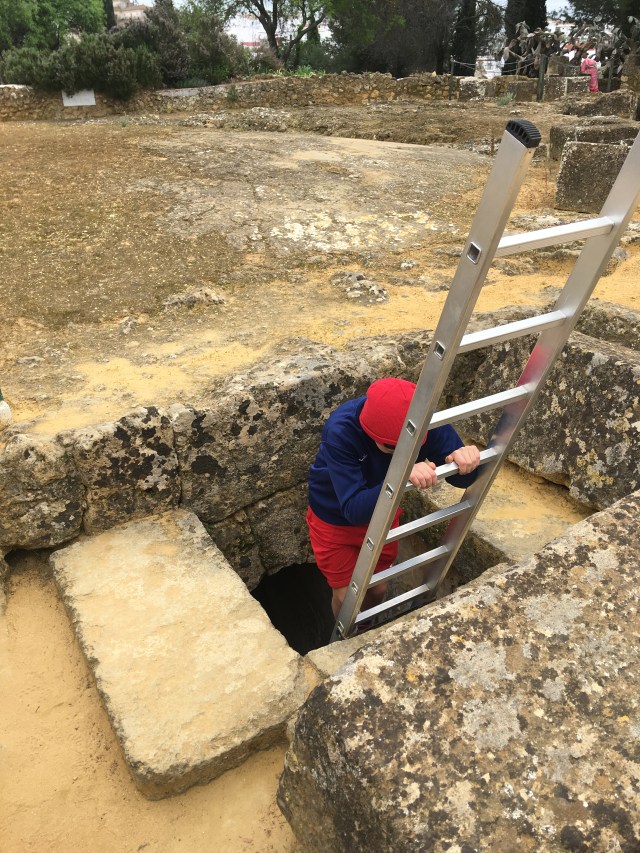
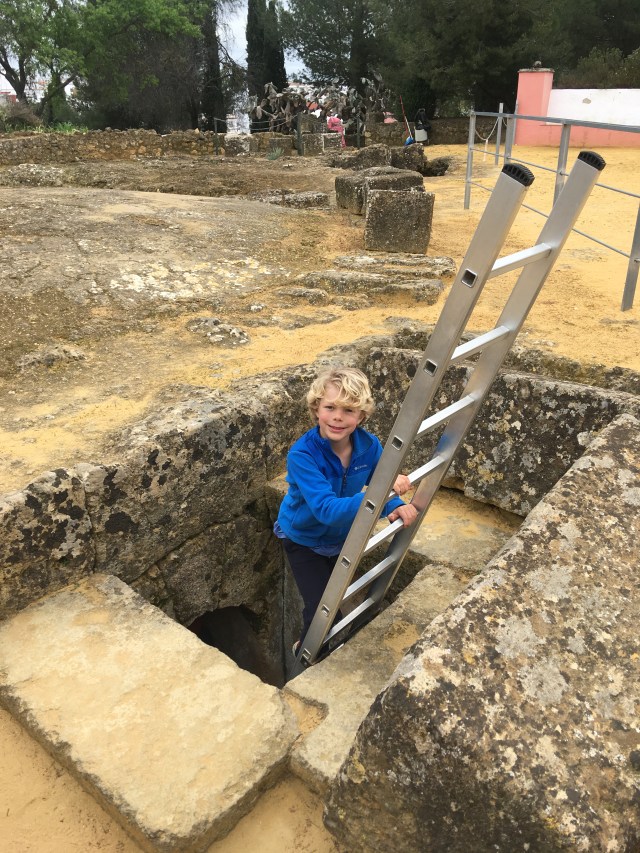
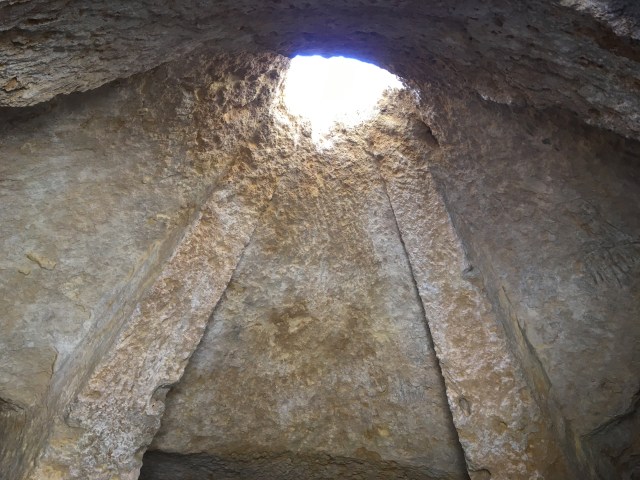
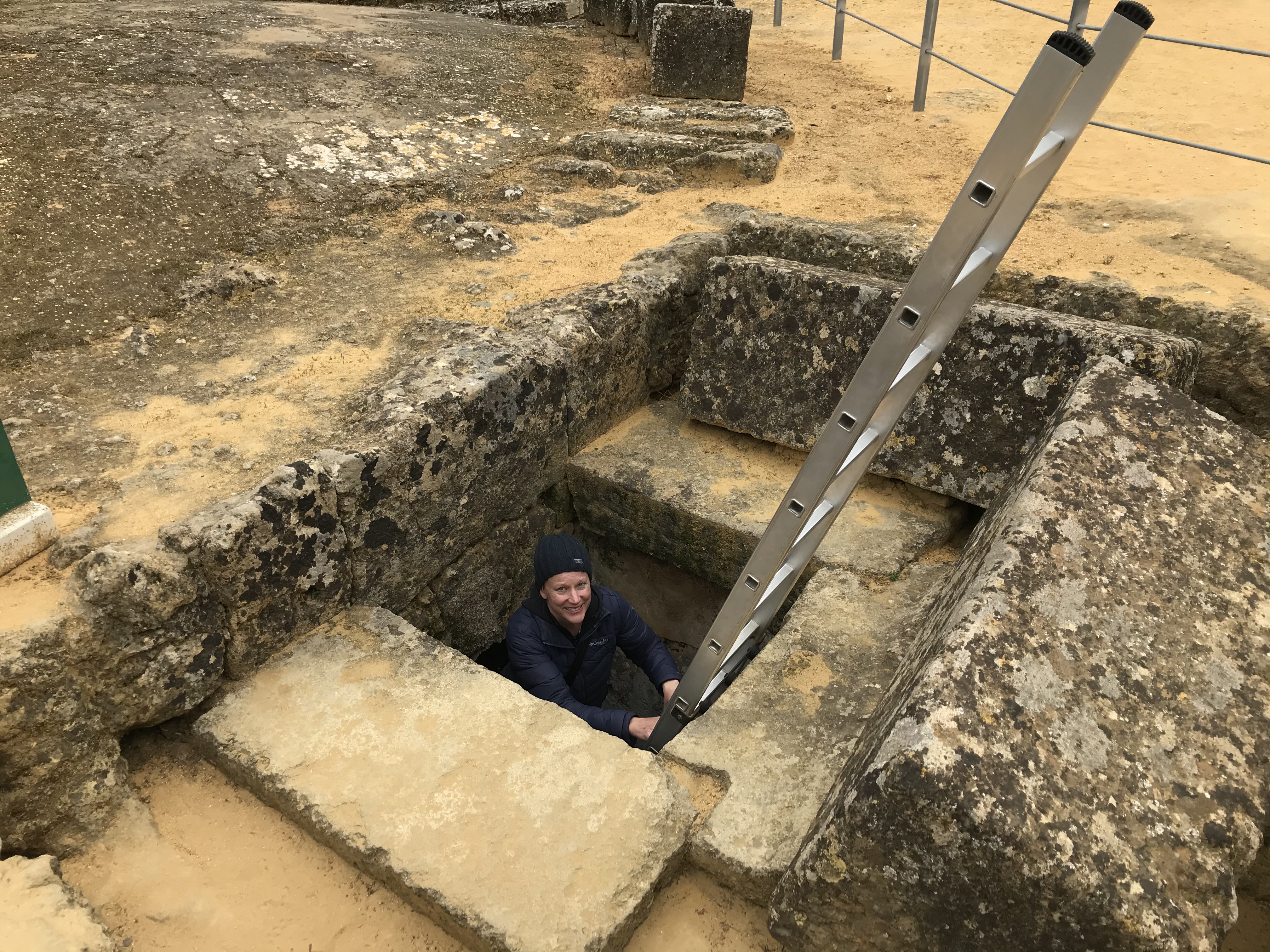
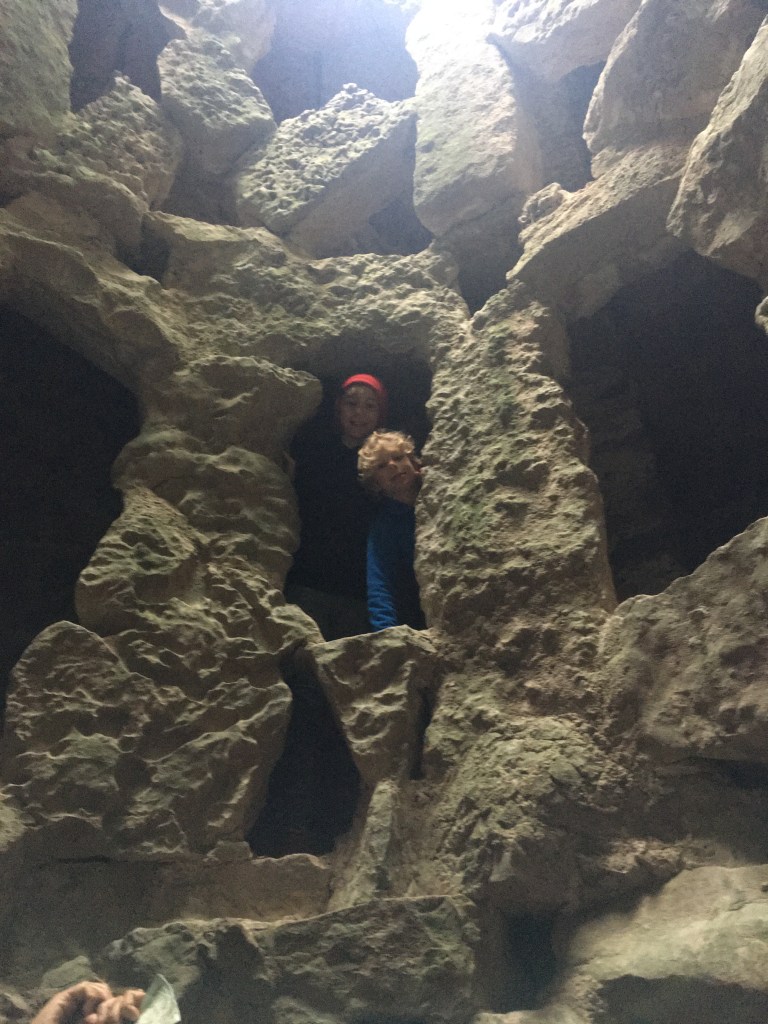
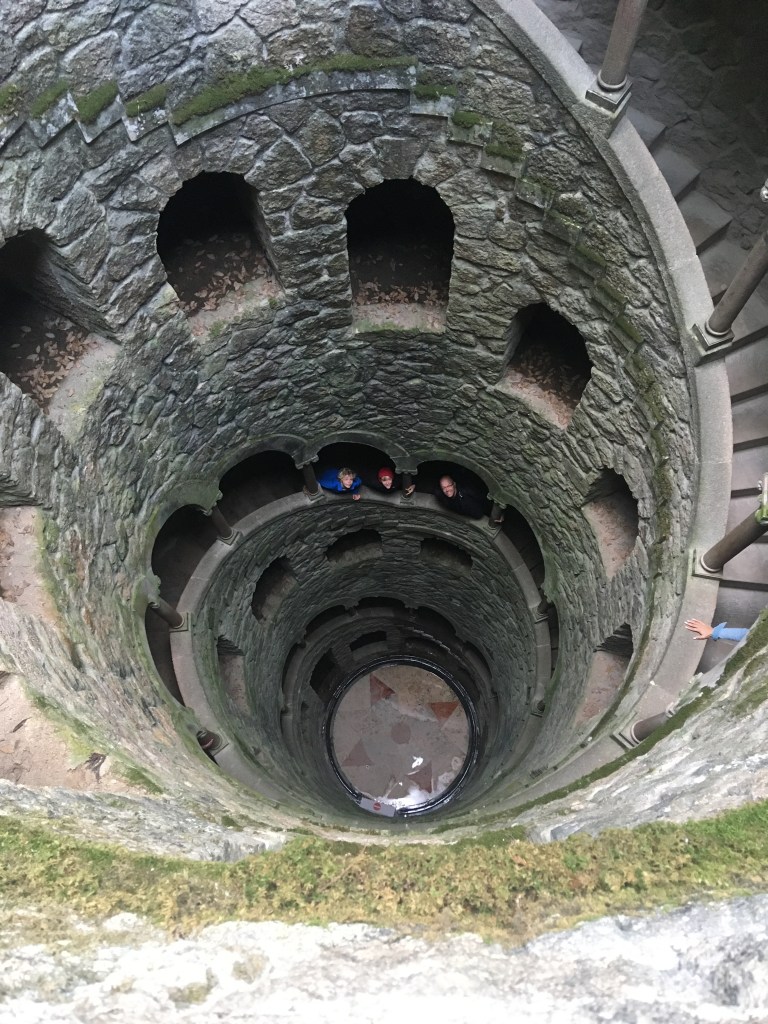
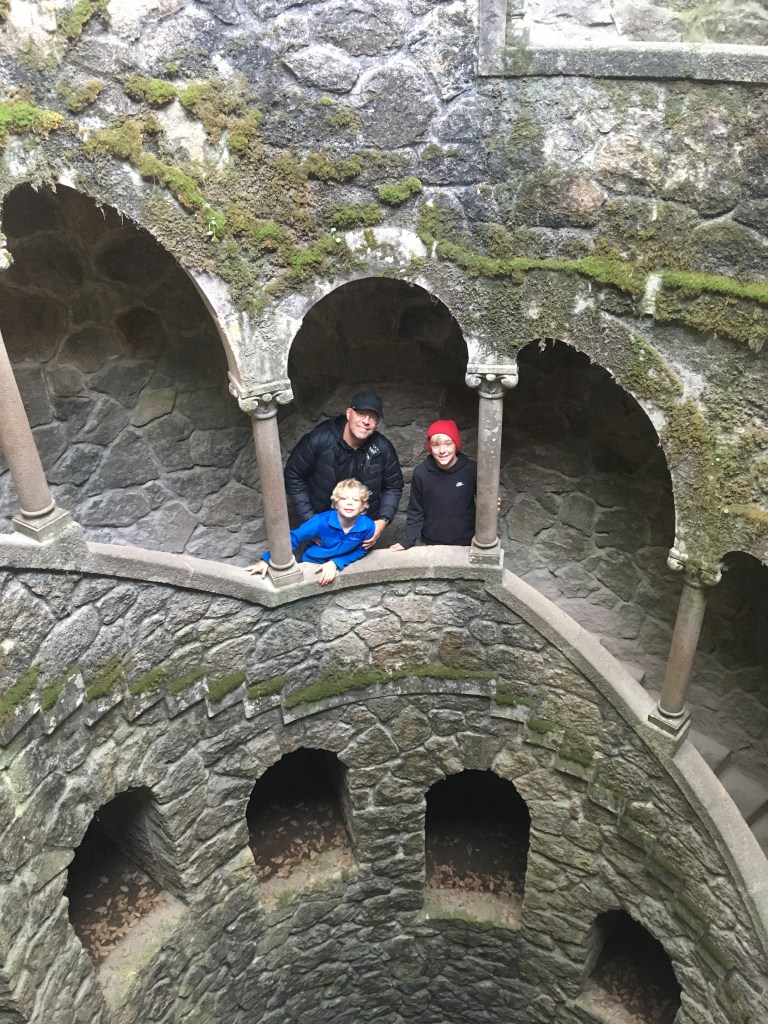
Everyone’s favorite part was the pozo iniciático, the inverted tower.
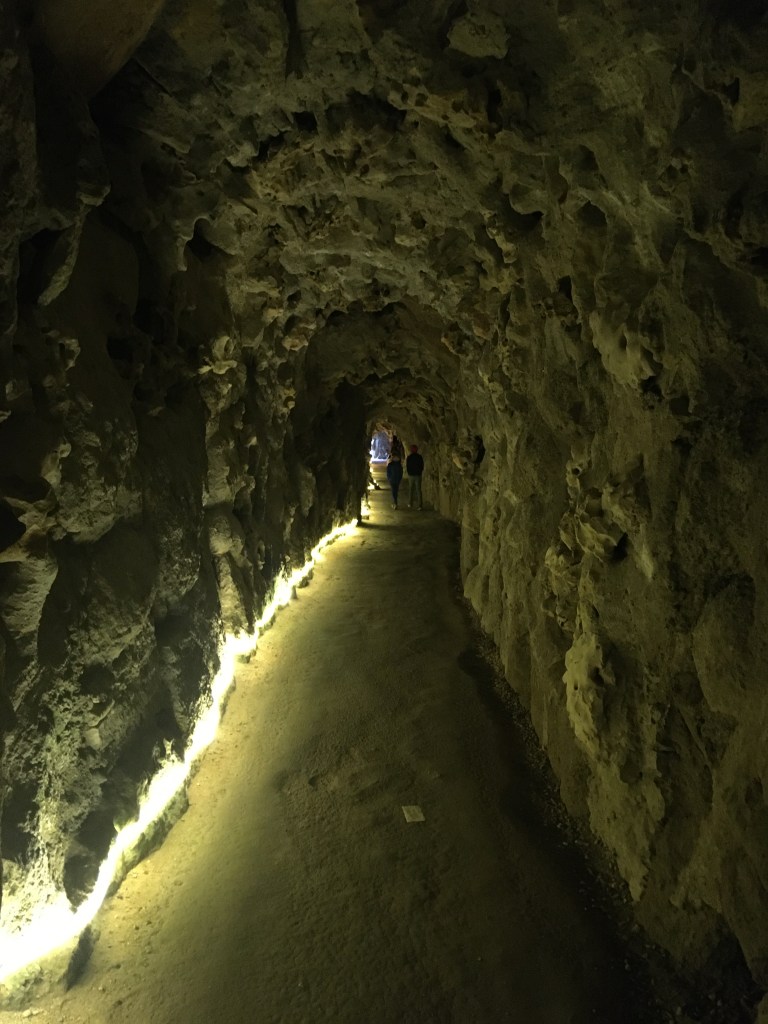
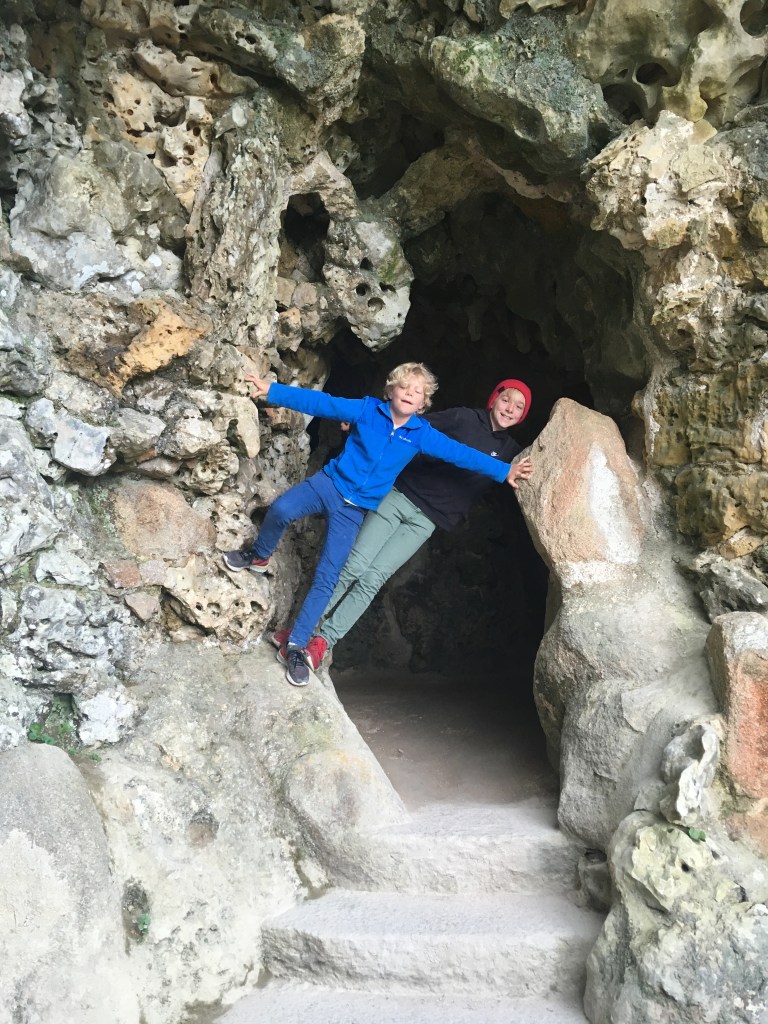
And the tunnels and caverns that led from the bottom.
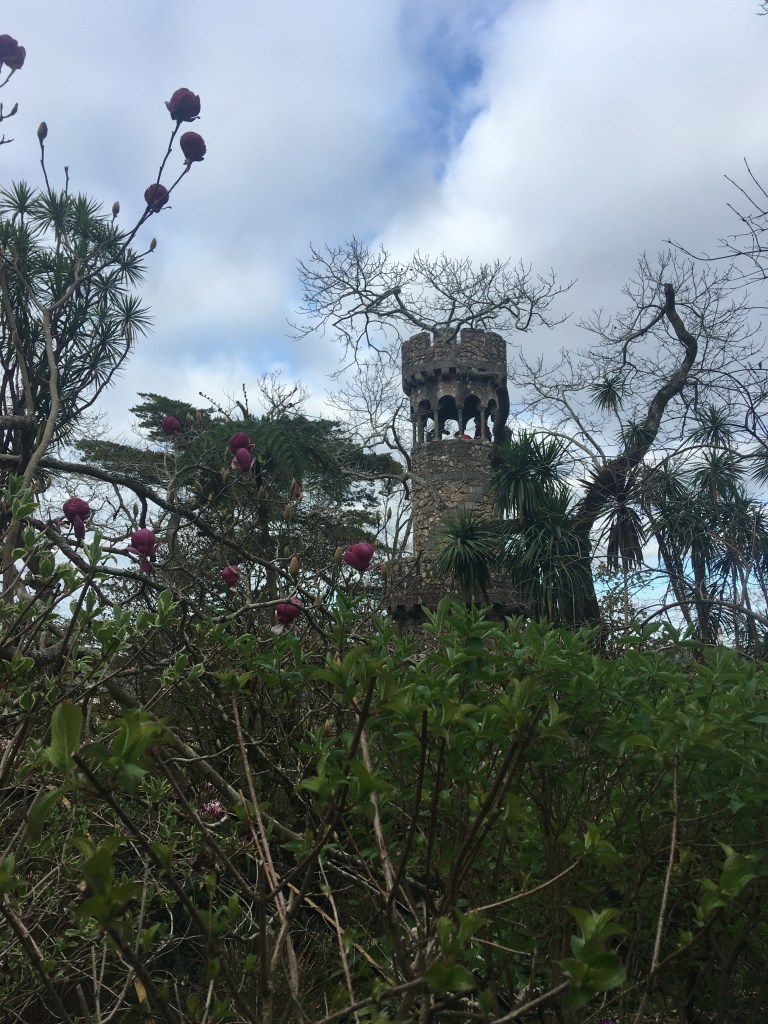
But there was so much more to love.
Look carefully in each tower
We had three full days in Sintra, but I think we could have used a week, or maybe a lifetime.
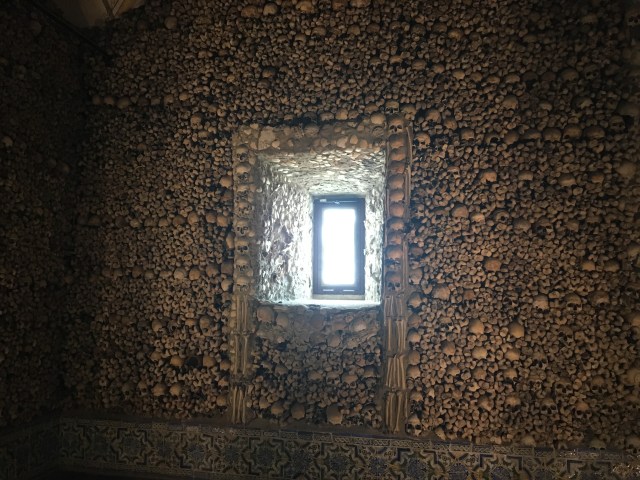
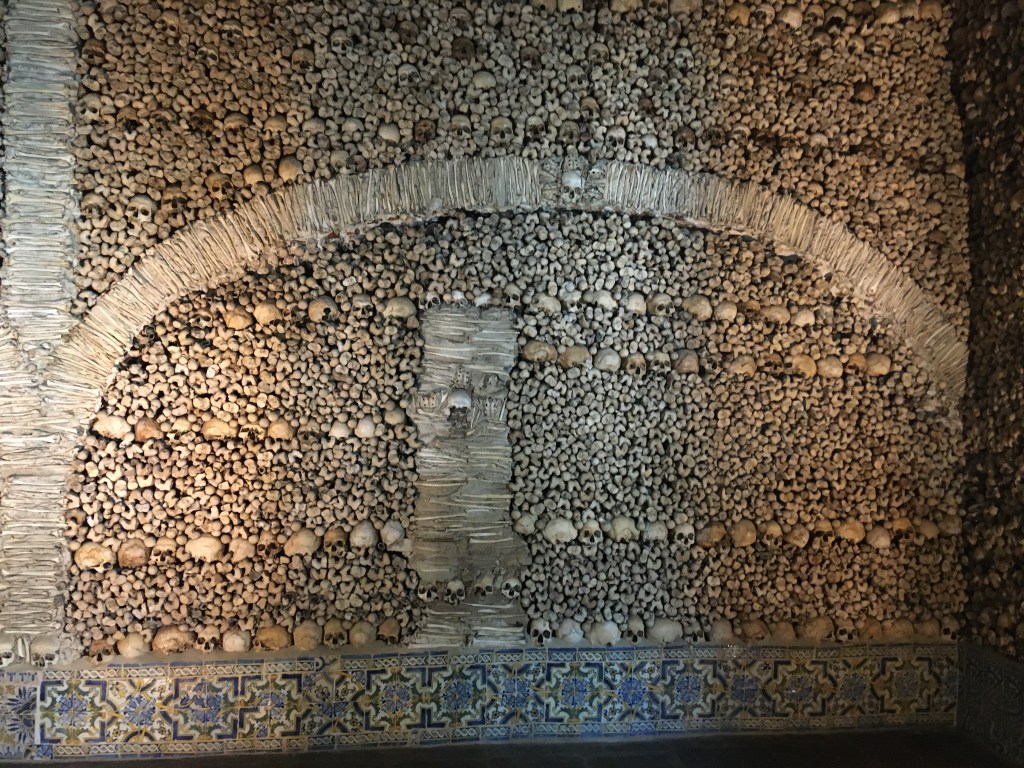
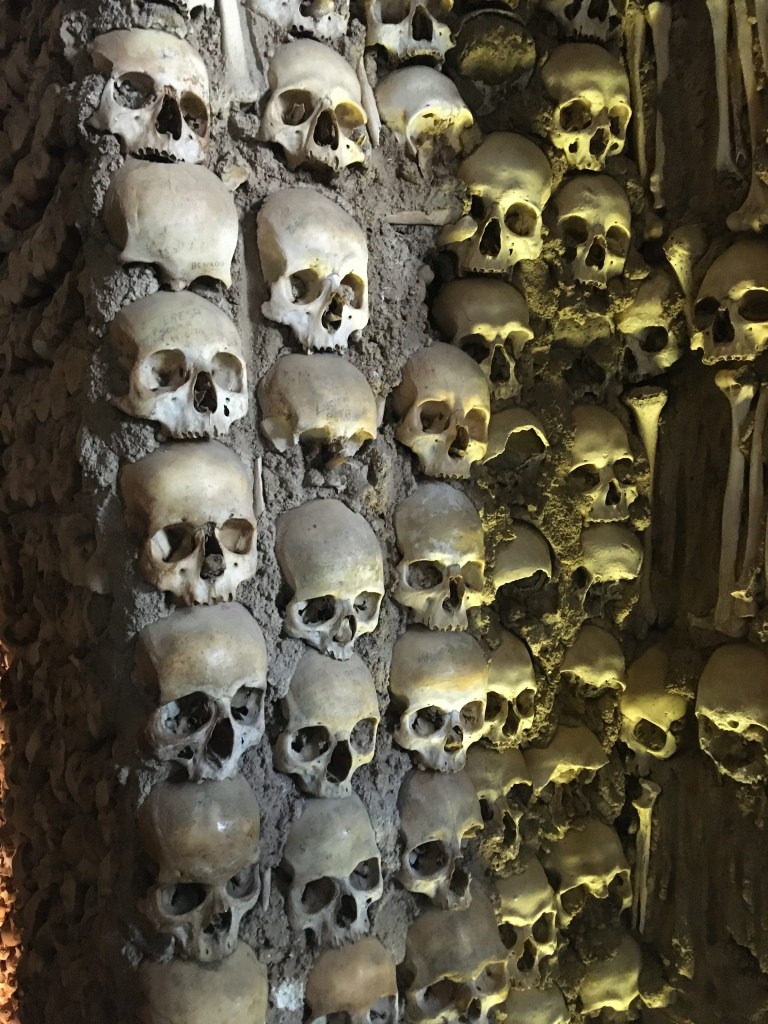
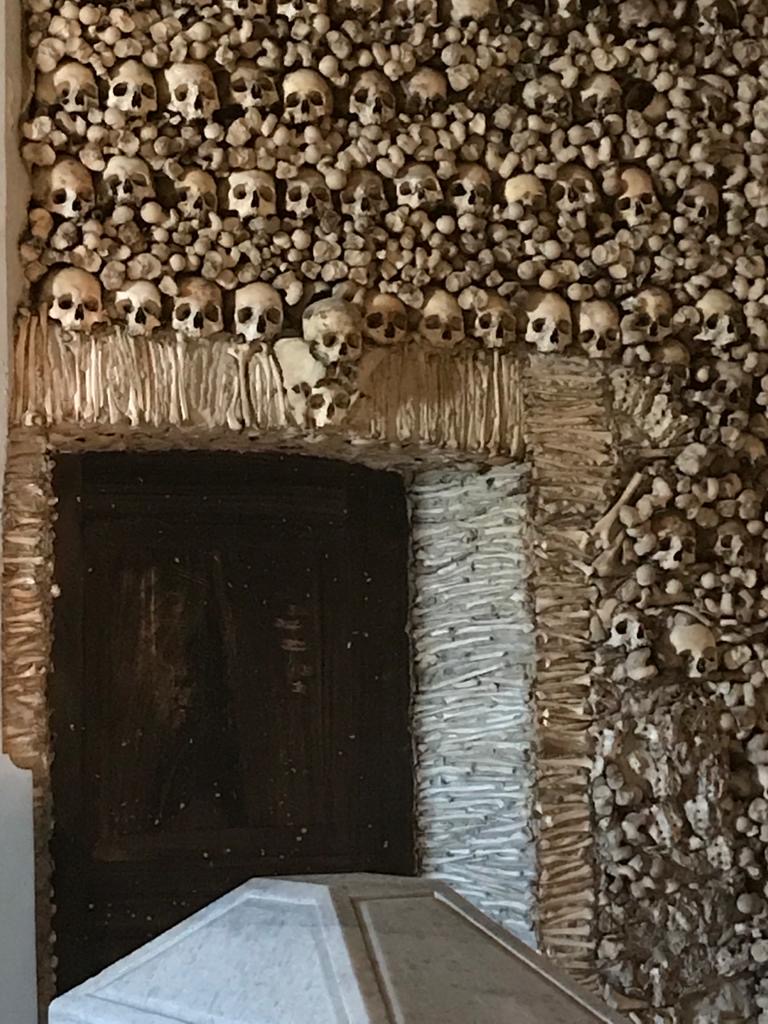
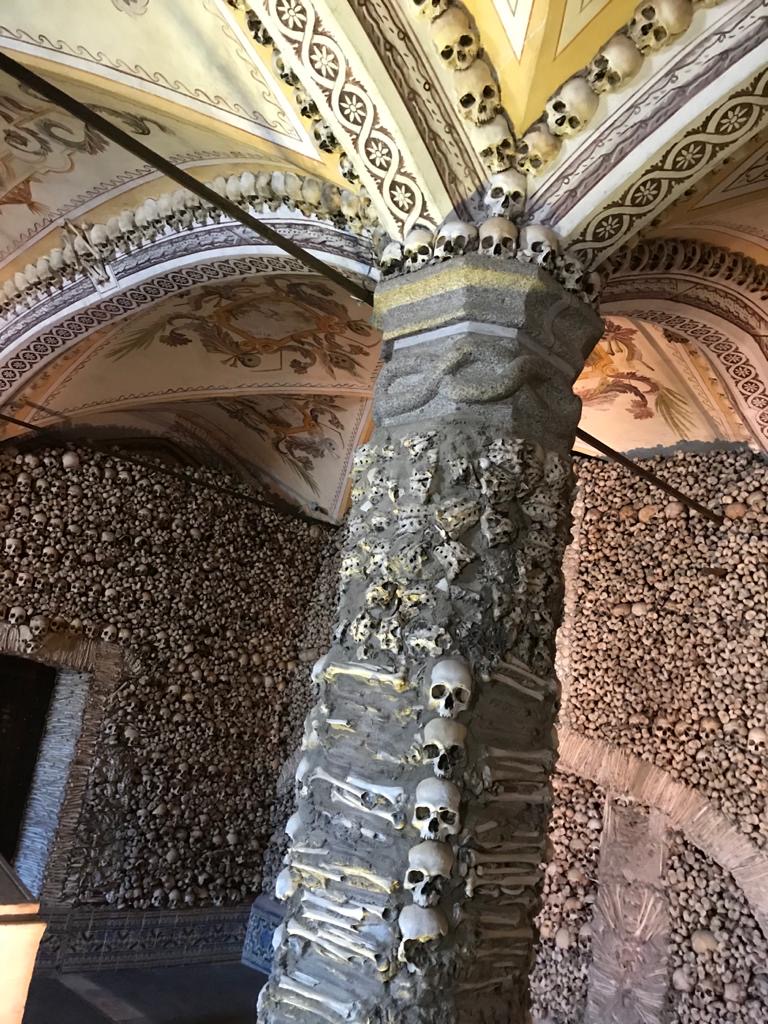
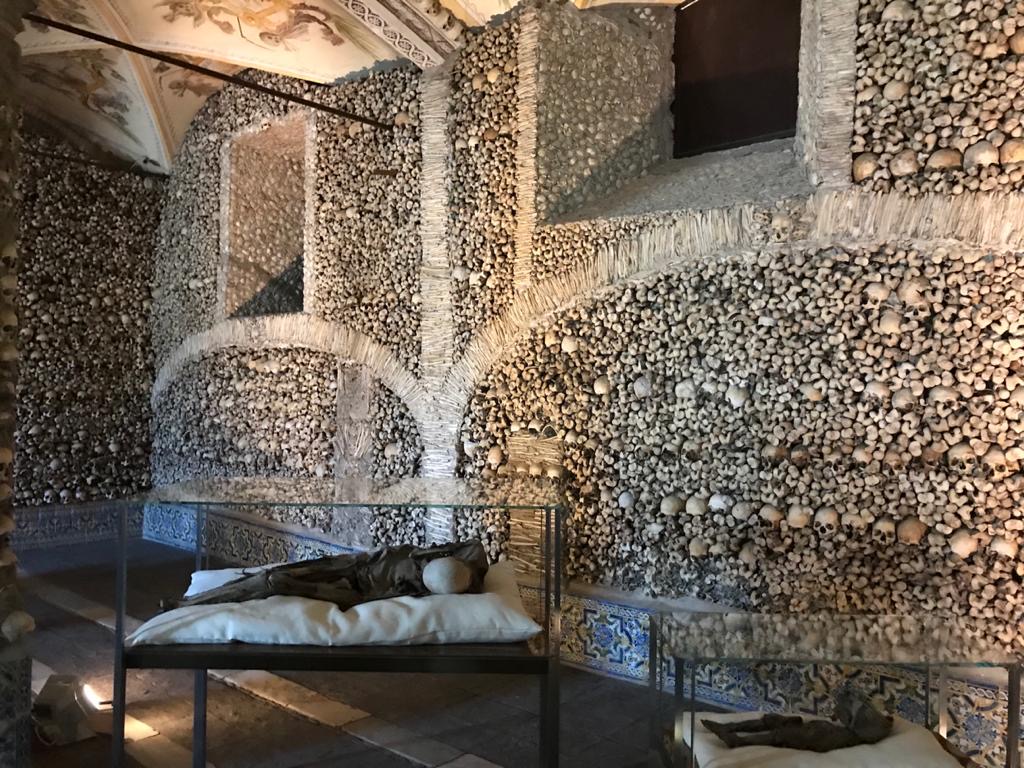
Our first stop in Portugal was Évora, perfectly situated about 3 hours from Palos de la Frontera. Our main point of interest was the Capela dos Ossos (Chapel of Bones).
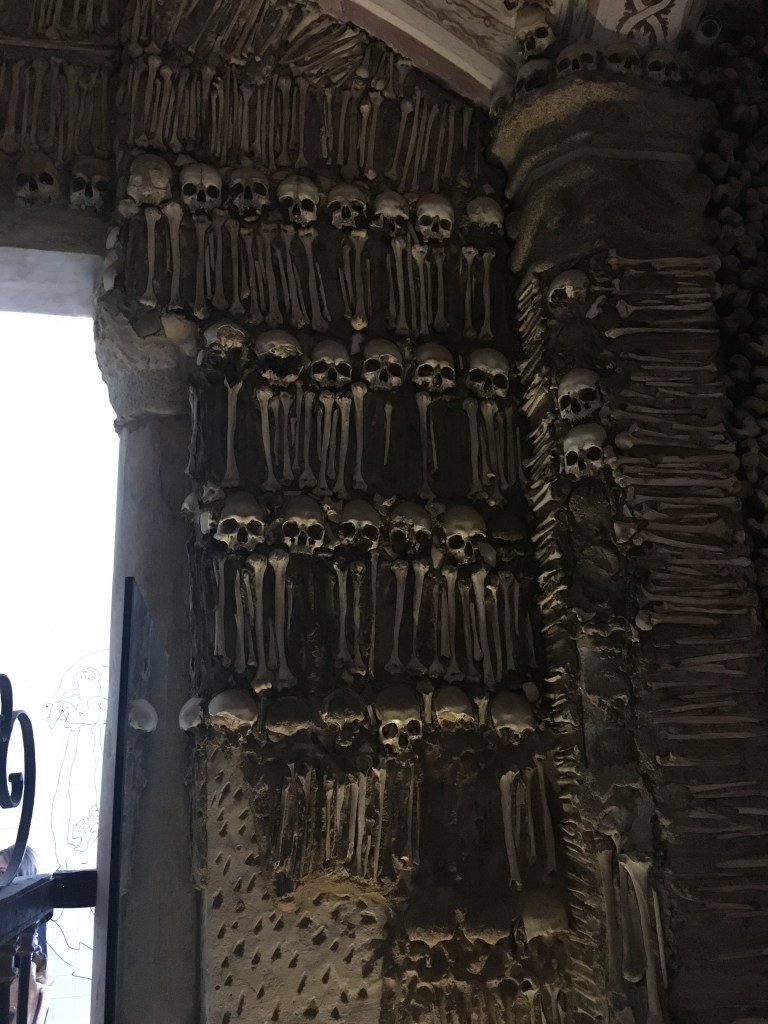
Built in late 16th century, the Capella dos Ossos was Évora’s answer to the overcrowding in the cemeteries. The monks used the bones 5000 bodies to decorate the inside of the chapel.
The monks wanted to make a “helpful place to meditate on the undeniable presence of death.” This is made clear by the message above the chapel door: “Nós ossos que aqui estamos, pelos vossos esperamos,” or: “We bones, are here, waiting for yours.”
Even though these bones were very beautifully arranged, we found the bones in the Paris catacomb more impressive (probably because we walked deep underground through dark, narrow passageways lined with bones).
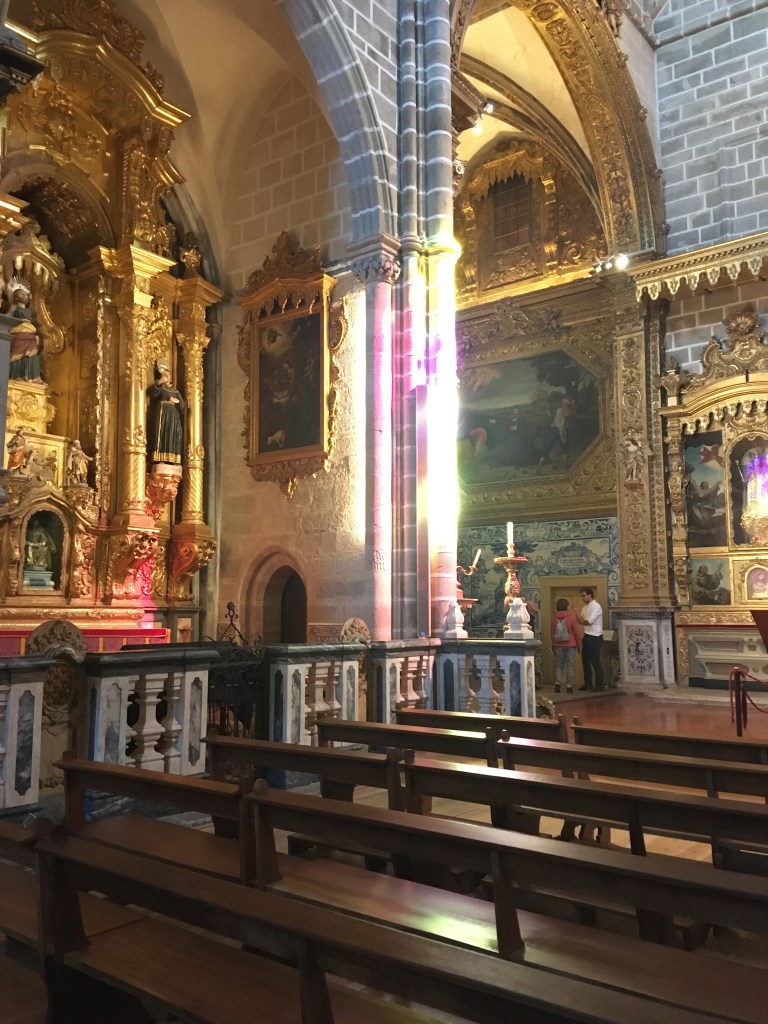
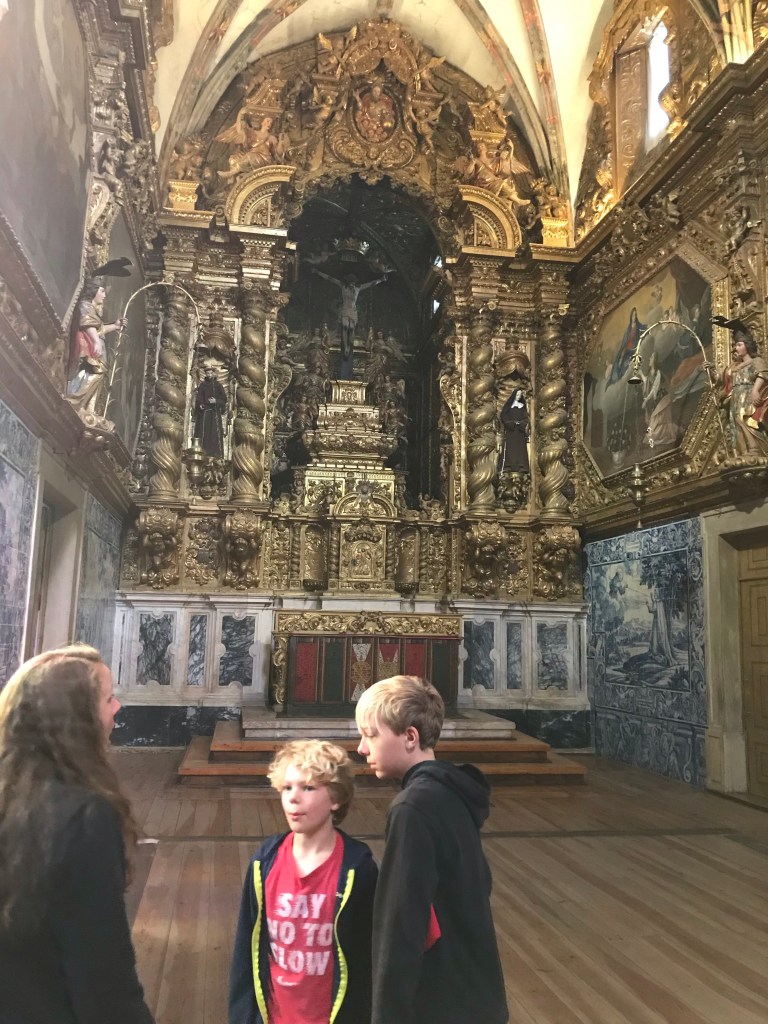
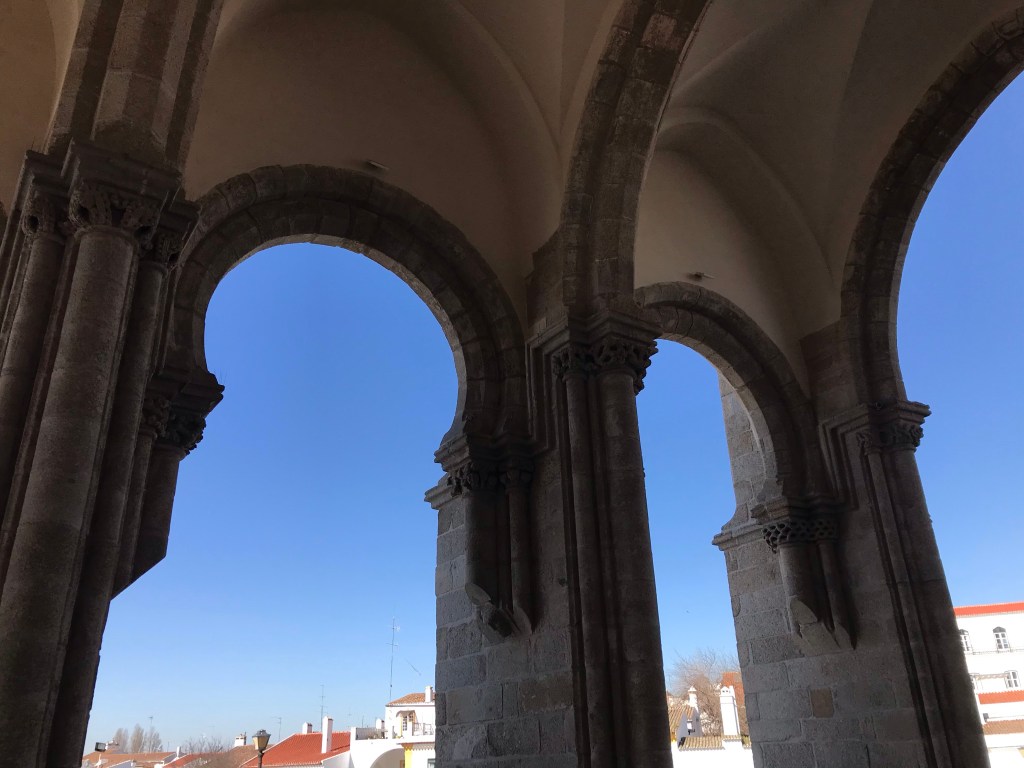
The Capela dos Ossos is actually just a small chapel to the side of the larger San Francisco Cathedral.
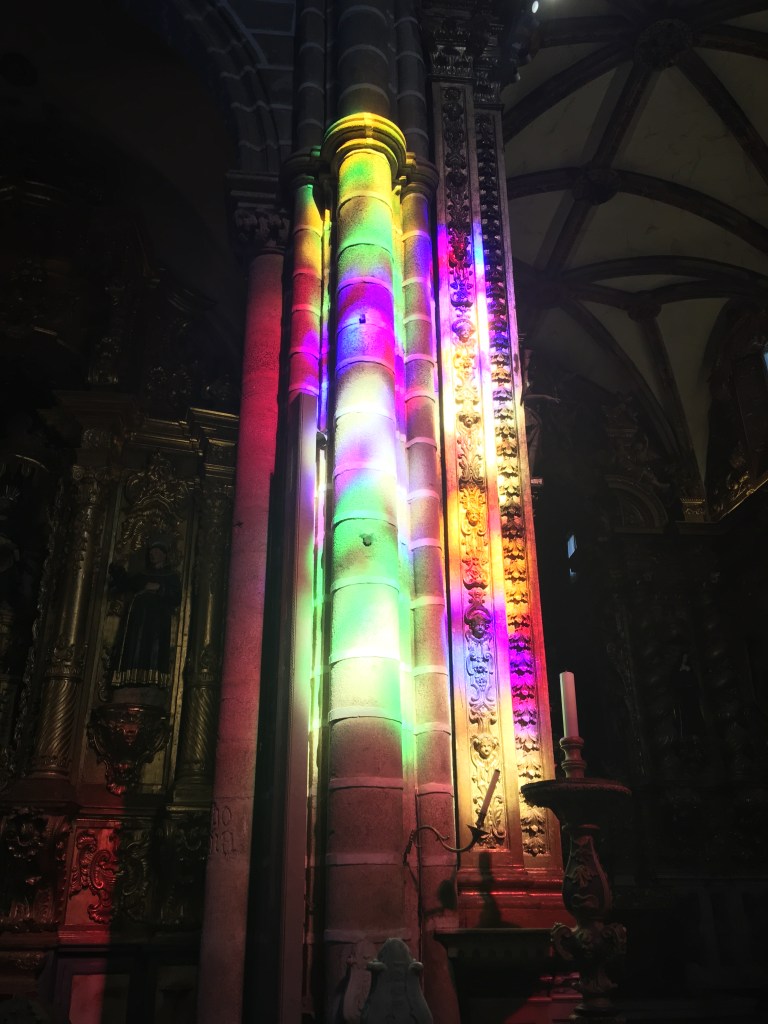
The sun was shining through the stained glass window and lit up this pilar.
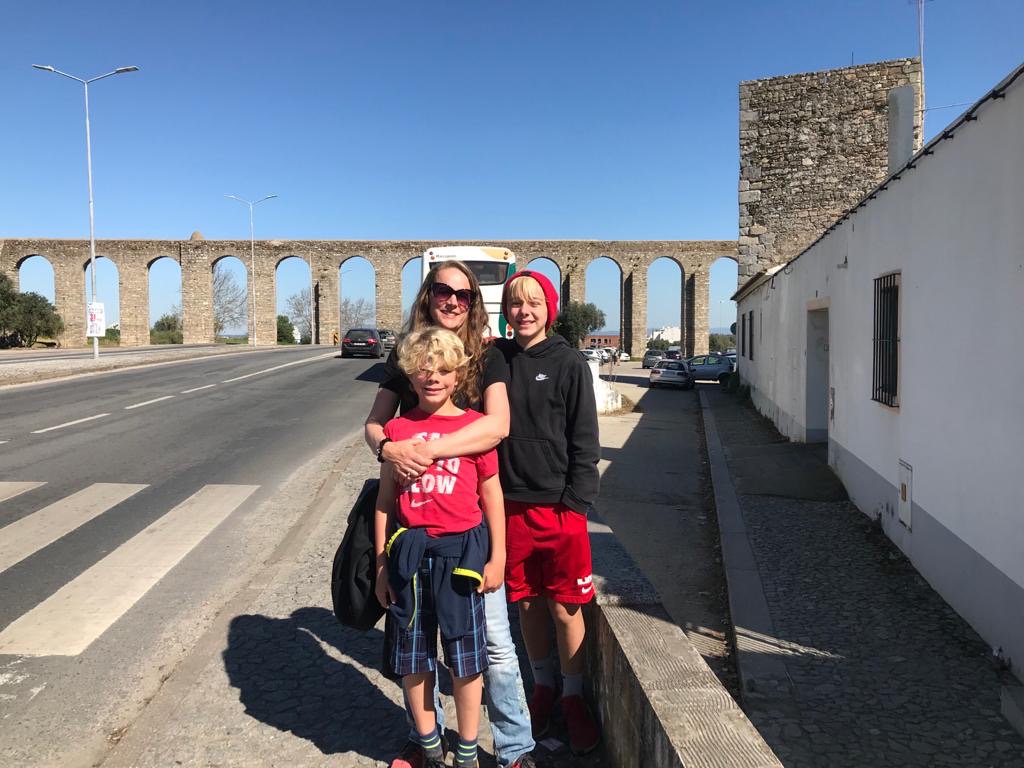
One of the other popular landmarks in Évora is the Agua de Prata Aqueduct, a Roman aqueduct built in the first century.
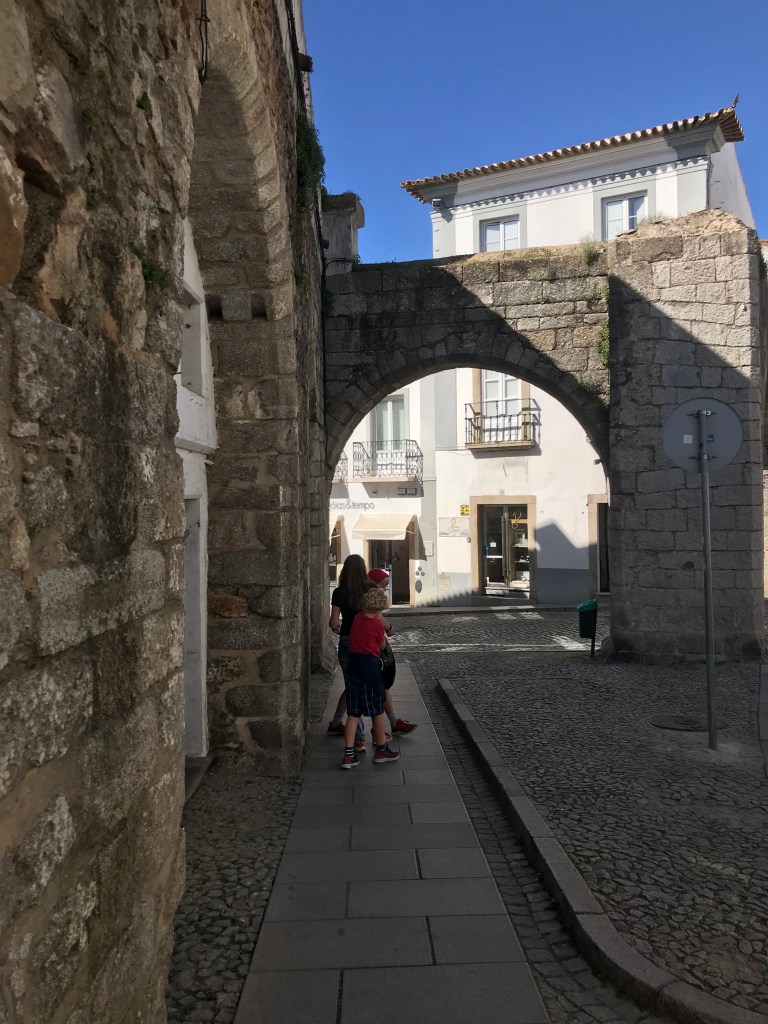
The town has done an impressive job of building itself around the aqueduct.
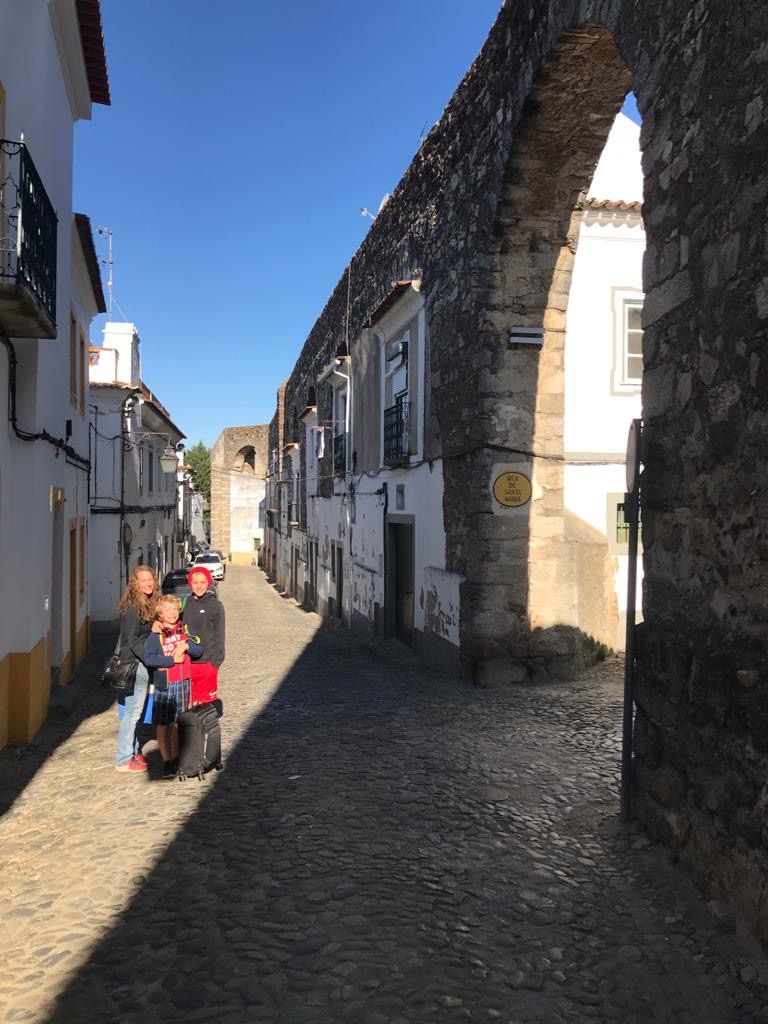
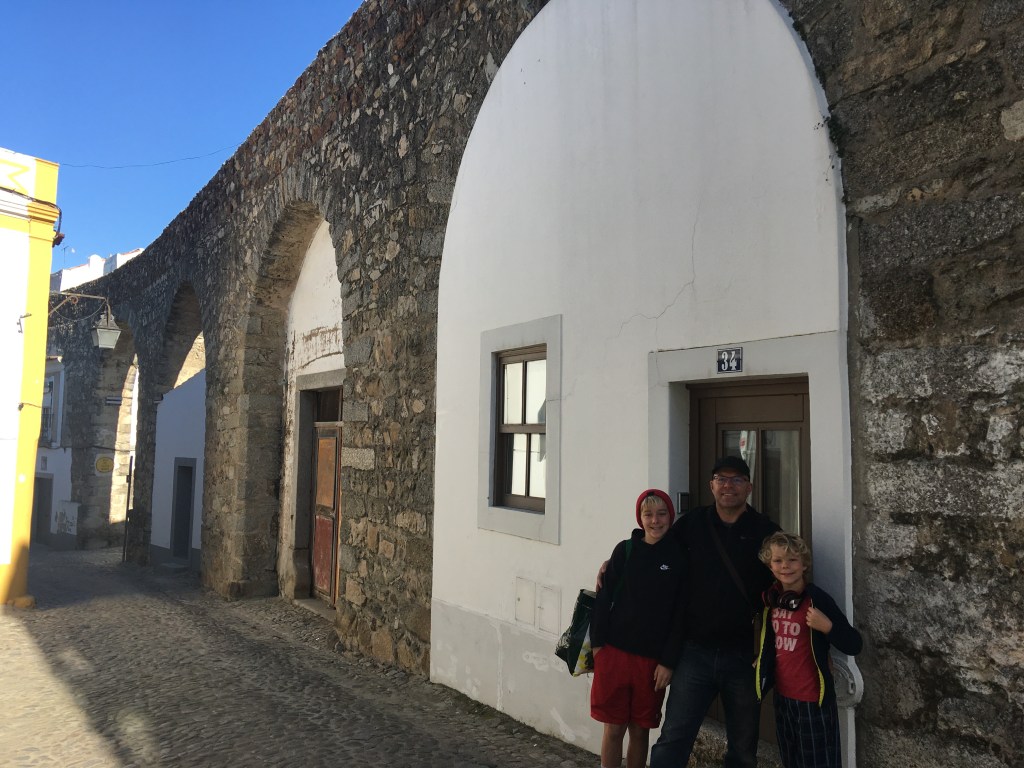
We were lucky to get to stay in a house built into one of the arches of the aqueduct.
Our front door
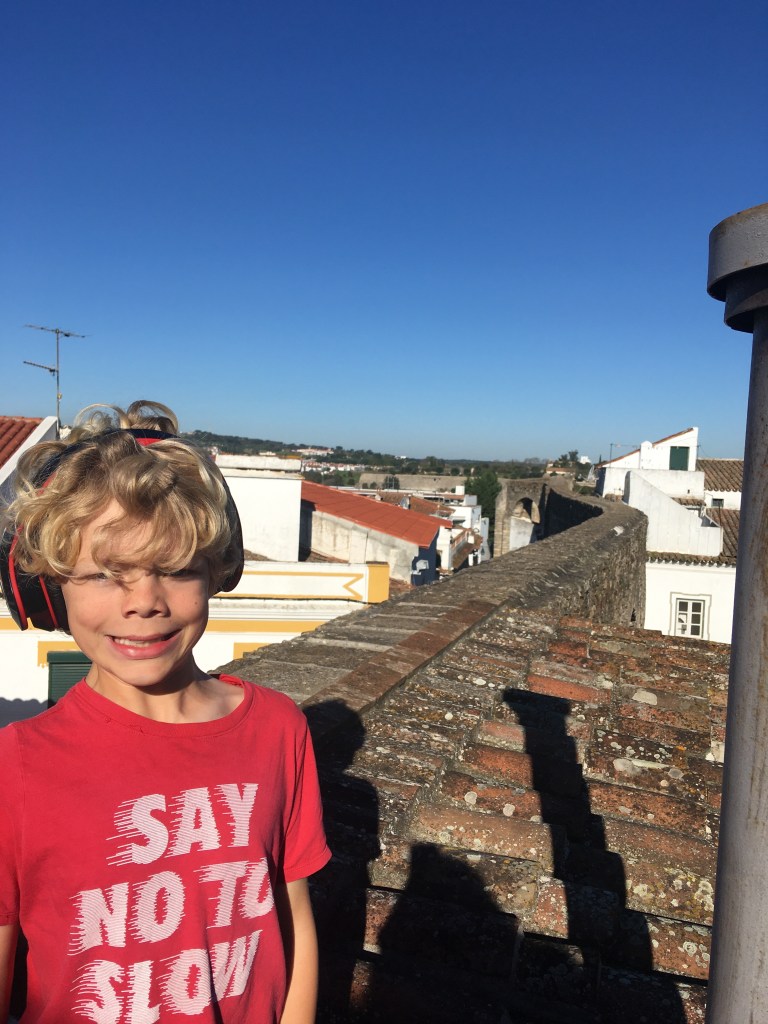
Up on our roof patio
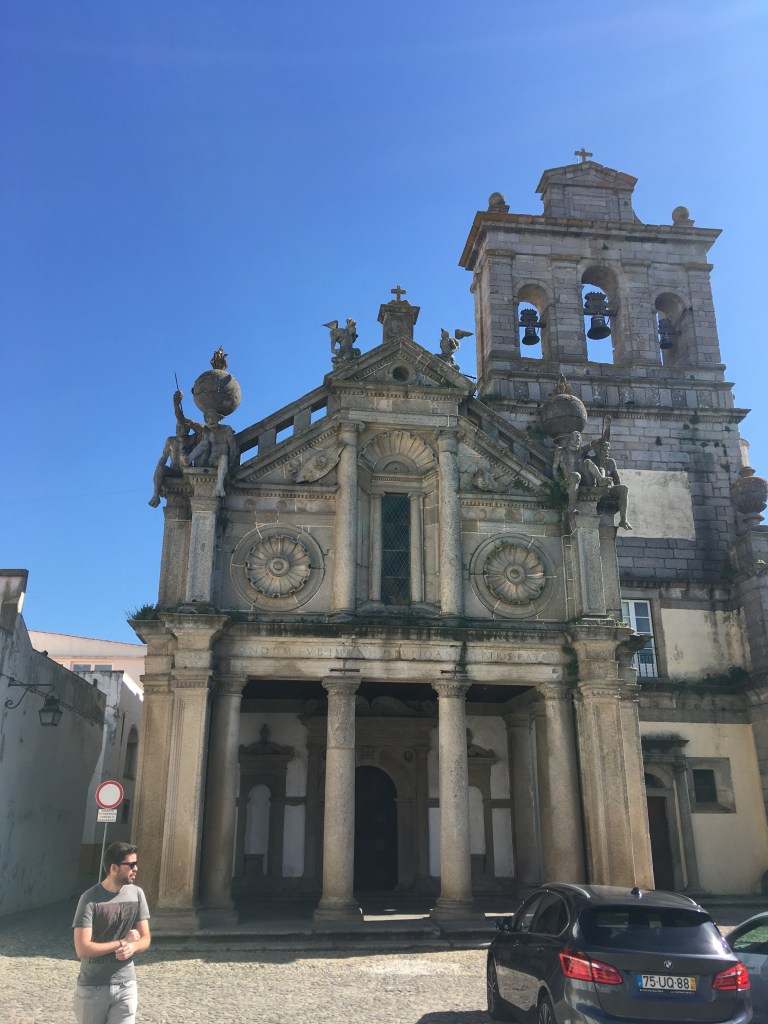
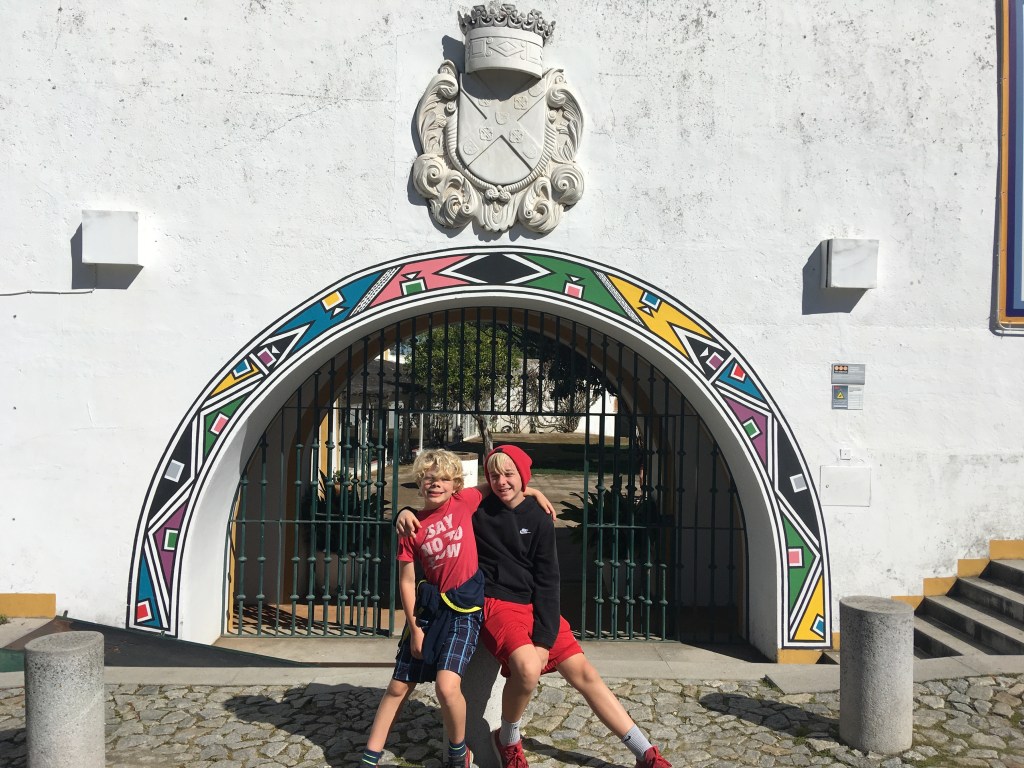
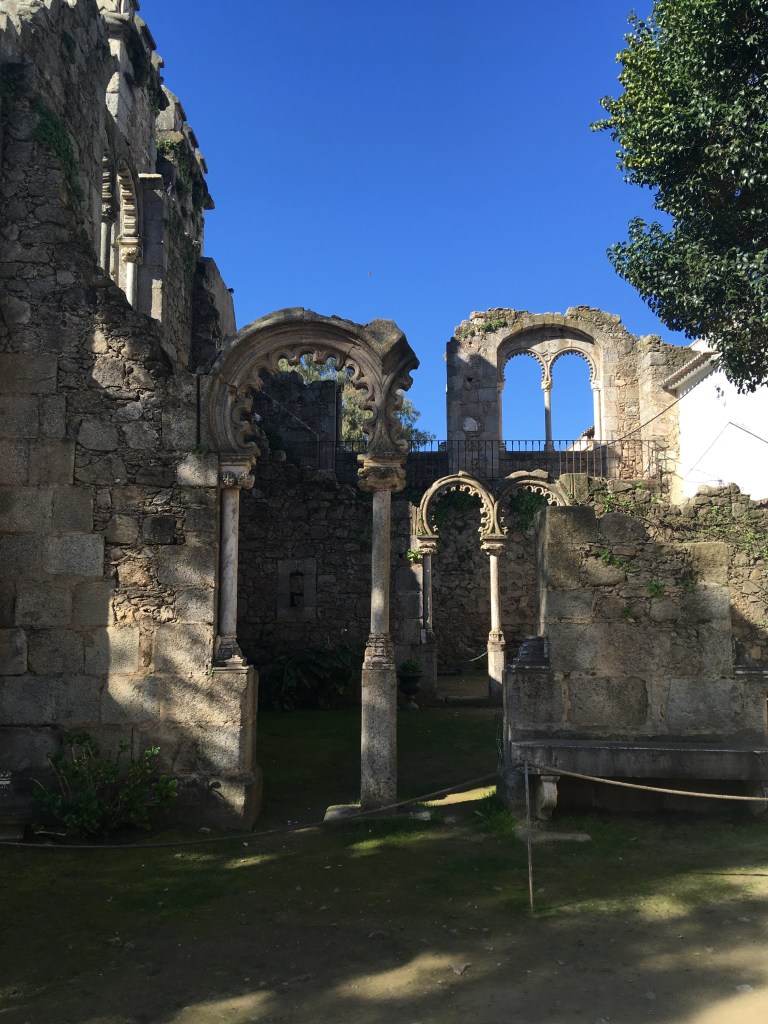
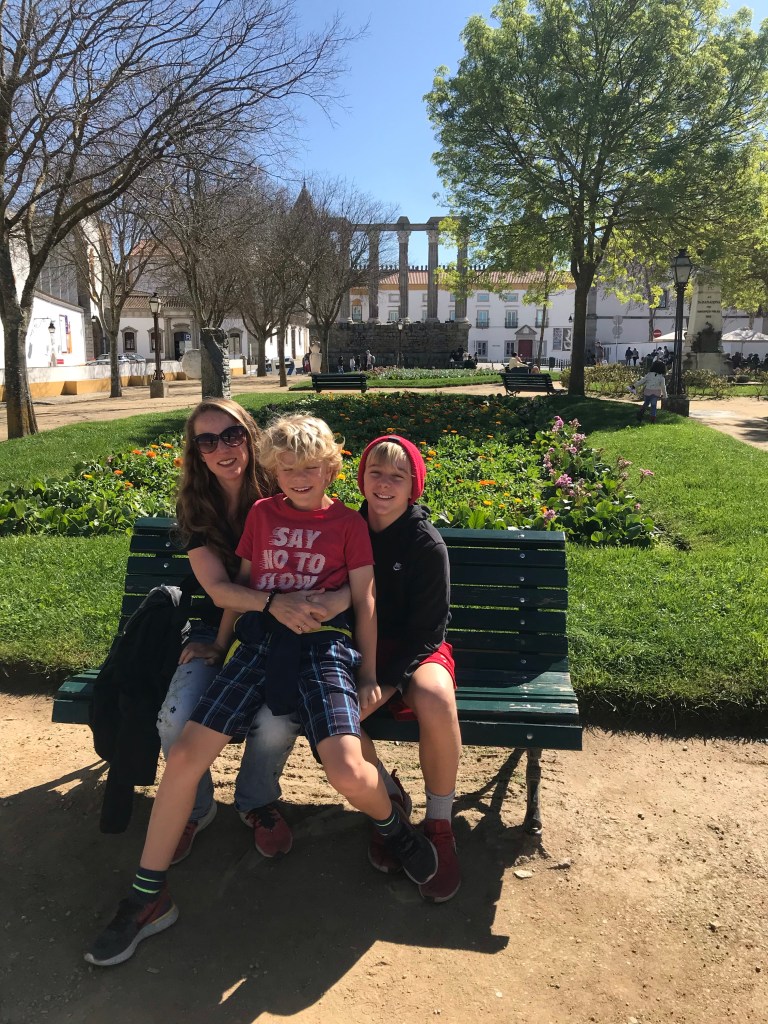
We had a fun time walking through town to get some wiggles out.
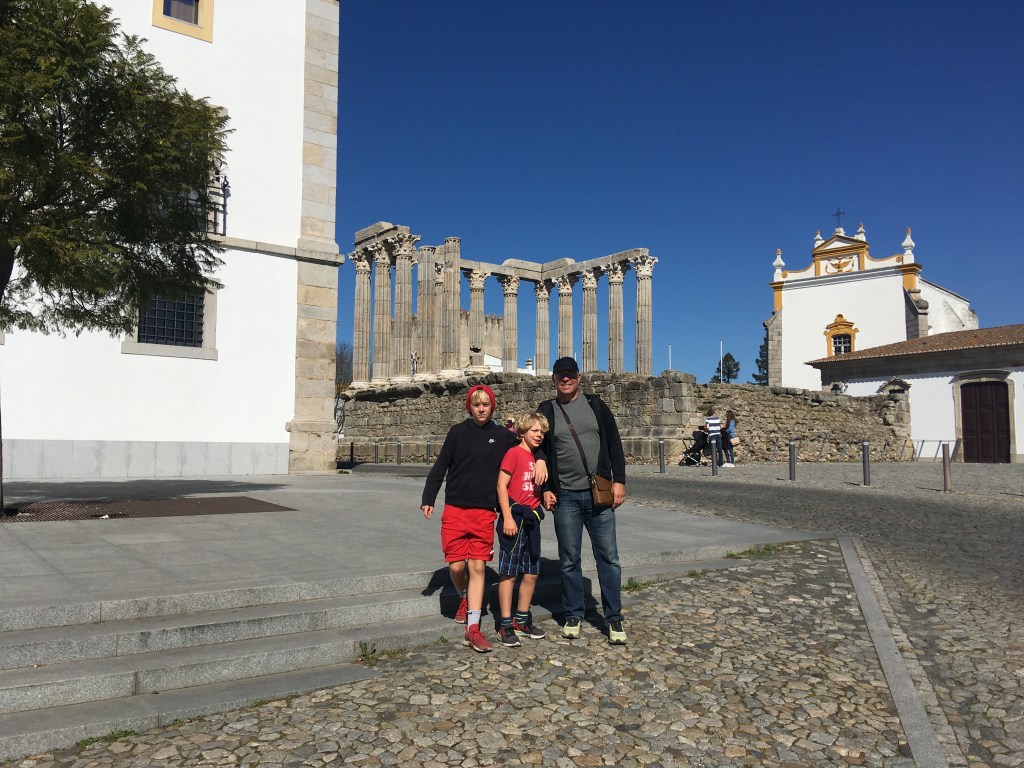
Román temple of Diana
Then we were back in the car and on our way to Sintra!
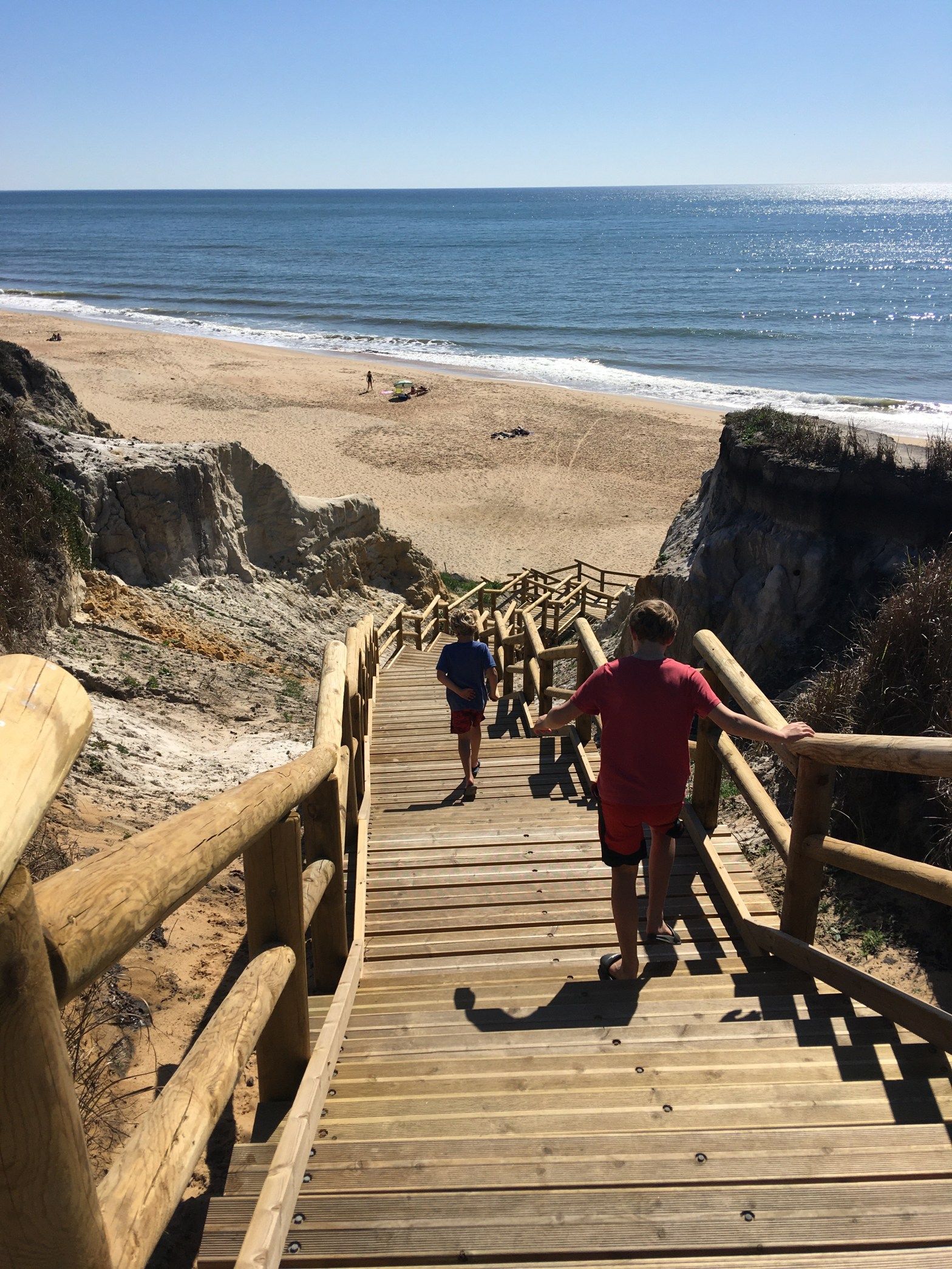
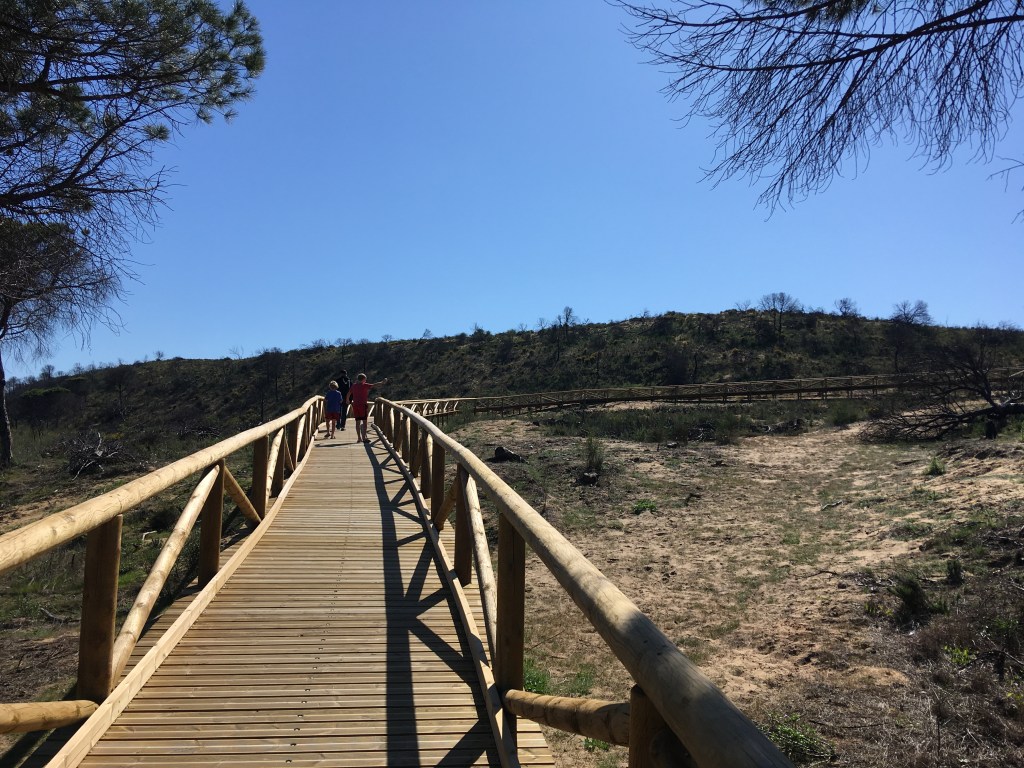
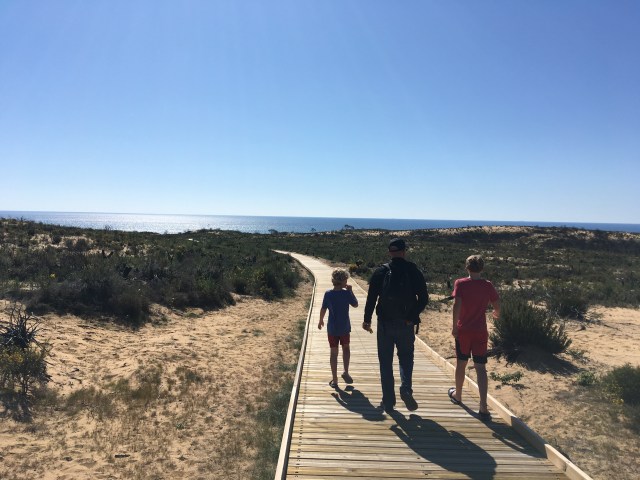
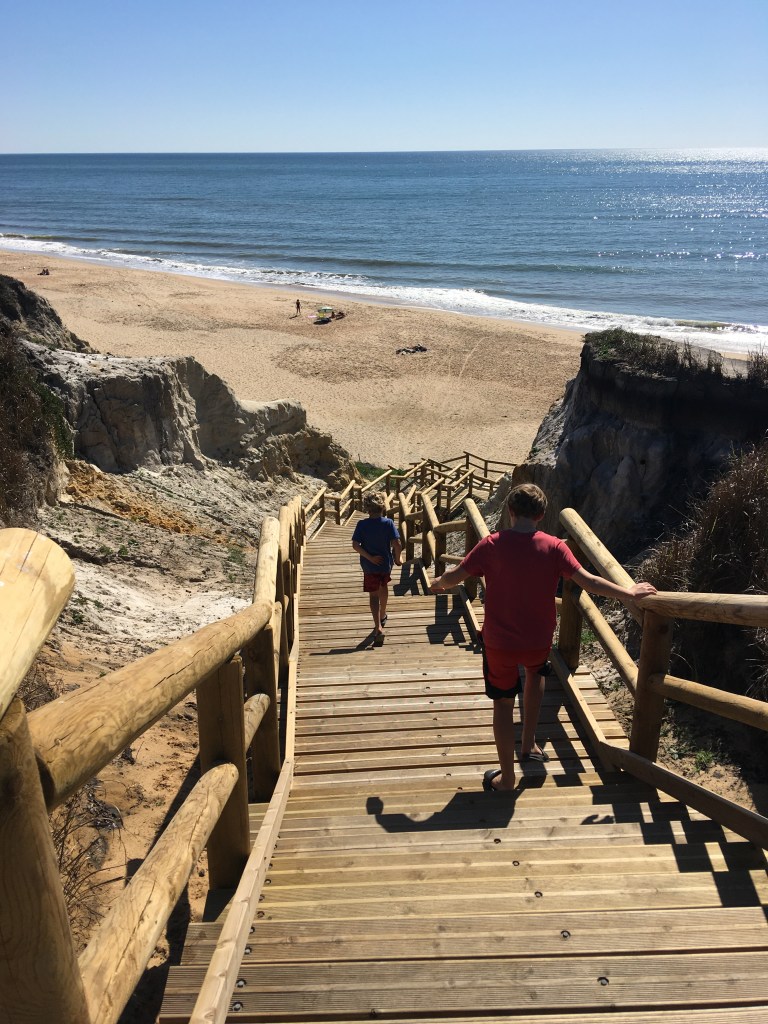
As we exited Doñana National Park, we made a couple of stops in the Huelva region on the way to Portugal. Our first stop was Cuesta Maneli Beach. We were just looking for a place to let the kids play on the sand dunes and get onto the beach and were attracted to the wooden walkway that led up to the beach from the highway.
The walkway took us up and over a huge sand dune that had recently been replanted after what looked like some sort of fire.
We shared the path with several lizards and were rewarded with a spectacular view of the Atlantic.
For me, the walk to the beach was just as exciting as the actual beach.
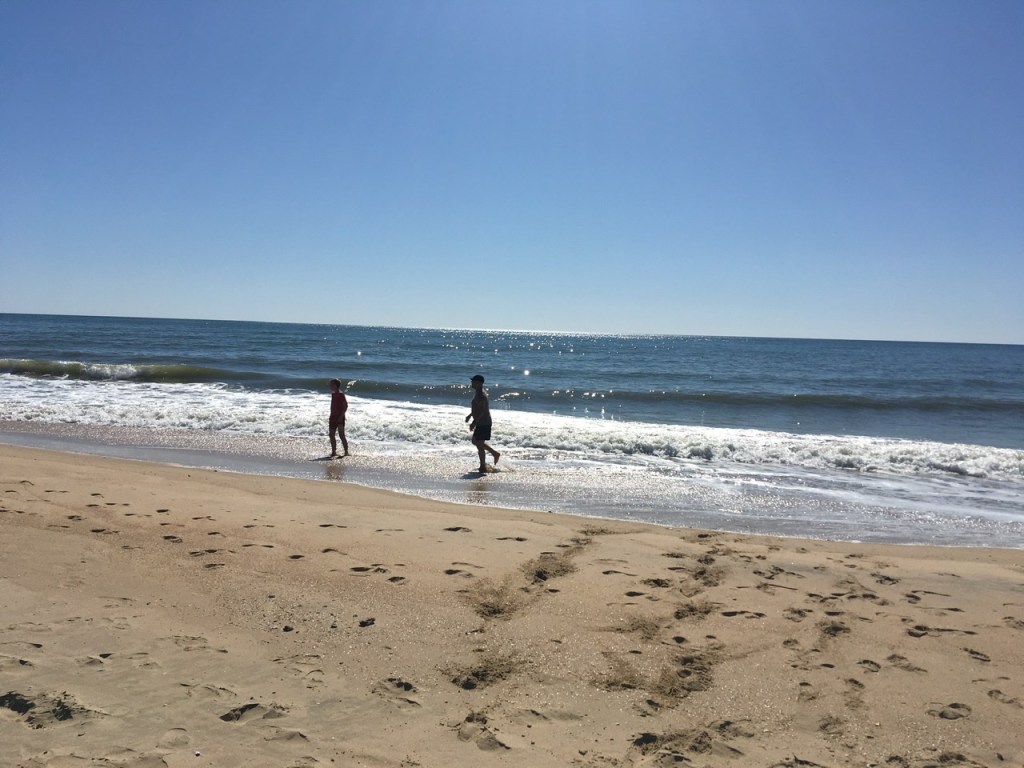
After a 10-15 minute walk, we were rewarded with soft, light sand (as opposed to the dark, rocky “sand” of the Mediterranean), big, rolling waves, and warm sunshine on the beach.
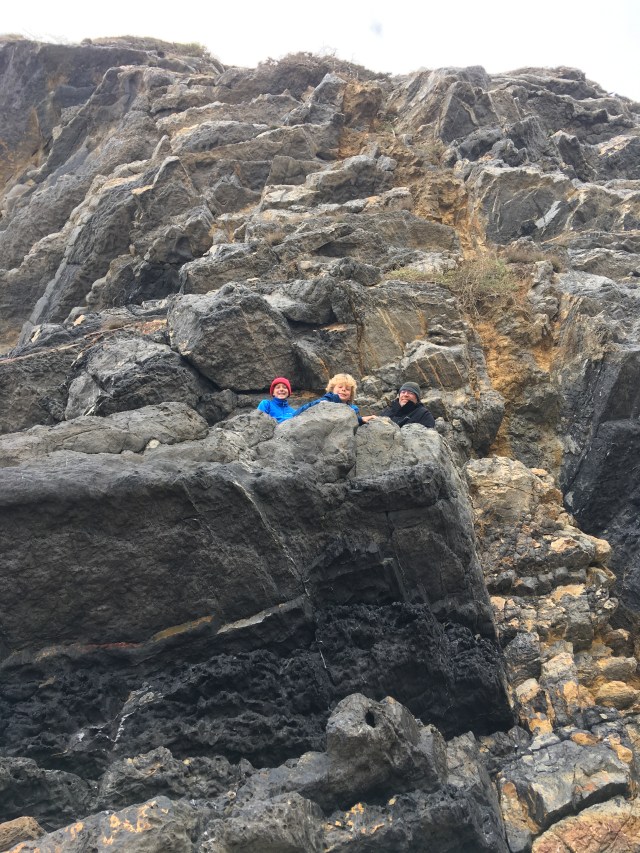
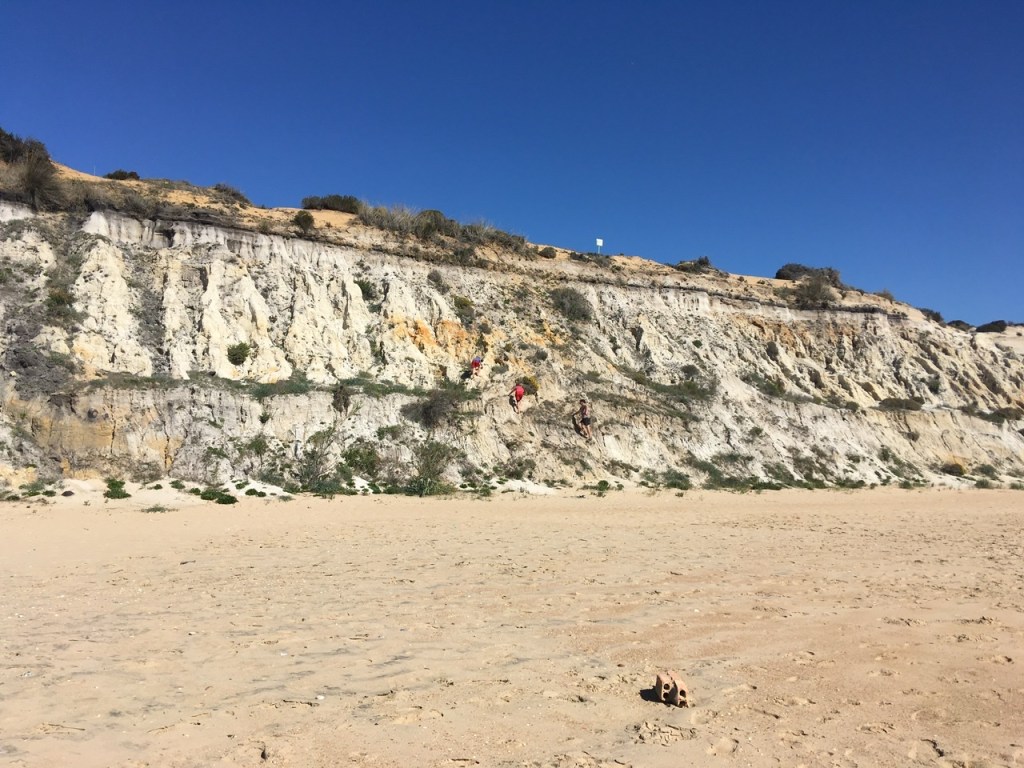
There were also some cliffs that the boys were eager to climb.
We had nowhere near enough time to enjoy this beach, but we had one more stop to make before heading into Portugal for the night: Palos de la Frontera.
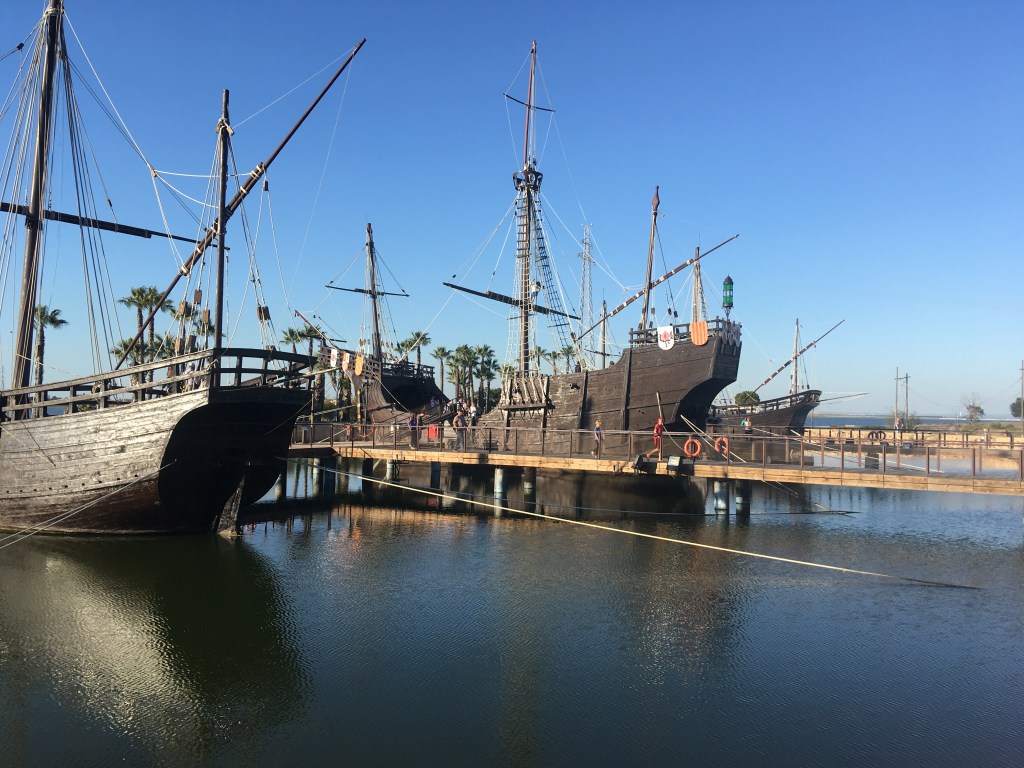
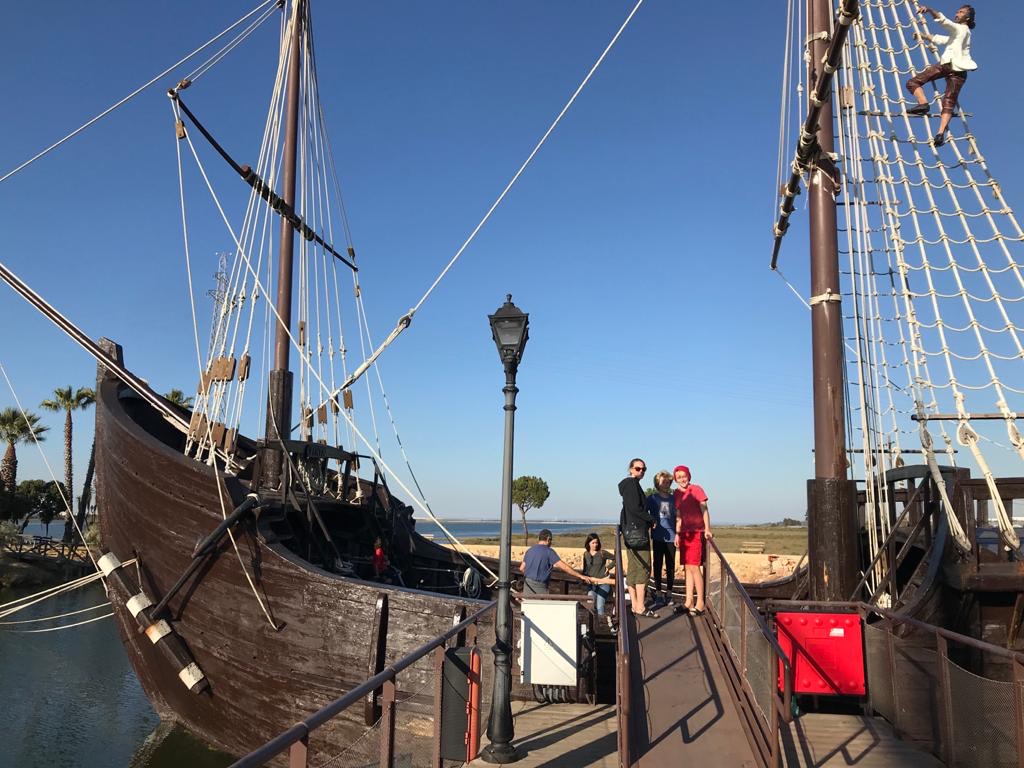
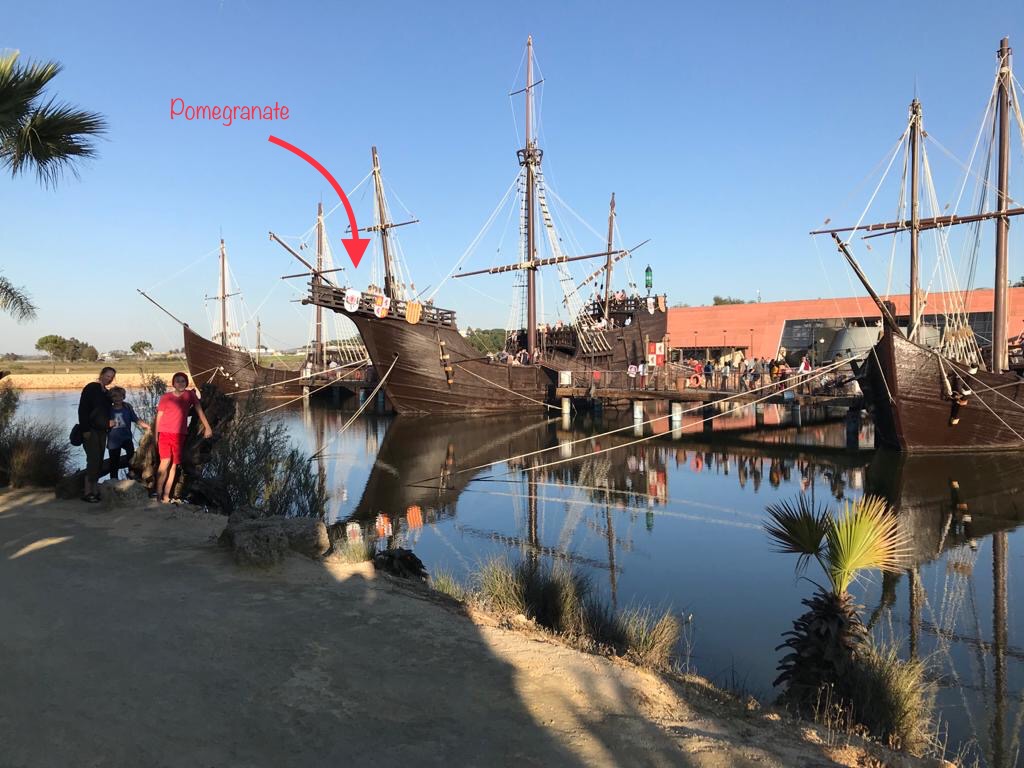
Palos de la Frontera is the port where Columbus disembarked back in 1492. There are replicas of his three ships moored there.
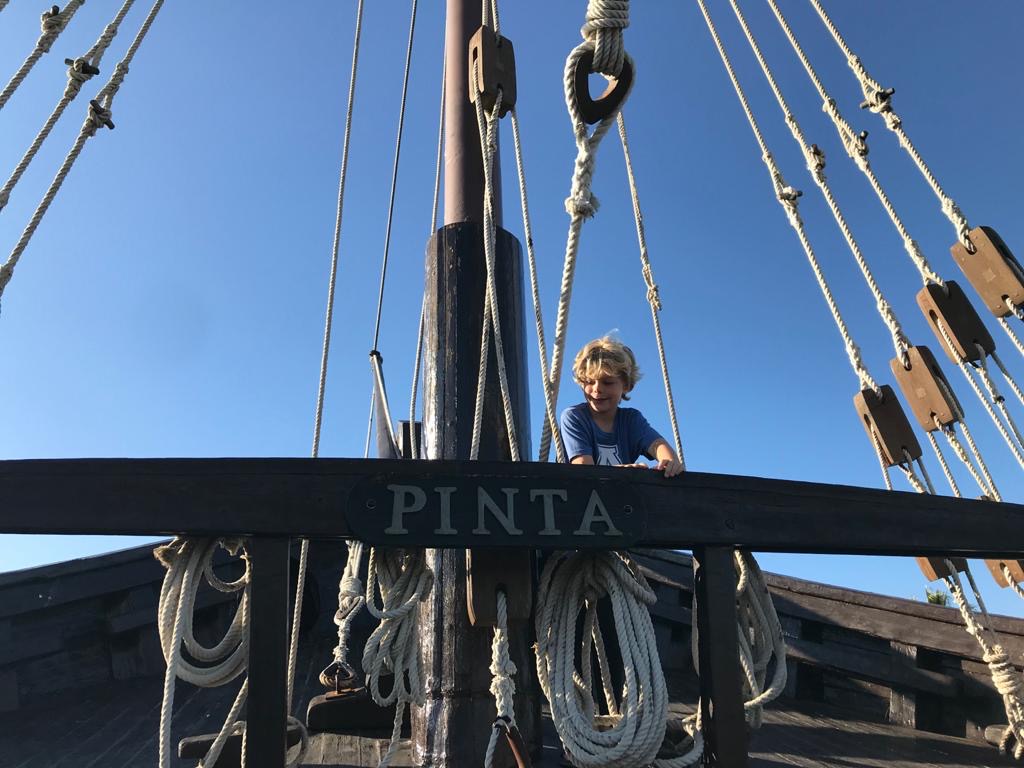
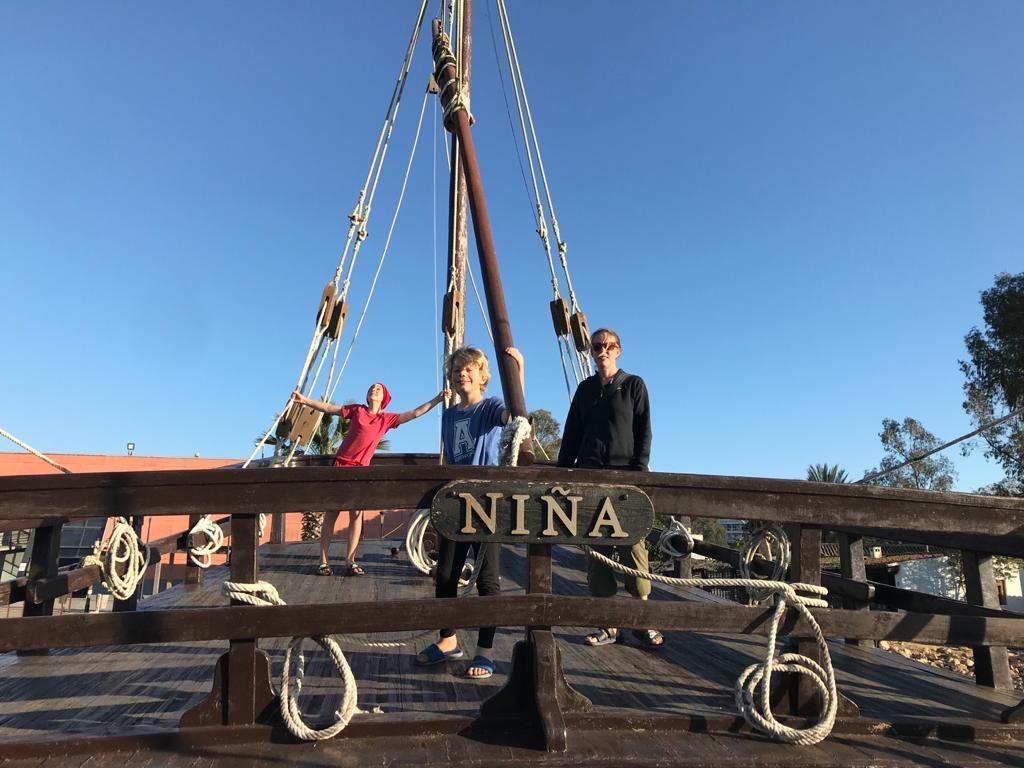
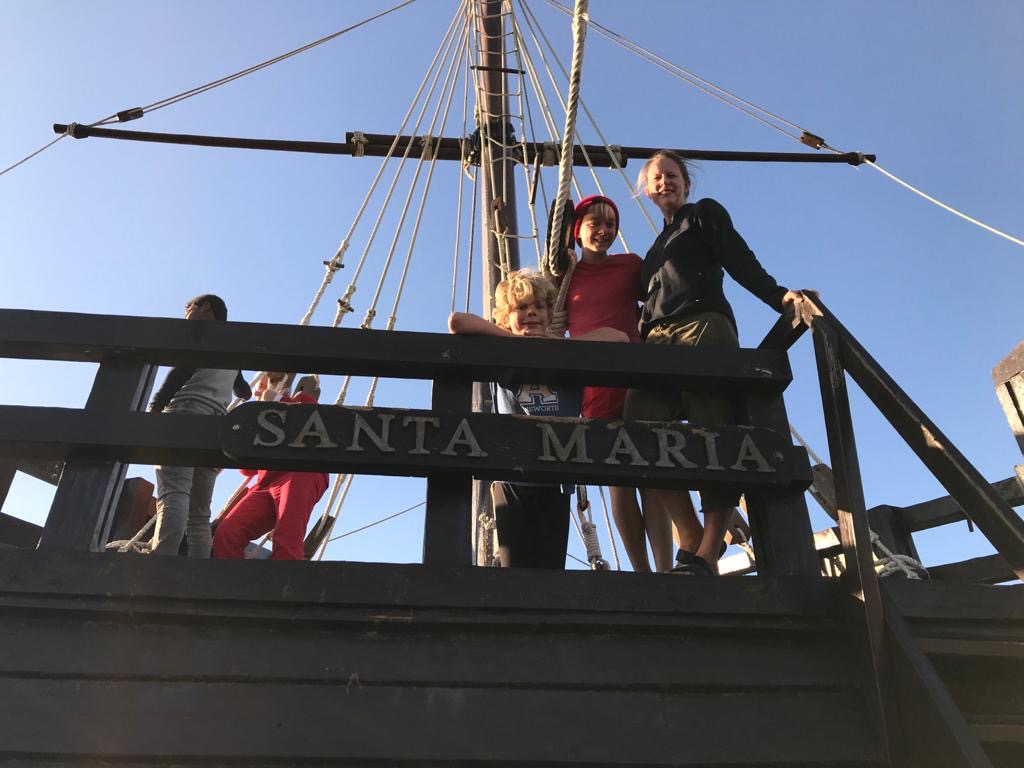
The Niña, the Santa María and the Pinta.
Despite the devastation experienced by the native peoples of the Americas because of Colombus’ “discovery,” we thought that this would be an interesting stop where the kids could learn a little history and get a hands-on glimpse into what the voyage was about.
It was powerful to see how small the boats were that made this voyage.
One thing that struck me was the Niña.
Both Todd and I were taught that it was called the Nina (goes to show the ignorance of the Spanish language by our elementary teachers). Additionally, this was the smallest boat, which Leo astutely decided was the reason why the boat was named for a little girl.
The pomegranate shield on the Santa María (which was the boat that Columbus traveled on) also caught my eye, probably because of seeing so many pomegranates in Granada.
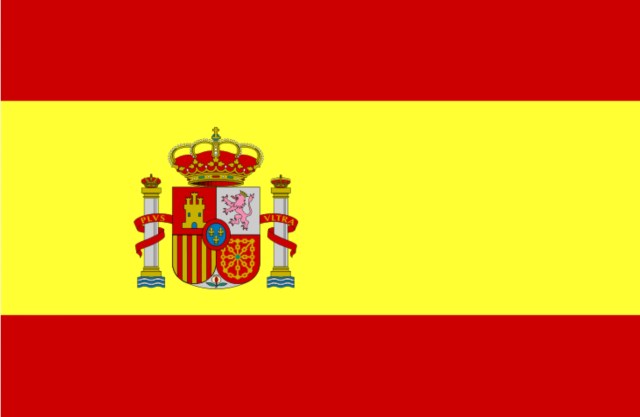
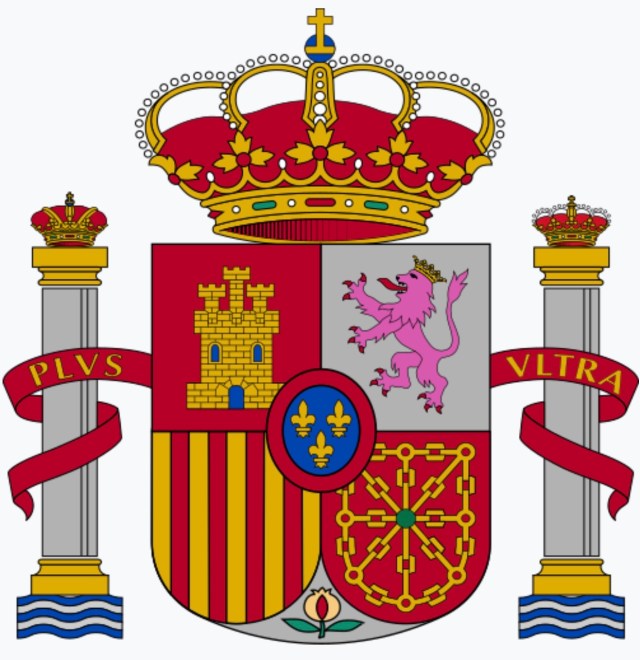
Turns out the pomegranate is the symbol of the Spanish Royal Family. I’ve since learned that it even appears on the coat of arms on the Spanish flag.
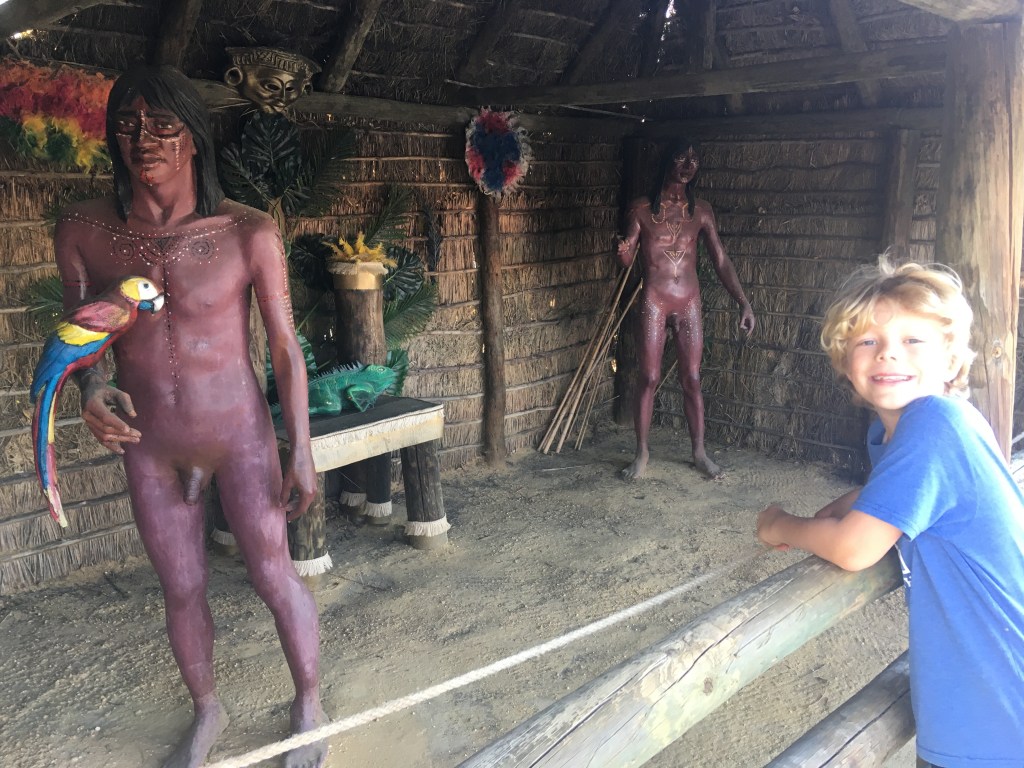
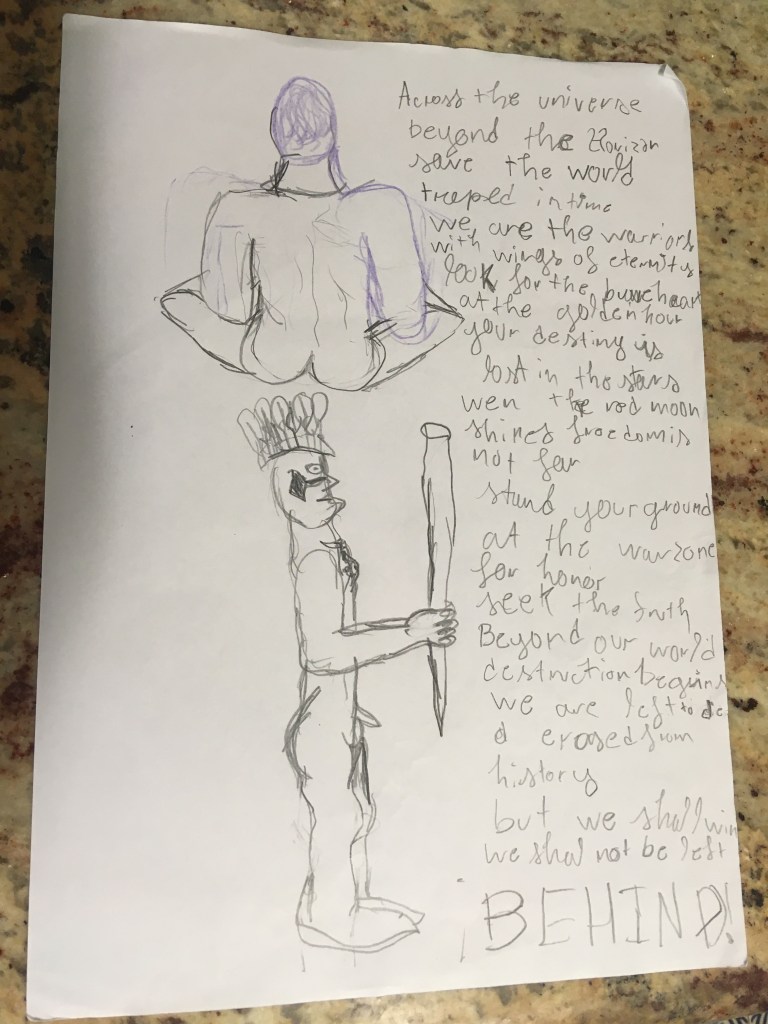
Around the boats were displays of what a Spanish medieval town and the West Indies would have looked like at the time. For some reason, Leo was particularly intrigued by the indigenous peoples.
Leo used them as subjects for his morning drawings (he is always up at least an hour or two before Oliver and needs something quiet to do).
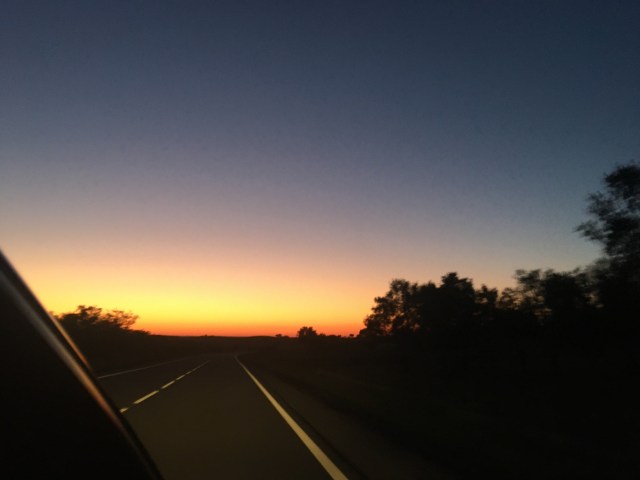
And with that we drove off into the sunset and into Portugal.


 Adrift in Andalucía