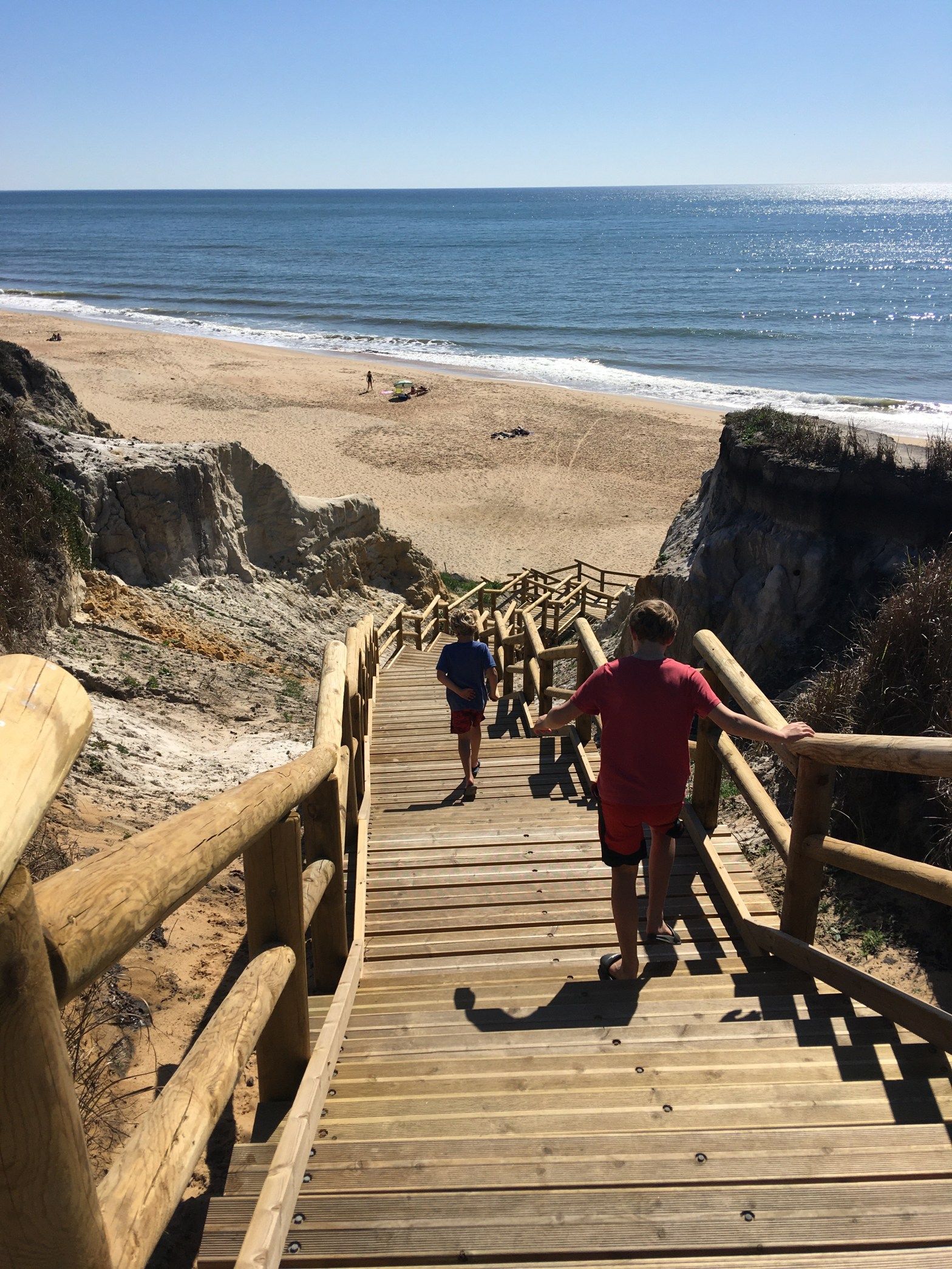
As we exited Doñana National Park, we made a couple of stops in the Huelva region on the way to Portugal. Our first stop was Cuesta Maneli Beach. We were just looking for a place to let the kids play on the sand dunes and get onto the beach and were attracted to the wooden walkway that led up to the beach from the highway.
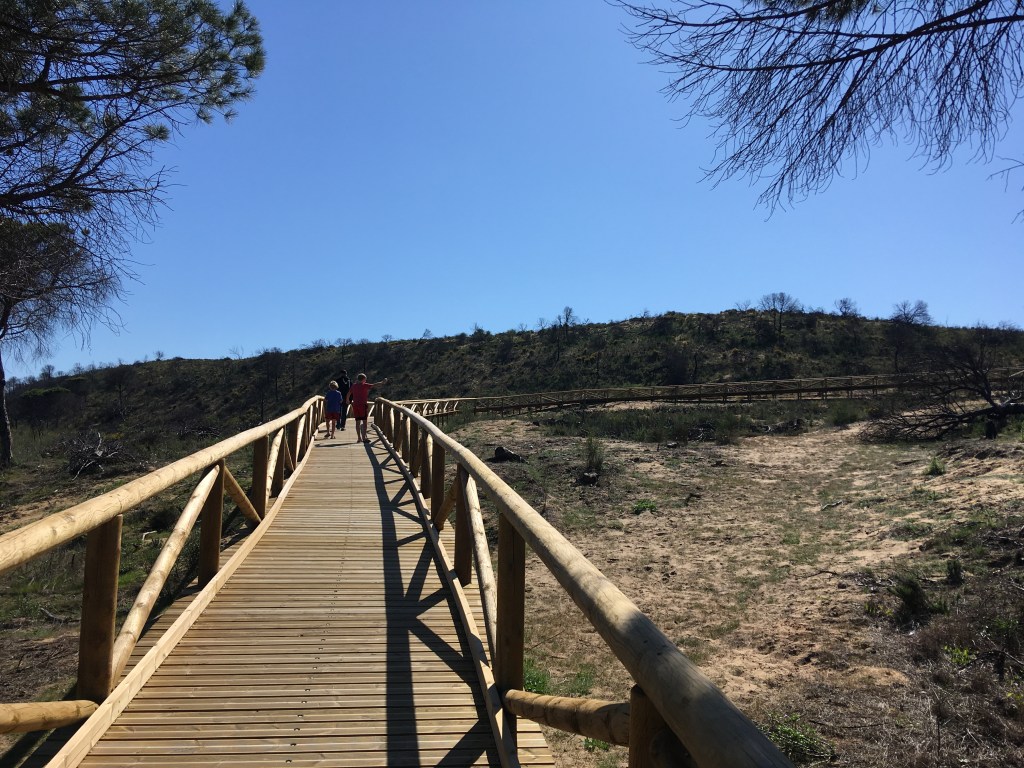
The walkway took us up and over a huge sand dune that had recently been replanted after what looked like some sort of fire.
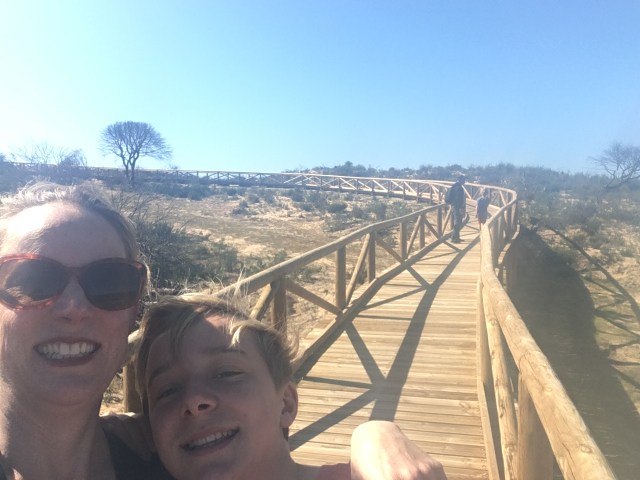
We shared the path with several lizards and were rewarded with a spectacular view of the Atlantic.
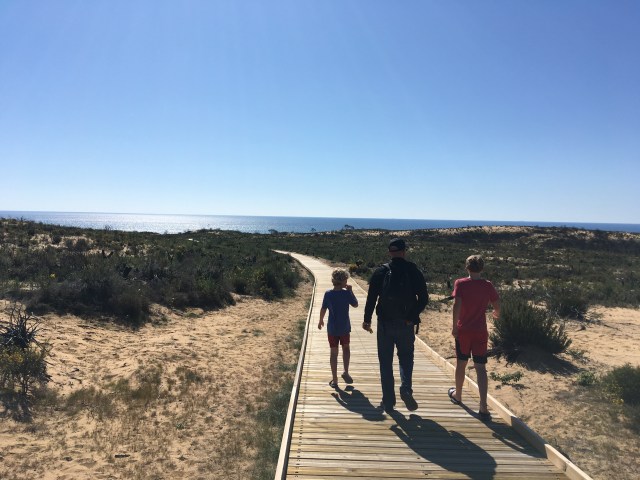
For me, the walk to the beach was just as exciting as the actual beach.
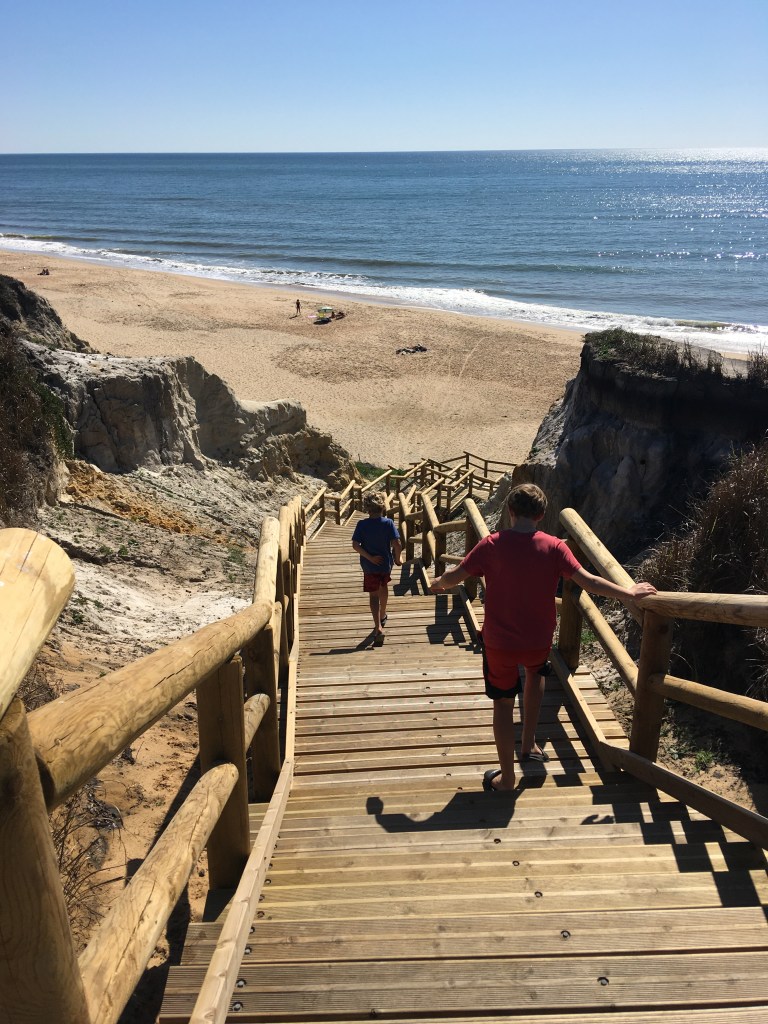
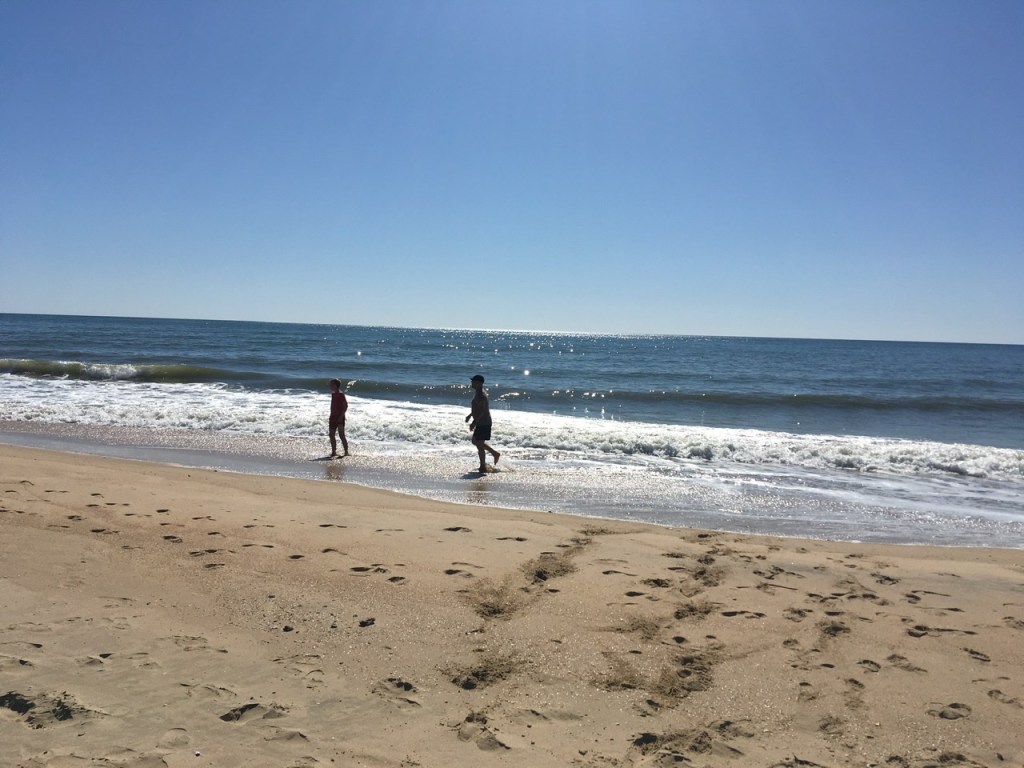
After a 10-15 minute walk, we were rewarded with soft, light sand (as opposed to the dark, rocky “sand” of the Mediterranean), big, rolling waves, and warm sunshine on the beach.
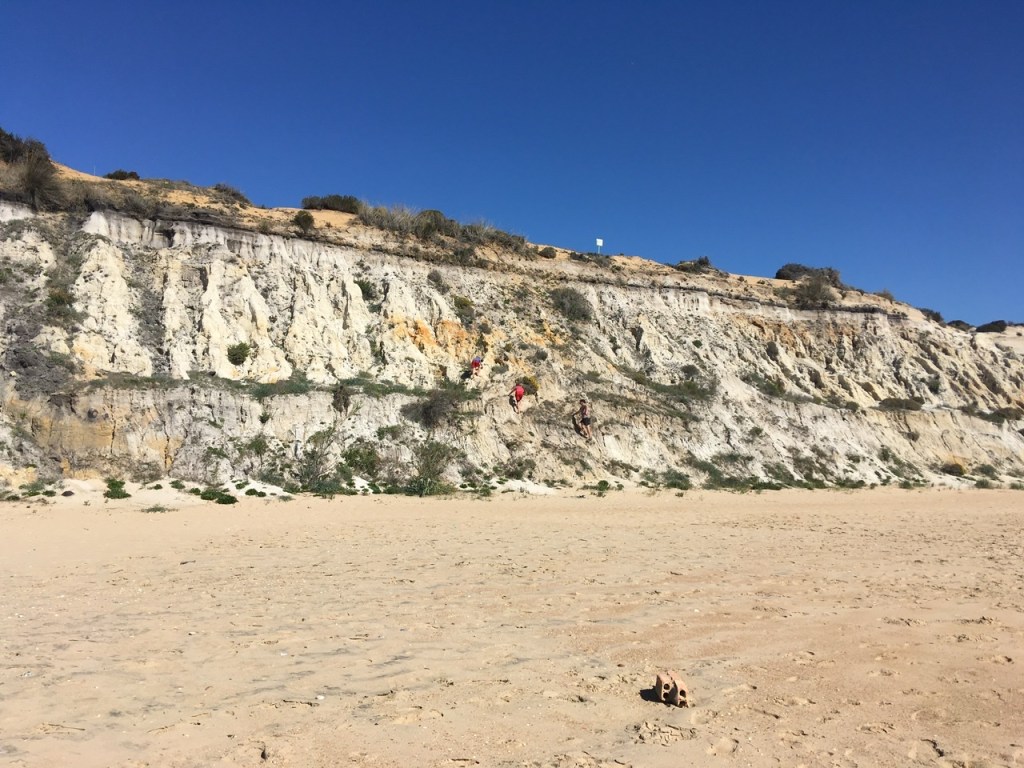
There were also some cliffs that the boys were eager to climb.
We had nowhere near enough time to enjoy this beach, but we had one more stop to make before heading into Portugal for the night: Palos de la Frontera.
Palos de la Frontera is the port where Columbus disembarked back in 1492. There are replicas of his three ships moored there.
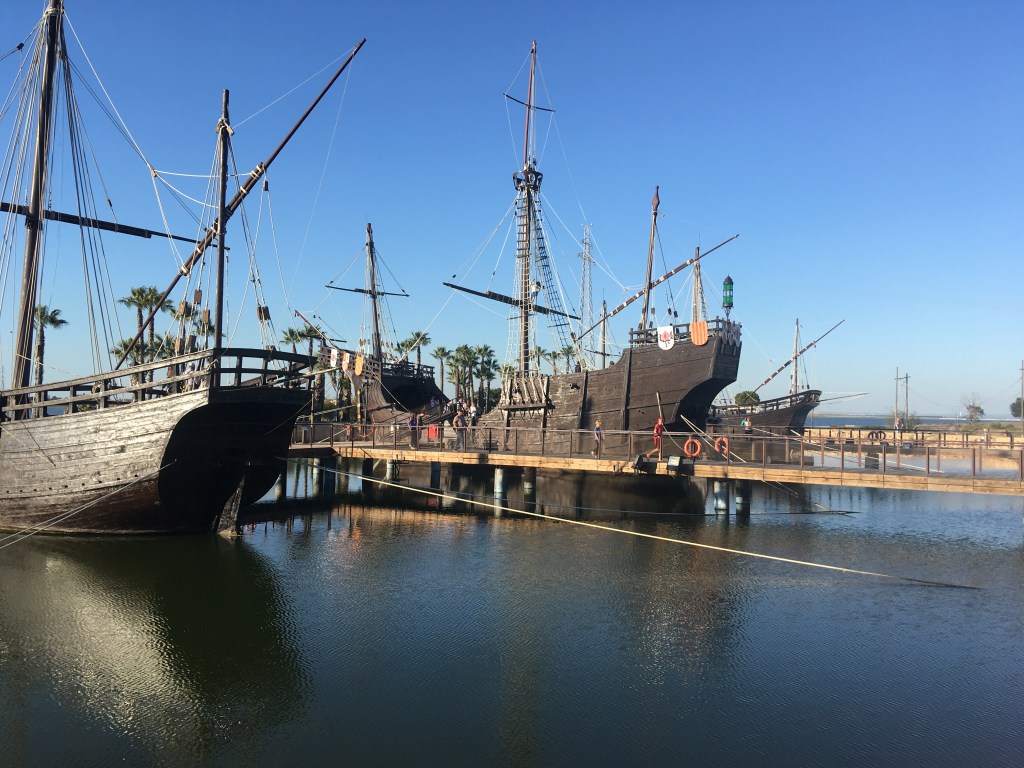
Despite the devastation experienced by the native peoples of the Americas because of Colombus’ “discovery,” we thought that this would be an interesting stop where the kids could learn a little history and get a hands-on glimpse into what the voyage was about.
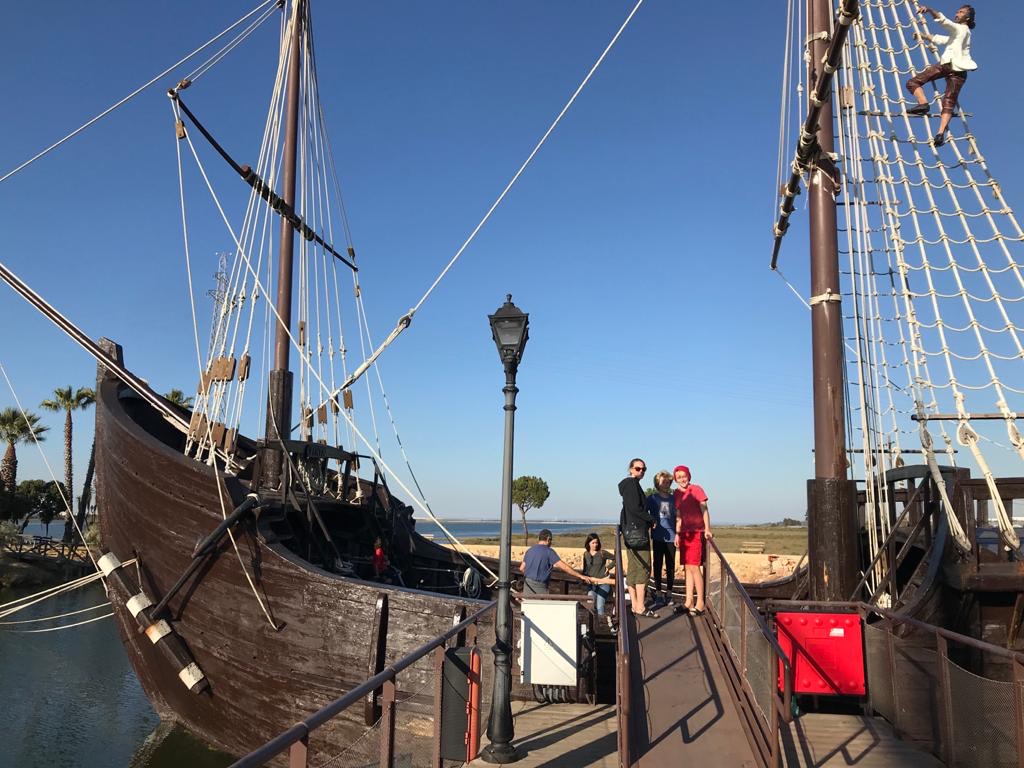
It was powerful to see how small the boats were that made this voyage.
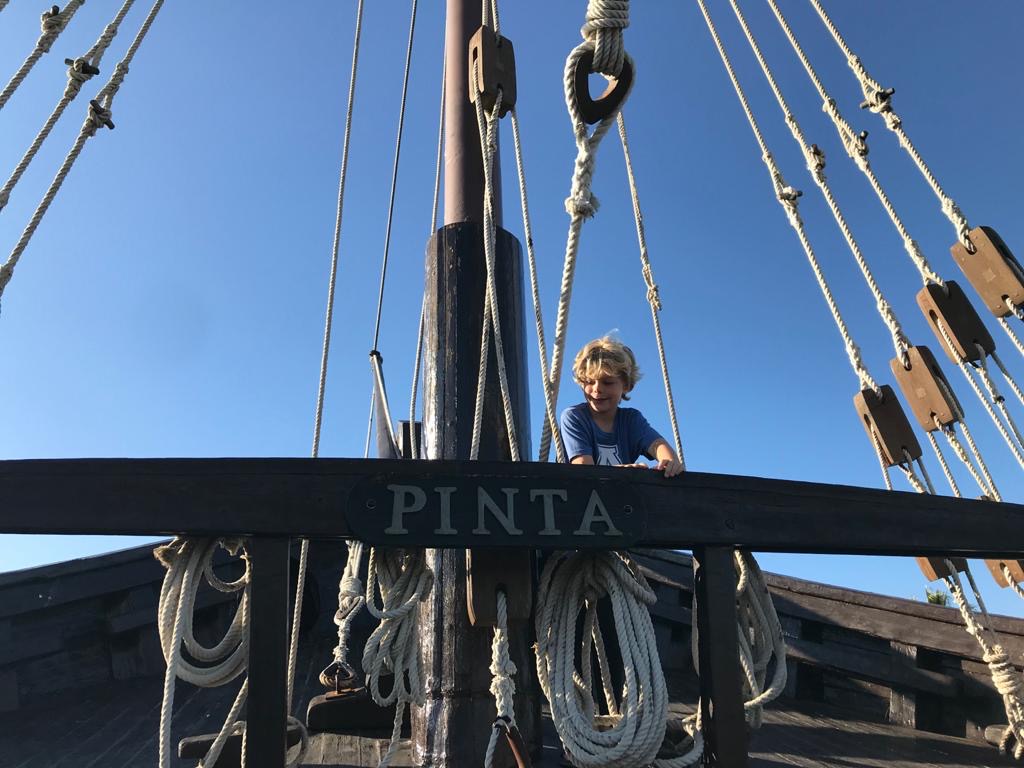
One thing that struck me was the Niña.
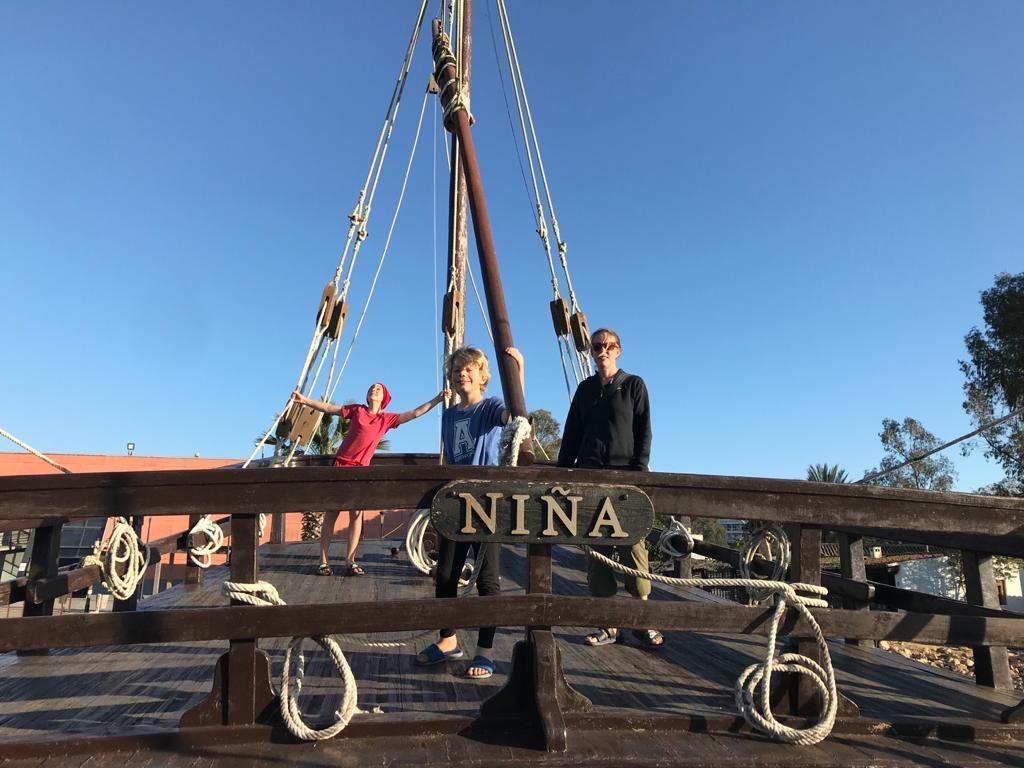
Both Todd and I were taught that it was called the Nina (goes to show the ignorance of the Spanish language by our elementary teachers). Additionally, this was the smallest boat, which Leo astutely decided was the reason why the boat was named for a little girl.
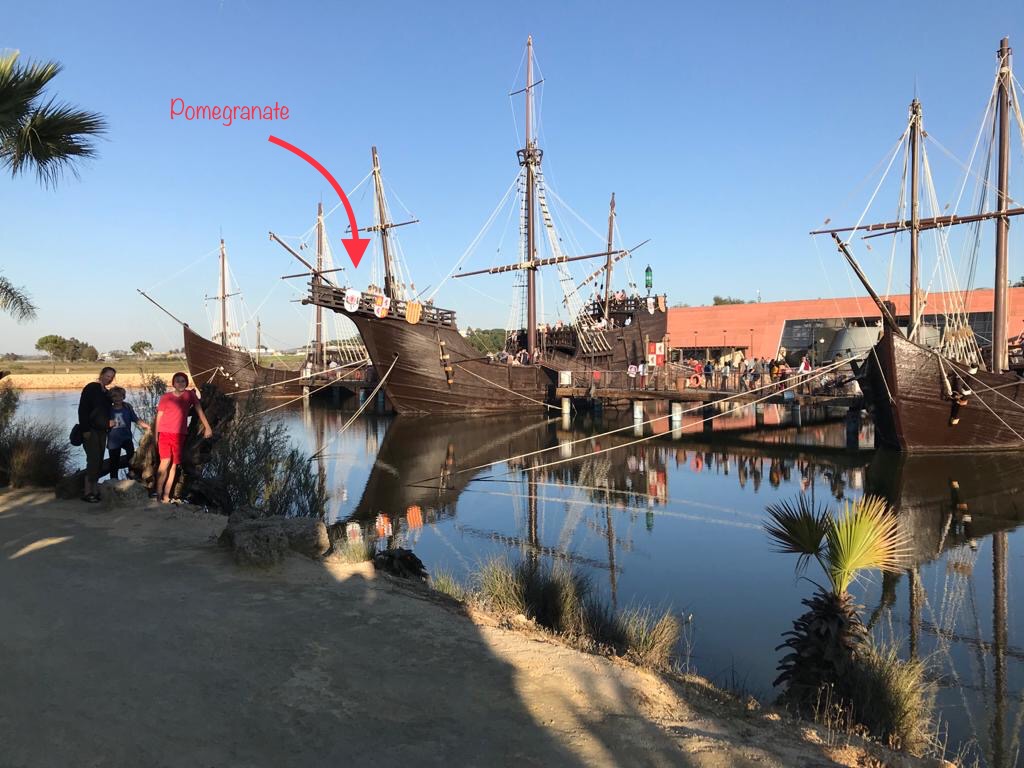
The pomegranate shield on the Santa María (which was the boat that Columbus traveled on) also caught my eye, probably because of seeing so many pomegranates in Granada.
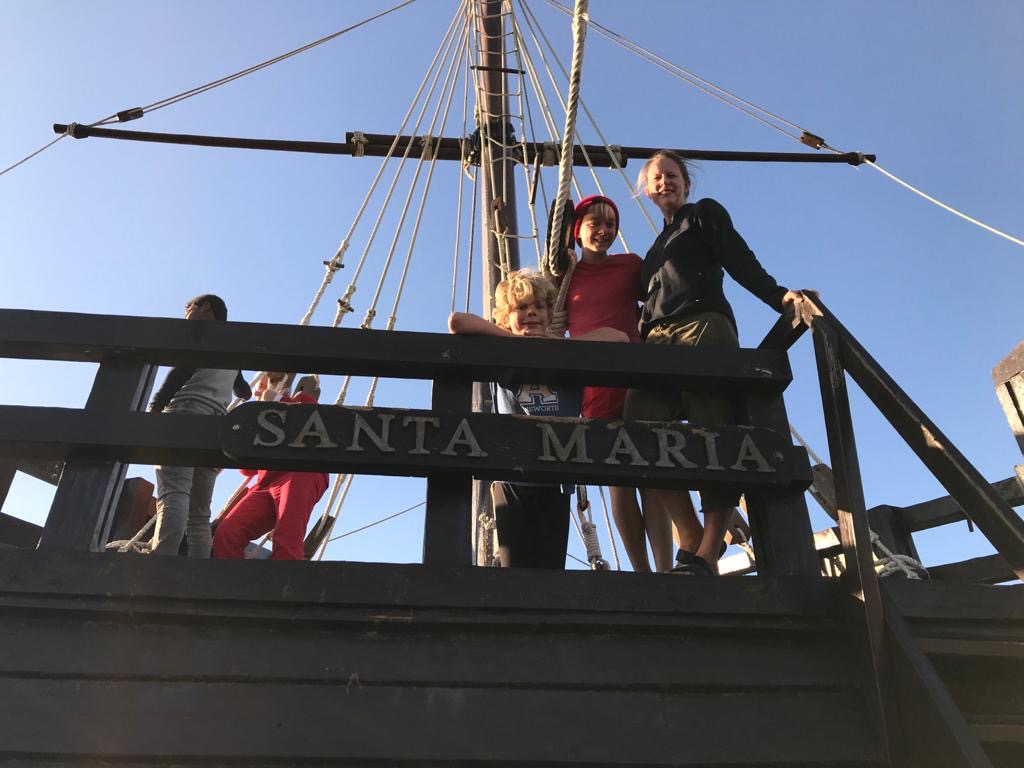
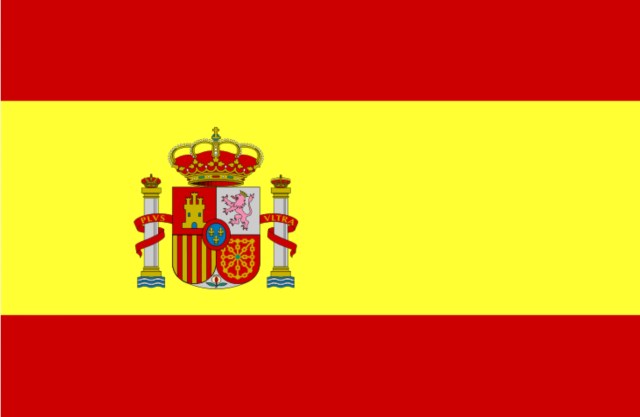
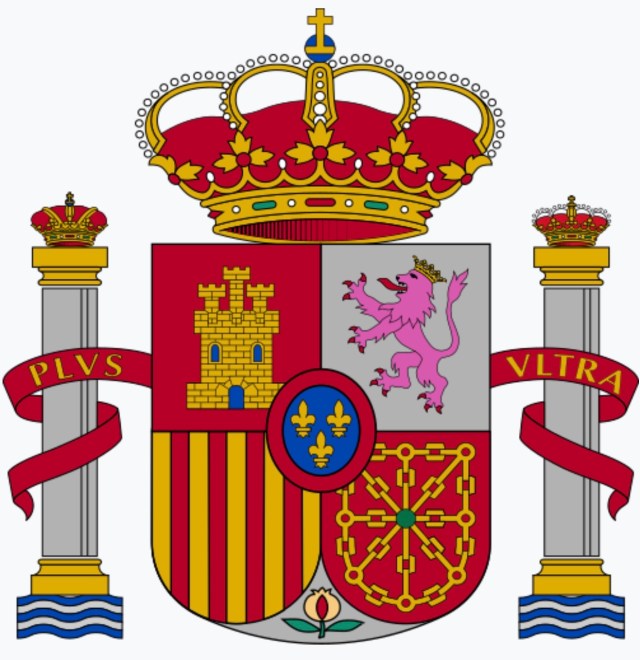
Turns out the pomegranate is the symbol of the Spanish Royal Family. I’ve since learned that it even appears on the coat of arms on the Spanish flag.
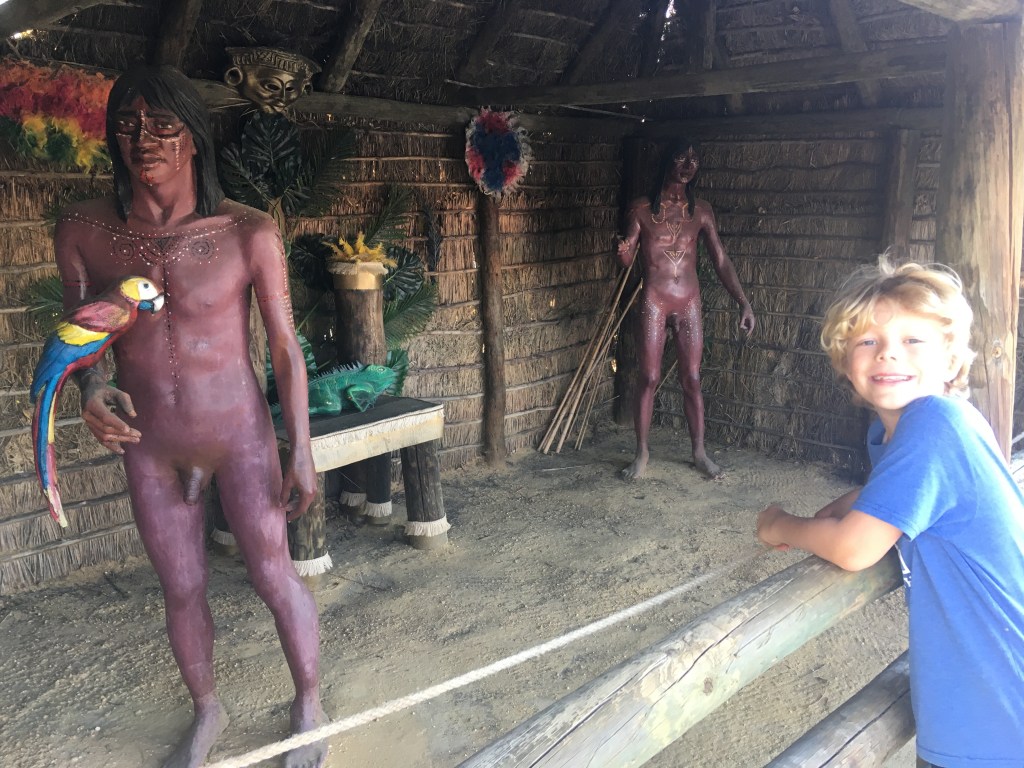
Around the boats were displays of what a Spanish medieval town and the West Indies would have looked like at the time. For some reason, Leo was particularly intrigued by the indigenous peoples.
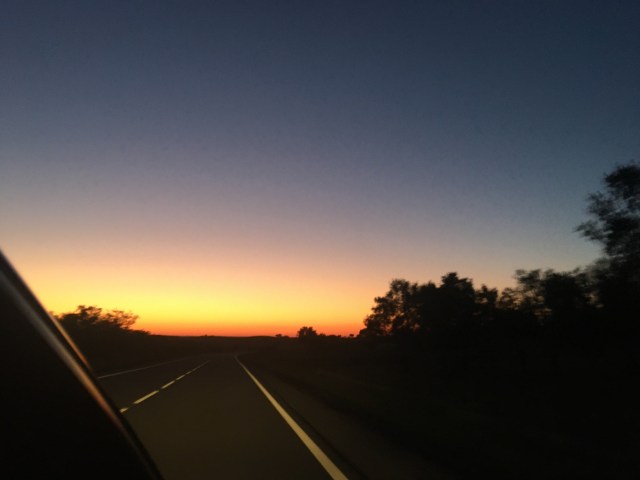
And with that we drove off into the sunset and into Portugal.
 Adrift in Andalucía