

Of course no trip is complete without trying new foods and we ate well in Portugal.
I think the boys’ favorites were the pastries. I’m not really a pastry kind of person but even I liked a couple.
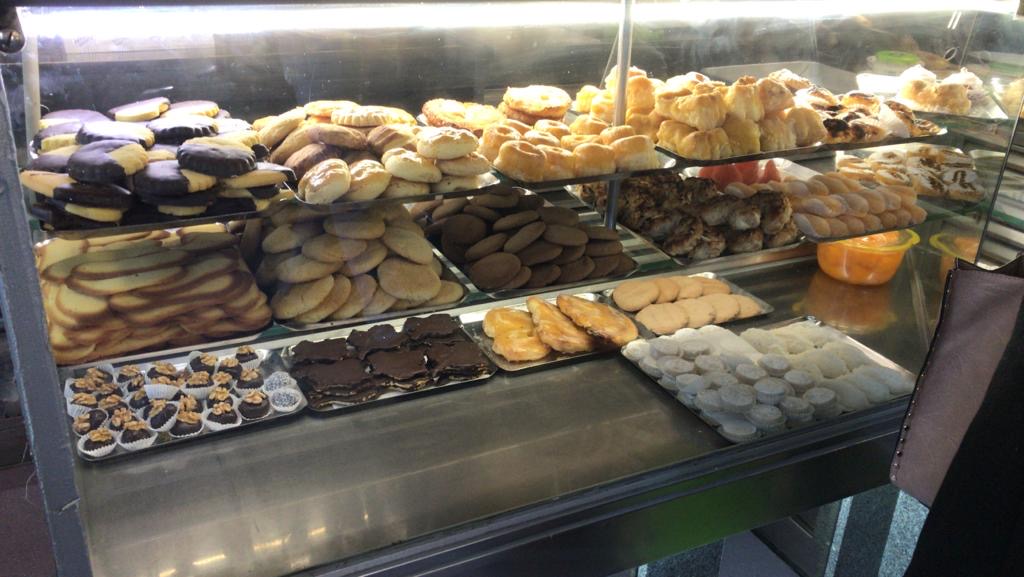
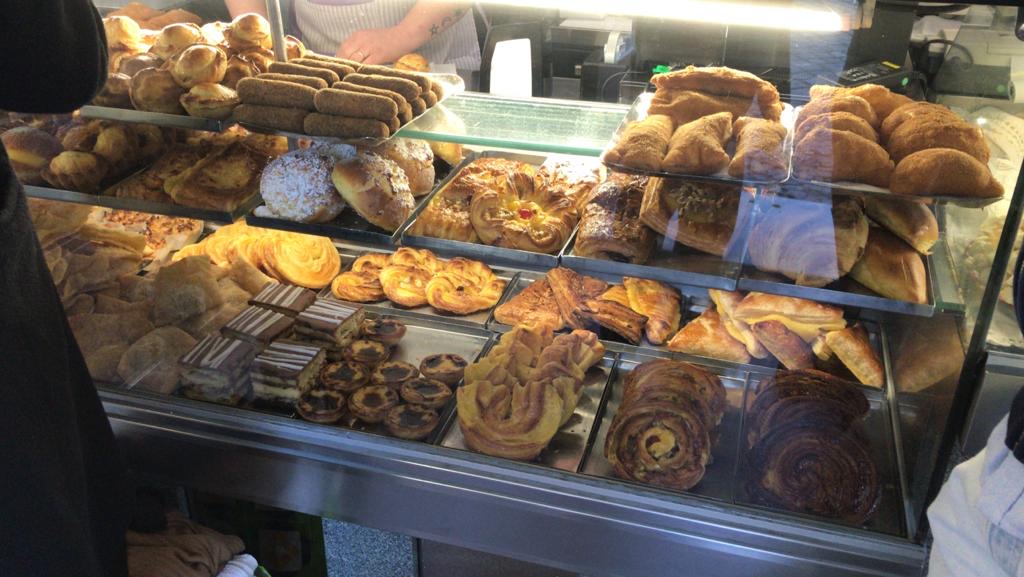
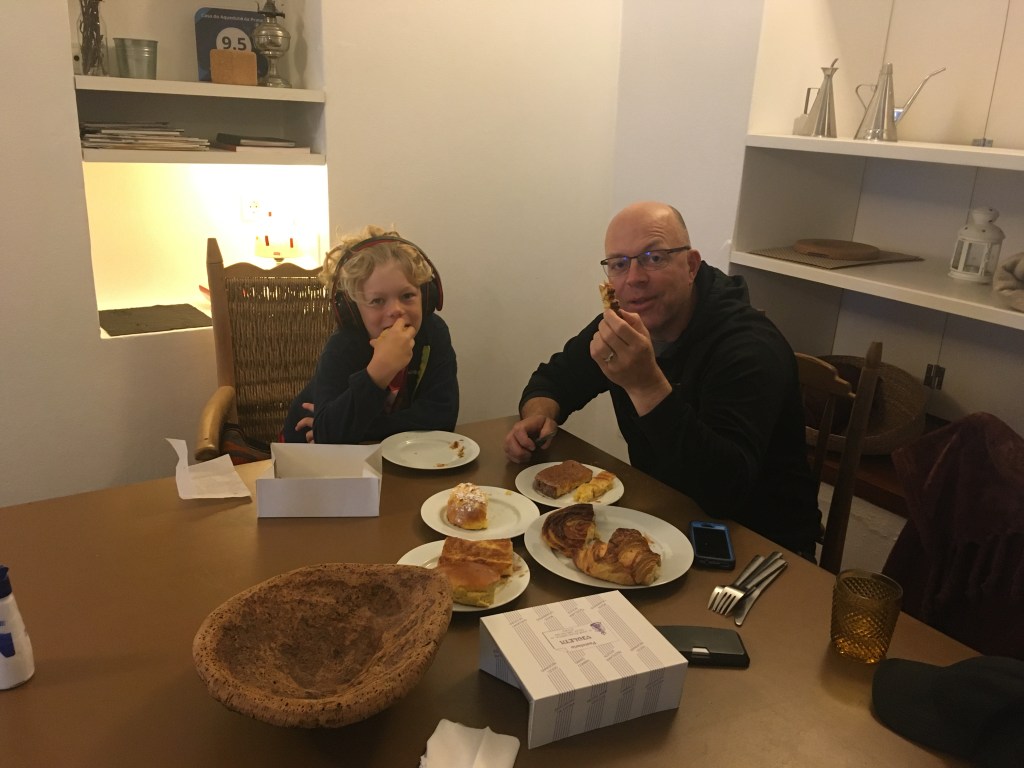
Selection from early morning pastry run in Évora.
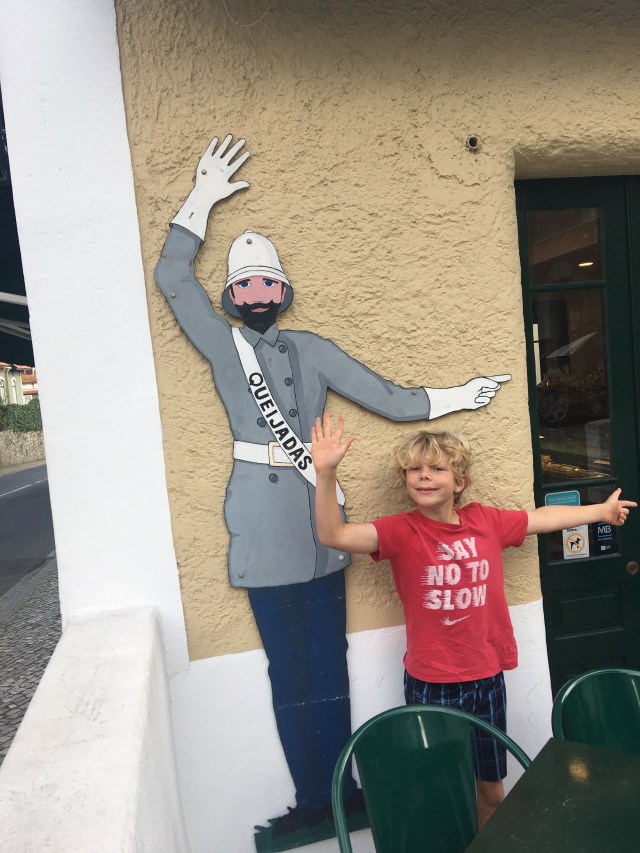
Probably the most typical (and one of our favorites) pastry is the queijada, a little cheesecake made from sheep cheese.
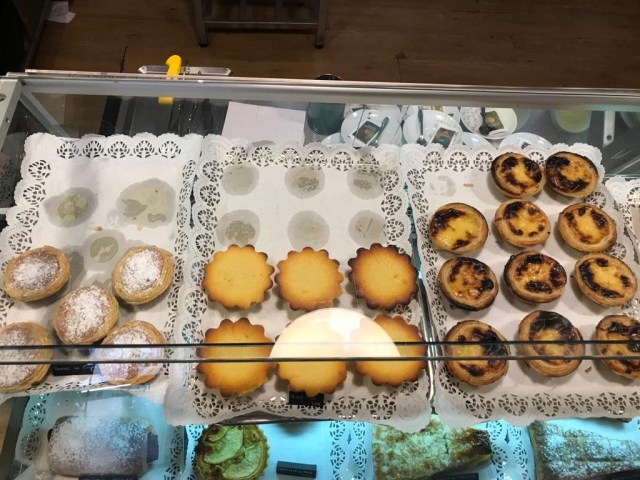
Pastel de feijao (sweet bean tarts), queijadas (cheesecake), pastel de nata (custard tarts)
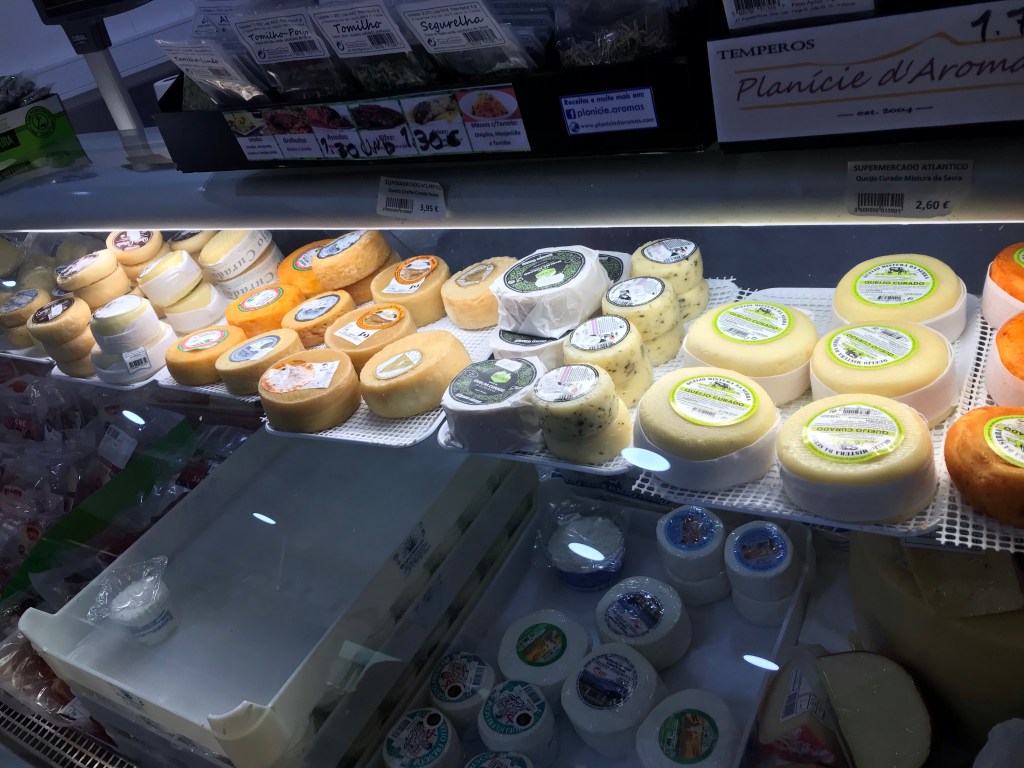
Speaking of cheese, cheese is one of two things that Portugal does a lot better than Spain (*please see foot note at the bottom of this blog about Spanish cheese). Besides the Queijadas, one dish I tried was basically a pot of melted sheep cheese, mmmmmmmm.
The other food the Portugal does better is beef. Leo gave up hamburgers fairly quickly after we arrived in Spain since they were never quite right, and he was very happy to have several in Portugal. We even went to a restaurant that was named Santo Bife, beef in Portuguese (luckily they had a fantastic veggie patty for me). The boys were happy.
There may be a connection between the quality dairy and beef and the fact that we saw grazing goats, sheep and cows all over Portugal, something we don’t see in our part of Spain.
Like Spain, Portugal has tapas, which was a great way to try lots of things.
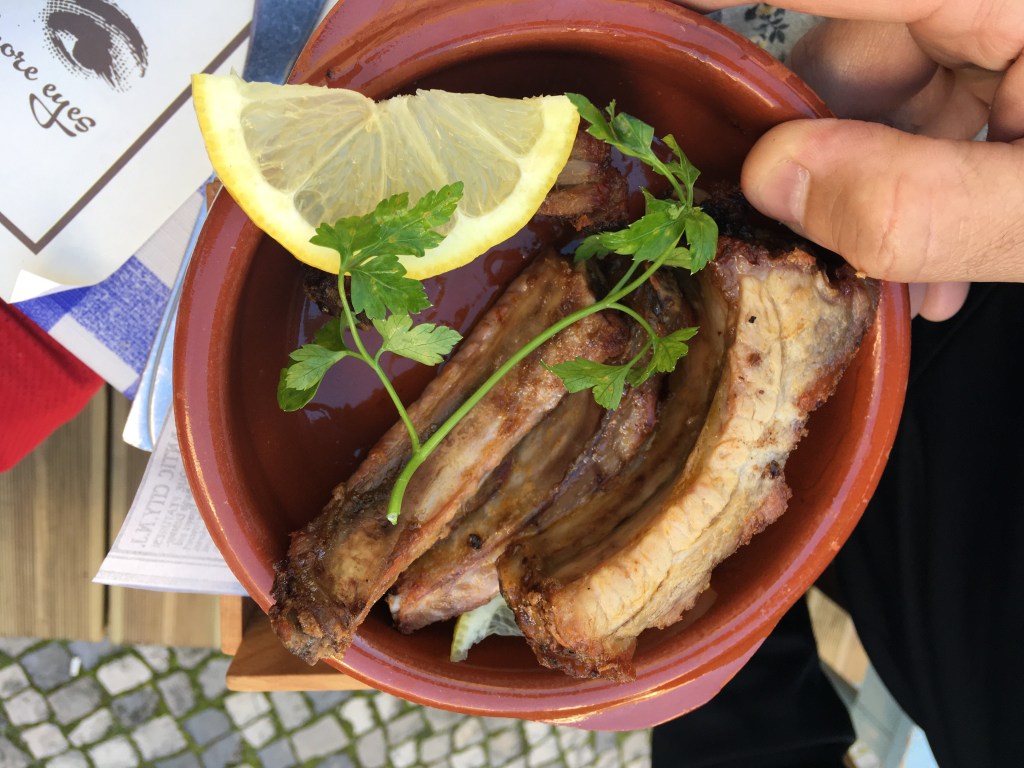
Ribs 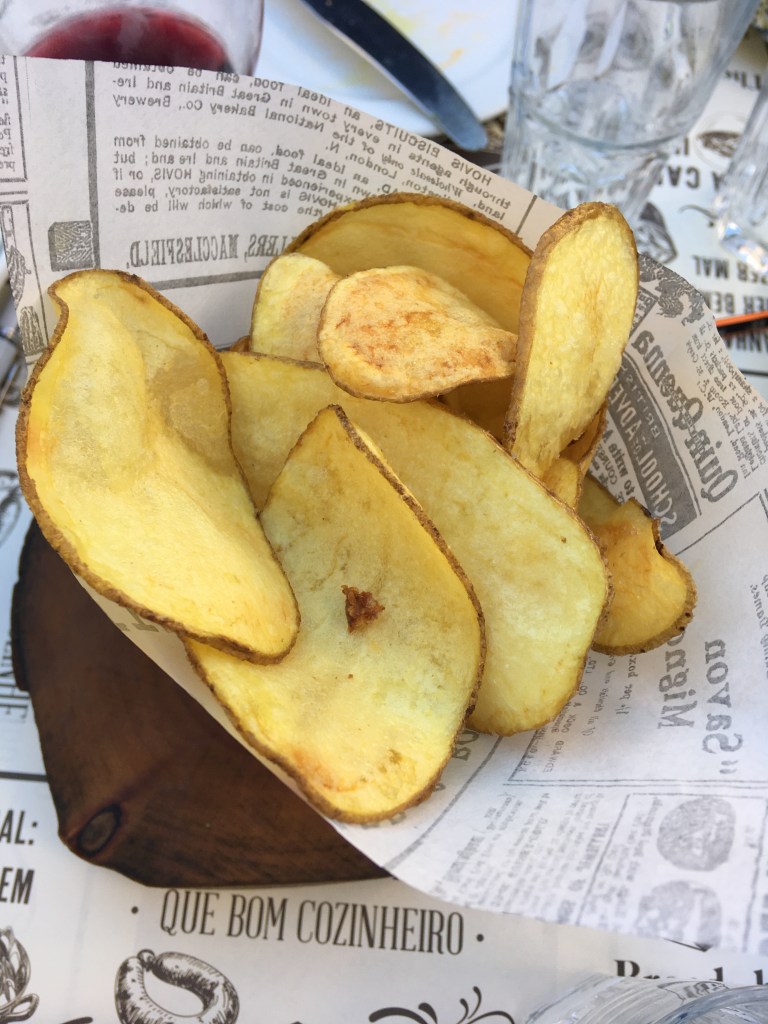
fancy chips 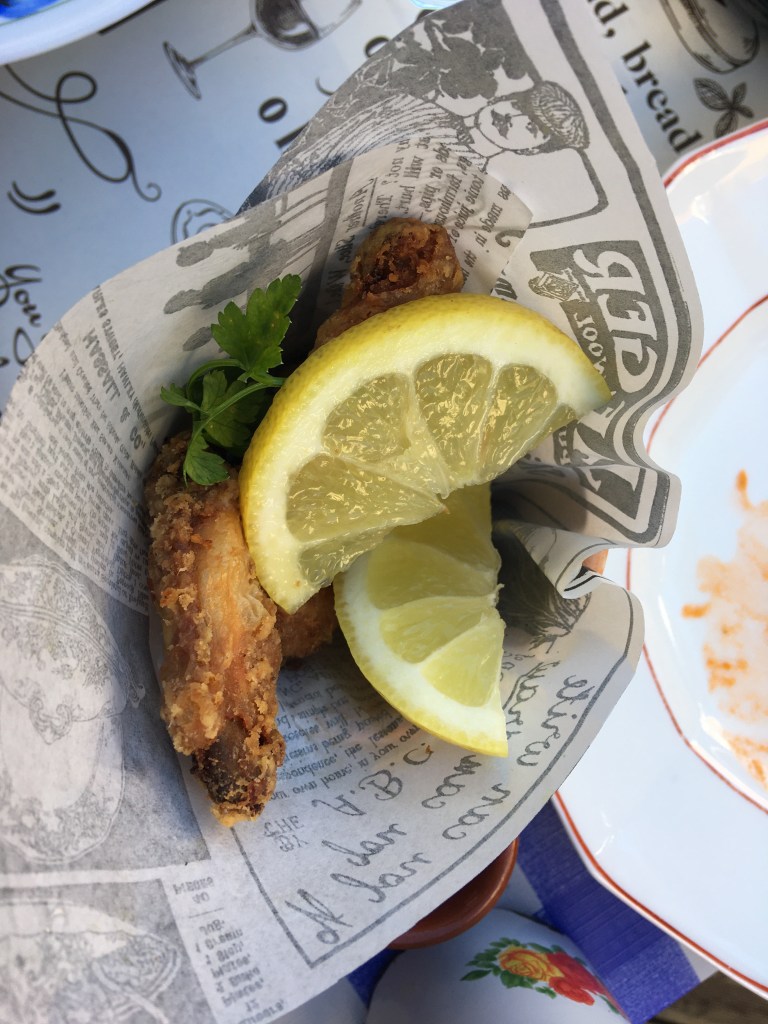
fried fish 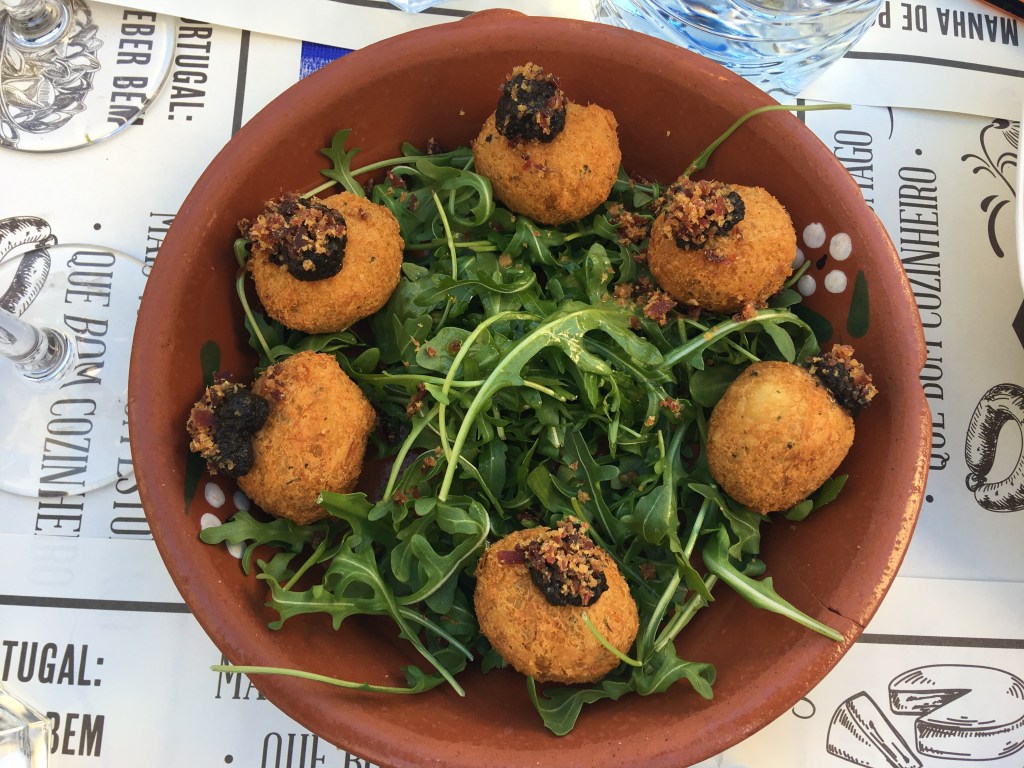
fish croquette (no one’s favorite) 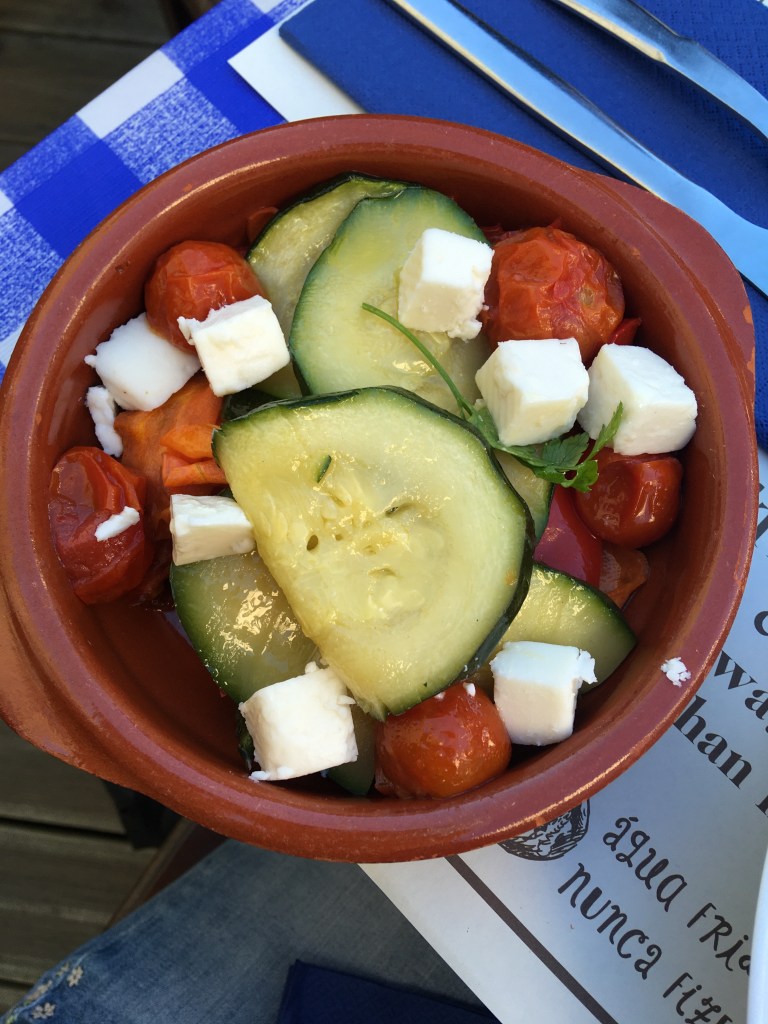
My veggie salad 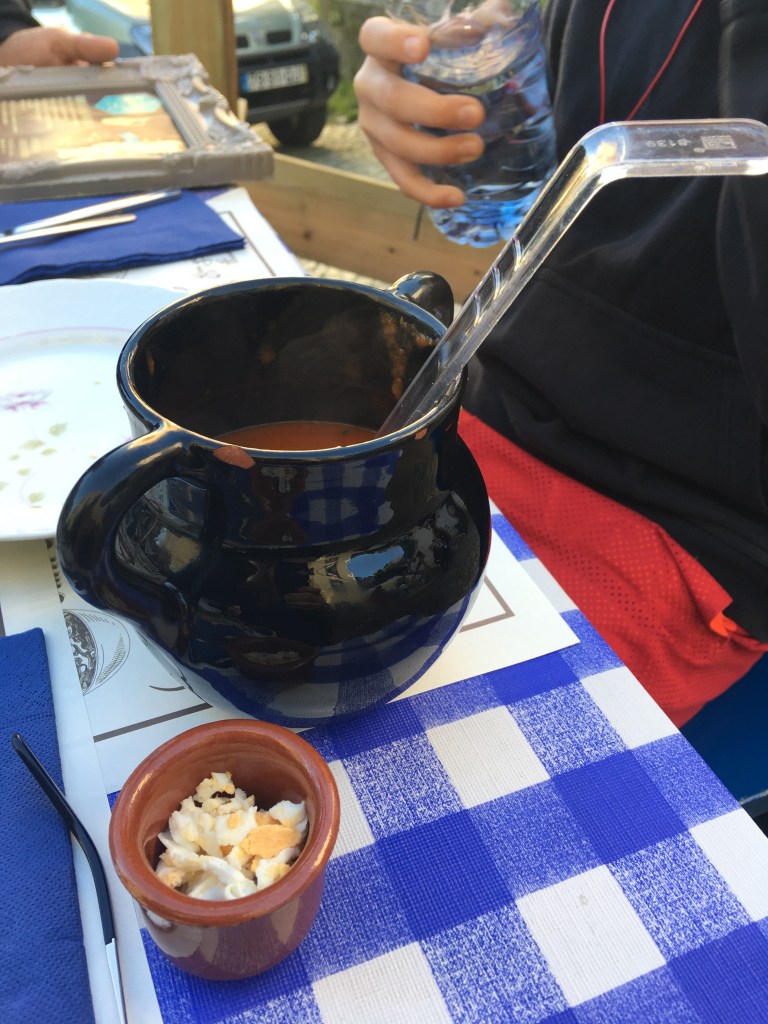
Tomato soup with boiled egg
And then there are the drinks. They have Sangria, similar to Spain’s but with a little more tangy flavor (yum).
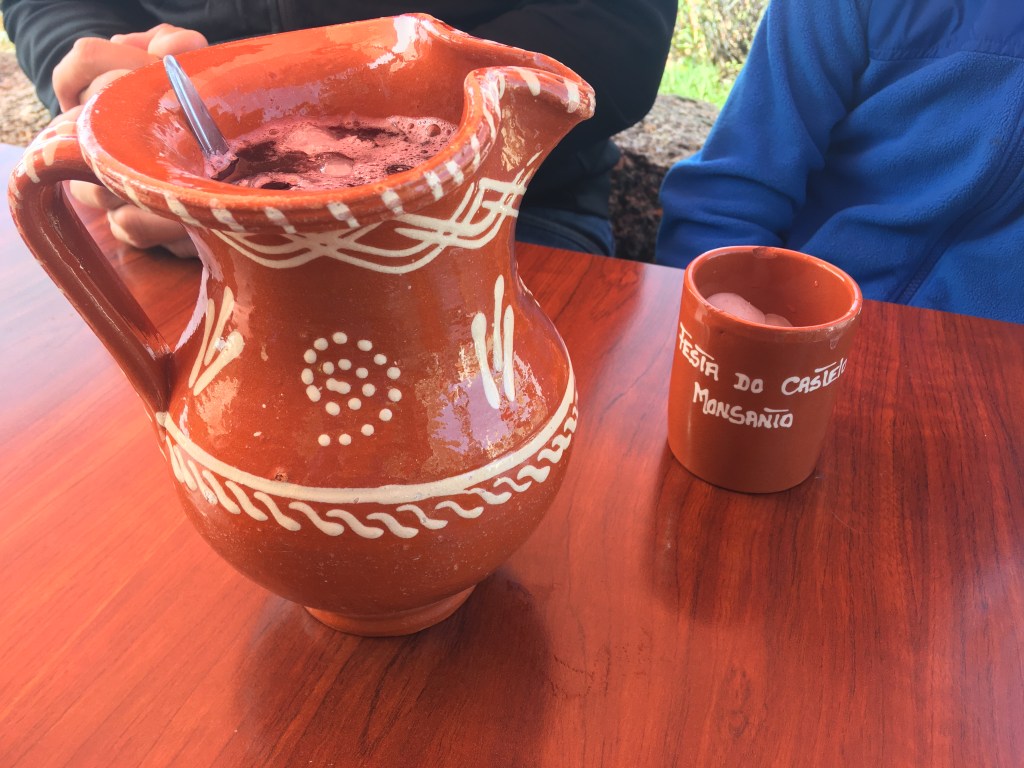
A traditional drink is Ginja, a liqueur made from ginja berries (small sour cherries) that you drink out of a pure chocolate cup.
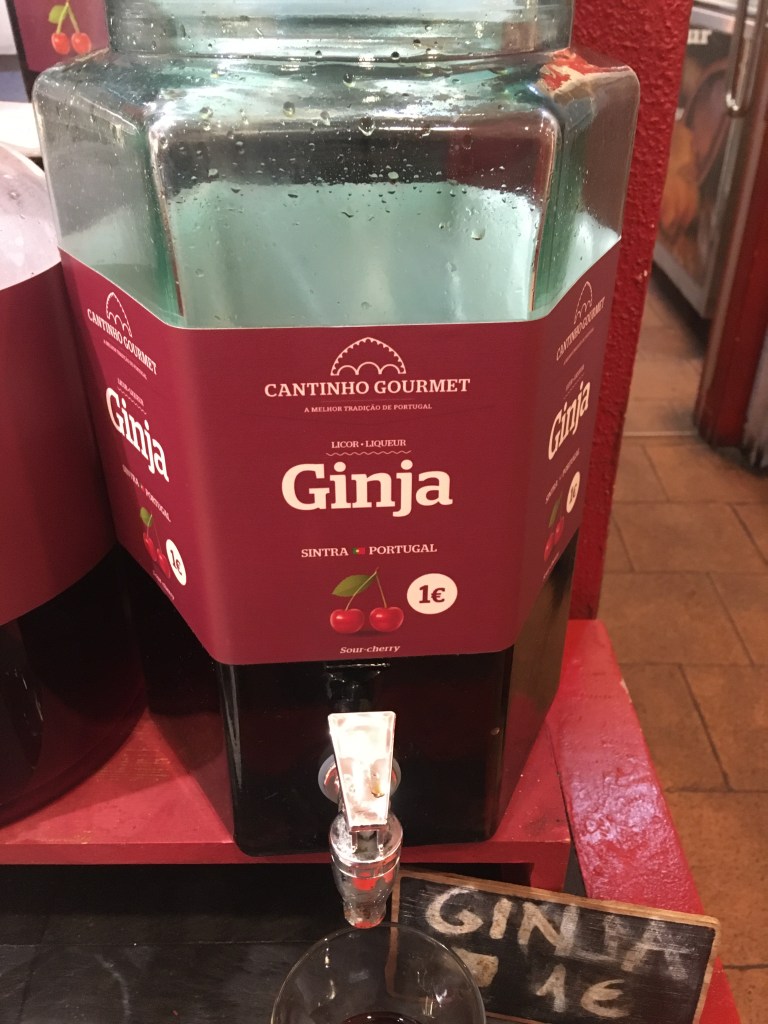
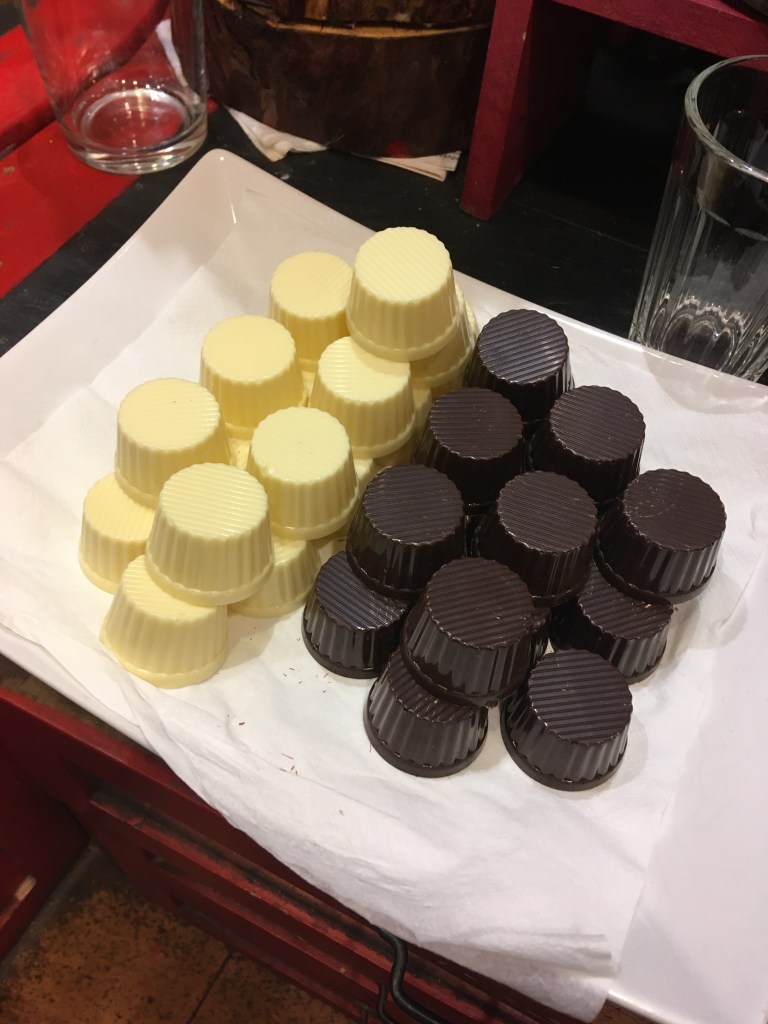
We found one shop that offered a kids’ non-alcoholic version and the merchant taught us how to properly drink Ginja.
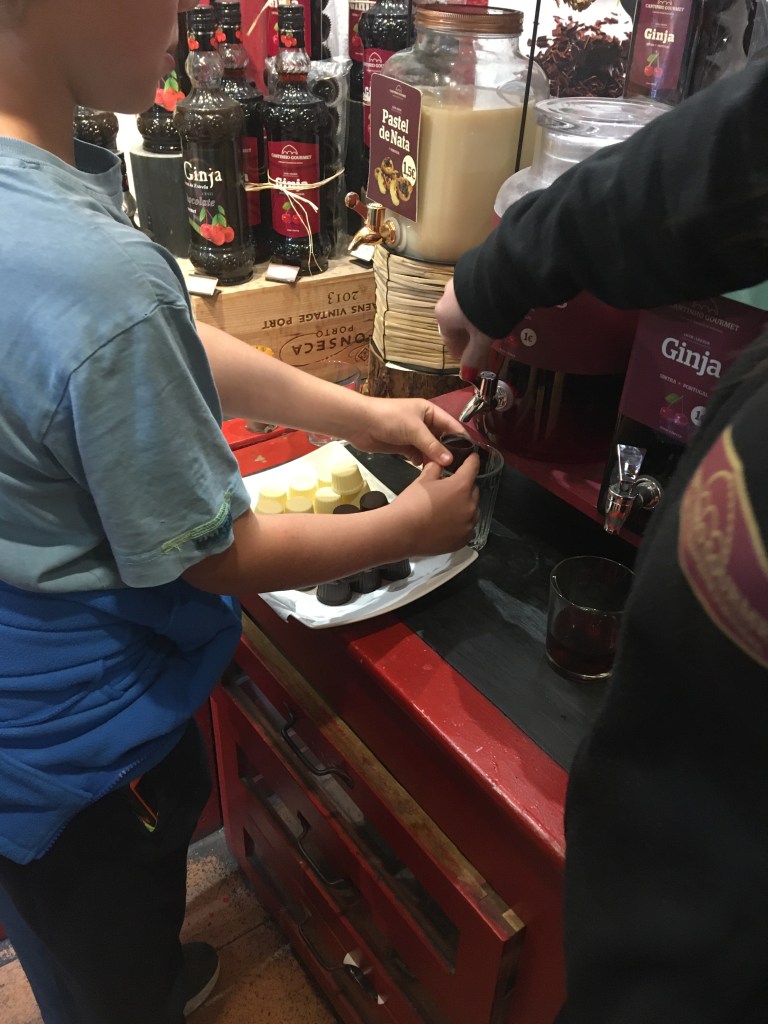
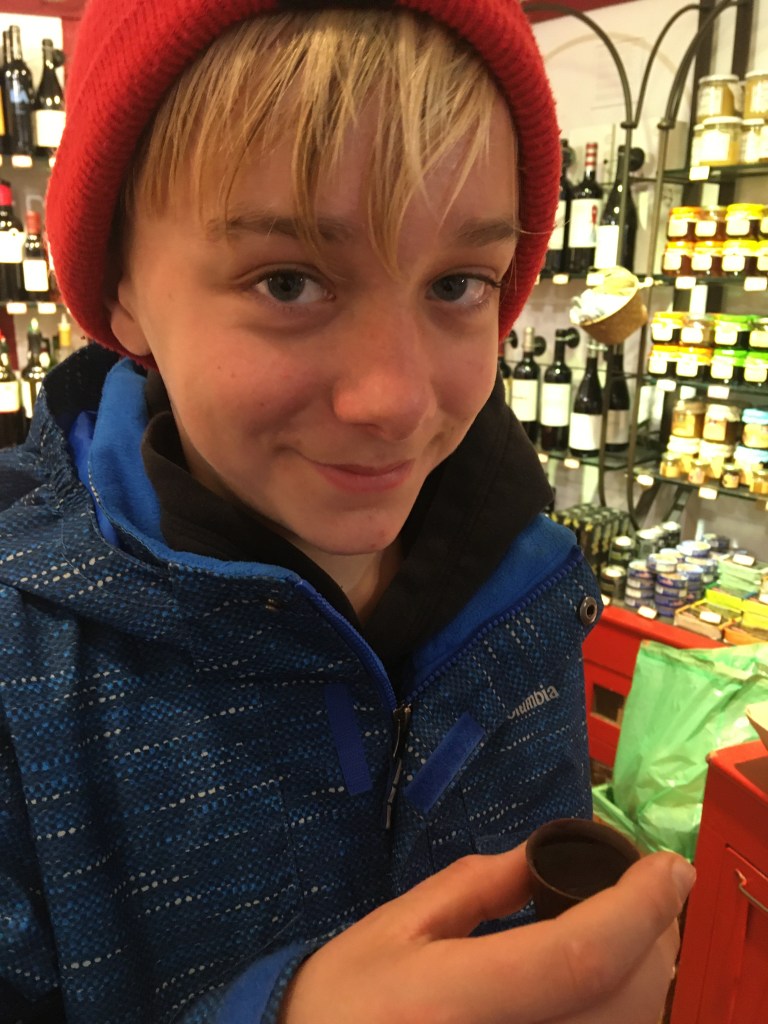
First, you fill the chocolate cup with the liqueur, then you drink about half of it, then you toss the cup with the remaining liqueur into your mounth. Yum!
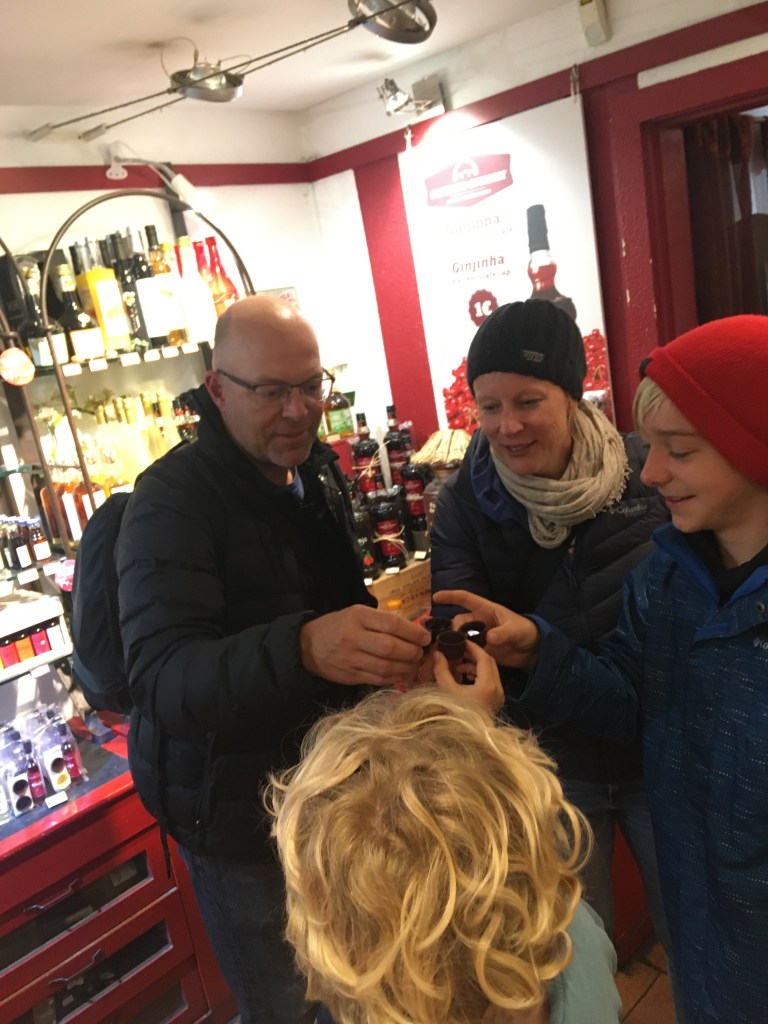
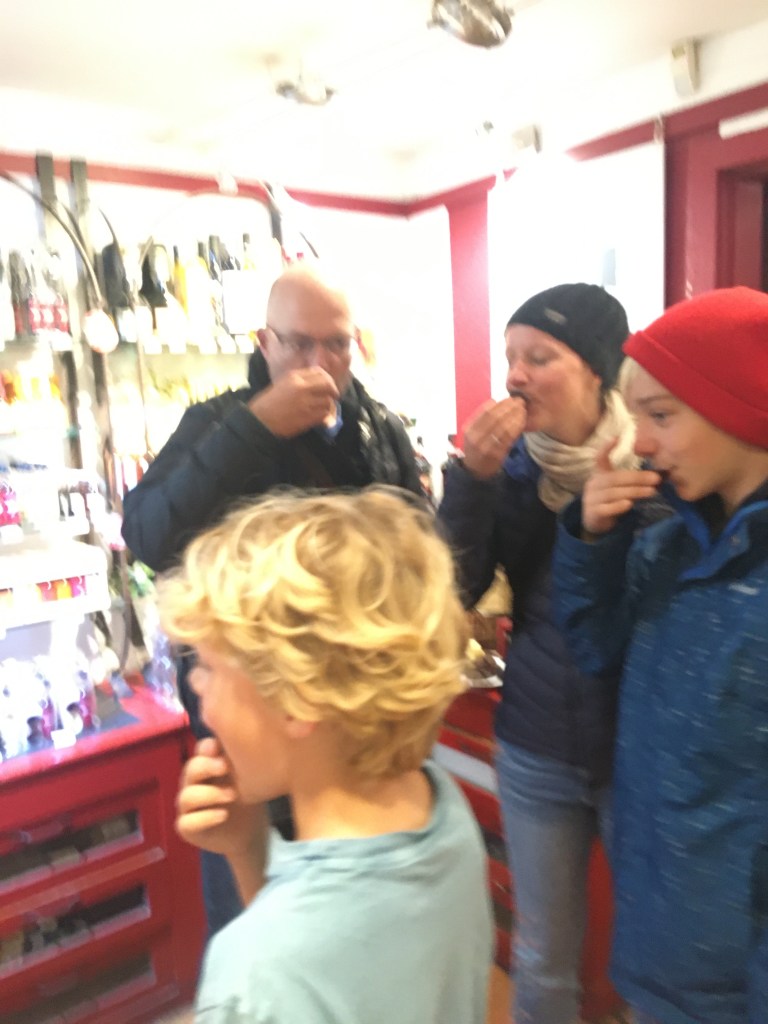
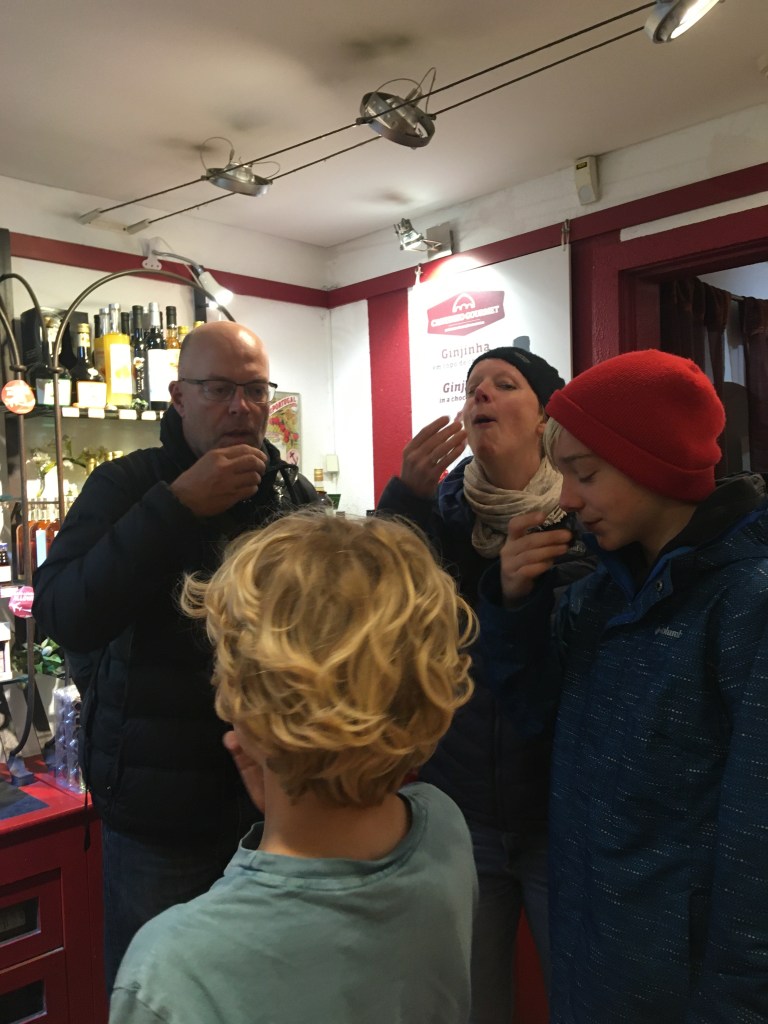
And of course there is port, which our waitress instructed us that to be authentic port it must be produced in Porto.
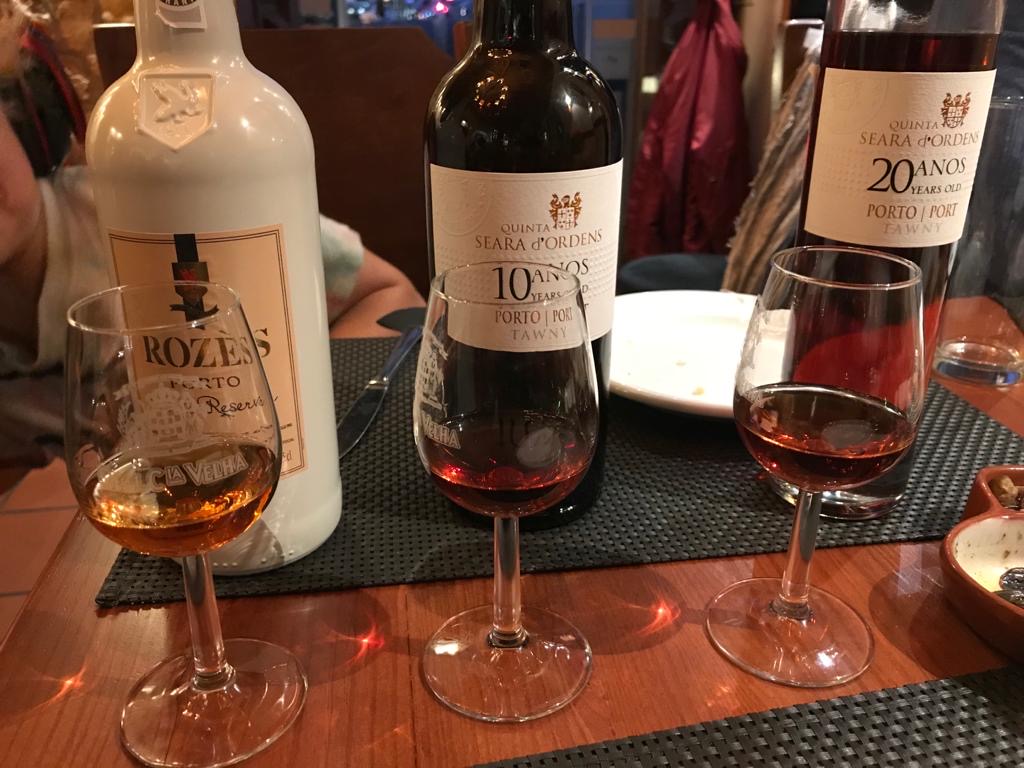
* Spanish Cheese foot note: We have all been very disappointed in the selection of cheese since we arrived in Spain. Mostly there is cow cheese, goat cheese and sheep cheese, or mixtures of those cheeses, either semi-aged or aged, and that is it, that is how they are named. We get a semi-aged cow/sheep mix which is basically Manchego and an imported mild cheddar (which isn’t quite right). We’ve often wondered why there aren’t more choices of cheese, especially with France and Switzerland’s example so close by. Turns out, it is a result of Franco’s leadership, when artisinal cheese was basically outlawed. Additionally, Franco, who was not a wine drinker, greatly limited wine production by destroying vineyards, particularly those producing white wine grapes and pushing for bulk red wine with an emphasis on quantity over quality. This helps explain why we’ve had such a hard time finding wine that is worth drinking.
If you are interested in more details, this is an interesting article: https://vinepair.com/articles/how-francos-40-year-rule-changed-the-course-of-spanish-wine-and-cheese/
 Adrift in Andalucía
Hi guys, I am enjoying your blogs, particularly our recounting of time during quarantine since obviously that make your experience so different from ours!
In regard to cheese, there are several cheeses made in the north which are very pungent (I have never liked manchego because I find it to be so bland!)… If you can, seek out idizazbel, a firm sheeps-milk cheese (https://www.gastronomicspain.com/blog/en/whats-special-idiazabal-cheese/) or Cabrales, a super-pungent goat or goat-sheep blue cheese from Asturias (https://en.wikipedia.org/wiki/Cabrales_cheese)
Best wishes to you with at least 2 more weeks of stay-at-home. Glad you have a flat that offers you at least a little space for some activities!
LikeLike
Hi Darcy! We did try the very pungent cheese up north last winter, definitely not our taste!
LikeLike